
















This program is well-balanced. It remains mostly easy to follow and process. It is a good fit for the recommended age.
The pacing is fast. Images follow each other quickly, leaving little time to pause and take in what is happening.
The sound is soft and supportive.
The visuals are busy, with a lot of movement and frequent changes.
One clear question drives the whole episode: how do you measure something as big as a whale? Nearly every segment, the breakfast chat, the classroom survey, the lab activity, even the pirate song, circles back to that single thread, which makes it easy to follow. New ideas arrive one at a time, an inch, then a tape measure, then the rules of non-standard measurement, each reinforced before the next appears. The magazine-style blocks do interrupt the throughline, but the logic of counting bodies to find a length stays clear and predictable.
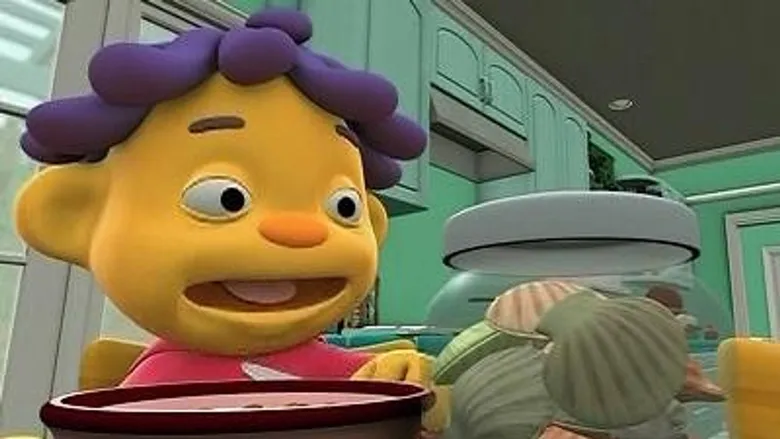
The mood stays warm and even from start to finish. Adults answer Sid's questions with encouragement, his grandmother calls him 'my smart boy', and his teacher treats every guess as worthwhile, so the interactions consistently model support and respect. There is no real conflict, fear, or sadness to weather, and the small moments of puzzlement ('I don't get it, how could I use this little ruler to measure a whale') are met with calm reassurance. Children are very unlikely to feel any unease here.
Sid sets his own goal and chases it, wanting to measure a whale and asking different people until he finds a method. The episode shows a genuine inquiry arc: naming the problem, gathering ideas, testing non-standard measurement by lying down and counting bodies, and finally inventing a 'whale ruler' from identical toy whales. Much of the key insight is handed to him by the teacher rather than discovered through his own trial and error, so he figures out less alone than the strong setup invites. Even so, his initiative and the visible step-by-step solution give the episode real problem-solving value.
The language is clear and well matched to a preschooler, built from concrete words and short explanations. New terms are introduced and unpacked in context: an inch is 'the length between each number', a tape measure is 'a really long ruler you can stretch out', and even 'paleontologist' gets a friendly definition. Most of the talk does real work, describing, explaining, or asking, with only light filler like cheers and 'wow'. The repeated phrase 'non-standard measurement' drives the concept home rather than padding the dialogue.
This episode connects directly to everyday life. Measuring is a practical skill, and the activities are genuinely doable at home: lining up shoes, blocks, or paper cut-outs of your own body with no gaps, then counting them. The episode openly invites children to try it and to trace and make their own paper body ruler. Grounded settings, a family breakfast, school, a parent doing woodworking, sit alongside light imaginative play like the pirate song, giving children plenty they can recognise and repeat off-screen.
More information
This score shows how inclusively the series portrays diverse people, families and cultures. Scale: Limited → Varied → Rich → Inclusive.
Sid the Science Kid surrounds its curious lead with a genuinely mixed group of children and adults, spanning different skin tones, a household with parents and a grandmother under one roof, and a female teacher who guides the learning at school. Curiosity, humour, and ideas are shared across the boys and girls alike, so no single group holds the initiative or stays in the background. A mild traditional touch appears at home, where Sid's dad works with wood and tools while his mom offers facts, but both stay involved and warm. The main limit is the world itself, which rarely moves beyond one home and one classroom.
This score shows whether the series stays close to everyday reality or leans into fantasy. Scale: Fantasy → Mixed reality → Realistic.
This episode keeps both feet in the everyday world: Sid eats breakfast with his parents, heads to school, sits at rug time, and learns to measure things first with a ruler and tape measure, then with his own body, shoes and blocks. No villain appears anywhere; the only challenge is a real question, how to measure something as big as a blue whale, and the adults and classmates around Sid are all warm and helpful. A few light flights of imagination break in, such as a pirate song about measuring a whale at sea and Sid picturing his own 'whale ruler', but these stay clearly framed as play and song. The grounded, real-life focus with gentle pretend play fits a preschooler well.
This score shows how enjoyable the series is for parents watching along. Scale: Tedious → Tolerable → Pleasant → Enjoyable.
Sid the Science Kid carries one clear question from start to finish, how to measure something as big as a whale, and pays it off when Sid builds his own row of toy whales to measure with. The production is solid, with consistent puppet-style animation, original songs, and a clean sound mix, though the computer animation looks dated. The humor stays friendly but firmly child-pitched, with little aimed at the adult watching alongside. Sid's high energy and the phrase 'non-standard measurement' repeated again and again can wear on a grown-up in the room, but it holds together for a co-viewing parent.
Themes
Measurement
Central
The entire episode teaches how to measure things, from a ruler's inches to counting bodies across the classroom floor.
Science
Central
Sid calls a ruler a 'science tool' and frames the day as investigating, exploring and discovering.
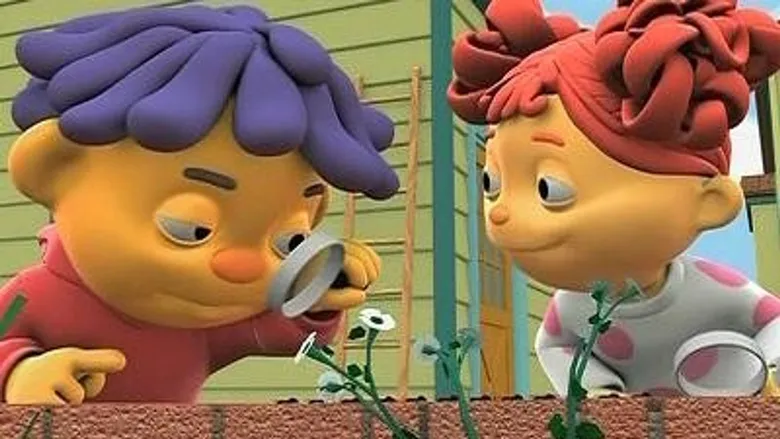
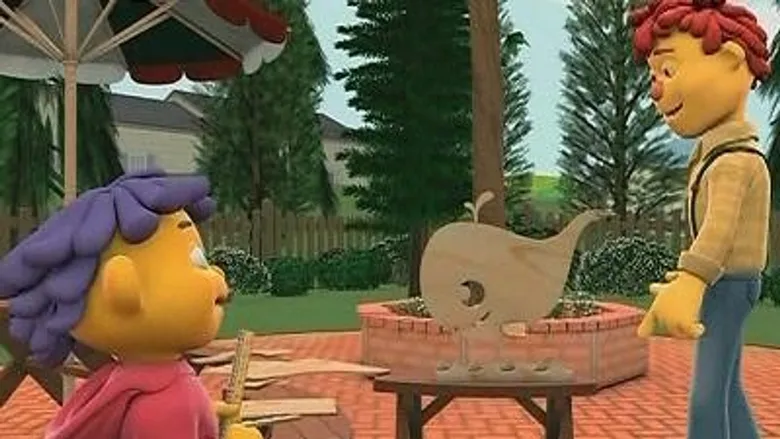
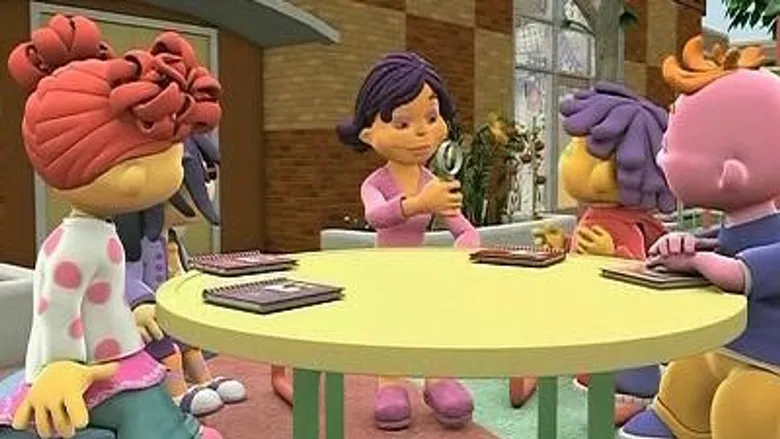
Sid wants to know how to measure a giant blue whale with the small ruler his dad gave him. He carries the question through breakfast, a classroom survey and a lab session where Teacher Susie shows the class how to measure using shoes, blocks and their own bodies, a method called non-standard measurement. After a story from grandma and helping his dad measure wood for a toy whale, Sid invents a 'whale ruler' of identical toy whales lined up to count. The episode closes with Sid reminding viewers to keep asking questions.