






This program is well-balanced. It remains mostly easy to follow and process. It is a good fit for the recommended age.
The pacing is fast. Images follow each other quickly, leaving little time to pause and take in what is happening.
The sound is intense and continuously present.
The visuals are calm and well-organized.
The video is easy to follow because it keeps a single focus throughout: one owl, one night sky, and the repeated song. New things appear only occasionally, so a young child is never asked to track several things at once, and the loose flow from the moonlit forest up into the sky and back gives it a recognisable beginning and end. The one limitation is that very little real cause-and-effect happens here. Events drift past as a mood rather than one thing clearly leading to another, which suits a lullaby but means there is not much logical structure to follow.
Emotionally this is a very safe watch. The mood stays warm and even from start to finish, with no scary moments, no raised voices, and no sudden emotional swings for a child to absorb. The owl gazes at the stars with quiet curiosity and the smiling star looks welcoming, so the few characters feel kind and consistent. Because nothing ever builds into tension, there is nothing a young child needs to be talked back down from, which makes it easy for a toddler to settle.
This pillar scores low because the video does not show any problem-solving. There is no goal to reach, no obstacle, and no character working something out, so a child sees no thinking process, no trying-and-adjusting, and no decisions being made. The owl and stars simply move through the night sky alongside the song. As a musical lullaby, this content is not built to model independent thinking or initiative.
The language is a good fit for this age. The sung words are short, clear, and highly repetitive, built on concrete images like a star, the sky, and 'up above the world so high,' which is exactly the kind of rhythmic, repeated phrasing that helps toddlers absorb new words. The singing is clean and easy to understand, and the lines hold together as complete phrases rather than scattered words. The small caveat is that a couple of ideas, such as 'how I wonder what you are' and 'like a diamond in the sky,' are a touch poetic for a two-year-old, though the melody and repetition carry the meaning.
This pillar scores low because the video stays in an imaginary world with little to carry into daily life. The central images, stars with smiling faces and an owl gliding through the sky, are make-believe rather than things a child does or sees done at home. There are no real activities with a purpose or steps to copy, and no everyday social situations like play or family routines to recognise. The clearest real-world link is the night sky itself, the moon and stars a child can look up and find, but that connection stays in the background.
More information
This score shows how inclusively the series portrays diverse people, families and cultures. Scale: Limited → Varied → Rich → Inclusive.
This is a sung lullaby set in a night sky, where a small owl drifts past twinkling stars and a large smiling star. The film features only an owl and star characters and no people at all, so it offers no view of human diversity in culture, family form, age or body. At the same time, nothing in it leans on stereotypes: the owl explores on its own terms and the characters carry no gendered or clichéd roles. It works as a visual poem rather than a story about people living together, so what it can show about representation is limited by its design.
This score shows whether the series stays close to everyday reality or leans into fantasy. Scale: Fantasy → Mixed reality → Realistic.
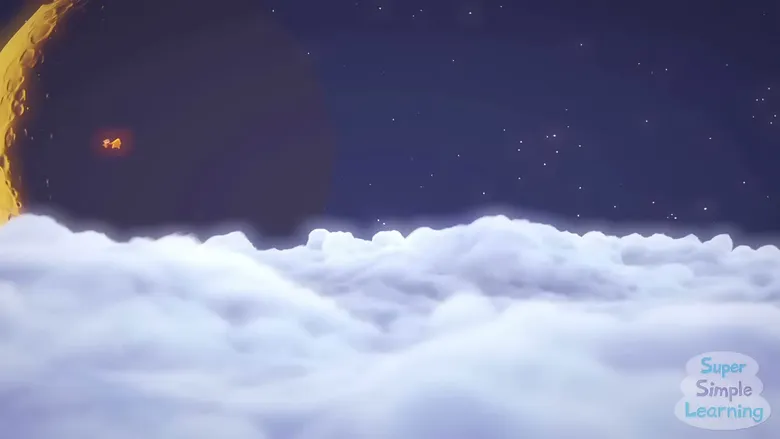
This is an animated version of the classic lullaby, set in a calm night sky with a crescent moon, drifting clouds, and a friendly brown owl perched on a branch. Most of what a child sees is recognizable from real life, with the main imaginative touch being stars that have small faces and smile, plus one larger glowing star character. There is no villain and no good-versus-evil story, just a quiet song repeated twice. The blend of a familiar night sky with light, consistent fantasy is a good fit for a 2-year-old.
This score shows how enjoyable the series is for parents watching along. Scale: Tedious → Tolerable → Pleasant → Enjoyable.
This lullaby version of Twinkle Twinkle Little Star is easy for a parent to share. The soft 3D animation of an owl drifting through a starry night sky is polished, and the gentle vocal makes it pleasant to have playing in the room. There is little written specifically for the adult, though: no jokes or layered humor, and the single repeated verse carries only a thin visual thread rather than a real story. For the co-viewing parent the appeal is the calm craft, not the plot.
Themes
Nighttime
Central
The owl drifts through a star-filled night sky with a crescent moon and clouds for nearly the entire video.
Stars
Central
Yellow stars twinkle throughout and a large smiling star floats beside the owl as the lyric describes the little star.
A round owl sits in a moonlit forest and then glides through a night sky filled with twinkling stars, drifting clouds, and a crescent moon. Throughout, the nursery rhyme 'Twinkle, Twinkle, Little Star' is sung, and a large smiling star floats beside the owl as it gazes upward. The song repeats its verse and the owl returns to the forest. The video closes on a black screen showing a website address.