




This program is stimulating. It actively demands attention and can feel intense. For the recommended age, this may be on the more intense side.
The pacing is fast. Images follow each other quickly, leaving little time to pause and take in what is happening.
The sound is intense and continuously present.
The visuals are busy, with a lot of movement and frequent changes.
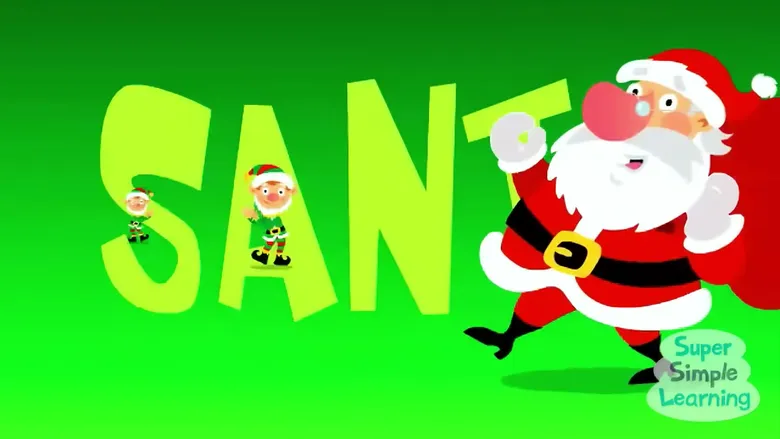
The song keeps a single, clear focus from start to finish: describing Santa and spelling his name, with no side threads to track. New information is kept to a minimum, just a few simple features (a red hat, a white beard, a twinkle in his eye) and the letters of his name, so a two-year-old can easily follow along. Each verse builds on the last in the familiar BINGO pattern, dropping one letter at a time, which makes the structure predictable and easy to anticipate. The one limit is that, as a descriptive song, it shows little real cause and effect.
This is emotionally gentle and predictable throughout. Santa and the elves stay cheerful and friendly, with no anger, fear, or tension at any point, so there is nothing a sensitive child would find unsettling. Because the mood never spikes, there is no scary moment that needs resolving, and the warmth holds from beginning to end. The interaction is simple and consistent, with the only small caveat that the characters mostly perform rather than show much back and forth between them.
This pillar scores low because the video is a descriptive spelling song with no problem to solve. No character sets a goal, tries something, runs into a setback, or works out a solution, so there is no visible thinking or reasoning process for a child to follow. The progressive letter-dropping invites a child to fill in the missing sound, which is a light form of participation, but it does not amount to problem-solving or independent initiative.
The language fits a two-year-old well: short, concrete phrases like 'red hat', 'white beard', and 'twinkle in his eye', repeated with a strong rhythm that supports learning. The words are used consistently and are reinforced by on-screen labels and the spelled-out letters, so their meaning stays clear. Most of the singing is descriptive and purposeful rather than empty exclamation, and the repetition reinforces the spelling rather than padding it. The main nuance is that a large share of the song is single letters and short fragments rather than full sentences, which is fine at this age but limits sentence-level language.
This pillar is held down by how little of the content connects to a child's everyday world. Santa, the elves, and the plain colored backgrounds are imaginative rather than real, and for a two-year-old the focus should lean toward recognizable, real-life situations. There is genuine value in the simple spelling and the describing words a child can carry over, and singing or dancing along is easy to copy, but the song shows no practical, step-by-step activity and little real social interaction. The takeaway is mostly a name to spell and a few describing words.
More information
This score shows how inclusively the series portrays diverse people, families and cultures. Scale: Limited → Varied → Rich → Inclusive.
This Christmas spelling song works with a very narrow cast, Santa Claus and a small group of nearly identical elves, all light-skinned, bearded, and dressed alike, with no children, women, families, or other backgrounds on screen. Santa is the celebrated star while the elves serve as cheerful helpers who hold up the letters, a fixed and familiar hierarchy with no surprises. Everyone shares the same upbeat mood, so there is little variety in who appears or how they behave. It functions as a festive sing-along, but it gives children almost no window onto different people or ways of living together.
This score shows whether the series stays close to everyday reality or leans into fantasy. Scale: Fantasy → Mixed reality → Realistic.
This Christmas sing-along centers on a friendly cartoon Santa, a make-believe figure that most young children already meet through the holiday season. There is no villain and no conflict of any kind; the song simply describes Santa's red hat and white beard while spelling out his name to a familiar tune. The single imaginative element stays gentle and consistent, with nothing frightening or confusing. For a 2-year-old, this light touch of imagination paired with a recognizable character is a comfortable fit.
This score shows how enjoyable the series is for parents watching along. Scale: Tedious → Tolerable → Pleasant → Enjoyable.
This is a polished Christmas spelling song that sets the familiar BINGO melody to the letters of Santa's name. Production is the clear strength, with clean animation, bright holiday colors, and a soft, well-mixed vocal that sits comfortably in the background. What holds the parental experience down is that there is little beyond the loop: no story to follow and no humor or reference aimed at the adult in the room. The same short refrain repeats from the first verse to the last.
Themes
Christmas
Central
Santa, three elves, and red-and-green backgrounds fill every scene as the song celebrates Santa Claus.
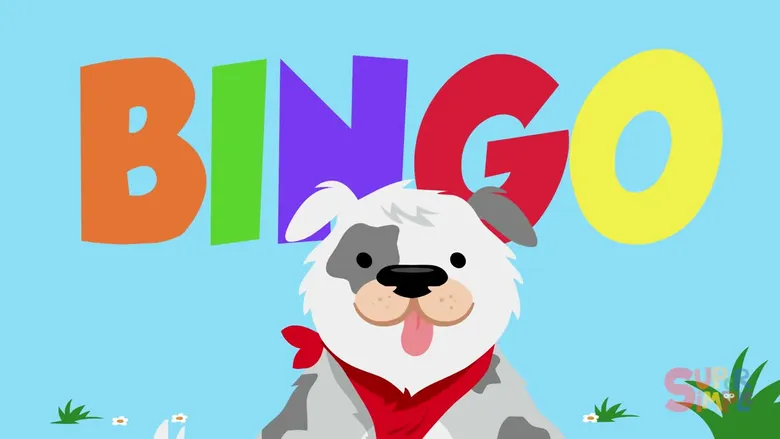
A cartoon Santa Claus and three elves sing and dance through a Christmas version of the BINGO song. The verses describe Santa with a red hat, a white beard, and a twinkle in his eye, then spell his name as 'S-A-N-T-A', dropping one letter each round and replacing it with a hum. Bright red and green backgrounds alternate behind the characters as they dance. The video ends on a close-up of Santa with the 'BINGO' logo and the SuperSimpleLearning.com web address.