

Slowscreen SlowScreen
Toggle sidebar

Just launched: free lifetime premium for the first 1,000 members to activate their account.

Start free

Savannah

Sufficient

Recommended age Unlock

Co-watching from age 2

Balanced

Exact score locked

Watch on Apple TV+
Save
Savannah

Share

Pass this find on to another parent

Link preview

Tiny World: Savannah | Sufficient, co-watching from age 2

Tiny World: Savannah | Sufficient, co-watching from age 2 - Slowscreen

Sufficient · Co-watching from age 2. This documentary explores the African savannah from the point of view of its smallest animals, including an elephant shrew,...

slowscreen.com

https://slowscreen.com/en/series/tiny-world/s1/e1-savannah

https://slowscreen.com/en/series/tiny-world/s1/e1-savannah

Slowscreen

Tiny World: Savannah | Sufficient, co-watching from age 2 - Slowscreen

Sufficient · Co-watching from age 2. This documentary explores the African savannah from the point of view of its smallest animals, including an elephant shrew,...

Tiny World: Savannah | Sufficient, co-watching from age 2

slowscreen.com

Tiny World: Savannah | Sufficient, co-watching from age 2 - Slowscreen

Sufficient · Co-watching from age 2. This documentary explores the African savannah from the point of view of its smallest animals, including an elephant shrew,...

Tiny World: Savannah | Sufficient, co-watching from age 2
slowscreen.com

Tiny World: Savannah | Sufficient, co-watching from age 2 - Slowscreen

slowscreen.com · Posted by you

Tiny World: Savannah | Sufficient, co-watching from age 2 - Slowscreen

0 Share
Tiny World: Savannah | Sufficient, co-watching from age 2
To
Subject Tiny World: Savannah | Sufficient, co-watching from age 2

Sufficient · Co-watching from age 2. This documentary explores the African savannah from the point of view of its smallest animals, including an elephant shrew,...

https://slowscreen.com/en/series/tiny-world/s1/e1-savannah

Share on WhatsApp Share on X Share on Facebook Share on Telegram Share on Reddit Share on Email

See the exact scores

The review is yours to read. Create a free account to reveal the exact SlowScreen score and every pillar score.

Create free account
This program is well-balanced. It remains mostly easy to follow and process. It is a good fit for the recommended age. The pacing is fast. Images follow each other quickly, leaving little time to pause and take in what is happening. The sound is soft and supportive. The visuals are calm and well-organized.
The episode weaves several animal stories together, an elephant shrew, a band of dwarf mongoose, a nesting plover and a determined dung beetle, so attention shifts between them rather than following one clear line. Each story still builds in order, with a recognisable seasonal arc from dry season to rains to the great migration and back to peace. Cause and effect is easy to follow: an elephant's footprint fills with water and becomes a tiny pond, and ants swarm a giraffe until it moves on. The amount of new information packed into each scene sits on the higher side for a six-year-old, so some facts will wash over the youngest viewers.
The narration stays warm and respectful throughout, treating the small animals as brave survivors rather than objects of ridicule, and celebrating a plover mother who risks herself to draw a jackal away from her chick. Emotional moments are clearly signposted and resolve within the episode: the eggs survive the stampede, the chick escapes the jackal, and the mongoose gang stands strong against a cobra. There is real peril here, with predators hunting and a chick briefly in danger, which gives the episode a tense edge for the youngest in this band. The tone is consistent and reassuring, with threats introduced and then settled rather than left hanging.
Because this is real wildlife, the problem-solving on screen is instinctive survival rather than deliberate, step-by-step thinking, so a child mostly sees animals acting on drive rather than reasoning through a plan. Some efforts do show persistence and consequence: a dung beetle hauls its ball over obstacles ten times its own weight before finally winning a mate, and the mongoose team splits roles, flushing prey while the hornbill watches for danger. Most challenges arise from the animals' own needs, finding food or defending a nest, which gives a sense of initiative. What is largely missing is the visible try, fail and adjust process that shows older children how to work a problem out for themselves.
The language is clear, purposeful and almost entirely informative, with a professional narrator delivering well-formed sentences and accurate descriptions of each animal and behaviour. The episode introduces real concepts like migration, territory, venom and camouflage, all explained through what is shown on screen. The small caveat is that some words, 'frenetic', 'tenacious', 'Herculean', sit above what a six-year-old will know, so a few terms land as new rather than understood. Playful touches like the 'mongoose spa' reinforce meaning rather than distract from it.
The episode is entirely grounded in the real world, with genuine footage of real animals and real ecology, which makes it a strong window onto nature for a child of this age. Its clear strength is realism and recognisable social patterns: teamwork in the mongoose pack, a mother protecting her young, and partners cooperating for mutual benefit. The limitation for hands-on value is that almost nothing here is something a child can copy offline, since you cannot do what a dung beetle or a mongoose does. The developmental payoff lies in observing and learning about the natural world rather than in transferable everyday activities.

More information

This score shows how inclusively the series portrays diverse people, families and cultures. Scale: Limited → Varied → Rich → Inclusive.
This episode is a wildlife documentary set in the African savannah, told entirely through its animals and a single guiding narrator. Because no people appear, there is no picture of human diversity here, no different backgrounds, family forms or ways of living together for children to see. What the storytelling does is give many small, different creatures a real part in the story, from the elephant shrew to the mongoose troop and the dung beetle, without leaning on tired clichés. Families looking for how people live and relate will not find it here, though nothing on screen pushes a narrow or stereotyped view either.
This score shows whether the series stays close to everyday reality or leans into fantasy. Scale: Fantasy → Mixed reality → Realistic.
This is real nature footage of the African savannah, following small animals like elephant shrews, dwarf mongoose and dung beetles as they make their way through a land of giants. Nothing is invented, there are no talking animals or magic, only the narrator's playful habit of calling the little creatures tiny heroes. There is no villain, the threats come from natural events such as stampedes, drought and predators, all shown as part of survival. For a child this age the experience sits firmly in the real world, with only mild tension during a few hunting moments.
This score shows how enjoyable the series is for parents watching along. Scale: Tedious → Tolerable → Pleasant → Enjoyable.
This is a rare children's title that an adult can sit through and genuinely enjoy. The savannah is filmed with striking close-up camera work, the narration carries a dry, knowing wit, and the braided animal storylines actually go somewhere. A grown-up on the couch gets real natural-history interest, a calm soundtrack, and nothing shrill to grit their teeth through.

Themes

Behaviour

Danger

Small animals face repeated threats, including a cobra strike, a jackal hunting a chick, and a stampede of a million wildebeest near the plover's eggs.

Mild violence

Natural predation and attacks are shown, such as acacia ants biting a giraffe and the mongoose taking on a venomous baboon spider, though kills are not graphic.
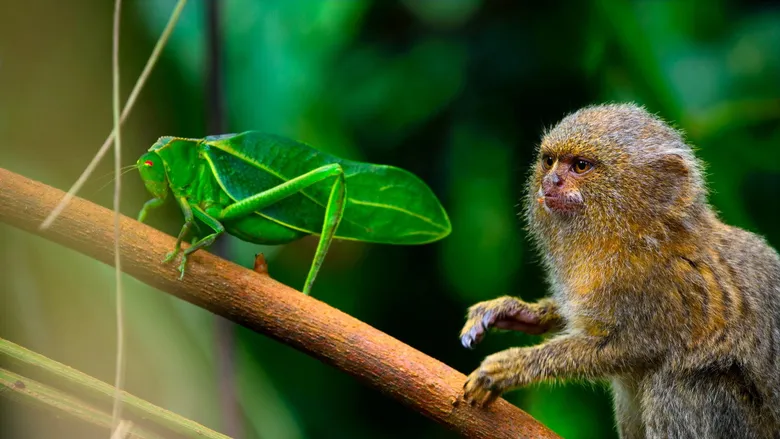
This documentary explores the African savannah from the point of view of its smallest animals, including an elephant shrew, a band of dwarf mongoose, a nesting crowned plover and a dung beetle. A narrator follows them through the seasons as the great wildebeest and zebra migration sweeps in, bringing both danger and opportunity. The small creatures forage, cooperate and defend their young against predators and trampling herds. By the end the migration moves on, the eggs hatch, the beetle wins a mate, and the mongoose welcome new recruits as life settles back to calm.

Season 1

2 episodes

Explore more

From this series Tiny World
By age 6 years
By platform Apple TV+

Just launched: free lifetime premium for the first 1,000 members to activate their account.

Create your account

Search by title, show, tag, or topic

We use functional cookies and Google Analytics to improve our site. Learn more