

Slowscreen SlowScreen
Toggle sidebar

Just launched: free lifetime premium for the first 1,000 members to activate their account.

Start free

Jungle

Sufficient

Recommended age Unlock

Co-watching from age 2

Balanced

Exact score locked

Watch on Apple TV+
Save
Jungle

Share

Pass this find on to another parent

Link preview

Tiny World: Jungle | Sufficient, co-watching from age 2

Tiny World: Jungle | Sufficient, co-watching from age 2 - Slowscreen

Sufficient · Co-watching from age 2. A narrator guides a journey through the rainforests of Latin America, following the smallest creatures as they survive amon...

slowscreen.com

https://slowscreen.com/en/series/tiny-world/s1/e2-jungle

https://slowscreen.com/en/series/tiny-world/s1/e2-jungle

Slowscreen

Tiny World: Jungle | Sufficient, co-watching from age 2 - Slowscreen

Sufficient · Co-watching from age 2. A narrator guides a journey through the rainforests of Latin America, following the smallest creatures as they survive amon...

Tiny World: Jungle | Sufficient, co-watching from age 2

slowscreen.com

Tiny World: Jungle | Sufficient, co-watching from age 2 - Slowscreen

Sufficient · Co-watching from age 2. A narrator guides a journey through the rainforests of Latin America, following the smallest creatures as they survive amon...

Tiny World: Jungle | Sufficient, co-watching from age 2
slowscreen.com

Tiny World: Jungle | Sufficient, co-watching from age 2 - Slowscreen

slowscreen.com · Posted by you

Tiny World: Jungle | Sufficient, co-watching from age 2 - Slowscreen

0 Share
Tiny World: Jungle | Sufficient, co-watching from age 2
To
Subject Tiny World: Jungle | Sufficient, co-watching from age 2

Sufficient · Co-watching from age 2. A narrator guides a journey through the rainforests of Latin America, following the smallest creatures as they survive amon...

https://slowscreen.com/en/series/tiny-world/s1/e2-jungle

Share on WhatsApp Share on X Share on Facebook Share on Telegram Share on Reddit Share on Email

See the exact scores

The review is yours to read. Create a free account to reveal the exact SlowScreen score and every pillar score.

Create free account
This program is well-balanced. It remains mostly easy to follow and process. It is a good fit for the recommended age. The pacing is fast. Images follow each other quickly, leaving little time to pause and take in what is happening. The sound is soft and supportive. The visuals are calm and well-organized.
The episode follows many small creatures in turn, so several parallel stories run alongside each other rather than one central thread, which asks the child to reset attention with each new animal. A loose spine does hold it together, with the strawberry dart frog opening and closing the journey and a falling tree linking several segments. Cause and effect is consistently clear: heavy rain tops up the tadpole pool, too much water weighs down the old tree, and its fall opens a gap that lets new seeds race for light. Each fact builds on the last in a logical order, even as the subject keeps changing.
The narration is warm and respectful toward every creature, framing the marmoset family's shared babysitting and a frog father guarding his eggs with genuine care. Tension does arrive through nature's realities: a snake eats the mother frog's exposed tadpole, a velvet worm traps its prey, and two frogs wrestle over territory. These moments are balanced by recovery, as the mother lays a fresh clutch, the father sees off his rival, and the film closes on renewal and new life. For a school-age viewer the emotional shifts are handled gently and rarely dwell on distress.
The survival challenges here are met through instinct rather than a visible process of thinking, trying, and adjusting, so a child sees animals act but rarely sees them reason through a problem step by step. There is still purposeful initiative on show: the frog mother sets out to find a safe nursery, the marmosets dig fresh sap wells when their tree is lost, and an orchid bee works out the single way to escape a flower. A few sequences even include a setback and a restart, as the mother frog begins again after losing her tadpole. The cause and effect behind each creature's choices is clear, but deliberate problem-solving stays in the background.
The narration is clear, well formed, and consistently informative, describing each animal in full sentences with accurate, purposeful words. The vocabulary is rich and stretches a school-age listener with terms like 'mimicry', 'specialist', and 'torrential', while the pictures on screen help carry the meaning. Almost everything spoken delivers information rather than filler, which keeps the language meaningful from start to finish. The only small stretch is a handful of plant names such as 'bromeliad' and 'Heliconia' that lean advanced.
Everything on screen is real, with genuine footage of real animals and a real rainforest, giving a strong and trustworthy window onto the natural world. The social patterns are recognizable too, from parents sharing the care of their young to siblings pitching in and rivals competing for space. The clear limitation for daily life is transferability: climbing a forty meter tree, gouging sap wells, or trapping prey are not actions a child can carry into their own play or routines. Its value lies in real-world knowledge and wonder about nature rather than directly imitable activities.

More information

This score shows how inclusively the series portrays diverse people, families and cultures. Scale: Limited → Varied → Rich → Inclusive.
This is a wildlife film about the jungles of Latin America, told by a single narrator with no people on screen at any point. Because there are no human characters, it offers no picture of people of different backgrounds, ages, bodies or family forms, and no human roles to share out. What it does show is a wide range of animals living alongside one another, including parents of both sexes caring for their young, such as the marmoset family where both parents and older siblings help, and the male dart frog guarding the eggs. Parents hoping to see human representation and varied social roles will not find them here, which reflects the nature-documentary format rather than a narrow or stereotyped portrayal of people.
This score shows whether the series stays close to everyday reality or leans into fantasy. Scale: Fantasy → Mixed reality → Realistic.
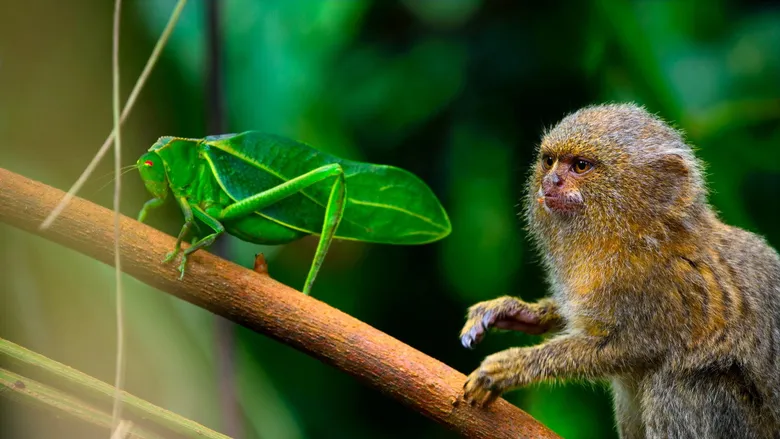
This is real wildlife footage of a Latin American jungle, so almost everything a child sees comes straight from nature: frogs, marmosets, hummingbirds and ants going about their lives. There is no villain and no good-versus-evil story; the tension comes from real situations such as predators hunting, storms toppling trees and animals competing for food and space. No magic or invented world appears, and the narrator's talk of 'tiny heroes' and 'superpowers' simply dresses up real animal abilities. For a child of this age, the honest, grounded look at jungle life is a comfortable fit.
This score shows how enjoyable the series is for parents watching along. Scale: Tedious → Tolerable → Pleasant → Enjoyable.
This nature documentary gives a watching adult plenty to enjoy. The narration carries dry wit and knowing references, and the close-up footage of tiny jungle creatures is genuinely absorbing. The story threads, a frog trying to raise her tadpole and a father guarding his eggs, hold real stakes that reach well beyond the youngest viewers. A calm narrator and rich natural soundscape make it easy company in the room.

Themes

Problem solving

Recurring

Creatures meet survival challenges, such as the frog finding a treetop pool for her tadpole.

Family

Recurring

Both marmoset parents share babysitting and older siblings pitch in with the twins.

Perseverance

Recurring

After her tadpole is eaten the mother frog starts again, and the father guards eggs for two more weeks.

Food

Recurring

Marmosets gouge sap wells, leafcutter ants harvest leaves, and hummingbirds lap nectar.

Growing up

Recurring

A tadpole grows in a bromeliad pool and ping-pong-ball-sized marmoset twins are raised by the troop.

Caregiving

Recurring

Frog and marmoset parents shelter, carry, and protect their young throughout.

Death

A snake eats the mother frog's exposed tadpole, with the narrator saying 'There's nothing the mother can do but start again.'

Mild violence

Predators capture prey, including a velvet worm trapping an insect in hardening strands and a margay hunting an agouti.

Scary scenes

A velvet worm stalks in silence and a caterpillar mimics a deadly snake, framed as 'the stuff of science fiction.'

Mild conflict

Two male strawberry dart frogs wrestle over territory in a fight that can last over half an hour.
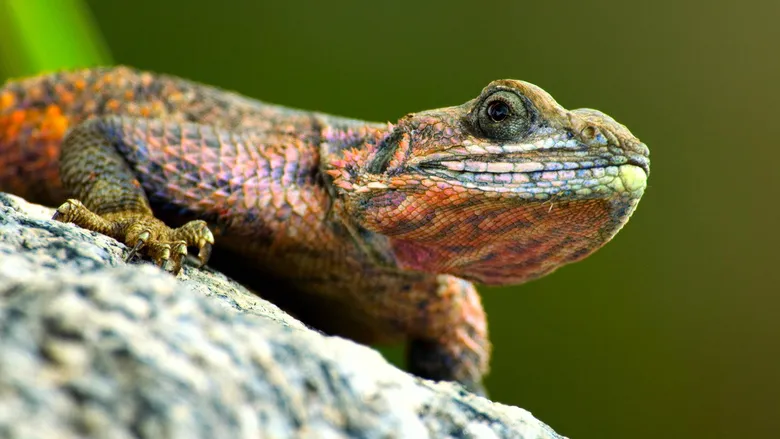
A narrator guides a journey through the rainforests of Latin America, following the smallest creatures as they survive among giant trees. A strawberry dart frog searches for a safe place to raise her tadpole, pygmy marmosets share the care of their young, and leafcutter ants, hummingbirds, an orchid bee, and a dung beetle each play their part. A great tree falls partway through, reshaping the forest and opening a gap for new life. The film closes on renewal, with the frog setting out again to raise the next generation.

Season 1

2 episodes

Explore more

From this series Tiny World
By age 6 years
By platform Apple TV+

Just launched: free lifetime premium for the first 1,000 members to activate their account.

Create your account

Search by title, show, tag, or topic

We use functional cookies and Google Analytics to improve our site. Learn more