









This program is well-balanced. It remains mostly easy to follow and process. It is a good fit for the recommended age.
The pacing is fast. Images follow each other quickly, leaving little time to pause and take in what is happening.
The sound is intense and continuously present.
The visuals are calm and well-organized.
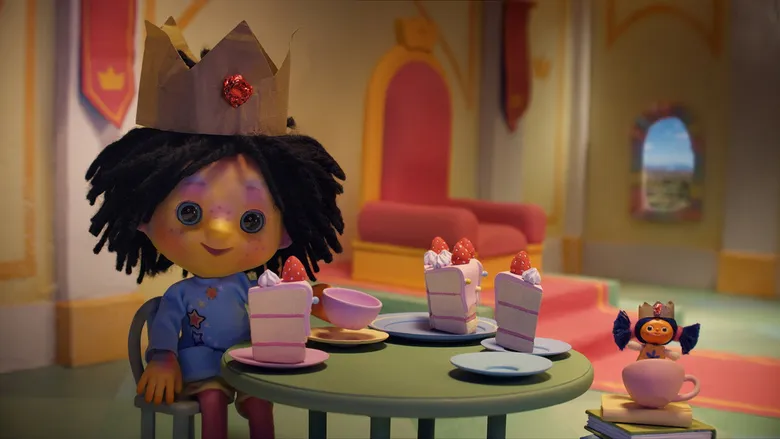
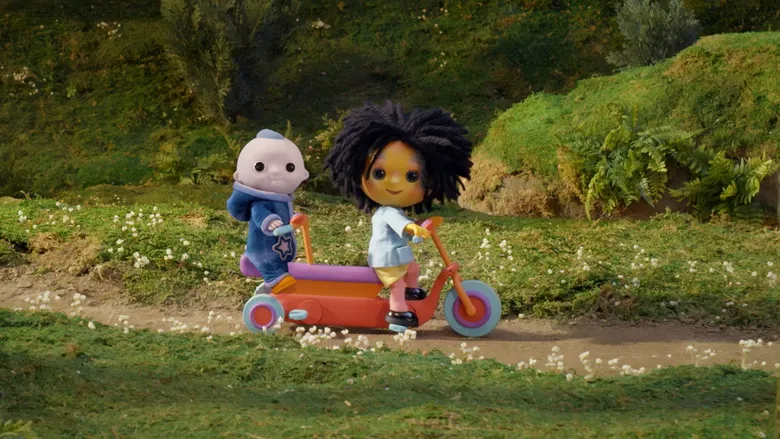
The episode keeps to one thread at a time and tells it in clear order: Pepi Nana writes a letter to the moon, Moon Baby arrives, the toys make up a story, and that story runs cleanly from the little princess setting off to her visit, the tea, the journey home, and the picture she draws. Very little new information arrives at once, which keeps it easy to follow for this age. Cause and effect is shown plainly, for example the doorbell is too high so the princess walks in under the gate. The one nuance is the story-within-a-story shape, which asks a little extra of the very youngest viewers to keep the frame and the inner tale apart.
This is one of the show's clear strengths. Voices stay soft, the characters are kind and attentive to each other, and there are no frightening or distressing moments anywhere in the episode. Exchanges model warmth and good manners, from 'oh my dears, how lovely to see you all' to the repeated 'thank you very much, that was lovely' at the tea table. The only small hurdle, the princess being too little to reach the doorbell, is met cheerfully and resolved on the spot, so the emotional tone stays even and reassuring from start to finish.
The pillar lands in the middle because the characters do show some self-started initiative but very little worked-through problem solving. Pepi Nana decides on her own to write to the moon, and the little princess decides to go visiting, which are genuine moments of motivation. There is one small visible piece of thinking when the princess finds the doorbell too high and chooses to walk in under the gate instead. What holds the score down is that most events simply unfold through the narrator's telling rather than through characters naming a problem, trying, and adjusting, so there is limited room for a child to follow a real chain of reasoning.
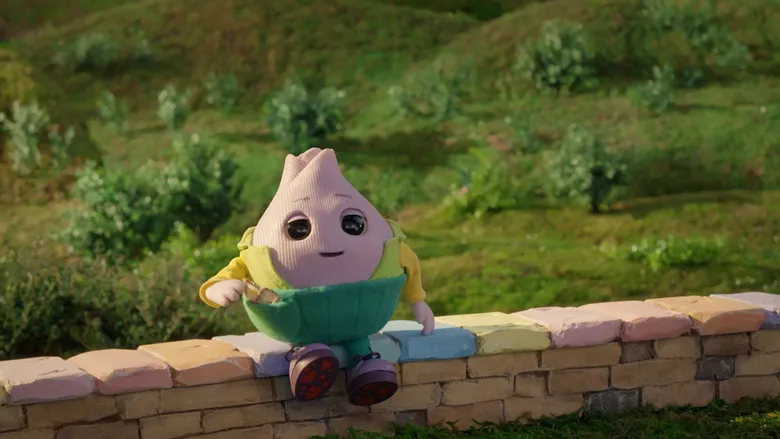
The language works in part for this age and falls short in part, which keeps it mixed. On the helpful side, much of it is simple, concrete, and repeated, with soothing refrains like 'hush-hush says the moon, it is time to go to sleep' and clear words such as tea, cake, crown, and castle. What holds the score down is the dreamlike, invented vocabulary woven through it, names like 'Pepi Nana' and 'Mr Onion' and playful nonsense such as 'tittle-tattle' and 'collywobbles', together with a soft, sometimes indistinct delivery that blurs meaning. Most of the spoken content is descriptive narration that carries the story rather than empty noise, which keeps it from scoring lower.
This pillar scores in the middle because the episode is mostly make-believe with only a thin thread back to everyday life. There are real-world anchors a toddler can recognise and copy, such as a bedtime routine, drawing a picture to remember a nice day, polite visiting, and pretend play that the toys themselves call 'pretend tea'. The social patterns are familiar and warm: arriving as a guest, being welcomed, sharing food, and saying thank you. What limits the value is that the bulk of the runtime is fantasy, with toys that come alive, a baby that floats down from the moon, and a make-believe princess kingdom, so much of what happens does not transfer directly to a young child's own world.
More information
This score shows how inclusively the series portrays diverse people, families and cultures. Scale: Limited → Varied → Rich → Inclusive.
This gentle bedtime show puts a brown-skinned doll, 'Pepi Nana', at its centre, and adds a human child with dark curly hair and a brown-skinned princess, so a range of faces feels like a natural part of its world. The leading role belongs to a girl who sets the action in motion, and a male character happily takes on the table-laying, which keeps everyday jobs from following predictable lines. The cast cooperates warmly and on an equal footing throughout. The clearest limits are that the world stays inside a toy house and a fantasy castle, so real-life family forms and varied everyday settings get little room, and the pretend play leans on classic princess and tea-party ideas.
This score shows whether the series stays close to everyday reality or leans into fantasy. Scale: Fantasy → Mixed reality → Realistic.
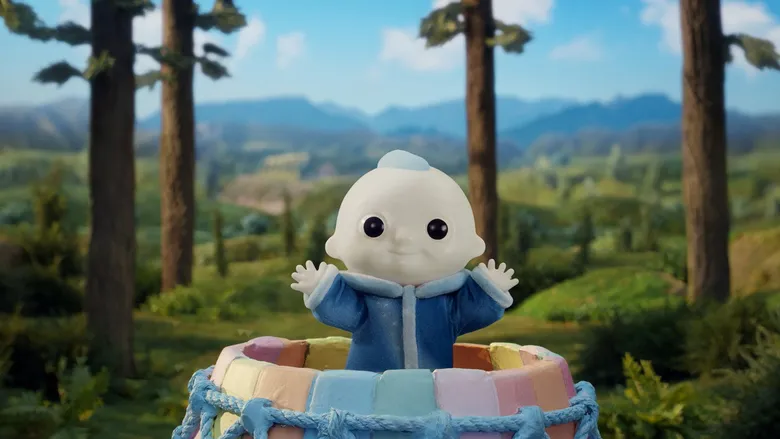
Children meet a calm bedtime world where the toys in a doll house wake only when Moon Baby arrives from the moon, then share tea and make up a story together. There is no villain and no hero-versus-villain conflict, so the small hitches, like a little princess too short to reach a doorbell, sort themselves out without anyone to fear. The imagined world keeps its own steady rules and even names its pretending out loud, telling viewers 'this is pretend tea.' The premise of living toys and a moon visitor is a touch more imaginative than a strictly realistic world, yet the slow, calm handling keeps it easy for a young child to follow.
This score shows how enjoyable the series is for parents watching along. Scale: Tedious → Tolerable → Pleasant → Enjoyable.
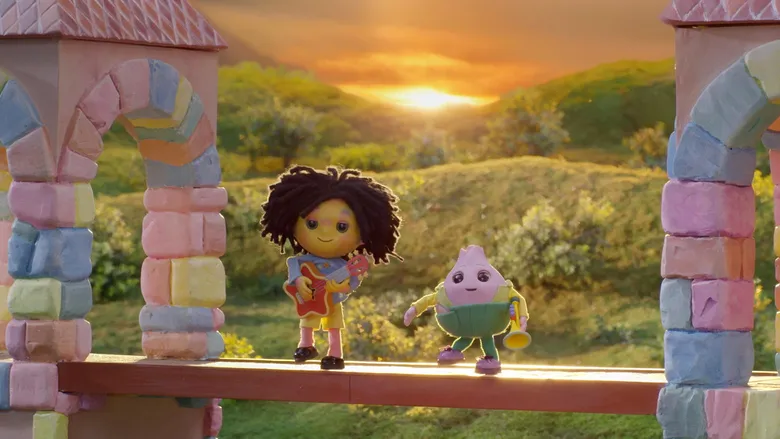
This is a calm, carefully made show that is easy for a parent to sit with. The craft stands out, with intricately built doll-house and storybook sets, soft lighting, and a warm orchestral score, and the gentle voices and unhurried pace make it a restful presence in the room. The nested story, where the toys imagine a little princess travelling to take tea with a big princess, gives an adult an actual thread to follow. The main limit for grown-ups is that the humor stays pitched at small children, so there is little wordplay or layered comedy aimed at the co-viewer.
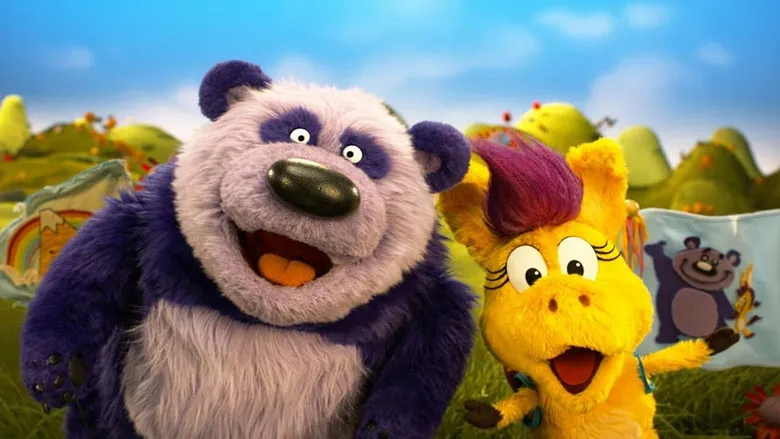
At bedtime, a child's toys come to life when Moon Baby floats down from the moon. Led by the doll Pepi Nana, the toys gather, try on big and little paper crowns, and make up a story about a little princess who walks over a hill, across a bridge and through a forest to visit a big princess for tea and cake. The little princess heads home and draws a picture to remember the day. Back in the toy house everyone shares pretend tea, waves goodnight to Moon Baby, and settles down to sleep.