















This program is well-balanced. It remains mostly easy to follow and process. It is a good fit for the recommended age.
The pacing is fast. Images follow each other quickly, leaving little time to pause and take in what is happening.
The sound is intense and continuously present.
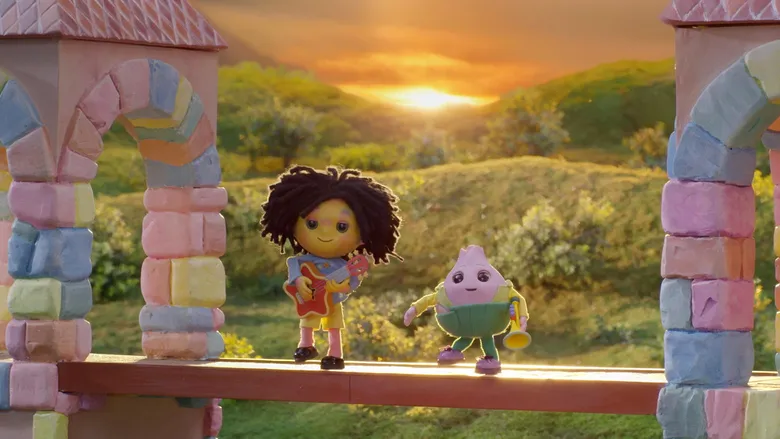
The visuals are calm and well-organized.
The episode follows one clear thread: Moon Baby comes to visit, the friends discover a nursery rhyme book, and Mr Onion turns it into the story of Old King Onion. Events arrive one at a time with a narrator guiding each step, so a small child can follow what is happening and why. Actions lead to sensible results, such as Pepi Nana's letter bringing Moon Baby down or the paper decoration making the king merry. The one extra layer to track is the story-within-a-story in Storyland, though the narrator frames it clearly enough to stay followable.
This is emotionally one of the safest programmes a toddler could watch. Voices stay soft and friendly, faces stay warm, and there is no fear, anger, or sadness to manage. The characters treat each other with kindness throughout, welcoming their visitor and celebrating each other's happiness, with lines like 'we like it when our friends are happy and merry.' When the smallest bump happens, King Onion bumping into a tree, it passes lightly with no distress and the friendly mood holds steady.
The friends take their own initiative to solve a gentle challenge: making King Onion as merry as can be. They decide to make something for him, then fold and tear paper into a decoration for his crown, showing a simple making process with a clear result, and Pepi Nana acts first by writing the letter that starts the whole visit. The small caveat is that the thinking stays light: there is little trying, failing, and adjusting, so this is more about a single good idea than a worked-through problem. For a two-year-old that is a reasonable level, but it keeps the pillar from scoring higher.
The narrator speaks in short, clear sentences with concrete words like onion, king, crown, and paper, which suits a two-year-old well, and the repeated nursery rhyme adds a comforting rhythm. The story language is used correctly and consistently. The main caveat is that a large share of the characters' own talk is playful babble, Mr Onion's 'onions onions' and Pepi Nana's 'tiddle toddle,' which carries feeling and rhythm but little actual information. So the clear language modelling comes mostly from the narrator rather than from the characters themselves.
Some of what happens here connects to a child's own day: writing a letter, making a paper decoration step by step, sitting down for tea, and settling into a bedtime routine with gentle good-nights, and the friendship and togetherness mirror real family and play life. What holds this pillar down is how much of the episode lives in fantasy: toys that come alive at night, a Moon Baby who flies down from the moon, a magical instrument, and a make-believe Storyland. For a two-year-old, that heavy imaginative framing limits how directly the content maps onto everyday life. The recognisable routines and warm social moments are real strengths, but they sit inside a mostly magical world.
More information
This score shows how inclusively the series portrays diverse people, families and cultures. Scale: Limited → Varied → Rich → Inclusive.
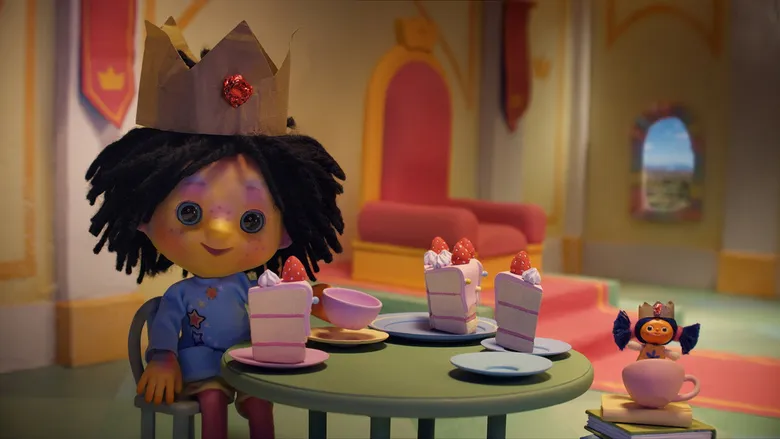
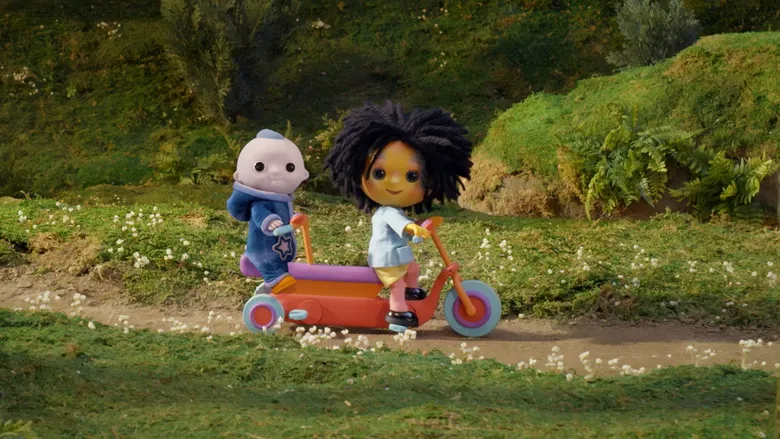
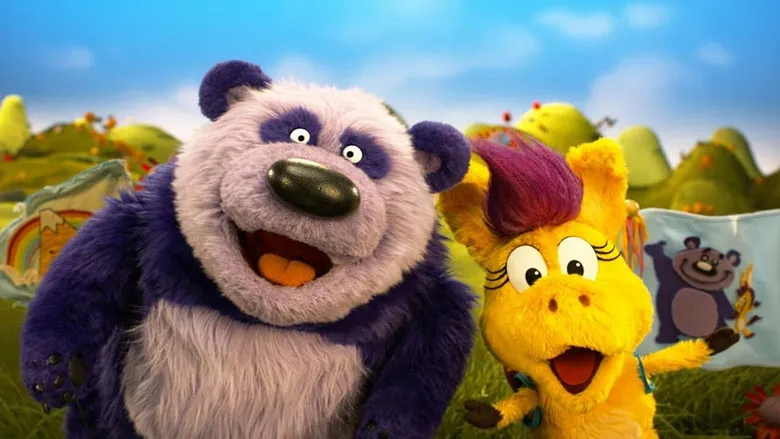
Moon and Me follows a 'family' of toys that come alive at night, led by Pepi Nana, a brown-skinned doll with natural afro hair who writes a letter to the Moon and sets the story going. The cast spans a wide range of toy shapes and skin tones, and the friends work together as equals, with the female lead taking the initiative while a visiting Moon Baby wakes the house with his music. The main limit is that almost every character is a fantasy toy living in one toy house and a single imagined meadow, so real-world variety like different families, ages and everyday settings stays mostly off screen. Across this toy world, characters of different appearances share the spotlight and the work fairly evenly.
This score shows whether the series stays close to everyday reality or leans into fantasy. Scale: Fantasy → Mixed reality → Realistic.
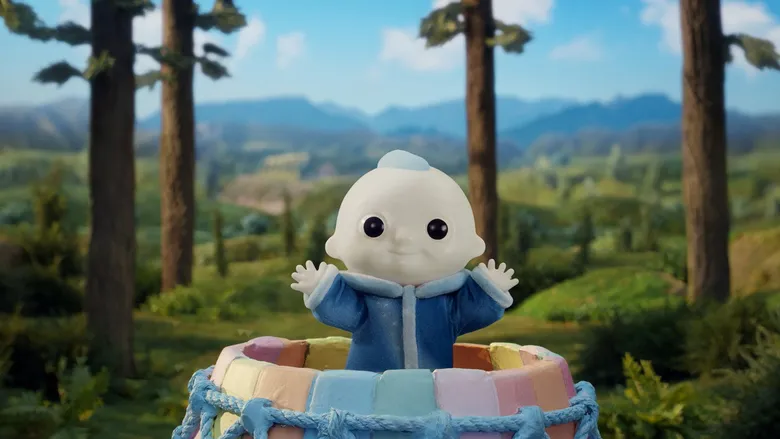
Moon and Me builds a calm world where toys in a toy house come to life when the moon shines, and a visitor called Moon Baby travels down from the moon to play. The everyday moments feel familiar to a small child, sharing tea, telling a story from a nursery rhyme book, and folding paper to make a decoration, even though the premise itself is imagined. There is no villain anywhere; the only gentle tension is helping King Onion feel merry, and the friends solve it together. The slow rhythm and soft bedtime close fit a two-year-old well.
This score shows how enjoyable the series is for parents watching along. Scale: Tedious → Tolerable → Pleasant → Enjoyable.
The production is the strongest part of the experience for a parent in the room, with soft lighting, detailed sets, and a calm musical score. There is a genuine story to follow, as Moon Baby visits the toys and Pepi Nana spins a tale about King Onion that ends on a warm note about friends. The voices stay gentle and the pacing is unhurried, so it sits easily in the background. The main limit for adults is that everything is pitched at very young children, with little layered humor, and the repeated babble talk can wear slightly over the full length.
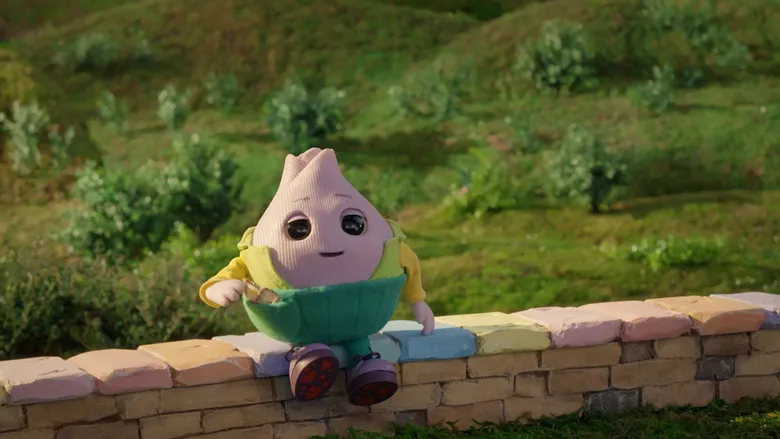
Pepi Nana, a doll who lives in the Little Toy House, writes a letter to the Moon, and Moon Baby flies down to visit and wakes the sleeping toys with a magical kalimba. The friends discover a nursery rhyme book about Old King Cole, which inspires Mr Onion to become 'Old King Onion.' In a make-believe Storyland the friends act out his story and fold and tear paper into a decoration for his crown to make him merry. They return to the toy house for tea, and the episode ends with each toy being wished good night.