















Slowscreen SlowScreen
Toggle sidebar

Just launched: free lifetime premium for the first 1,000 members to activate their account.

Start free

Monkey

Sufficient

Recommended age Unlock

Co-watching from age 3

Stimulating

Exact score locked

Watch on Prime Video
Save
Monkey

Share

Pass this find on to another parent

Link preview

The Hoobs: Monkey | Sufficient, co-watching from age 3

The Hoobs: Monkey | Sufficient, co-watching from age 3 - Slowscreen

Sufficient · Co-watching from age 3. The Hoobs, a group of large furry puppets, set out to discover what they could give a monkey to make it happy. Iver, Tula,...

slowscreen.com

https://slowscreen.com/en/series/the-hoobs/s1/e2-monkey

https://slowscreen.com/en/series/the-hoobs/s1/e2-monkey

Slowscreen

The Hoobs: Monkey | Sufficient, co-watching from age 3 - Slowscreen

Sufficient · Co-watching from age 3. The Hoobs, a group of large furry puppets, set out to discover what they could give a monkey to make it happy. Iver, Tula,...

The Hoobs: Monkey | Sufficient, co-watching from age 3

slowscreen.com

The Hoobs: Monkey | Sufficient, co-watching from age 3 - Slowscreen

Sufficient · Co-watching from age 3. The Hoobs, a group of large furry puppets, set out to discover what they could give a monkey to make it happy. Iver, Tula,...

The Hoobs: Monkey | Sufficient, co-watching from age 3
slowscreen.com

The Hoobs: Monkey | Sufficient, co-watching from age 3 - Slowscreen

slowscreen.com · Posted by you

The Hoobs: Monkey | Sufficient, co-watching from age 3 - Slowscreen

0 Share
The Hoobs: Monkey | Sufficient, co-watching from age 3
To
Subject The Hoobs: Monkey | Sufficient, co-watching from age 3

Sufficient · Co-watching from age 3. The Hoobs, a group of large furry puppets, set out to discover what they could give a monkey to make it happy. Iver, Tula,...

https://slowscreen.com/en/series/the-hoobs/s1/e2-monkey

Share on WhatsApp Share on X Share on Facebook Share on Telegram Share on Reddit Share on Email

See the exact scores

The review is yours to read. Create a free account to reveal the exact SlowScreen score and every pillar score.

Create free account
This program is stimulating. It actively demands attention and can feel intense. For the recommended age, this may be on the more intense side. The pacing is fast. Images follow each other quickly, leaving little time to pause and take in what is happening. The sound is soft and supportive. The visuals are busy, with a lot of movement and frequent changes.
One clear question runs through the whole episode: what could a Hoob give a monkey to make it happy. Every segment, from Roma's jungle reports to the visits to the Tiddly Peeps, feeds back into that single thread, so a child always knows what the characters are working towards. Events build in a recognisable order, each idea is tried and then ruled out for a stated reason before the next one, and actions lead to clear consequences. The one caveat is the thick layer of invented words sitting over the real facts, which can blur how much genuinely new information each part carries.
The mood stays warm and cheerful throughout, with the Hoobs encouraging each other and treating the whole quest as a kind way to thank a monkey. Strong feelings are rare and gentle: the saddest beat, when Teeny worries she will never make friends with the big tree monkeys, is resolved when a parrot invites her to the tea party. Characters behave consistently and kindly, with only light comic selfishness when Groove keeps eating the snacks. Shifts between feelings are smooth, so nothing lands as a jolt for a young child.
This is where the episode works best for a young child: the Hoobs set themselves a goal and visibly work towards it. They propose giving a tree, a game, monkey language, and a fur clean, test each idea, notice why it will not work, and keep going until they land on bananas. The drive comes from the characters themselves, sparked by Iver wanting to thank a monkey, rather than from any outside pressure. Children see a real chain of trying, evaluating, and adjusting modelled from start to finish.
The sentences are mostly short and clearly spoken, and the closing news recap usefully sums up everything the Hoobs discovered. The limitation is the dense layer of invented vocabulary, words like 'hooby chips', 'hubble dangler', and 'hoobapedia', plus a stretch of pure monkey gibberish, which carry little concrete meaning for a three-year-old still building real words. Useful language about monkeys, trees, food, and feelings is present, but it sits alongside a lot of playful nonsense and catchphrases. The everyday words a child can take away are diluted by the made-up ones.
The episode carries real knowledge about monkeys, helped by genuine footage of monkeys in the trees, real bananas, and groups of real children, and the story of Teeny moving to a new home and longing to make friends mirrors something many young children recognise. What limits the everyday value is the make-believe frame around it: the Hoobs, their world, and most of their objects are invented, so much of what happens cannot be copied directly off screen. A child can take away that monkeys live in trees, groom each other, and eat bananas, and could play at rolling or being a monkey. Still, the practical, do-it-yourself thread is thinner than the fantasy one.

More information

This score shows how inclusively the series portrays diverse people, families and cultures. Scale: Limited → Varied → Rich → Inclusive.
The familiar faces here are brightly coloured puppets, with most real human variety coming through the children who pop in to help answer questions, a group that includes different ethnic backgrounds and both boys and girls. A short animated tale adds a mother monkey settling into a new home with her young one, bringing in a caregiving relationship and the feeling of being somewhere new. Tasks and initiative are shared evenly across the cast, with adventure, humour and problem-solving spread around rather than tied to any one type. The diversity on show is genuine, though it leans on brief visitors more than on the returning characters.
This score shows whether the series stays close to everyday reality or leans into fantasy. Scale: Fantasy → Mixed reality → Realistic.
The Hoobs are invented puppet creatures with their own world and their own playful words, but the episode keeps anchoring itself in real life: actual monkey footage, real children, and facts a child can recognise like monkeys eating bananas and grooming each other. There is no villain anywhere; the story is driven by a friendly question rather than any conflict between good and bad characters. The invented world stays consistent from scene to scene, and the calm blend of imagination and real animal facts sits well for this age, with only the heavy stream of made-up words leaning slightly more fantastical than a mostly realistic mix.
This score shows how enjoyable the series is for parents watching along. Scale: Tedious → Tolerable → Pleasant → Enjoyable.
The episode keeps a watchable thread for an adult, built around a single question and capable puppet work, with a running gag of Groove sneaking the snack bag. Most of the humour and language aim squarely at small children, and the loud, crowded palette plus the repeated travelling song and squawked monkey talk ask some patience from a co-viewing parent. It is bearable company rather than a draw in its own right.

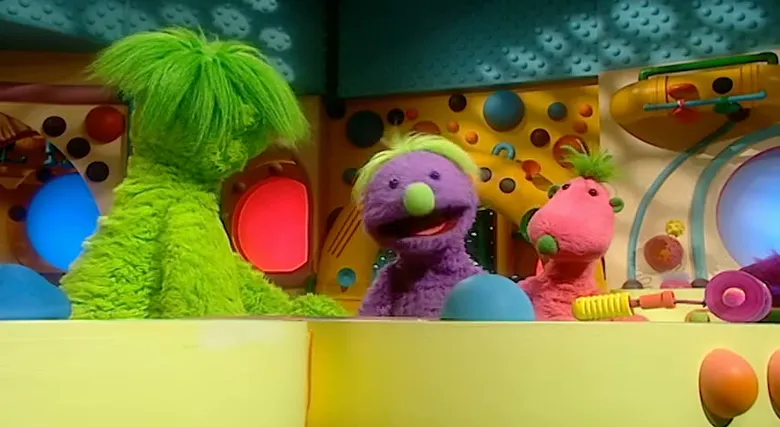
The Hoobs, a group of large furry puppets, set out to discover what they could give a monkey to make it happy. Iver, Tula, and Groove try one idea after another, a tree, a game, talking like a monkey, and cleaning its fur, while reporter Roma visits a real jungle and the group asks real children, the Tiddly Peeps, for help. Along the way they watch real monkeys and hear a story about a young monkey called Teeny who moves to a new jungle and longs to make friends. In the end they find that the answer is bananas and present everything they learned as a news report.

Season 1

5 episodes

The Hoobs
S01 E01

The Hoobs

Finding Out

Stimulating
recommended age Unlock co-watching from 3
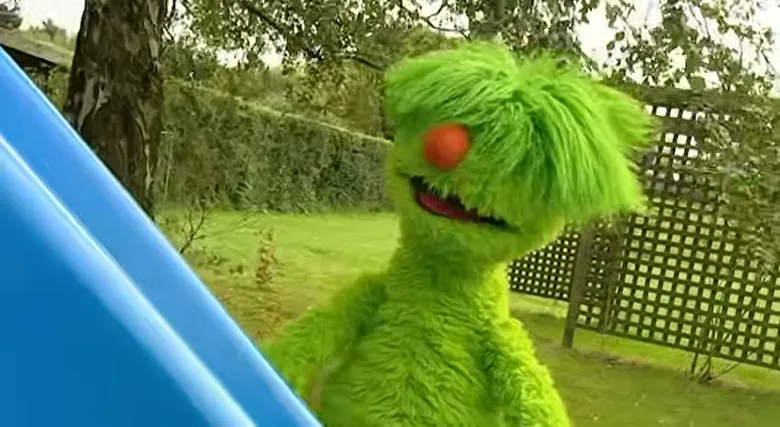
The Hoobs, a group of colourful puppets named Iver, Groove, Tula and Roma, are sent by Hubba Hubba to find out how children discover things. Travelling in their music-powered hoob mobile, they explore by playing, asking questions, testing a drink, reading a book and meeting a girl named Emma at her computer. Along the way they make a tart, build a squidgy model and share a story about an encyclopedia. They gather everything into a closing Hoob News report, concluding that children find things out the same way hoobs do.

The Hoobs
S01 E02

The Hoobs

Monkey

Stimulating
recommended age Unlock co-watching from 3
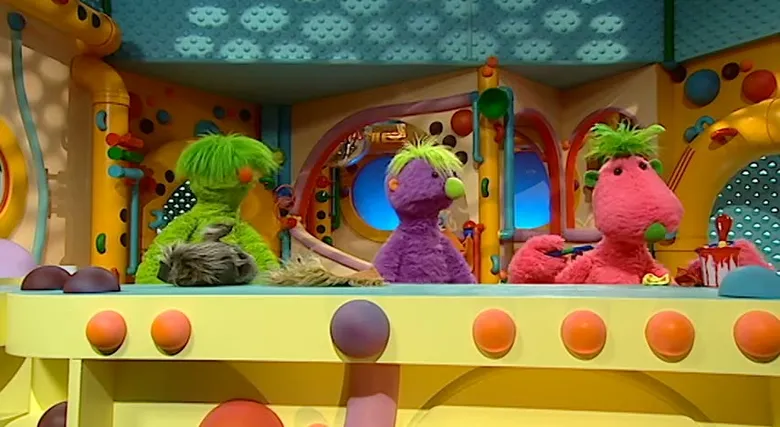
The Hoobs, a group of large furry puppets, set out to discover what they could give a monkey to make it happy. Iver, Tula, and Groove try one idea after another, a tree, a game, talking like a monkey, and cleaning its fur, while reporter Roma visits a real jungle and the group asks real children, the Tiddly Peeps, for help. Along the way they watch real monkeys and hear a story about a young monkey called Teeny who moves to a new jungle and longs to make friends. In the end they find that the answer is bananas and present everything they learned as a news report.

The Hoobs
S01 E03

The Hoobs

Hello

Stimulating
recommended age Unlock co-watching from 3
In the Hoobs' colourful world, Iver, Groove and Tula set out to answer one question: how do people say hello to a friend they are really pleased to see? They explore a dog's wagging tail, a queen's curtsy, a soldier's salute, a rugby haka, waving and handshakes, weighing each against their own cosy greeting, the hubble digger. Real children and a field report from Roma add everyday examples. In the end they decide that a hug is the warmest hello, and they share their findings on Hoob News.

The Hoobs
S01 E04

The Hoobs

Laughing

Stimulating
recommended age Unlock co-watching from 3
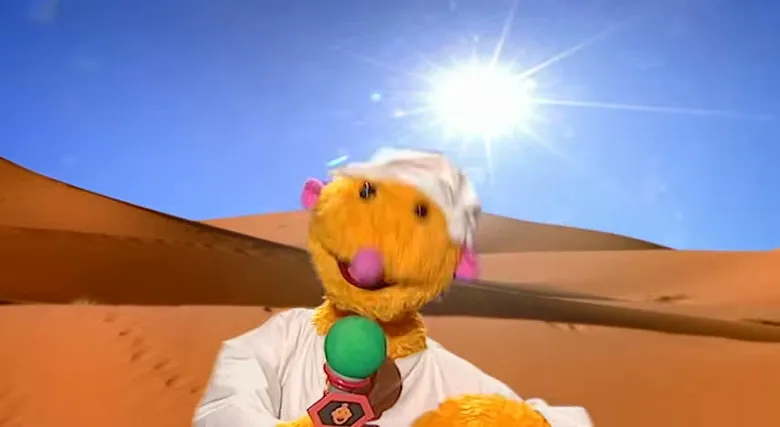
The Hoobs, large puppet characters, set out to answer one question: what makes both Hoobs and the real children they call tiddlypeeps laugh. From their colourful home they research on Hoobnet, hear a story about party objects, and drive out to visit children, testing jokes, a whoopee cushion, a party cracker and clowns, none of which works for everyone. In the end they discover that tickling makes both Hoobs and children laugh. They share the answer on their Hoob News broadcast.

The Hoobs
S01 E05

The Hoobs

Stars

Stimulating
recommended age Unlock co-watching from 3
In this episode of The Hoobs, four puppet friends, Iver, Tula, Groove and Roma, set out to answer one question: how can they get a star to hang in their Hoobmobile? They try to catch a falling star, learn from Roma that the sun is a star and that stars are far too hot to hold, and visit real children who show them how to catch and craft. After a story about a speck of light that learns to twinkle by being kind, the Hoobs make their own star and give it a sparkly twinkle, then present it on their 'Hoob News'. Iver ends the day by catching a falling star of his own.

Explore more

From this series The Hoobs
By age 3 years

Just launched: free lifetime premium for the first 1,000 members to activate their account.

Create your account

Search by title, show, tag, or topic

We use functional cookies and Google Analytics to improve our site. Learn more