







Slowscreen SlowScreen
Toggle sidebar

Just launched: free lifetime premium for the first 1,000 members to activate their account.

Start free

Laughing

Sufficient

Recommended age Unlock

Co-watching from age 3

Stimulating

Exact score locked

Watch on Prime Video
Save
Laughing

Share

Pass this find on to another parent

Link preview

The Hoobs: Laughing | Sufficient, co-watching from age 3

The Hoobs: Laughing | Sufficient, co-watching from age 3 - Slowscreen

Sufficient · Co-watching from age 3. The Hoobs, large puppet characters, set out to answer one question: what makes both Hoobs and the real children they call t...

slowscreen.com

https://slowscreen.com/en/series/the-hoobs/s1/e4-laughing

https://slowscreen.com/en/series/the-hoobs/s1/e4-laughing

Slowscreen

The Hoobs: Laughing | Sufficient, co-watching from age 3 - Slowscreen

Sufficient · Co-watching from age 3. The Hoobs, large puppet characters, set out to answer one question: what makes both Hoobs and the real children they call t...

The Hoobs: Laughing | Sufficient, co-watching from age 3

slowscreen.com

The Hoobs: Laughing | Sufficient, co-watching from age 3 - Slowscreen

Sufficient · Co-watching from age 3. The Hoobs, large puppet characters, set out to answer one question: what makes both Hoobs and the real children they call t...

The Hoobs: Laughing | Sufficient, co-watching from age 3
slowscreen.com

The Hoobs: Laughing | Sufficient, co-watching from age 3 - Slowscreen

slowscreen.com · Posted by you

The Hoobs: Laughing | Sufficient, co-watching from age 3 - Slowscreen

0 Share
The Hoobs: Laughing | Sufficient, co-watching from age 3
To
Subject The Hoobs: Laughing | Sufficient, co-watching from age 3

Sufficient · Co-watching from age 3. The Hoobs, large puppet characters, set out to answer one question: what makes both Hoobs and the real children they call t...

https://slowscreen.com/en/series/the-hoobs/s1/e4-laughing

Share on WhatsApp Share on X Share on Facebook Share on Telegram Share on Reddit Share on Email

See the exact scores

The review is yours to read. Create a free account to reveal the exact SlowScreen score and every pillar score.

Create free account
This program is stimulating. It actively demands attention and can feel intense. For the recommended age, this may be on the more intense side. The pacing is fast. Images follow each other quickly, leaving little time to pause and take in what is happening. The sound is soft and supportive. The visuals are busy, with a lot of movement and frequent changes.
One clear question drives the whole episode, what makes both Hoobs and children laugh, and it threads cleanly from start to finish through a series of attempts and a final answer. Events follow each other logically: an idea is raised, tried out, and judged before the next one begins, so the link between action and result is easy to follow. The main strain for a three-year-old is the sheer number of invented objects and words packed in, the hoobledangler, party cracker, whoopee cushion, clowns and Hubopedia, which can blur the thread. A running side gag about Groove and his plank adds a small second thread alongside the central question.
The emotional tone stays light and friendly throughout, built almost entirely on laughter, curiosity and gentle cooperation, with no fear, anger or real conflict to unsettle a young viewer. Characters support one another and behave consistently, asking for help and thanking each other warmly. Small frustrations, like Iver saying he is stuck or Groove fussing over his plank, stay mild and settle quickly. The one caveat is that Groove is repeatedly the target of light teasing about his plank, though it always reads as affectionate.
The whole episode models a visible problem-solving process: the Hoobs pose a question, guess at answers, test each one, notice it did not work, and try again until they land on tickling. The characters drive this themselves, taking the initiative to research, travel and experiment rather than being handed the answer. Each attempt has a recognizable shape, an idea followed by a try and an honest evaluation, which shows children that being wrong is just part of figuring something out. The reasoning is a little loose at times, since several attempts simply fail without much thought about why.
The spoken language is clear and well articulated, and the real sentences are mostly complete and easy to parse for a young listener. The limitation for a three-year-old is the thick layer of invented vocabulary, hoobledangler, tiddlypeeps, swingle swangle, hubopedia, which sits on top of the real words and does not carry over into everyday speech. A good deal of the talk is also expressive filler, repeated chants of 'why why why' and 'what what what' rather than information. When the characters do explain something, such as what a joke or a whoopee cushion is, the wording is concrete and understandable.
The episode is anchored in a fantasy world of puppet creatures and invented gadgets, which limits how directly a three-year-old can carry the activities into daily life. The core subject, what makes people laugh, is genuinely real, and the live-action clips of children laughing, playing and pulling party crackers ground it in recognizable experience. The closing discovery, that tickling makes everyone laugh, is something a child can try at home straight away. Familiar social patterns of friends asking questions and helping each other appear, but much of the on-screen action centres on imaginary objects with no offline use.

More information

This score shows how inclusively the series portrays diverse people, families and cultures. Scale: Limited → Varied → Rich → Inclusive.
The Hoobs follows a group of colourful puppet characters who investigate what makes people laugh, dipping into real footage of children at play. Those clips bring real variety, with boys and girls from different ethnic backgrounds sharing the screen, though family life, older people and a wider range of everyday settings stay in the background. Among the Hoobs, jobs like exploring, reporting and presenting the news are shared out across the cast rather than pinned to one character type. The picture stays steady throughout: an even spread of roles alongside human diversity that mostly appears as observational glimpses.
This score shows whether the series stays close to everyday reality or leans into fantasy. Scale: Fantasy → Mixed reality → Realistic.
The Hoobs are imagined puppet characters living in their own colourful world, but the episode stays anchored in real life by following real children and exploring everyday things like jokes, party crackers, whoopee cushions and tickling. No villain appears anywhere; the gentle tension comes from a friendly question about what makes people laugh and a running gag about Groove finding the right spot for his plank. The invented world keeps its own steady logic from start to finish. The balance of light fantasy and grounded real-world content sits comfortably for a young preschool audience.
This score shows how enjoyable the series is for parents watching along. Scale: Tedious → Tolerable → Pleasant → Enjoyable.
This episode gives an adult co-viewer a real through-line and a recurring plank gag that pays off at the end, carried by practiced puppetry, detailed sets, and original songs. Where it tires is the sensory side: exaggerated character voices, repeated chanting, and a heavily saturated palette that an adult in the room will notice. The plot stays light but holds together as the characters test one idea after another before landing on tickling as the shared answer. Solid as a piece of craft, with the loud, repetitive presentation as the main drawback.

Themes

Comedy

Central

The entire episode investigates what makes Hoobs and children laugh, ending on the discovery of tickling

Curiosity

Central

Iver repeatedly asks 'what makes tiddly peeps and hoobs laugh' and sets out to find the answer

Friendship

Recurring

The Hoobs work together and call on Roma and Hubba Hubba to help solve the question

Parties

Recurring

An animated story shows a paper chain, party blower and cracker getting ready for Lucy and Josh's party

The Hoobs, large puppet characters, set out to answer one question: what makes both Hoobs and the real children they call tiddlypeeps laugh. From their colourful home they research on Hoobnet, hear a story about party objects, and drive out to visit children, testing jokes, a whoopee cushion, a party cracker and clowns, none of which works for everyone. In the end they discover that tickling makes both Hoobs and children laugh. They share the answer on their Hoob News broadcast.

Season 1

5 episodes

The Hoobs
S01 E01

The Hoobs

Finding Out

Stimulating
recommended age Unlock co-watching from 3
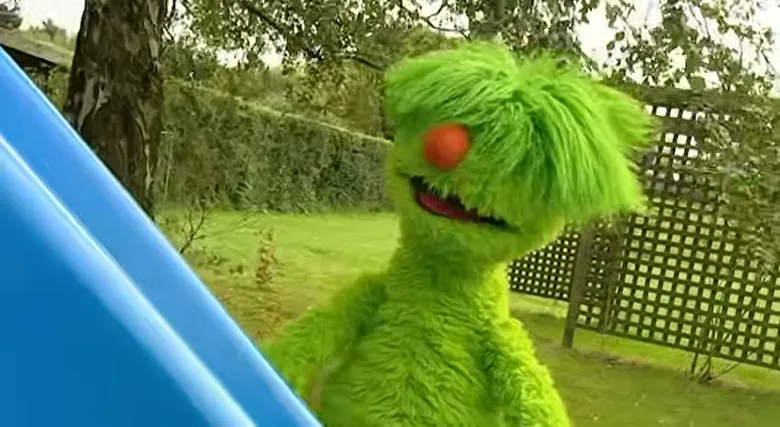
The Hoobs, a group of colourful puppets named Iver, Groove, Tula and Roma, are sent by Hubba Hubba to find out how children discover things. Travelling in their music-powered hoob mobile, they explore by playing, asking questions, testing a drink, reading a book and meeting a girl named Emma at her computer. Along the way they make a tart, build a squidgy model and share a story about an encyclopedia. They gather everything into a closing Hoob News report, concluding that children find things out the same way hoobs do.

The Hoobs
S01 E02

The Hoobs

Monkey

Stimulating
recommended age Unlock co-watching from 3
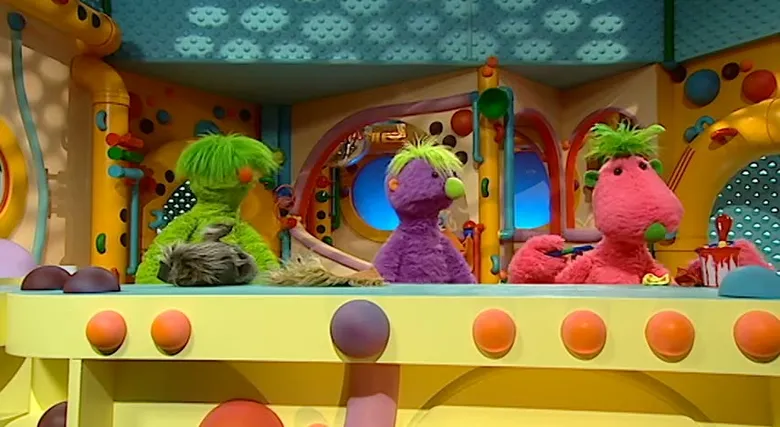
The Hoobs, a group of large furry puppets, set out to discover what they could give a monkey to make it happy. Iver, Tula, and Groove try one idea after another, a tree, a game, talking like a monkey, and cleaning its fur, while reporter Roma visits a real jungle and the group asks real children, the Tiddly Peeps, for help. Along the way they watch real monkeys and hear a story about a young monkey called Teeny who moves to a new jungle and longs to make friends. In the end they find that the answer is bananas and present everything they learned as a news report.

The Hoobs
S01 E03

The Hoobs

Hello

Stimulating
recommended age Unlock co-watching from 3
In the Hoobs' colourful world, Iver, Groove and Tula set out to answer one question: how do people say hello to a friend they are really pleased to see? They explore a dog's wagging tail, a queen's curtsy, a soldier's salute, a rugby haka, waving and handshakes, weighing each against their own cosy greeting, the hubble digger. Real children and a field report from Roma add everyday examples. In the end they decide that a hug is the warmest hello, and they share their findings on Hoob News.

The Hoobs
S01 E04

The Hoobs

Laughing

Stimulating
recommended age Unlock co-watching from 3
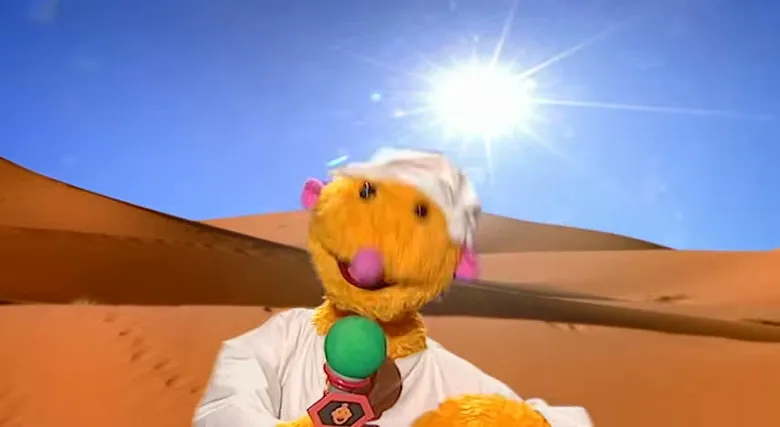
The Hoobs, large puppet characters, set out to answer one question: what makes both Hoobs and the real children they call tiddlypeeps laugh. From their colourful home they research on Hoobnet, hear a story about party objects, and drive out to visit children, testing jokes, a whoopee cushion, a party cracker and clowns, none of which works for everyone. In the end they discover that tickling makes both Hoobs and children laugh. They share the answer on their Hoob News broadcast.

The Hoobs
S01 E05

The Hoobs

Stars

Stimulating
recommended age Unlock co-watching from 3
In this episode of The Hoobs, four puppet friends, Iver, Tula, Groove and Roma, set out to answer one question: how can they get a star to hang in their Hoobmobile? They try to catch a falling star, learn from Roma that the sun is a star and that stars are far too hot to hold, and visit real children who show them how to catch and craft. After a story about a speck of light that learns to twinkle by being kind, the Hoobs make their own star and give it a sparkly twinkle, then present it on their 'Hoob News'. Iver ends the day by catching a falling star of his own.

Just launched: free lifetime premium for the first 1,000 members to activate their account.

Create your account

Search by title, show, tag, or topic

We use functional cookies and Google Analytics to improve our site. Learn more