
















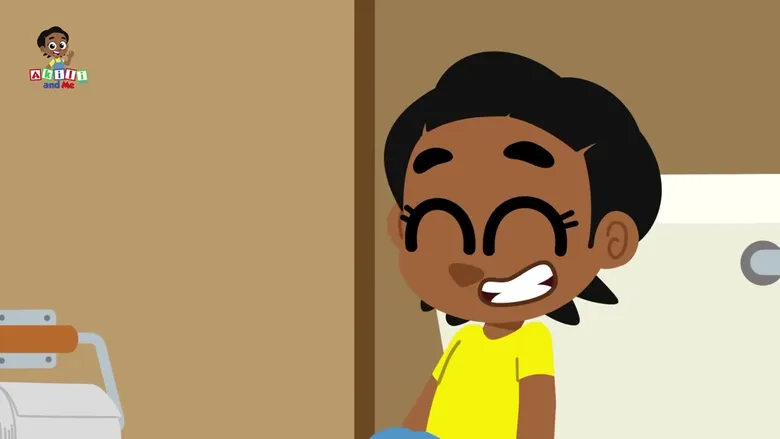
This program is well-balanced. It remains mostly easy to follow and process. It is a good fit for the recommended age.
The pacing is moderate. The story remains easy for a child to follow.
The sound is clearly present and regularly draws attention.
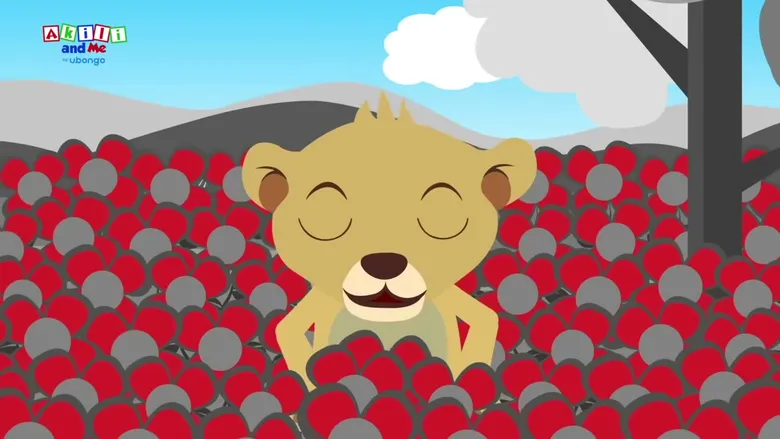
The visuals are calm and well-organized.
One clear goal runs through the whole episode: the wind has scattered letters off Lala Land's alphabet wall, and Akili and her friends set out to bring them back so people can read and write again. Events follow in order, from the bedtime opening, through the search for letters F, O and W, to a satisfying return home where Akili finally remembers the alphabet. Cause and effect stay clear throughout, since no letters means no reading and returning each one fixes the problem. The one small caveat is that the song segments sometimes cluster several new words together at once.
The tone stays warm and encouraging from start to finish. Akili's father is patient when she cannot recall the alphabet order, telling her she can finish 'tomorrow,' her mother gently calls her home, and the letter characters cheer each other with 'good job everyone' and 'well done everyone.' The only ripples of tension, the wind snatching a hat or a letter, are mild and settled within the same segment as each letter is found and returned. Emotional shifts stay gentle rather than sudden, with the small note that the wind moments arrive as brief 'uh-oh' surprises.
The narrator drives most of the problem-solving, telling the children where to look and announcing when each letter is found, so Akili and her friends mostly follow along rather than work things out themselves. The missing letters tend to reveal themselves instead of being reasoned toward, which leaves little visible thinking on screen. There is a genuine learning thread in the frame story, where Akili struggles with the alphabet order and finally writes it all out in the sand the next morning. Still, the quest is set in motion by outside events, and the solutions stay simple, mostly fetch a letter and put it back.
The language is clear and concrete, built around words a young child can picture: fruits, frogs, flowers, octopus, orange, watermelon and a watch. The narrator speaks in short, complete sentences and repeats key lines like 'without all the letters people won't be able to write and read books,' which reinforces meaning rather than padding. Most speech informs or instructs, with only light expressive moments such as 'uh-oh' and 'whoa.' The repeated phrasing occasionally runs a touch long for the youngest listeners, but it stays understandable.
The episode centres on a fantasy world of magical letters, talking letter characters and an underwater octopus, which sits well beyond everyday life for this age. Its real value lives at the edges: the alphabet song, naming familiar objects, and the closing scene where Akili practises writing letters in the sand, all of which a child can carry into daily play. The village home life, with a father teaching and a mother calling her in, offers recognizable family moments. Much of the middle, though, stays in imagination rather than connecting to things a young child does off screen.
More information
This score shows how inclusively the series portrays diverse people, families and cultures. Scale: Limited → Varied → Rich → Inclusive.
This learning video puts a young Black girl, Akili, and her African community at its center, a kind of representation that is often missing from children's media. She leads the story as a curious, capable learner, supported by a father who teaches her the alphabet at home and a mother who appears at the end, so initiative and caregiving are shared rather than fixed by gender. The cast stays within a single cultural frame, and other forms of difference, such as varied family forms or bodies, do not really appear. The personified letters all being called 'he' is a small recurring pattern, but overall roles and behavior are handled with a light, even hand.
This score shows whether the series stays close to everyday reality or leans into fantasy. Scale: Fantasy → Mixed reality → Realistic.
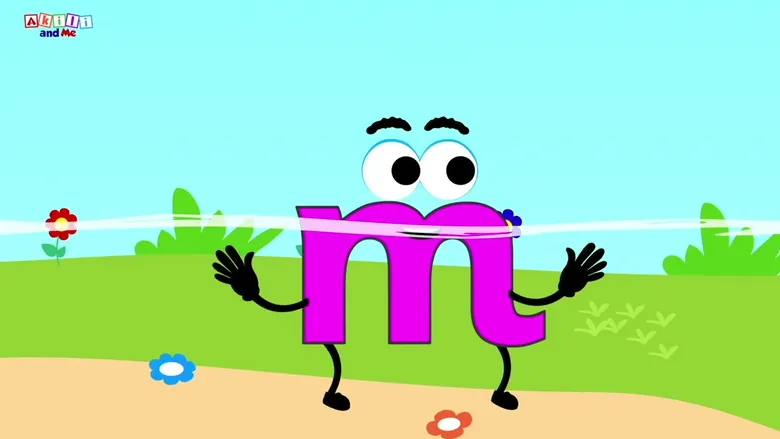
This episode wraps a recognizable everyday world around a magical core. It opens and closes with Akili learning her letters at home with her dad, being called in by her mother, and practicing writing in the sand outside her house, while the main adventure plays out in Lala Land, where letters come alive and a magical wall powers the books people read. There is no villain anywhere; the only obstacle is a playful wind that scatters the letters, so the children simply work together to put them back. The made-up world keeps its own clear logic from start to finish, though the heavy reliance on a full magical land sits a little above the mostly-realistic mix the youngest children in this age range usually settle into best.
This score shows how enjoyable the series is for parents watching along. Scale: Tedious → Tolerable → Pleasant → Enjoyable.
This alphabet adventure is built for the child in the room, with almost nothing aimed at an adult watching alongside. The dream-quest frame gives it a clear beginning and end, but the middle leans on a repeated letter-by-letter pattern and a refrain about books that returns many times. The flat savanna animation is clean and consistent, and the voices stay steady rather than shrill. For a parent it is an easy presence to sit through, though not one that offers much of its own.
Themes
Alphabet
Central
The whole episode is about returning missing letters F, O and W to Lala Land's alphabet wall.
Literacy
Central
The narrator repeats that 'without all the letters people won't be able to write and read books.'
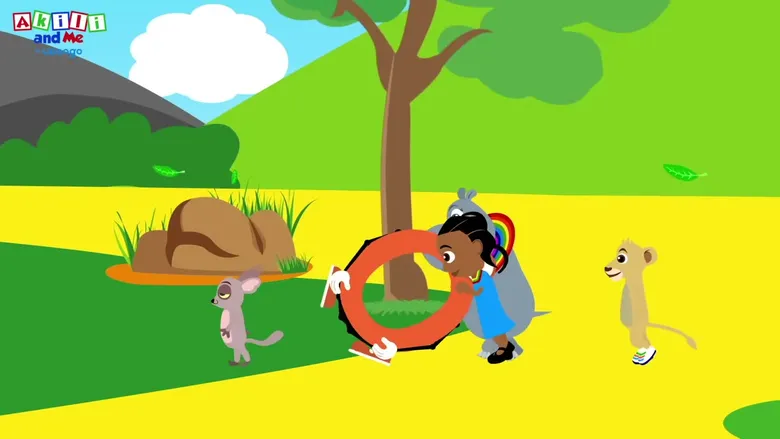
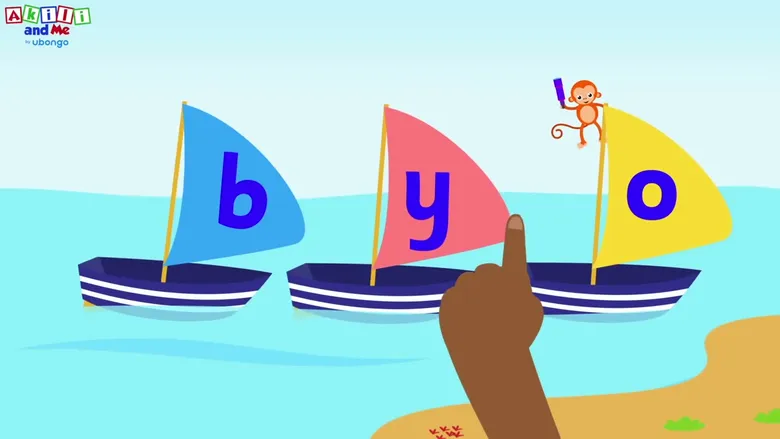
Akili, a young girl, cannot remember the order of the alphabet when her father teaches her at bedtime. That night she travels to the dream world of Lala Land, where the wind has blown letters off the alphabet wall, and she helps find letters F, O and W, each introduced through a song about words that begin with it. Once every letter is back in place, the wall is complete and people can read and write again. The next morning Akili practises writing the alphabet in the sand outside her home and remembers all of it.