















This program is stimulating. It actively demands attention and can feel intense. For the recommended age, this may be on the more intense side.
The pacing is fast. Images follow each other quickly, leaving little time to pause and take in what is happening.
The sound is intense and continuously present.
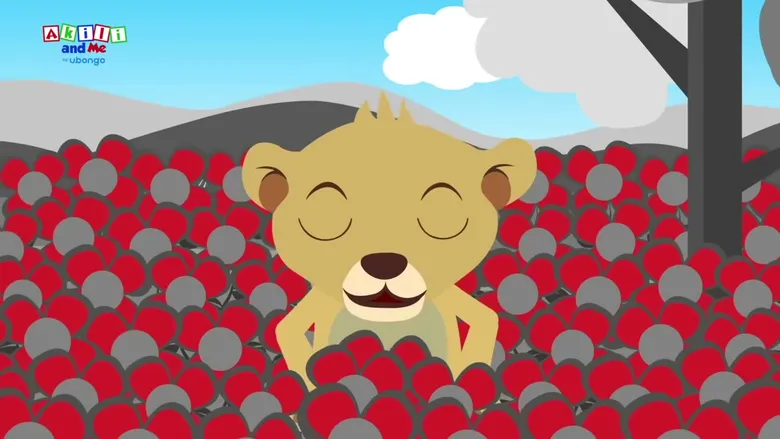
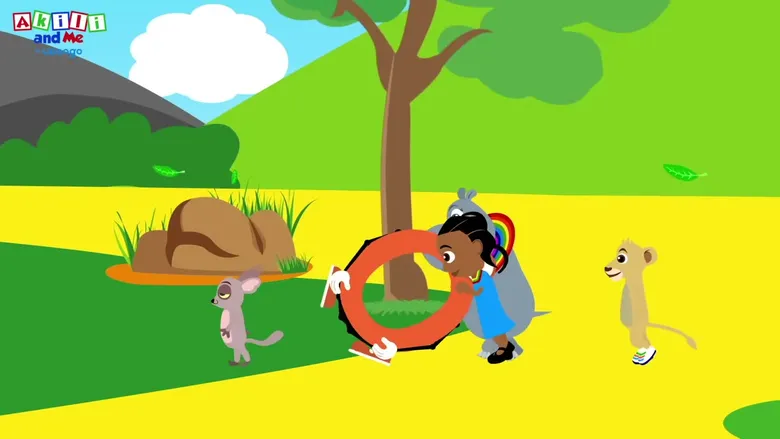
The visuals are calm and well-organized.
One clear thread runs from start to finish: Akili needs the toilet, uses it, cleans herself, and washes her hands. The events follow in a sensible order with a recognizable beginning, middle and reinforcement at the end, and each action leads to a predictable result, such as washing hands so she can play with friends afterwards. Because the same steps return in the song, little new information arrives at once, which keeps the sequence easy for a young child to follow. The looping structure does mean the storyline develops only lightly beyond the routine itself.
The mood stays warm and steady throughout. Akili's mother responds with patience and encouragement, praising her with 'good job my baby' and reminding her 'you can always do it yourself, but when you need help you can call me.' There is no frightening or tense content, and the small need that opens the episode is met calmly and resolved right away. Feelings move smoothly from one moment to the next without sudden switches, with the only caveat that the praise and reassurance follow a fairly fixed pattern.
Akili practises the routine herself after her mother sets the challenge to 'try to do it all by yourself today,' so there is a visible sense of a child becoming more capable. The steps she follows are meaningful and connected, going to a clean toilet, taking her time, cleaning herself, and washing her hands, and the reasons are spelled out, like staying clean so she can play later. Most of the thinking, though, is supplied by the instructional song and her mother rather than worked out by Akili, so there is little trial, mistake or independent figuring-out. The task is met by following directions rather than by solving a genuine problem.
The language is concrete and well matched to a young child, with short clear lines such as 'I wash my hands with soap and water so I can play with my friends later.' Almost everything spoken carries information or instruction rather than empty exclamations, and the repeated refrain reinforces the same useful words: toilet, clean, wash, hands. Sentences are mostly complete and the vocabulary stays stable and correct across the episode. Some of the sung lines are a little harder to make out, which slightly softens an otherwise strong fit.
This episode connects directly to a young child's daily life. Everything shown can be copied straight away with familiar things: using a clean toilet, wiping, and washing hands with soap and water. The setting is a real home, and the relationship at its centre, a mother guiding her child through a daily routine, mirrors situations children know well. Each action has a clear, practical purpose, which makes the content easy to carry from the screen into real life.
More information
This score shows how inclusively the series portrays diverse people, families and cultures. Scale: Limited → Varied → Rich → Inclusive.
Akili and Me places a girl and her mother at the heart of an everyday African home, a setting and cast that widen the picture of family life children usually see on screen. Within this single story the range of people stays narrow, built around one child, her mother and a few briefly seen playmates from the same background. Roles are handled warmly and without heavy cliches, though caregiving and teaching fall to the mother alone, with no other adults present. The result carries real value in its cultural setting while staying limited in the breadth of people and relationships it shows.
This score shows whether the series stays close to everyday reality or leans into fantasy. Scale: Fantasy → Mixed reality → Realistic.
This episode stays grounded in everyday life: a child learns to use the toilet, clean up afterward, and wash hands with soap and water, with a mother nearby to help. There is no villain and no magic, so the only challenge is the ordinary one of learning a new skill. The home setting matches what a young child sees every day, which makes each step easy to follow and copy. For a three-year-old, this practical, real-world focus is a close fit.
This score shows how enjoyable the series is for parents watching along. Scale: Tedious → Tolerable → Pleasant → Enjoyable.
This is a single-topic hygiene song built for the youngest children, with almost nothing layered in for an adult sharing the couch. The story stays thin, repeating the same toilet routine and refrain again and again, though a small thread of a child learning to manage on their own runs underneath. The looping refrain is the main thing an adult will notice, while the voices stay calm and the colours are easy on the eyes. The clean, consistent animation is the strongest part of the experience for a watching parent.
Themes
Hygiene
Central
The episode follows Akili using a clean toilet, cleaning herself, and washing her hands with soap and water.
Self care
Central
Akili learns to carry out her own toilet routine from start to finish.
A young child named Akili learns the steps of using the toilet and washing her hands, guided by her mother at their village home. Through a repeated song she goes to a clean toilet, takes her time, cleans herself, and then washes with soap and water. Her mother encourages her to do it on her own and praises her when she succeeds. The episode ends on a branding screen for the Akili and Me and Ubongo Playroom app.