


















This program is well-balanced. It remains mostly easy to follow and process. It is a good fit for the recommended age.
The pacing is calm. A child has time to watch and understand what is happening.
The sound is intense and continuously present.
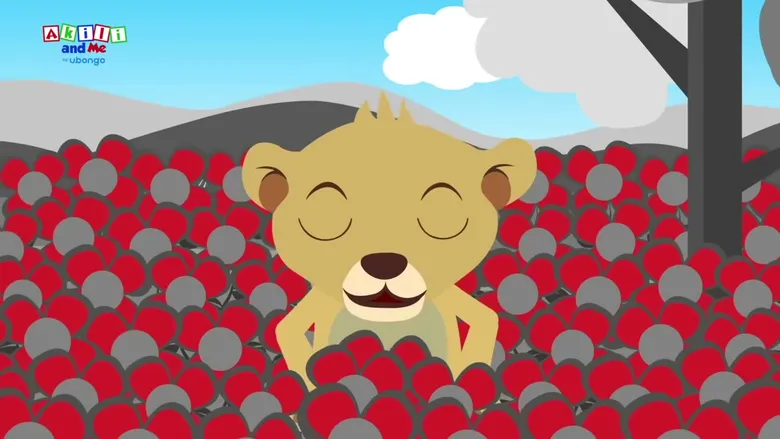
The visuals are calm and well-organized.
One simple thread carries the whole story: the letter M has lost his mama and sets off to find her. Events arrive one at a time and follow clearly, from tracing the letter, to choosing a path, crossing a stream, climbing hills, and knocking on the right door. Each step links to the next in a way a young child can follow, and actions lead to predictable results, like stepping on the M stones to make it across the water. The only soft spot is that the channel message and a closing song sit apart from the main story.
Feelings stay gentle and well held. The letter M cries because he misses his mama, and the upset is met right away with comfort, as the narrator invites children to help wipe his tears and promises they will find her together. Warmth and reassurance run through every interaction, with no mocking and no nagging, and the story ends in a happy reunion and a shared meal. Emotional shifts move from sadness to hope to joy without any jarring switches.
The narrator does most of the thinking aloud, posing each question and pointing the way, so the figuring-out is heavily guided rather than discovered. Children are invited to take part by choosing the path shaped like M or the door marked with the letter, which gives a small taste of solving a problem. The overall goal, reuniting M with his mama, is set by the situation rather than chosen by the character, and each puzzle resolves in one straightforward move. There is a recognizable logic, matching the letter shape to find the right way, but little visible trial, error, or self-correction.
The language fits a young preschooler well: short, clear sentences built from concrete words, such as 'we start at the top, then we go down, and back up.' The narrator speaks slowly and articulately and repeats key phrases so the meaning lands. Most of the talk does a real job, giving directions, describing what is happening, or asking a question, with only light filler like 'yay' or 'mmm.' The steady repetition of the tracing instructions reinforces the message rather than padding it.
Most of what happens lives in an imaginary world of talking letters, rainbow paths, and magical streams, so little of the adventure maps onto a child's everyday life. The strongest real-world thread is the letter learning itself: tracing M in the air with a finger and sounding out 'mmm' are things a child can copy off screen. Family moments also feel familiar, missing a parent, a warm welcome home, and sharing a meal that mirror real relationships. Still, the heavy fantasy framing limits how much of this carries over into daily play and routines.
More information
This score shows how inclusively the series portrays diverse people, families and cultures. Scale: Limited → Varied → Rich → Inclusive.
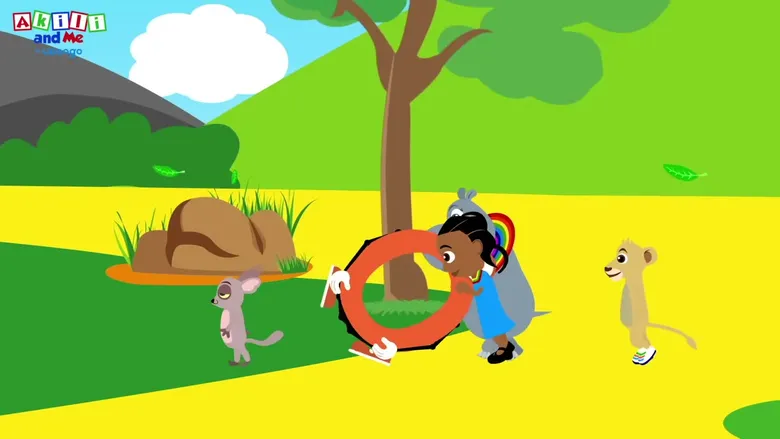
This episode sits in a warmly drawn African world, where a Black girl named Akili and, in its closing moments, real Black children appear around an animated letter's journey home. Centring an often under-represented community as the self-evident norm feels natural rather than token, which is the main strength here. The human cast itself stays small and draws from one cultural background, since most of the runtime belongs to the letters rather than to people. The parent figure, Mama M, falls into the familiar role of the mother who cooks and waits at home, though feelings are handled openly, with the little letter free to cry and be comforted.
This score shows whether the series stays close to everyday reality or leans into fantasy. Scale: Fantasy → Mixed reality → Realistic.
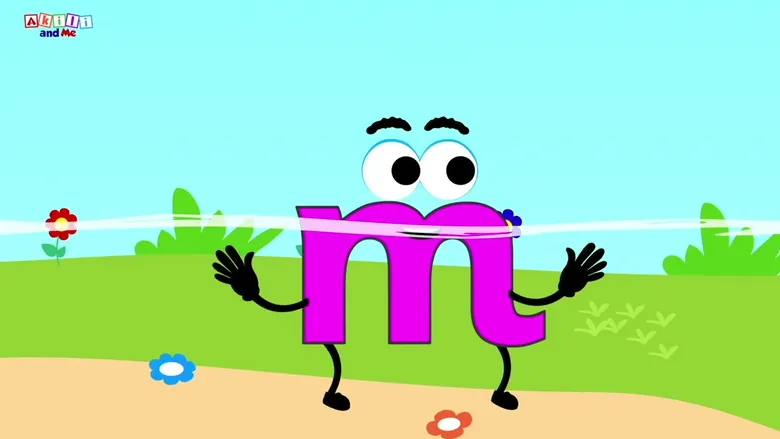
This alphabet story follows a friendly Letter M who misses his mama and sets off to find her, with children invited to trace, point, and cheer him along the way. There is no villain at all; the gentle tension comes only from a sad feeling and small challenges like crossing a stream on stepping stones, and it resolves in a warm reunion and shared meal. The imaginary world of living letters leans more fantastical than purely realistic, yet its internal logic stays consistent and the emotions at its heart are ones a young child knows well. For this age the mix lands well, with the small caveat that the premise is more imaginative than everyday.
This score shows how enjoyable the series is for parents watching along. Scale: Tedious → Tolerable → Pleasant → Enjoyable.
This is an alphabet teaching episode where the letter M, missing his mama, sets off on a short journey while children are asked to point at the right letter and trace its shape. It is built squarely for the youngest viewer, so there is little for an adult sitting alongside, and the heavy repetition of the letter and the tracing rhyme wears thin for grown-up ears. The simple journey to reunite with mama gives a thread to follow, but most of the runtime is pointing and tracing drills rather than story. The vector animation is clean and the narrator stays calm, though the look is basic and the closing stretch tacks on screen-recorded subscribe and search instructions.
Themes
Alphabet
Central
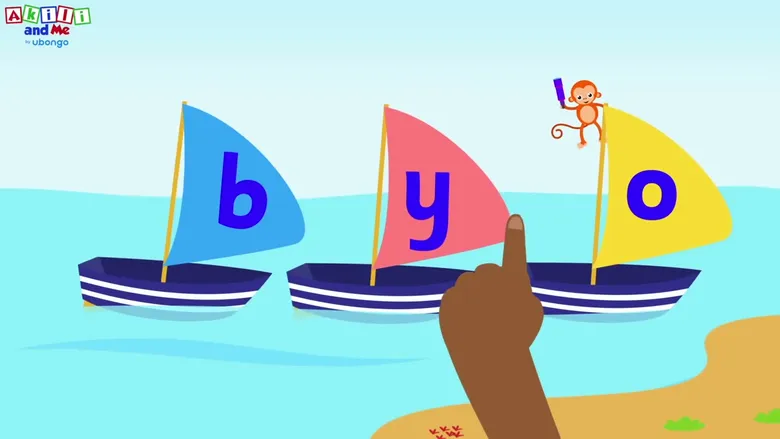
The whole episode teaches the letter M, tracing its shape and sounding out 'mmm.'
A personified letter M is sad because he has lost his mama, and a friendly narrator invites children to help him find her. Together they trace the letter M, choose the path shaped like M, cross a stream on M stones, and climb hills to the house marked with M. Letter M is reunited with Mama M, who shares her cooking, and the friends take the leftovers to share with the other letters. The episode closes with a channel subscribe message, a credits roll, and a short song featuring Akili and her animal friends.