

Slowscreen SlowScreen
Toggle sidebar

Just launched: free lifetime premium for the first 1,000 members to activate their account.

Start free

Music Song

Mediocre

Recommended age Unlock

Co-watching from age 6

Overstimulating

Exact score locked

Watch on Netflix
Save
Music Song

Share

Pass this find on to another parent

Link preview

Cocomelon: Music Song | Mediocre, co-watching from age 6

Cocomelon: Music Song | Mediocre, co-watching from age 6 - Slowscreen

Mediocre · Co-watching from age 6. A teacher and a group of young children in a bright music classroom learn the solfège notes, do, re, mi, fa, so, la, ti, do,...

slowscreen.com

https://slowscreen.com/en/series/cocomelon/s1/e17-music-song

https://slowscreen.com/en/series/cocomelon/s1/e17-music-song

Slowscreen

Cocomelon: Music Song | Mediocre, co-watching from age 6 - Slowscreen

Mediocre · Co-watching from age 6. A teacher and a group of young children in a bright music classroom learn the solfège notes, do, re, mi, fa, so, la, ti, do,...

Cocomelon: Music Song | Mediocre, co-watching from age 6

slowscreen.com

Cocomelon: Music Song | Mediocre, co-watching from age 6 - Slowscreen

Mediocre · Co-watching from age 6. A teacher and a group of young children in a bright music classroom learn the solfège notes, do, re, mi, fa, so, la, ti, do,...

Cocomelon: Music Song | Mediocre, co-watching from age 6
slowscreen.com

Cocomelon: Music Song | Mediocre, co-watching from age 6 - Slowscreen

slowscreen.com · Posted by you

Cocomelon: Music Song | Mediocre, co-watching from age 6 - Slowscreen

0 Share
Cocomelon: Music Song | Mediocre, co-watching from age 6
To
Subject Cocomelon: Music Song | Mediocre, co-watching from age 6

Mediocre · Co-watching from age 6. A teacher and a group of young children in a bright music classroom learn the solfège notes, do, re, mi, fa, so, la, ti, do,...

https://slowscreen.com/en/series/cocomelon/s1/e17-music-song

Share on WhatsApp Share on X Share on Facebook Share on Telegram Share on Reddit Share on Email

See the exact scores

The review is yours to read. Create a free account to reveal the exact SlowScreen score and every pillar score.

Create free account
This program is highly stimulating. It may be difficult to calmly process everything. For the recommended age, this can feel clearly intense. The pacing is fast. Images follow each other quickly, leaving little time to pause and take in what is happening. The sound is intense and continuously present. The visuals are busy, with a lot of movement and frequent changes.
The episode keeps a single focus throughout, learning the solfège notes and using them to sing, so there are no competing threads to follow. It builds in a recognizable way, first naming the notes, then trying them out on 'Mary Had a Little Lamb', then circling back to the same chorus, and the heavy repetition keeps the amount of new information low and easy to take in. The clear limitation is that there is almost no story and little cause and effect beyond the simple idea that 'when you put them together they make a song'. A child can follow what happens but is rarely shown why one thing leads to another.
The mood stays warm and friendly from start to finish, with the teacher cheering the children on and everyone singing together. Nothing frightening or sad happens, there are no sudden mood swings, and the one small challenge, 'Let's try it faster', lands gently and ends in praise ('Yay! Great job!'). Because the feeling never dips, there is nothing distressing for a child to recover from. The only small caveat is that the emotional pitch stays bright and excited the whole way through, with little variation in feeling.
The episode gives a child almost nothing to figure out. There is no problem to solve and no goal that calls for trying, failing and adjusting; the teacher leads every step and the children follow by copying her. The closest thing to a challenge, singing the notes faster, is simply demonstrated and rewarded rather than worked through. Initiative and reasoning stay entirely with the adult, so a young viewer watches and imitates instead of thinking something through.
The spoken parts use short, clear sentences with concrete words, such as 'These are the notes that we can bring together to make a song.' Much of the soundtrack, though, is made of repeated note syllables (do, re, mi, fa, so, la, ti, do) rather than full sentences, so the share of meaningful, complete language stays limited. The note names are used consistently and the teacher's instructions are easy to follow, which helps. The musical idea of named notes is also a fairly abstract concept to hang a two-year-old's language learning on.
The setting is an everyday music classroom with children and a teacher, which a child will recognize, and singing along, clapping and jumping are all things a child can copy at home. Learning to name and sing notes carries a real, practical purpose. The limitation is that the activity stays fairly abstract, with a lot of singing the same scale rather than building toward a finished result a child can repeat step by step. The group lesson reflects a familiar real-world situation, but the episode does more chanting than doing.

More information

This score shows how inclusively the series portrays diverse people, families and cultures. Scale: Limited → Varied → Rich → Inclusive.
This music lesson brings together a visibly mixed group of preschoolers who sing and dance as equals, with different ethnic backgrounds present as a natural part of the scene rather than as background extras. Boys and girls share the same activity and the same energy, and no child is sidelined or slotted into a stereotyped role. The breadth is real but contained. The whole episode stays in one classroom, so family forms, varied ages and different ways of living are not shown. For its simple sing-along format, it offers a welcoming and balanced picture of children together.
This score shows whether the series stays close to everyday reality or leans into fantasy. Scale: Fantasy → Mixed reality → Realistic.
This episode sits firmly in everyday life: a teacher and a group of children learn the musical notes together in an ordinary classroom. There is no villain and no conflict between characters, only the shared goal of singing the scale do, re, mi and trying a familiar tune faster. Bright note graphics serve as teaching aids rather than magic, so nothing pulls the world away from what a young child already knows. The realistic, musical mix is a comfortable fit for a two-year-old.
This score shows how enjoyable the series is for parents watching along. Scale: Tedious → Tolerable → Pleasant → Enjoyable.
The production itself is polished, with clean 3D animation and a clear sound mix that keeps the singing front and centre, so as craft it is easy on the eyes and ears. For a watching adult, though, there is little to hold onto: no humour or layered jokes, and the structure is a looped music lesson rather than a story to follow. The repeated refrain and loud, saturated colours add some background irritation, kept in check by voices that stay sweet rather than shrill. It works as something to put on for a toddler, but offers the grown-up in the room mostly polished wallpaper.

Themes

Learning

Recurring

The teacher leads the class in learning to name and sing the musical notes step by step.

School

Recurring

The action takes place in a classroom with small tables, chairs and a teacher leading a group of children.

Continuous stimulation

Upbeat music, singing and movement run nonstop from the title card to the final chorus with no quiet pauses.

Fast pacing

The picture cuts frequently between angles and characters across the song with rising pace toward the middle.

Repetitive content

The chorus 'These are the notes that we can bring together... Let's all jump and sing along' and the note scale repeat many times.

A teacher and a group of young children in a bright music classroom learn the solfège notes, do, re, mi, fa, so, la, ti, do, with a large colorful note wheel that lights up each one. They sing the scale together, then use the notes to sing 'Mary Had a Little Lamb', first slowly and then faster. The teacher praises the children, and the episode closes by repeating the main song about putting notes together to make a song.

Season 1

21 episodes

Cocomelon
S01 E01

Cocomelon

First Day of School

Overstimulating
recommended age Unlock co-watching from 6
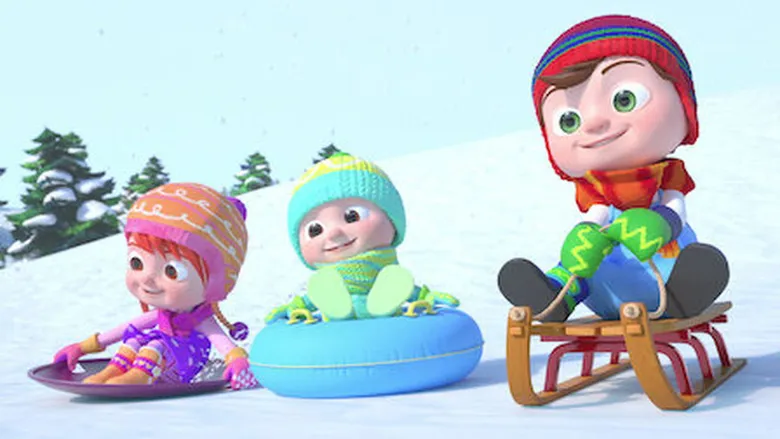
JJ gets ready for and arrives at his first day of school in a single sung story. A parent checks that he has his backpack, shoes, lunch and teddy, and they talk through greeting the teacher, making friends and feeling both excited and nervous. At school JJ finds his cubby, hangs his backpack, gives a hug and waves goodbye. The whole episode is set to one repeating song.

Cocomelon
S01 E02

Cocomelon

Baa Baa Black Sheep

Overstimulating
recommended age Unlock co-watching from 6
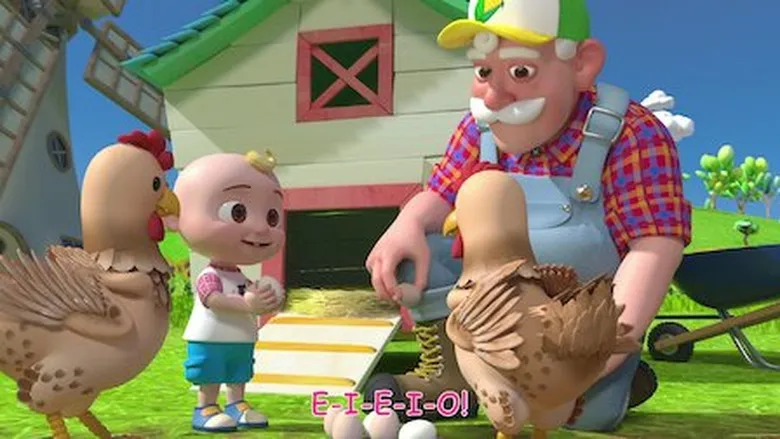
A baby spends the episode on a sunny farm while the 'Baa Baa Black Sheep' rhyme plays. Each verse brings a sheep of a different color, black, blue, pink and white, that is asked for wool and answers 'Yes sir, yes sir, three bags full.' The wool is shared among a master, a dame and a little boy who lives down the lane. The episode ends on the final white sheep verse.

Cocomelon
S01 E03

Cocomelon

Swimming Song

Overstimulating
recommended age Unlock co-watching from 6
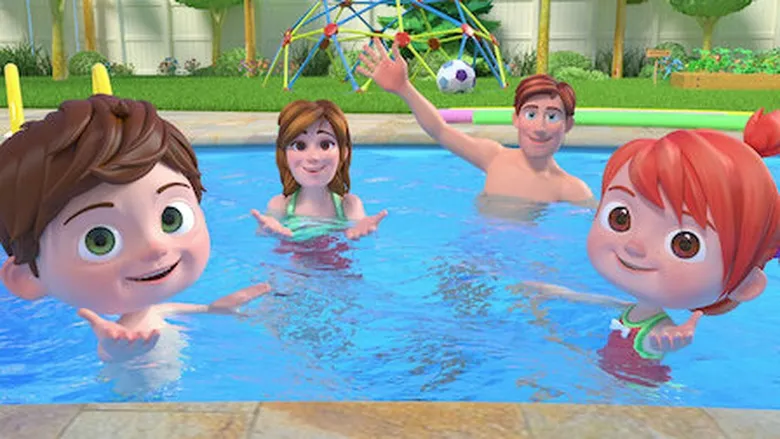
JJ and a group of other children spend a sunny day swimming in an outdoor pool. Across one continuous song they jump in, hold their breath, float along, kick their legs and move their arms while bright music plays. There is no story or problem, just a montage of swimming moments set to the lyrics. The episode closes with the children laughing happily in the water.

Cocomelon
S01 E04

Cocomelon

Dinosaur Song

Overstimulating
recommended age Unlock co-watching from 6
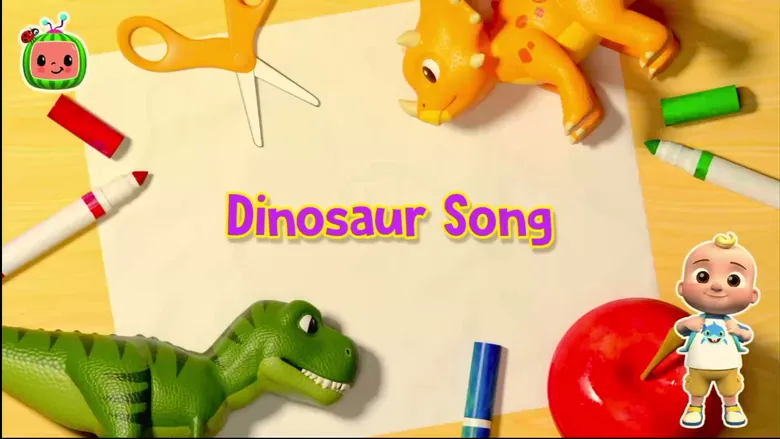
A group of animated young children sing a song about dinosaurs in a bright outdoor park. Verse by verse they introduce favorites like the Tyrannosaurus, Pteranodon, Triceratops and Stegosaurus, describing each one's features and the sound it makes while children play and pretend alongside dinosaur characters. A short refrain about dinosaurs hatching from little eggs and growing ties the verses together, and a voice asks 'What dinos do you know?'. The song closes after running through several more dinosaurs.

Cocomelon
S01 E05

Cocomelon

Five Little Monkeys Jumping on the Bed

Overstimulating
recommended age Unlock co-watching from 6
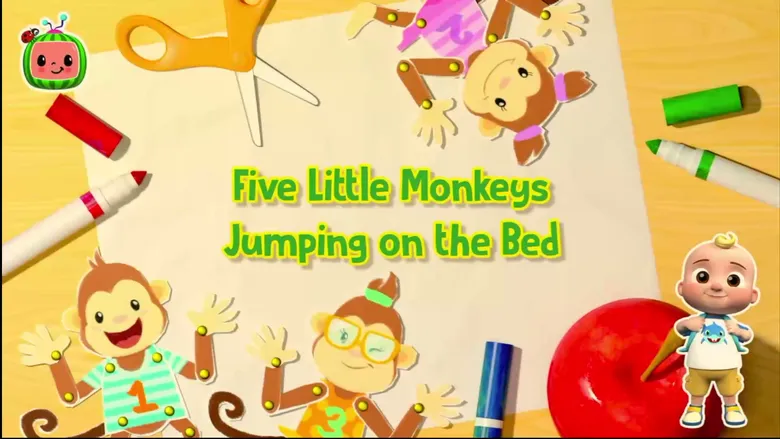
A group of young children, sung about as five little monkeys, bounce on a bed in a brightly colored family home. One by one each falls off and bumps their head, and each time Mama phones the doctor, who answers and repeats 'No more monkeys jumping on the bed'. The count drops from five down to one until none are left. The song ends with the children laying their heads down and falling asleep.

Cocomelon
S01 E06

Cocomelon

Jobs and Career Song

Overstimulating
recommended age Unlock co-watching from 6
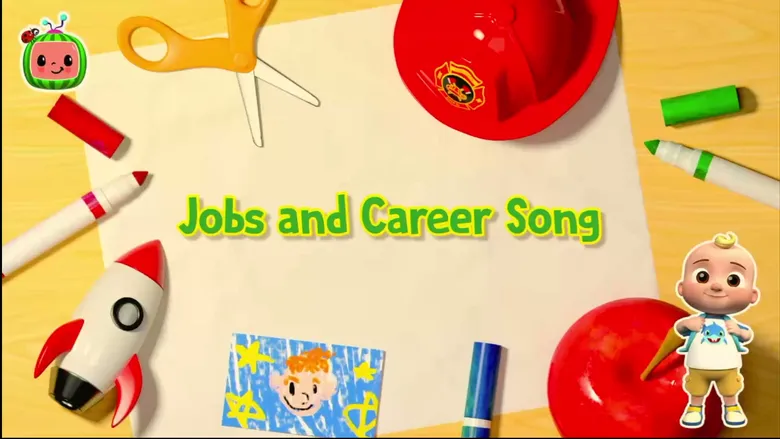
This is an animated sing-along from Cocomelon in which young children picture themselves in a long list of jobs, from astronaut and athlete to doctor, chef, firefighter, builder, police officer, dancer, musician and teacher. Each verse names a profession, a voice asks 'A doctor?' and the answer comes back 'Yes you can, yes you can.' The setting changes with every job, all rendered in bright 3D animation with the lyrics shown on screen. It closes with the idea that when children grow up they can be anything at all if they dream and work hard.

Cocomelon
S01 E07

Cocomelon

Thank You Song

Overstimulating
recommended age Unlock co-watching from 6
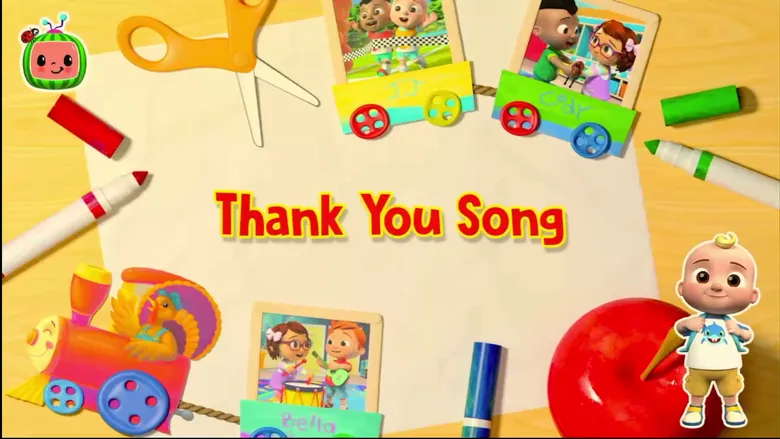
A group of young schoolchildren sing about the people and things they are grateful for. Each child names a teacher or friend and a reason, such as Miss Appleberry for teaching the music notes, Bella for sharing her toys, and Cody for helping finish a race. A repeating chorus asks 'What are you thankful for?' between the thank-you moments. The song ends with a child singing 'I'm thankful for all of you!'

Cocomelon
S01 E08

Cocomelon

Field Day Song

Overstimulating
recommended age Unlock co-watching from 6
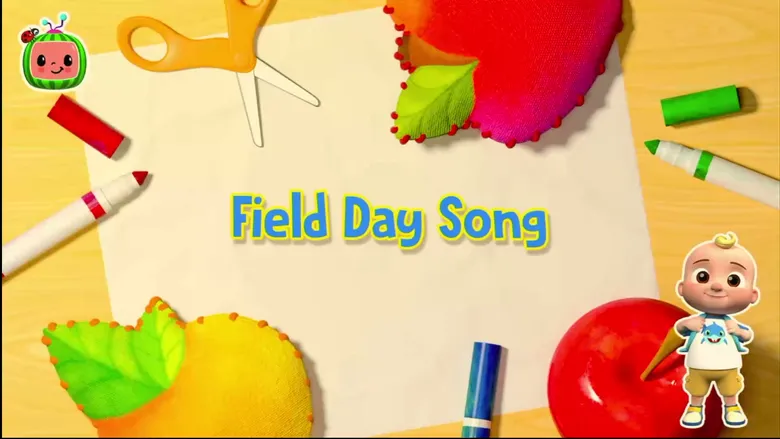
JJ and a group of friends spend a sunny field day outdoors, moving through one game after another: bouncing on balls, a tug of war, a sack race, a bean bag toss and a baton relay. An upbeat song with on-screen lyrics carries the whole video, with the children playing in teams. It closes with a sung recap of the day and a quick goodbye.

Cocomelon
S01 E09

Cocomelon

Numbers Song with Little Chicks

Overstimulating
recommended age Unlock co-watching from 6
Young children count ten eggs nestled in a straw nest as the eggs slowly crack and hatch into yellow chicks. Sung from start to finish, the episode counts from one to ten again and again while the chicks chirp, stretch, skip and play. Numbers and lyrics appear on screen in bright colours alongside the action. It closes with the chicks playing happily beside the children.

Cocomelon
S01 E10

Cocomelon

Father and Sons Song

Overstimulating
recommended age Unlock co-watching from 6
A father and his two young sons celebrate Father and Sons Day, marked with a circled date on a wall calendar. Across a single upbeat song they play catch, fix things together, exercise and splash at an outdoor swimming pool. A repeated chorus describes the day as time spent together as best buddies. The song ends with the family cheering and a closing thank you.

Cocomelon
S01 E11

Cocomelon

Class Pet Song

Overstimulating
recommended age Unlock co-watching from 6
In a brightly decorated preschool classroom, children and their teacher gather around a cage to meet the class pet, a hamster named Jellybean. Through a repeated song they describe her tiny feet, her soft fur, the way she squeaks, and how she rolls around in her exercise ball. The hamster runs on her wheel and tumbles in her ball while the children watch and sing. The episode is one continuous song that ends after the final chorus.

Cocomelon
S01 E12

Cocomelon

Nap Time Song

Overstimulating
recommended age Unlock co-watching from 6
At a preschool nap time, Miss Appleberry and a group of toddlers sing about counting sheep to fall asleep. One by one the children share small worries, wanting to keep playing, being scared of the dark, and feeling alone, and each is met with reassurance and the offer of a teddy bear. A short dream sequence drifts through a starry sky before the song returns to its counting refrain. The episode closes with the children settling down and the promise of more fun after the nap.

Cocomelon
S01 E13

Cocomelon

Funny Face Song

Overstimulating
recommended age Unlock co-watching from 6
JJ and a group of friends gather with their teacher in a colourful playroom and sing through a series of facial expressions. With each verse the song names a feeling, happy, sad, angry, surprised, cute and silly, and the children move their eyes, mouth and nose to make that face. A refrain, 'Make a funny face!', returns between each new emotion. The song ends after the silly face, with no separate story or closing scene.

Cocomelon
S01 E14

Cocomelon

Basketball Song

Overstimulating
recommended age Unlock co-watching from 6
JJ and a group of friends, including a monkey, a hippo and a squirrel, play a basketball game on a sunny outdoor court. A song names and demonstrates each move in turn, from dribbling and passing to scoring, blocking, rebounding and dunking, while a scoreboard tracks the two teams. The chorus 'Defense, offense, here we go, let's do our best' returns between verses. The game closes with the players gathered together cheering as the video fades out.

Cocomelon
S01 E15

Cocomelon

Sea Animal Song

Overstimulating
recommended age Unlock co-watching from 6
A child explores a sunny beach and sings about the sea animals they find: a seagull soaring overhead, a little red crab crawling by, a clam opening and closing in a tide pool, a sea turtle on the sand, and dolphins jumping in the waves. Each verse asks 'what do I see?', names the animal, copies its movement, then returns to the refrain about things that live at the beach. On-screen labels name each creature as it appears. The episode is one continuous song that ends after the dolphins with a closing chorus.

Cocomelon
S01 E16

Cocomelon

My Sister Song

Overstimulating
recommended age Unlock co-watching from 6
JJ sings about his big sister and his little sister, showing the three siblings playing, running, learning and helping together at home and outdoors in the sun. A repeated chorus celebrates how much more fun things are when they do them together. The song alternates short verses about each sister and ends with a burst of excited cheers.

Cocomelon
S01 E17

Cocomelon

Music Song

Overstimulating
recommended age Unlock co-watching from 6
A teacher and a group of young children in a bright music classroom learn the solfège notes, do, re, mi, fa, so, la, ti, do, with a large colorful note wheel that lights up each one. They sing the scale together, then use the notes to sing 'Mary Had a Little Lamb', first slowly and then faster. The teacher praises the children, and the episode closes by repeating the main song about putting notes together to make a song.

Cocomelon
S01 E18

Cocomelon

JJ Song

Overstimulating
recommended age Unlock co-watching from 6
This episode is a single song built around JJ, a baby with one curl of hair. Across about three minutes JJ wakes up, greets family and friends with 'good morning', plays and is celebrated by everyone around him at home, at school and outdoors. Small everyday moments appear, a sneeze answered with 'bless you' and a bump met with 'excuse me'. The song closes with the children gathering to sing 'We love you, JJ'.

Cocomelon
S01 E19

Cocomelon

Where Has My Little Dog Gone?

Overstimulating
recommended age Unlock co-watching from 6
JJ and two friends discover their little dog has wandered off and set out to find it. To the tune of the nursery rhyme 'Where Has My Little Dog Gone?', they search through a garden, a park and around the house while the same question repeats. The dog finally turns up back at the home and the children are reunited with their pet. The whole episode is one repeated song rather than a spoken story.

Cocomelon
S01 E20

Cocomelon

Stretching and Exercise Song

Overstimulating
recommended age Unlock co-watching from 6
A group of preschool children in a bright, colorful classroom sing and move through a series of exercises. They stretch up to touch the sky, bend down to touch their toes, do jumping jacks, run in place, wiggle and shake, march and stomp, and jump up high. On-screen lyrics follow each verse as the children demonstrate the movements together. The song ends with the children heading off to play.

Cocomelon
S01 E21

Cocomelon

The More We Get Together

Overstimulating
recommended age Unlock co-watching from 6

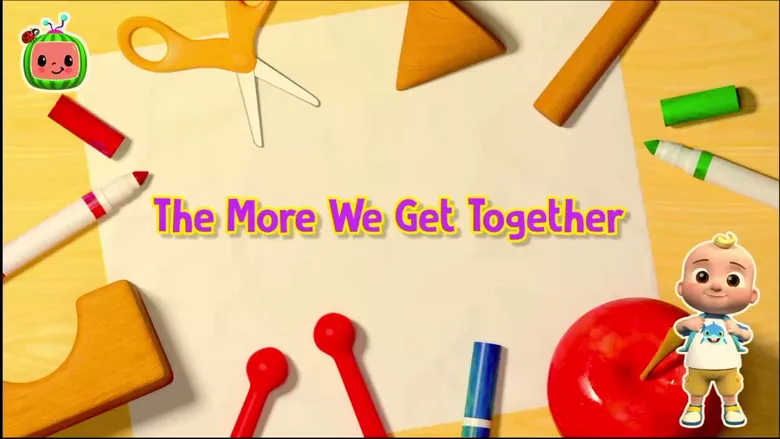
JJ and his friends Cody, Nina, Cece, Bella and Nico sing and dance to the nursery rhyme 'The More We Get Together' in a brightly coloured classroom. The song repeats its refrain across several verses, each naming the friends who are playing together. There is no story or problem to solve; the children simply move and sing as a group. The episode closes with a 'Fun Pack' card of JJ waving and the CoComelon logo.

Explore more

From this series Cocomelon
By age 2 years
By platform Netflix

Just launched: free lifetime premium for the first 1,000 members to activate their account.

Create your account

Search by title, show, tag, or topic

We use functional cookies and Google Analytics to improve our site. Learn more