


Slowscreen SlowScreen
Toggle sidebar

Just launched: free lifetime premium for the first 1,000 members to activate their account.

Start free

Numberblocks

Good

Recommended age Unlock

Co-watching from age 2

Stimulating

Exact score locked

Watch on Netflix Prime Video
Availability in
Save
Numberblocks

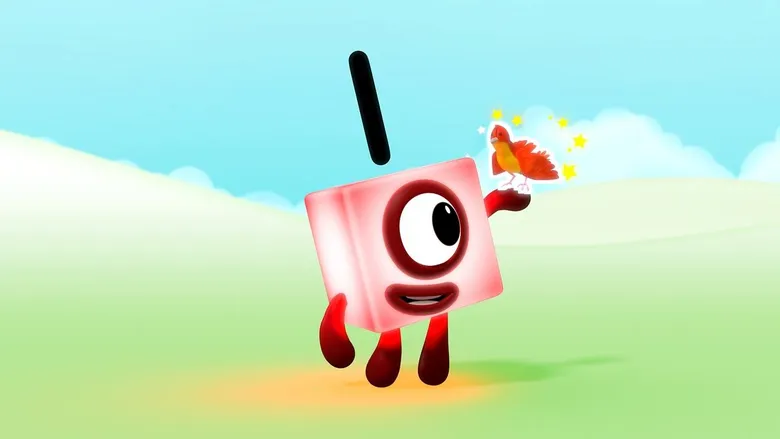
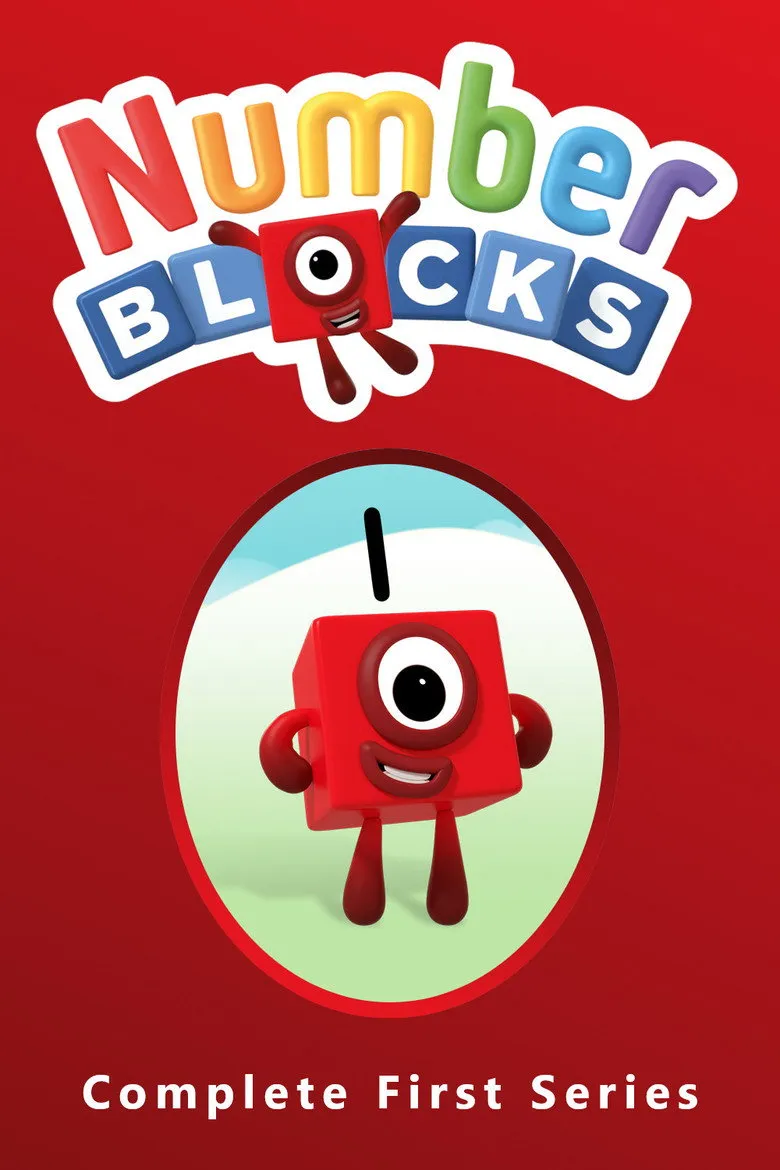
Numberblocks follows friendly number characters like One, Two and Three through a bright world of green hills and playful games. The tone is cheerful and musical, made for toddlers, teaching early counting and number skills.

  • Counting and early math woven naturally into play.
  • Catchy songs reinforce numbers and counting.
  • Calm, simple visuals suit very young children.
  • Warm friendship and sharing run throughout.
  • Characters often speak directly to the viewer.
  • Gentle competition appears in some games.
  • A brief, mildly sad moment for the youngest.

See the exact scores

The review is yours to read. Create a free account to reveal the exact SlowScreen score and every pillar score.

Create free account

Score Breakdown

Every episode keeps its visuals calm and clearly organised, so what the child sees stays easy to take in. The pacing is consistently fast, though, with images following each other quickly and little time to pause on each moment, and the sound is present enough to keep drawing attention. Most episodes land in a comfortable, well-balanced place for the youngest viewers, while the 'Three' episode pushes harder and feels more demanding and intense. A quick visual rhythm like this can leave very young children with less time to absorb what just happened.
Every episode follows a single, clear storyline from beginning to end, whether One discovers her world, two blocks join to make Two, or Three performs a set of apple tricks. Cause and effect is made explicit, both spoken ('one plus one equals two') and shown when blocks physically combine, which helps a young child follow what is happening. The recurring catch is the song sections, where many new examples arrive in quick succession, so the busiest stretches pack in more than the youngest viewers can comfortably hold onto. The 'Three' episode leans hardest on this, threading in references like the Three Musketeers and Goldilocks that mostly pass a toddler by.
The emotional tone stays warm and friendly throughout, with soft, curious voices and no mocking, shaming or scary moments. Small dips in mood, like One feeling lonely or realising the last apple is gone, are resolved within the same scene, modelling a quick and predictable recovery. A couple of episodes lightly nick this gentle tone: 'Three' holds a constantly high, showy 'look at me' excitement, and the apple episode frames winning around being biggest, with a quick 'Bad luck, one' to a sibling. None of this unsettles a young child, and the overall climate is steady and reassuring.
Initiative varies across the series. In some episodes the characters reason out loud in ways a child can follow, naming a problem, trying a fix, noticing it fails and adjusting, as when One works out how to play tennis alone or the blocks puzzle over who can reach an apple. In others, solutions arrive mainly through demonstration rather than visible thinking, with a character simply showing that two shoes let you dance or that three sides make a triangle. So a child often sees the answer rather than the step-by-step process behind it, and the lead character tends to drive most solutions while the others follow. The clearest moments, like sharing the replanted apple trees, do give a satisfying, child-led resolution.
Language is a consistent strength. Sentences are short, concrete and rhythmic, built on heavy, helpful repetition ('one bird, one tree', 'one plus one equals two'), with the key number word anchoring each line so the meaning stays tied to what is on screen. Speech is clear and unhurried, at a comfortable rate for young listeners, and vocabulary stays close to objects a child can already name. The small caveat is the occasional grown-up word or abstract phrase, like 'equals' or 'entertain'; the 'Three' episode leans hardest on this, threading in names and showy wording that sit above a toddler's understanding and make its meaning patchier than the plain counting alone.
The counting content has real, usable value: a child can carry naming 'one bird, one tree', joining one and one to make two, or spotting a triangle's three sides straight into everyday play. Many episodes hook into recognisable activities too, like pairing socks and shoes, playing tennis, or sharing food fairly. What holds this back is the realism gap: the characters are talking number-blocks in abstract, pastel settings, with few human relationships or everyday situations on screen to show how the learning fits into family or peer life. For a very young child still building a sense of how the real world works, the useful lessons sit inside a clearly made-up world.

More information

This score shows how inclusively the series portrays diverse people, families and cultures. Scale: Limited → Varied → Rich → Inclusive.
The cast is made up entirely of abstract number-block characters, with no human figures, families, caregivers or varied cultural settings, so the usual markers of human diversity are simply not part of this world by design. Within that narrow cast, the characters often share screen time and initiative as equal companions, and the series does not reinforce stereotypes about real-world groups. One difference is worth noting: in the apple episode a clear size-based hierarchy appears, with the biggest block leading every activity and winning each game, though she does share with the others at the end. Parents looking for visible human representation will not find it here; this is a maths-focused series rather than a window onto how different people live and work together.
This score shows whether the series stays close to everyday reality or leans into fantasy. Scale: Fantasy → Mixed reality → Realistic.
No villain ever appears. Conflict stays gentle throughout, limited to things like One feeling lonely, a sock needing its pair, or a friendly cup-and-ball game, and it is always resolved kindly. The fantasy world runs on its own tidy, consistent logic: each character's size matches their number, and 'one plus one equals two' really does play out on screen. That world is also heavily imagined, with talking, dancing number-blocks and a magic mirror, so it leans further into fantasy than the mostly-realistic mix that suits the youngest viewers, even as the counting content itself fits the age well.
This score shows how enjoyable the series is for parents watching along. Scale: Tedious → Tolerable → Pleasant → Enjoyable.
Be honest with yourself: this is preschool-first, and most of the jokes and references sail straight over to your kid, not to you. What you will appreciate is the craft, with clean animation, a controlled palette and tuneful songs that stay easy on adult ears, plus the occasional neat little maths reveal ('one plus two equals three') you can nod along to. The catch is the refrains, which loop often enough in a few minutes that you will notice them, the 'Three' episode especially. Think comfortable background company in the room rather than something that genuinely rewards a watching grown-up.

Season 1

5 episodes

Numberblocks
S01 E01

Numberblocks

One

Balanced
recommended age Unlock co-watching from 2
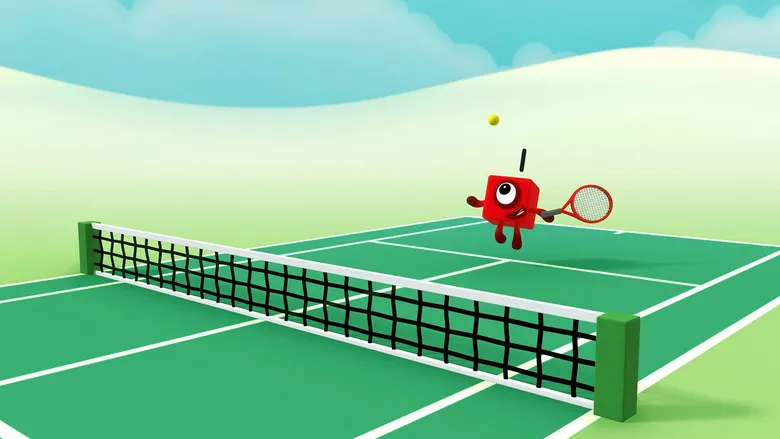
A small red block named One falls into a pastel world and slowly figures out who she is by counting and naming everything around her. She greets a bird, a tree, an ant, a bee, the sun, the sea, a whale, a chimpanzee and many more objects, repeating the refrain 'one wonderful world and one me.' A brief worry about being alone is followed by a song in which she decides she is 'one of a kind' and 'the start of something bigger.' The episode ends with her declaring 'I am one' before the credits roll.

Numberblocks
S01 E02

Numberblocks

Another One

Balanced
recommended age Unlock co-watching from 2
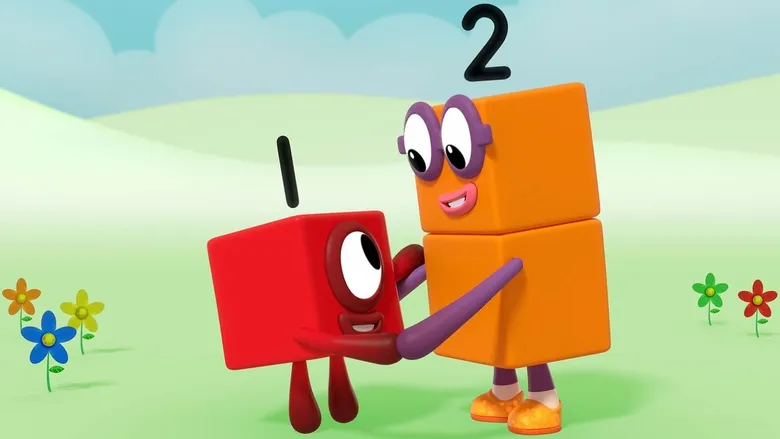
One, a small red block, wakes up in a sunny landscape and tries to play tennis but realises there is only one of him. After trying to run between both sides of the court, he discovers a magic mirror that lets another One appear. The two combine into Two, an orange block, and the story ends with the pair playing tennis together while the math '1 + 1 = 2' is reinforced through dialogue and on-screen text. The episode closes with end credits.

Numberblocks
S01 E03

Numberblocks

Two

Stimulating
recommended age Unlock co-watching from 2
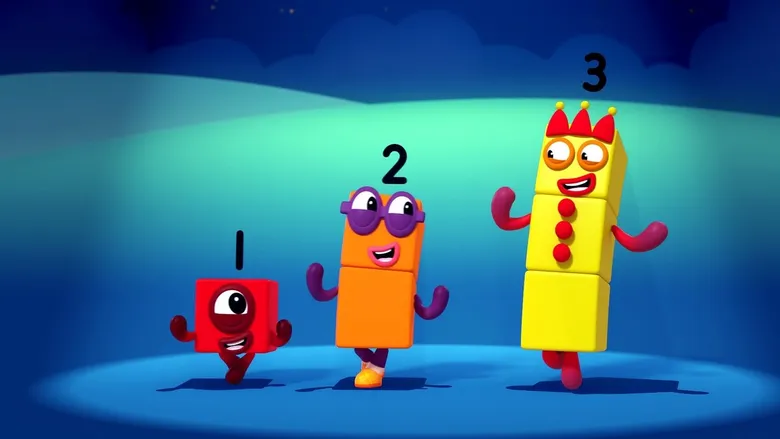
Two arrives in the grassy Numberblocks world after One has been puzzling over a single sock and a single shoe. Two reveals a pair of dancing shoes and sings 'Everything is better with two', showing One that pairs of socks, shoes, friends, swings, bikes, and even wings work better together. The pair dance, eat, play soccer, swing, and fly through a series of song verses. The episode closes quietly with the two calling each other 'best friend' before the credits.

Numberblocks
S01 E04

Numberblocks

Three

Overstimulating
recommended age Unlock co-watching from 2
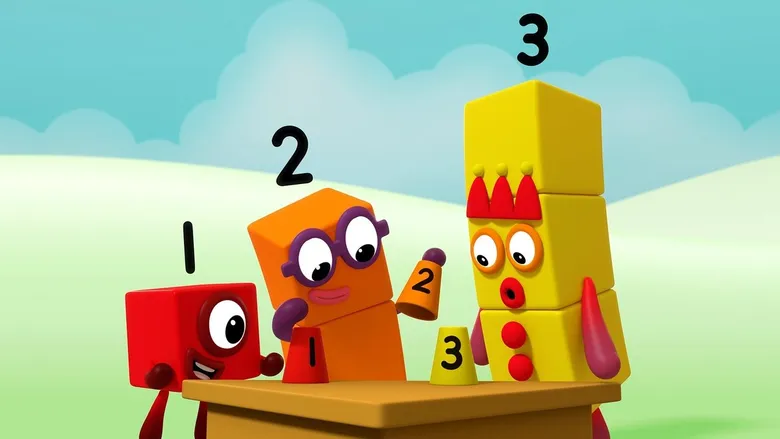
Three, a yellow block character with a small crown, is created when the Numberblocks Two and One join together to make 2 + 1 = 3. She then launches into a song-and-dance show, juggling three balls, taking one away and adding it back, and pointing out all the things that come in threes, from the Three Little Pigs to a triangle's three sides. The action plays out on a bright animated stage with spotlights, curtains and a starry backdrop. It ends with a dancing finale and fireworks before the closing credits.

Numberblocks
S01 E05

Numberblocks

One, Two, Three

Stimulating
recommended age Unlock co-watching from 2
Three, the yellow block character, performs four short magic tricks for her friends One and Two using apples: a find-the-apple cup game, an apple-on-top balance game, a surprise reveal that shows '1 + 2 = 3', and a final trick that makes the apple cores grow into three new trees. The action takes place outdoors on a grassy hill with a few simple props. Along the way the characters introduce counting to three, the words 'first', 'second' and 'third', and the ideas of bigger and smaller. The episode ends with Three sharing the new apples so all three friends have some.

Explore more

By age 2 years
By platform Netflix Prime Video

Share

Pass this find on to another parent

Link preview

Numberblocks | Good, co-watching from age 2

Numberblocks | Good, co-watching from age 2 - Slowscreen

Good · Co-watching from age 2. Numberblocks follows friendly number characters like One, Two and Three through a bright world of green hills and playful games....

slowscreen.com

https://slowscreen.com/en/series/numberblocks

https://slowscreen.com/en/series/numberblocks

Slowscreen

Numberblocks | Good, co-watching from age 2 - Slowscreen

Good · Co-watching from age 2. Numberblocks follows friendly number characters like One, Two and Three through a bright world of green hills and playful games....

Numberblocks | Good, co-watching from age 2

slowscreen.com

Numberblocks | Good, co-watching from age 2 - Slowscreen

Good · Co-watching from age 2. Numberblocks follows friendly number characters like One, Two and Three through a bright world of green hills and playful games....

Numberblocks | Good, co-watching from age 2
slowscreen.com

Numberblocks | Good, co-watching from age 2 - Slowscreen

slowscreen.com · Posted by you

Numberblocks | Good, co-watching from age 2 - Slowscreen

0 Share
Numberblocks | Good, co-watching from age 2
To
Subject Numberblocks | Good, co-watching from age 2

Good · Co-watching from age 2. Numberblocks follows friendly number characters like One, Two and Three through a bright world of green hills and playful games....

https://slowscreen.com/en/series/numberblocks

Share on WhatsApp Share on X Share on Facebook Share on Telegram Share on Reddit Share on Email

Just launched: free lifetime premium for the first 1,000 members to activate their account.

Create your account

Search by title, show, tag, or topic

We use functional cookies and Google Analytics to improve our site. Learn more