







This program is well-balanced. It remains mostly easy to follow and process. It is a good fit for the recommended age.
The pacing is fast. Images follow each other quickly, leaving little time to pause and take in what is happening.
The sound is clearly present and regularly draws attention.
The visuals are calm and well-organized.
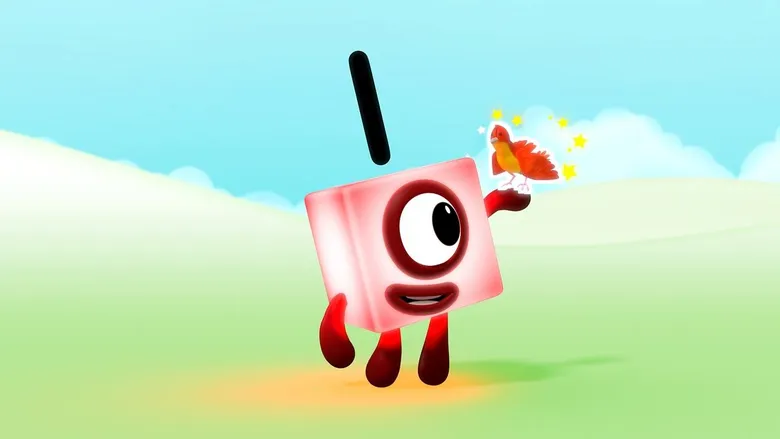
The story stays on a single thread throughout: a new block character named One discovers her world and learns what 'one of something' means. Information arrives in tidy, predictable chunks ('one bird, one tree, one ant, one bee'), with a clear beginning (arrival), middle (counting walk) and end (acceptance song). The limitation that holds the pillar back at this age is the back half of the episode, where One races through bat, ball, box, boat, gate, goal, goose, goat, cap, cow, cake, cat, hole, hop, hat in quick succession, packing more new items per scene than a two-year-old can comfortably absorb.
The tone is warm and friendly. One greets every new object ('hello bird, hello tree, hello Apple') in a soft, curious voice, and the show never mocks, scares, or shames her. When she briefly worries 'it could be lonely if I'm the only one,' she reassures herself in the very next breath with 'but I'm number one and I'm winning,' modelling a clean recovery from a small dip. Transitions between feelings are gentle and there are no abrupt shifts that would unsettle a young child.
This pillar sits in the middle band because the episode is built around counting and naming, not around solving problems. One takes initiative in exploring her world, looking around, walking toward things, and naming what she finds. What holds the score down is that real problem-solving steps are barely visible: the only mini-problem (rain falls on her) is resolved the moment an umbrella appears, with no try-evaluate-adjust loop, and her 'lonely' worry is resolved by self-talk rather than by action.
Language is the strongest feature for a toddler audience. Sentences are short, concrete, and built around heavy, helpful repetition ('one bird, one tree, one wonderful world and one me'), with the word 'one' anchoring every line so the meaning stays stable. The narrator's voice is clear and her vocabulary stays close to objects a child can already point to: bird, tree, ant, sun, sea, whale, apple, cloud, raindrop, umbrella. Roughly half the lines are sentence fragments rather than full sentences, which is appropriate at this age and leaves room for older listeners to fill in.
The pillar lands in the mixed band because counting to one and naming everyday objects is genuinely useful, yet the world around the lesson is heavily stylised. A child can transfer the act of pointing at one bird, one tree, one sun, one apple straight into their own day. The limitation is the realism gap: the protagonist is a talking number-block, the landscapes are abstract pastel scenes, and there are almost no human social interactions on screen to show how counting fits into family or peer life.
More information
This score shows how inclusively the series portrays diverse people, families and cultures. Scale: Limited → Varied → Rich → Inclusive.
This episode follows a single block character, One, as she explores a colourful abstract world and counts things she finds. There are no human characters to represent ethnicity, family forms, ages or bodies, and the supporting cast is made up of animals and objects (a bird, a tree, a whale, a chimpanzee, a horse). The character herself is curious, brave and good-natured, with no fixed gender-coded behaviour, but with only one figure on screen for most of the episode there is little role variety to evaluate.
This score shows whether the series stays close to everyday reality or leans into fantasy. Scale: Fantasy → Mixed reality → Realistic.
Numberblocks 'One' is a stylized educational show where the protagonist is a sentient red cube discovering a colourful world filled with single items (one bird, one tree, one sun, one boat, one apple). The world itself is fantastical, but it is built around recognizable real-life objects and a clear counting concept. There is no villain anywhere in the episode, conflict comes only from One wondering what it means to be alone. The fantasy stays internally consistent, though the talking-cube premise sits a step above the 'mostly realistic, light imagination' guidance for a 2-year-old.
This score shows how enjoyable the series is for parents watching along. Scale: Tedious → Tolerable → Pleasant → Enjoyable.
This is a well-produced educational segment built around introducing the number one to preschoolers. The craft is strong, with clean 3D animation, melodic songs, and a gentle pace, but the content stays firmly pitched at the youngest viewers with little for an adult to chew on. The narrative is a loose sequence of 'one bird, one tree, one ant' moments stitched together by catchy refrains. An adult in the room will find it pleasant background but not actively rewarding.
Themes
Numbers
Central
The entire episode teaches the number 1 by counting 'one bird, one tree, one sun, one whale' across many settings.
Self discovery
Central
One arrives in a new world and asks 'where am I, who am I' before discovering she is the number one.
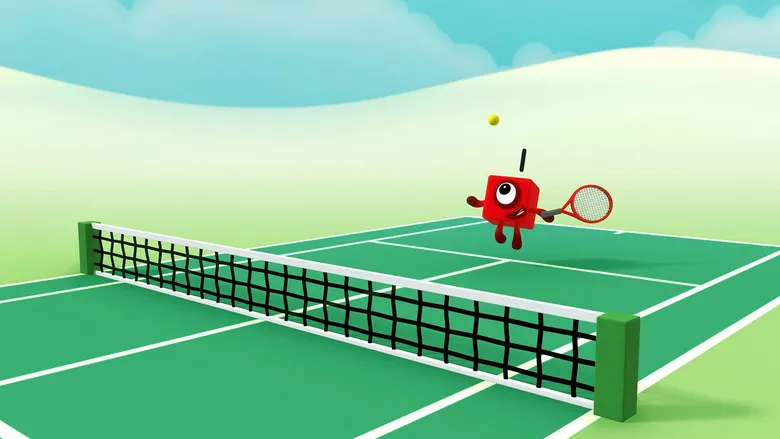
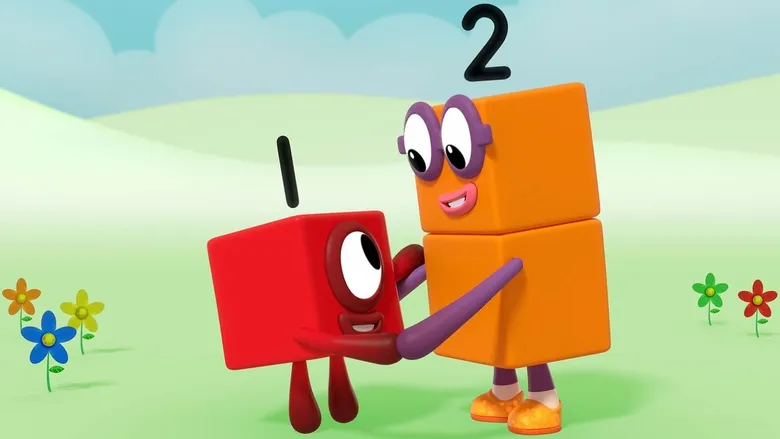
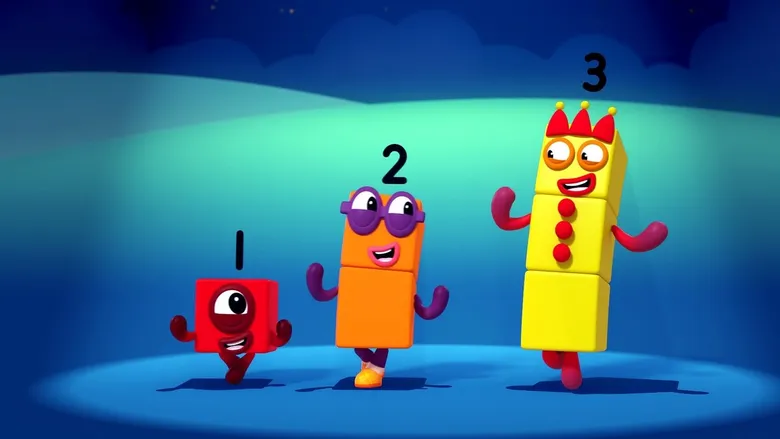
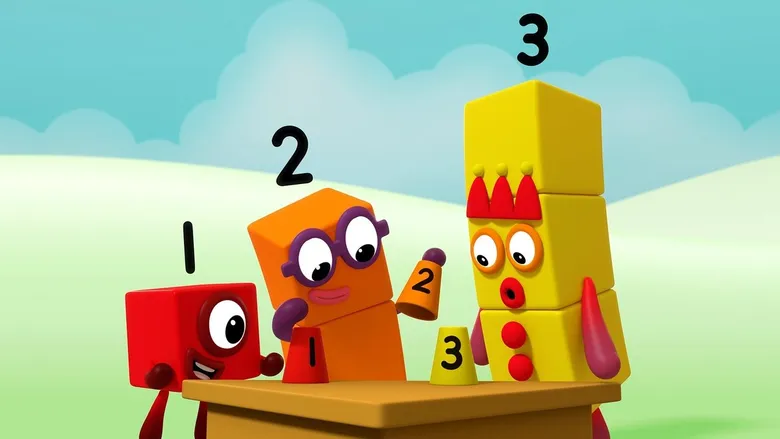
A small red block named One falls into a pastel world and slowly figures out who she is by counting and naming everything around her. She greets a bird, a tree, an ant, a bee, the sun, the sea, a whale, a chimpanzee and many more objects, repeating the refrain 'one wonderful world and one me.' A brief worry about being alone is followed by a song in which she decides she is 'one of a kind' and 'the start of something bigger.' The episode ends with her declaring 'I am one' before the credits roll.