



Slowscreen SlowScreen
Toggle sidebar

Just launched: free lifetime premium for the first 1,000 members to activate their account.

Start free

One, Two, Three

Good

Recommended age Unlock

Co-watching from age 2

Stimulating

Exact score locked

Watch on Netflix Prime Video BBC
Save
One, Two, Three

Share

Pass this find on to another parent

Link preview

Numberblocks: One, Two, Three | Good, co-watching from age 2

Numberblocks: One, Two, Three | Good, co-watching from age 2 - Slowscreen

Good · Co-watching from age 2. Three, the yellow block character, performs four short magic tricks for her friends One and Two using apples: a find-the-apple cu...

slowscreen.com

https://slowscreen.com/en/series/numberblocks/s1/e5-one-two-three

https://slowscreen.com/en/series/numberblocks/s1/e5-one-two-three

Slowscreen

Numberblocks: One, Two, Three | Good, co-watching from age 2 - Slowscreen

Good · Co-watching from age 2. Three, the yellow block character, performs four short magic tricks for her friends One and Two using apples: a find-the-apple cu...

Numberblocks: One, Two, Three | Good, co-watching from age 2

slowscreen.com

Numberblocks: One, Two, Three | Good, co-watching from age 2 - Slowscreen

Good · Co-watching from age 2. Three, the yellow block character, performs four short magic tricks for her friends One and Two using apples: a find-the-apple cu...

Numberblocks: One, Two, Three | Good, co-watching from age 2
slowscreen.com

Numberblocks: One, Two, Three | Good, co-watching from age 2 - Slowscreen

slowscreen.com · Posted by you

Numberblocks: One, Two, Three | Good, co-watching from age 2 - Slowscreen

0 Share
Numberblocks: One, Two, Three | Good, co-watching from age 2
To
Subject Numberblocks: One, Two, Three | Good, co-watching from age 2

Good · Co-watching from age 2. Three, the yellow block character, performs four short magic tricks for her friends One and Two using apples: a find-the-apple cu...

https://slowscreen.com/en/series/numberblocks/s1/e5-one-two-three

Share on WhatsApp Share on X Share on Facebook Share on Telegram Share on Reddit Share on Email

See the exact scores

The review is yours to read. Create a free account to reveal the exact SlowScreen score and every pillar score.

Create free account
This program is well-balanced. It remains mostly easy to follow and process. It is a good fit for the recommended age. The pacing is fast. Images follow each other quickly, leaving little time to pause and take in what is happening. The sound is clearly present and regularly draws attention. The visuals are calm and well-organized.
One clear storyline runs from start to finish: Three performs four little magic tricks for One and Two using apples. Each trick has a recognisable beginning, middle and end, and the whole episode resolves neatly when Three plants the three eaten apples as three trees. New ideas like 'first, second, third', 'bigger and smaller' and '1 plus 2 equals 3' are introduced one at a time, with lots of repetition, although the cluster of concepts together is on the busy side for a two-year-old. Cause and effect is consistently visible, for example Two saying 'I can't reach, I'm smaller than you'.
The emotional register stays calm and friendly almost throughout, with cheerful voices and gentle pacing of feelings. A small dip occurs when One realises 'Oh, that was the last one', and this is resolved within the same scene as Three replants the apple cores into trees and shares them out. The mild caveat is that Three repeatedly frames winning around being biggest ('I'm the biggest, so I guess I win again') and One gets a quick 'Bad luck, one', which lightly nicks the empathic tone. Overall, recovery is fast and predictable, and no scary or threatening content appears.
Characters reason out loud in ways a young child can follow: One guesses the first cup because 'I'm the first number', Two tries the second cup, and Three notices it is 'bigger than one but smaller than three'. Problems like 'who reaches the apple' and 'how do we share when there are none left' are named, attempted, evaluated and resolved on screen, which gives a clear two-step thinking model appropriate for this age. The small limitation is that Three, as the magician, drives most of the solutions, so One and Two mostly follow rather than initiate. Sharing the replanted trees is a satisfying, child-initiated resolution.
Language stays concrete and rhythmic: short sentences like 'One apple', 'I'm bigger than you', and 'Apple on top, don't let it drop' anchor the meaning in what is visible. Counting words and ordinal words ('first', 'second', 'third') are used consistently with matching visuals, so the meaning is easy to grasp. Speech is clear and unhurried, with a comfortable rate for young listeners and plenty of repetition. A few abstract terms like 'equals' appear briefly and may sit at the upper edge for a two-year-old, which is why the pillar is strong rather than exceptional.
The episode connects to recognisable real-world activities: counting apples, putting an object on your head and trying not to drop it, the classic shell-game with cups, and sharing food fairly. Children can imitate the counting, the ordering and the apple-on-top balancing game at home with everyday objects. The main limitation, especially for a two-year-old, is that the characters themselves are abstract sentient numbers rather than people or animals, so the world is recognisably fantasy even though the activities inside it are real. Social moments like Two thanking Three for sharing reflect everyday family or friend dynamics in a clear, useful way.

More information

This score shows how inclusively the series portrays diverse people, families and cultures. Scale: Limited → Varied → Rich → Inclusive.
The cast is made up of three abstract number block characters ('One', 'Two', and 'Three'), with brief intro glimpses of higher blocks. There are no human characters, no families, no caregivers, and no varied cultural or everyday settings, so the picture of who lives in this world is very narrow by design. Three leads almost every activity and wins each game by virtue of being the biggest, which establishes a clear size-based hierarchy, though she does share apples with One and Two at the end. The episode focuses on mathematical concepts rather than social representation, so children see almost nothing about how different people live or work together.
This score shows whether the series stays close to everyday reality or leans into fantasy. Scale: Fantasy → Mixed reality → Realistic.
The world of Numberblocks is built almost entirely on imagination: red, orange and yellow numbered blocks with eyes and arms talk, perform magic tricks and demonstrate sums together. There is no villain anywhere; conflicts are limited to lighthearted competition over a cup-and-ball game, and the trio resolves the apple shortage by sharing. The fantasy logic is tidy and consistent, with each character's size matching their number. For a two-year-old in the mostly-realistic band, the abstract premise leans further into fantasy than is ideal, even though the counting content itself fits the age.
This score shows how enjoyable the series is for parents watching along. Scale: Tedious → Tolerable → Pleasant → Enjoyable.
This is a polished, gently paced Numberblocks episode that pitches firmly at the preschool target audience while remaining easy on adult eyes and ears. The production craft is the standout, with clean animation and a controlled palette, and the small math reveal ('one plus two equals three') gives a parent something to nod along with. There is a light story spine through three apple games rather than pure looped repetition. For adults the humor and references stay child-level, so it is comfortable background company more than active entertainment.

Themes

Counting

Central

Characters repeat 'one, two, three' throughout and count apples one by one.

Magic

Central

Three announces 'Let me show you a trick or two' and performs four magic tricks with apples.

Math

Recurring

The equations '1 + 2 = 3' and '3 = 2 + 1' appear on screen with matching block characters.

Size

Recurring

Characters say 'I'm bigger than you', 'I'm smaller than three' while standing next to each other for visible comparison.

Competition

Three repeatedly states 'I'm the biggest, so I guess I win again', linking winning to being bigger.

Three, the yellow block character, performs four short magic tricks for her friends One and Two using apples: a find-the-apple cup game, an apple-on-top balance game, a surprise reveal that shows '1 + 2 = 3', and a final trick that makes the apple cores grow into three new trees. The action takes place outdoors on a grassy hill with a few simple props. Along the way the characters introduce counting to three, the words 'first', 'second' and 'third', and the ideas of bigger and smaller. The episode ends with Three sharing the new apples so all three friends have some.

Season 1

5 episodes

Numberblocks
S01 E01

Numberblocks

One

Balanced
recommended age Unlock co-watching from 2
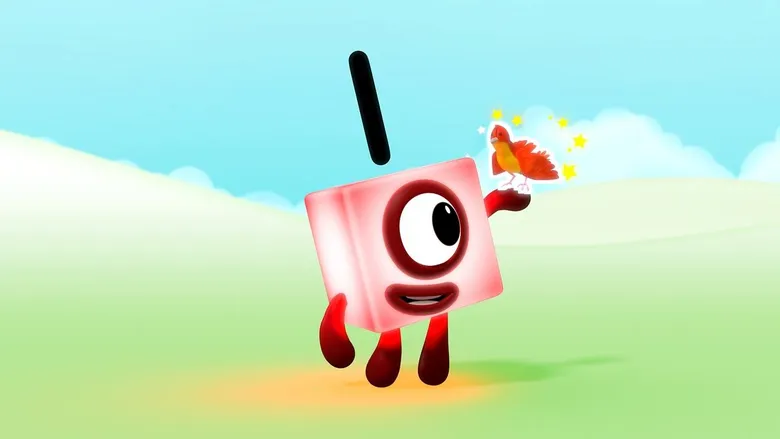
A small red block named One falls into a pastel world and slowly figures out who she is by counting and naming everything around her. She greets a bird, a tree, an ant, a bee, the sun, the sea, a whale, a chimpanzee and many more objects, repeating the refrain 'one wonderful world and one me.' A brief worry about being alone is followed by a song in which she decides she is 'one of a kind' and 'the start of something bigger.' The episode ends with her declaring 'I am one' before the credits roll.

Numberblocks
S01 E02

Numberblocks

Another One

Balanced
recommended age Unlock co-watching from 2
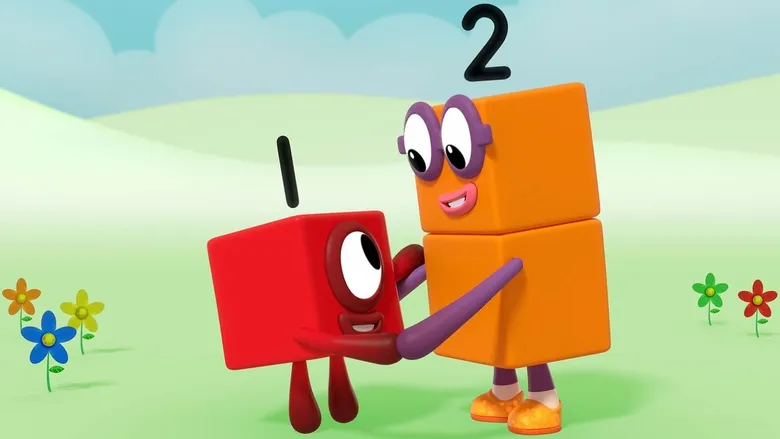
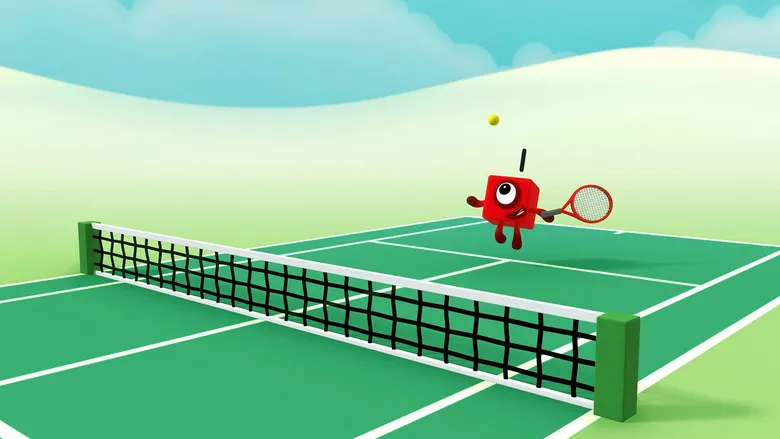
One, a small red block, wakes up in a sunny landscape and tries to play tennis but realises there is only one of him. After trying to run between both sides of the court, he discovers a magic mirror that lets another One appear. The two combine into Two, an orange block, and the story ends with the pair playing tennis together while the math '1 + 1 = 2' is reinforced through dialogue and on-screen text. The episode closes with end credits.

Numberblocks
S01 E03

Numberblocks

Two

Stimulating
recommended age Unlock co-watching from 2
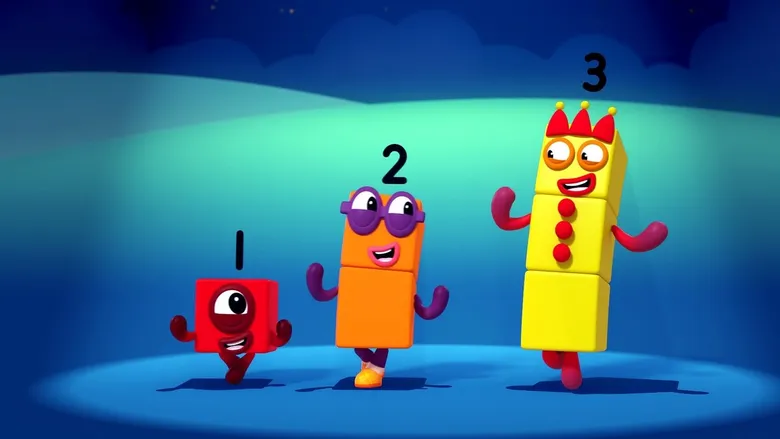
Two arrives in the grassy Numberblocks world after One has been puzzling over a single sock and a single shoe. Two reveals a pair of dancing shoes and sings 'Everything is better with two', showing One that pairs of socks, shoes, friends, swings, bikes, and even wings work better together. The pair dance, eat, play soccer, swing, and fly through a series of song verses. The episode closes quietly with the two calling each other 'best friend' before the credits.

Numberblocks
S01 E04

Numberblocks

Three

Overstimulating
recommended age Unlock co-watching from 2
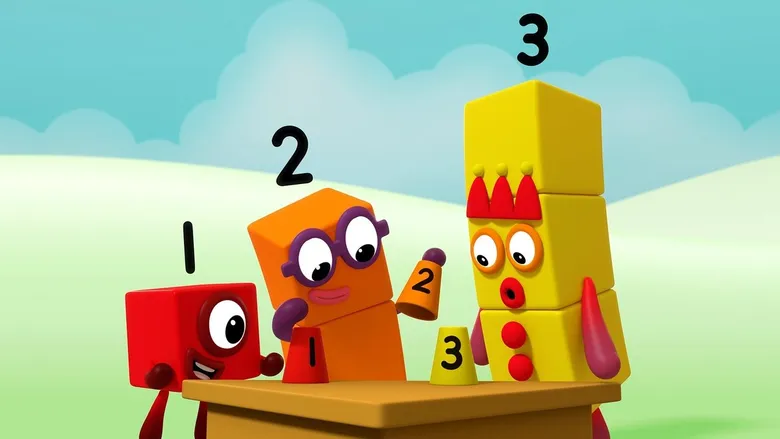
Three, a yellow block character with a small crown, is created when the Numberblocks Two and One join together to make 2 + 1 = 3. She then launches into a song-and-dance show, juggling three balls, taking one away and adding it back, and pointing out all the things that come in threes, from the Three Little Pigs to a triangle's three sides. The action plays out on a bright animated stage with spotlights, curtains and a starry backdrop. It ends with a dancing finale and fireworks before the closing credits.

Numberblocks
S01 E05

Numberblocks

One, Two, Three

Stimulating
recommended age Unlock co-watching from 2
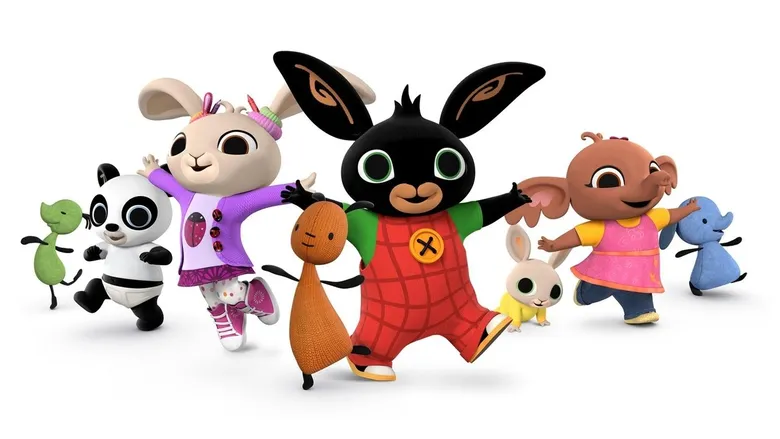
Three, the yellow block character, performs four short magic tricks for her friends One and Two using apples: a find-the-apple cup game, an apple-on-top balance game, a surprise reveal that shows '1 + 2 = 3', and a final trick that makes the apple cores grow into three new trees. The action takes place outdoors on a grassy hill with a few simple props. Along the way the characters introduce counting to three, the words 'first', 'second' and 'third', and the ideas of bigger and smaller. The episode ends with Three sharing the new apples so all three friends have some.

Explore more

Just launched: free lifetime premium for the first 1,000 members to activate their account.

Create your account

Search by title, show, tag, or topic

We use functional cookies and Google Analytics to improve our site. Learn more