



















This program is well-balanced. It remains mostly easy to follow and process. It is a good fit for the recommended age.
The pacing is moderate. The story remains easy for a child to follow.
The sound is soft and supportive.
The visuals are busy, with a lot of movement and frequent changes.
Each half of the episode follows one clear thread that a young child can hold onto: first building Bob a garage, then conquering a too-sharp forest turn. Events arrive in order with a clean beginning, middle and end, and every setback flows logically into the next attempt, like the garage sinking so the friends reason it must float instead. Cause and effect is spelled out plainly, for example the car flying into the leaves because the corner is too tight. The only small caveat is that the two separate stories ask the child to start fresh halfway through.
The tone is warm and steady throughout, with friends who reassure and praise each other ('don't worry Zack, answers are everywhere', 'you're so smart'). Emotions stay gentle: a little excitement about going fast, mild disappointment when a plan fails, and a tender wish to help Bob who has no garage of his own. Setbacks are met calmly and resolved right away, so a child is never left sitting in tension. Nobody mocks, nags or is made the butt of a joke, and the characters behave consistently from scene to scene.
This episode stands out for showing real, patient problem-solving. The friends notice a problem themselves, then try one idea after another, watch it fail, talk about why, and adjust: the garage is floated on sticks, drifts away, and is finally set on rocks that hold it steady. The sharp-turn story works the same way, moving from braking, to a stop wall, to a banked turn that lets the cars keep their speed. Each attempt has visible steps and clear reasoning, and the cheerful 'try try again' mantra models persistence rather than instant success.
The dialogue is clear, on-topic and easy to follow, and it does real work explaining what the characters are doing and thinking. New ideas are introduced through context, such as a 'banked turn' whose 'side is raised so you can go faster around the corner', or Bob noting he is 'not a submarine' so the garage must stay above water. Most lines are full sentences that give information or describe a plan, with only light filler like 'wow' and 'yeah'. Words are used correctly and consistently, and the speech comes through cleanly.
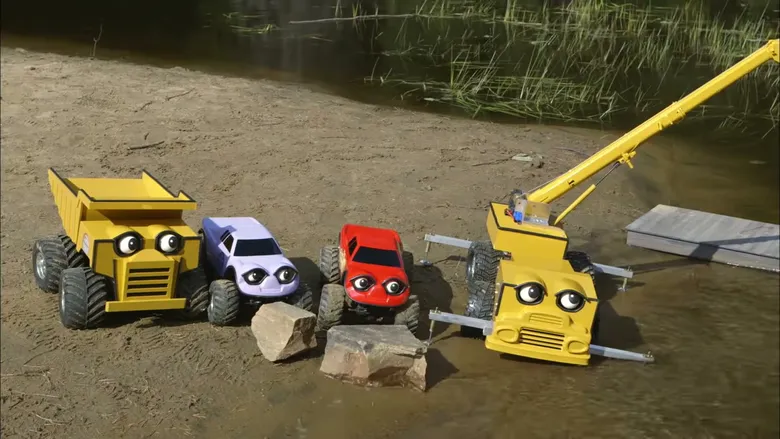
Filmed in a real forest with real water, rocks, sticks and leaves, the episode ties closely to the physical world, and the experiments with floating, sinking and momentum behave the way they really would. The activities have a clear purpose and are worked through in visible steps, and the social picture is recognisable: friends helping a friend, calling on Rex to build and Chase to relay a message. The one limitation is that the hands-on building is done by toy vehicles with cranes rather than by a child, so a young viewer takes away the ideas of trying again and stacking and floating things more than a directly copyable activity. The light fantasy of talking vehicles sits comfortably within otherwise realistic surroundings for this age.
More information
This score shows how inclusively the series portrays diverse people, families and cultures. Scale: Limited → Varied → Rich → Inclusive.
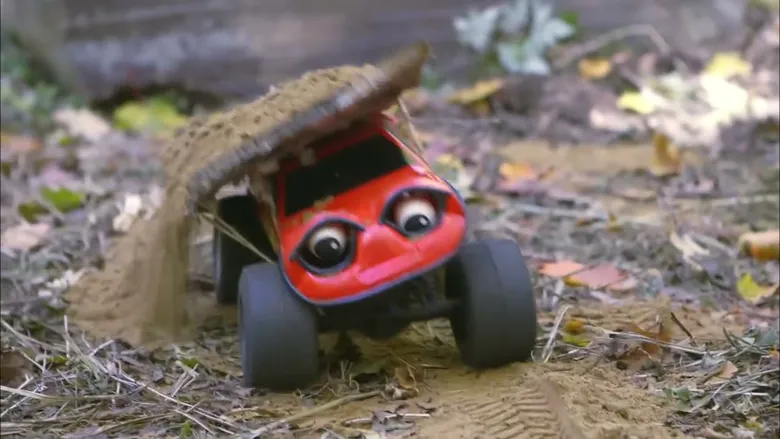
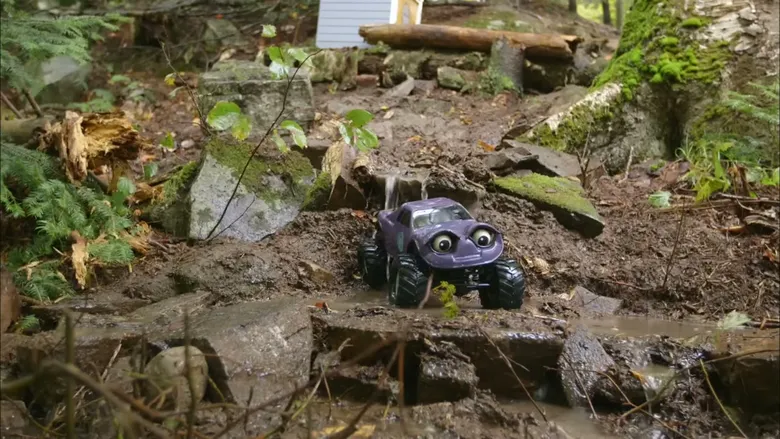
Zerby Derby plays out in a real forest populated entirely by toy vehicles with cartoon eyes: cars like Zack, Lily and Axle, plus Bob the boat, Rex the crane and a dump truck. Because no people appear, the everyday markers of human diversity such as cultural background, family forms, ages and bodies are simply not part of this world. The characters are told apart mainly by voice and name, and the speaking cast leans male, with Lily as the one clear female presence who joins in and spots the rock that finally solves the garage problem. Problem-solving is cooperative and the 'try, try again' message applies to everyone, though planning and the building work sit mostly with the male characters.
This score shows whether the series stays close to everyday reality or leans into fantasy. Scale: Fantasy → Mixed reality → Realistic.
This series follows real toy cars, trucks and a boat with faces as they roam real lakes, forests and trails and solve everyday physical problems together. There is no villain; the challenges come from situations like a garage that sinks or a corner that is too sharp, and the characters simply keep trying until something works. The talking-vehicle premise stays consistent, and the rest of the world behaves exactly as it would in life. For this age the blend of recognizable settings and light, coherent imagination fits comfortably.
This score shows how enjoyable the series is for parents watching along. Scale: Tedious → Tolerable → Pleasant → Enjoyable.
Real toy cars, trucks and a boat are filmed driving through genuine forests and water with simple animated faces added on top, and the craft behind that practical look holds up well. For an adult in the room it is calm and easy to sit through, carried by even children's voices and natural colours rather than anything harsh. The two small building-and-problem-solving stories offer enough trial and error to follow, though the constant 'try try again' refrain wears thin. Little here is aimed at an adult directly, so it lands as pleasant but unremarkable company.
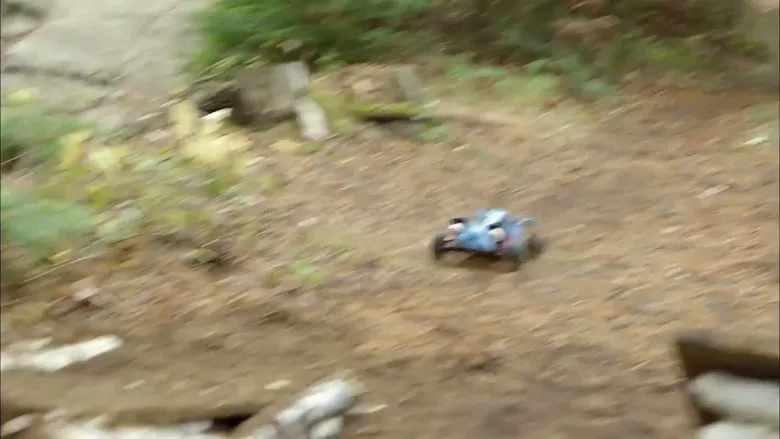
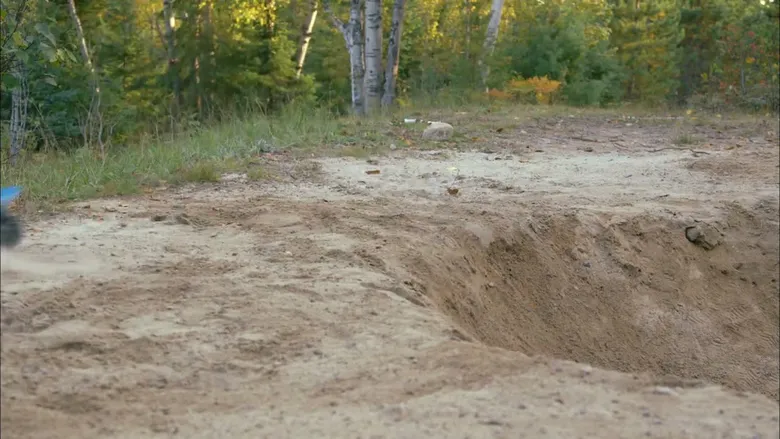
Zack and Lily realise their friend Bob the boat has no garage, so they build him one, watch it sink and then drift away, and finally set it on rocks so it stays above the water while Bob settles in to sleep. In the second story, Zack and Axle keep flying off a sharp forest turn, and after trying brakes and a stop wall they shape a banked turn that lets them round the corner at speed. Both stories unfold in a real forest with a lake and trails, using sticks, rocks and leaves found on site. Each problem is solved through repeated attempts under the friends' 'try try again' approach.