




This program is well-balanced. It remains mostly easy to follow and process. It is a good fit for the recommended age.
The pacing is fast. Images follow each other quickly, leaving little time to pause and take in what is happening.
The sound is soft and supportive.
The visuals are well-balanced, with a clear overall view.
Each of the two stories follows one clear line: build a ramp that clears both a branch and a puddle, then find the way out of a maze. New information arrives in small, digestible amounts, with a single idea developed at a time so a young child can keep up. Cause and effect is spelled out plainly, the long flat ramp sends Axle far but low, the short steep ramp sends him high but short, and combining the two shapes finally works. The beginning, middle and end are easy to recognise in both segments.
The mood stays warm and encouraging from start to finish. The cars cheer each other on with lines like 'way to go zerbies' and 'good luck, Axel', and nobody is mocked when an attempt fails. Small setbacks, a jump that lands in the mud or getting lost in the maze, are met with reassurance and a quick plan, so any worry passes almost as soon as it appears. When Zack and Rex feel stuck, Chase the helicopter helps them out kindly and without blame.
This episode stands out for the way it shows independent thinking. The characters set their own goals, deciding to build the best jump ever and to be the first to solve the maze, and then work through each problem one step at a time. Every attempt is tested, the result is examined out loud, and the next try is adjusted based on what went wrong, modelling genuine trial-and-error thinking. The maze is cracked the same way: when remembering every turn fails, the friends invent a trail of rocks to mark the path back out.
The dialogue is clear and the words match what is happening on screen, so terms like 'steep', 'in between', 'maze' and 'dead end' are learned from the action around them. Most of the talk does real work, explaining why a ramp shape matters or calling out directions such as 'first you back out, then you go left'. Speech is easy to follow, with only occasional filler and the odd playful exclamation like 'fabulous fenders'. Sentences are mostly complete, which suits a four-year-old listener, with a small caveat that excited moments drop into single words.
The activities mirror real backyard play: building ramps for toy cars, testing them, and finding the way through a maze. A child could copy much of this with their own cars and a pile of dirt or blocks, and the rock-trail trick is a genuinely usable idea. The world is a real forest with real mud, rocks and logs, and the only make-believe is that the cars talk and drive themselves, which stays consistent throughout. Friends working together, helping out and sticking with a hard task reflect everyday social patterns a preschooler will recognise.
More information
This score shows how inclusively the series portrays diverse people, families and cultures. Scale: Limited → Varied → Rich → Inclusive.
This forest world is populated entirely by toy-sized cars, dump trucks and a helicopter with cartoon eyes, so the familiar markers of human diversity, such as different backgrounds, family set-ups, ages and bodies, are simply not present, and the speaking characters here all come across as male. What the cast does do well is share the work: the friends build the ramp, test the jumps and puzzle out the maze together as equals, with different characters taking the lead at different moments. There is no fixed pecking order and no one is pushed permanently to the sidelines. Still, the uniform line-up leaves little room to reflect the variety of people and ways of living a young child meets in the real world.
This score shows whether the series stays close to everyday reality or leans into fantasy. Scale: Fantasy → Mixed reality → Realistic.
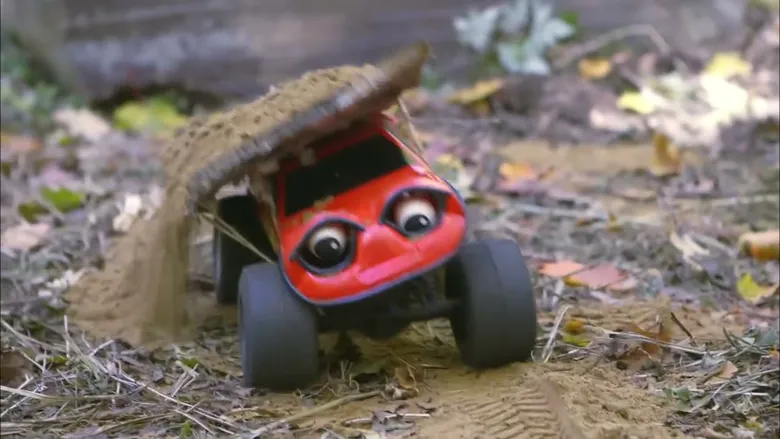
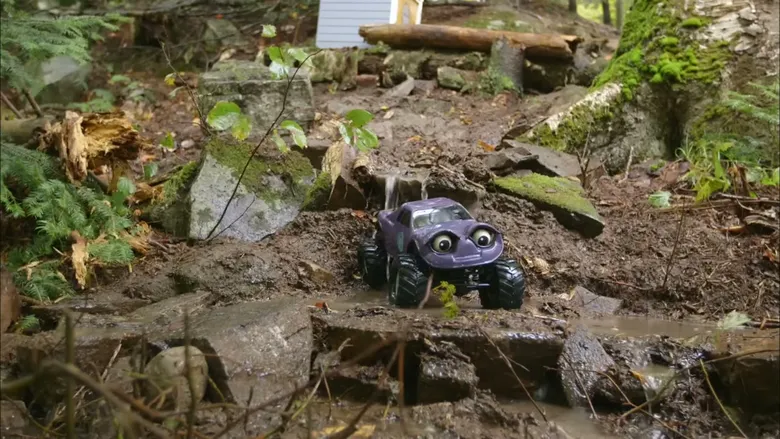
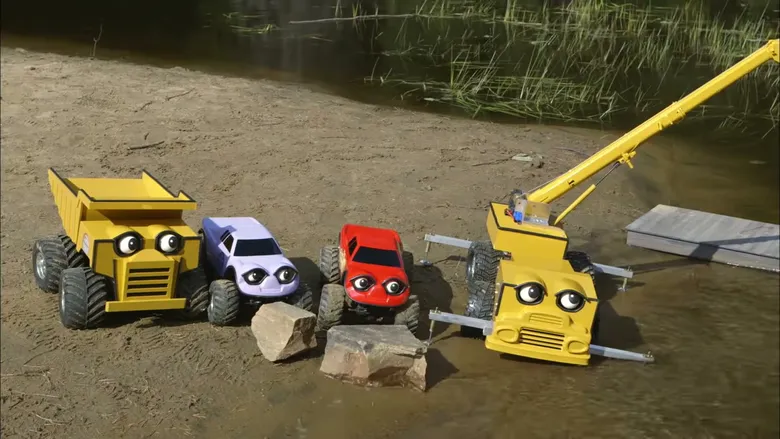
Zerby Derby plays out in a real outdoor world of dirt tracks, mud puddles, logs and forest, where toy vehicles with friendly faces talk and work together. The one imaginative leap is that the cars and trucks are alive and chatty, but everything they actually do stays grounded: they build ramps, test jumps, and find their way through a maze using trial and error. There is no villain anywhere in the story; every problem comes from a building challenge or a wrong turn, not from a bad character. The blend of a recognizable, hands-on world with living vehicles fits a four-year-old well and keeps the focus on real problem-solving.
This score shows how enjoyable the series is for parents watching along. Scale: Tedious → Tolerable → Pleasant → Enjoyable.
For a co-viewing adult this is watchable but undemanding. The two problem-solving stories, building the best jump and finding the way out of the maze, are easy to follow, and the natural outdoor setting keeps it calm to have on in the room. The dialogue stays strictly child-pitched and the constant 'try try again' refrain wears thin, while the production stays basic with cartoon eyes laid over real vehicles.
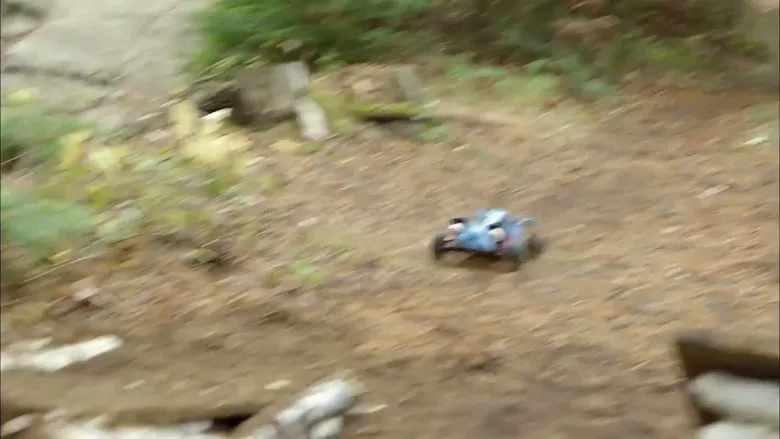
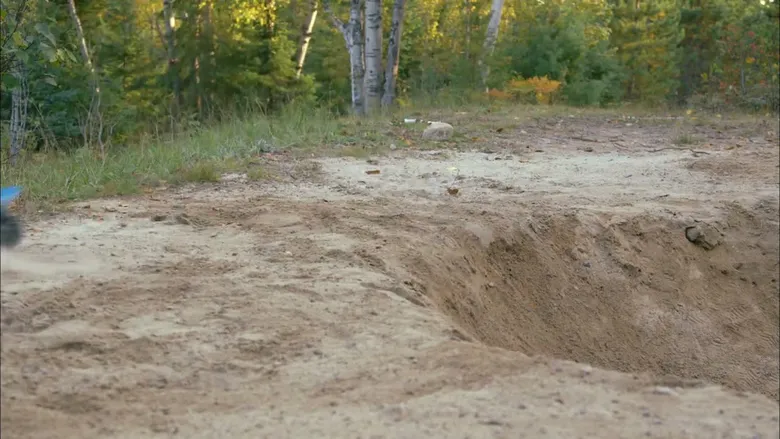
Axle, Zack and the Construction Zerbies build a ramp that can launch Axle over both a tree branch and a mud puddle. Their first two tries fall short, one too low and one too steep, until they study both ramps and build one with a shape in between that works. In the second story, Zack and Rex try to be the first to solve Zerby Town's maze, get lost on the way out, and finally mark their path with a trail of rocks to find the exit. Both stories play out among toy cars in a real forest.