














This program is well-balanced. It remains mostly easy to follow and process. It is a good fit for the recommended age.
The pacing is moderate. The story remains easy for a child to follow.
The sound is soft and supportive.
The visuals are busy, with a lot of movement and frequent changes.
Each of the two stories follows one clear thread from start to finish, so a child always knows what is going on. Events build in order: the friends notice a problem, try a fix, see why it did not work, and move to the next idea. Cause and effect is spelled out plainly, such as water running around a pile of dirt because it is not blocked, or a dam overflowing once it fills up. New information arrives one idea at a time without piling up.
The mood stays warm and encouraging from start to finish. When something goes wrong the characters answer with support rather than blame, repeating their 'try, try again' motto and cheering each other on, like Zack telling Rex 'just keep practicing, buddy'. The brief worry that the dam might break is talked through calmly and resolved, so tension never lingers. Feelings stay steady and predictable from one scene to the next.
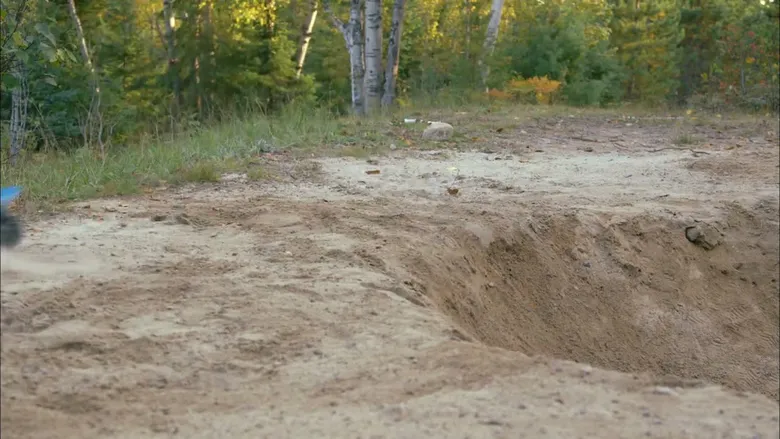
This episode stands out for how much thinking it puts on screen. The characters name each problem, test an idea, notice exactly why it failed, and adjust: dirt lets the water slip around it, so they dig a pit, then redirect the stream entirely. Rex works through hiding spot after hiding spot, rock, sticks, leaves, then mud, reasoning each time about why his yellow paint still shows. The children drive every solution themselves, and the 'try, try again' mantra models persistence without anyone swooping in to rescue them.
The dialogue is clear and conversational, with words a child can pick up from context, like 'stream', 'dam', 'collect', 'camouflaged' and 'blend in'. The characters mostly speak in full sentences that describe what they are doing and why, which gives the talk real purpose. The small caveat is the occasional filler ('uh', 'um') and a few mumbled lines, though the meaning stays easy to follow. New ideas are explained as they come up, such as how mud helps Rex disappear into the plants.
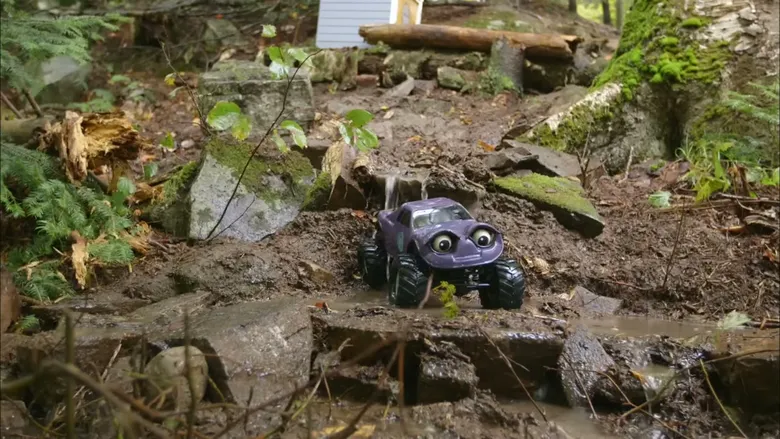
The activities connect directly to things children do outdoors: damming a trickle of water, digging, playing hide-and-seek, and covering up to camouflage. The world is a real forest with real water, mud, sticks and leaves, so the actions are easy to copy in a backyard or sandbox. The one step away from real life is that the cars talk and have faces, though everything around them behaves by real rules. Social moments like taking turns and helping a friend mirror everyday play.
More information
This score shows how inclusively the series portrays diverse people, families and cultures. Scale: Limited → Varied → Rich → Inclusive.
Zerby Derby plays out entirely with toy cars in a forest, so the usual markers of human diversity, different backgrounds, ages, bodies and family forms, are absent and the world feels narrow. Within that small cast the behaviour is handled fairly evenly: characters take turns having ideas, share the problem-solving and all live by the same 'try, try again' spirit. There is no strong stereotyping in who leads or who shows feelings, though the group skews male with Lily as the main female voice. The strength here is balanced cooperation rather than a broad or inclusive picture of how people live together.
This score shows whether the series stays close to everyday reality or leans into fantasy. Scale: Fantasy → Mixed reality → Realistic.
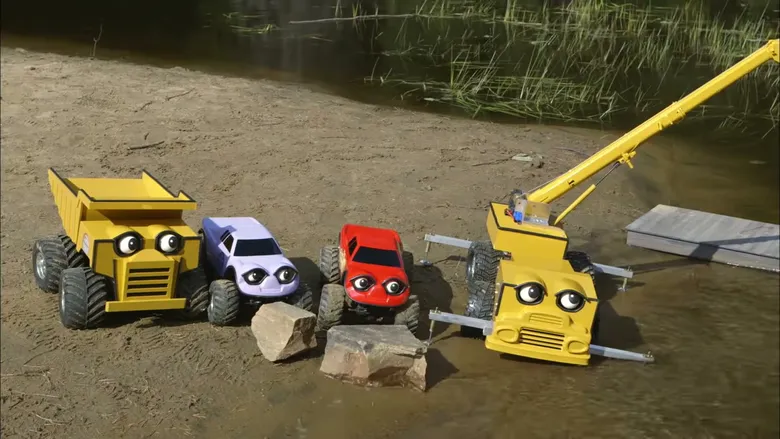
The world is almost entirely real: a forest with rain, mud and running water, and the cast is made up of ordinary toy cars and construction trucks. The only flight of imagination is that the vehicles talk and have personalities, and that idea stays consistent while the physics around them stays true to life. There is no villain anywhere; the story turns on a flood the friends solve together and a relaxed game of hide-and-seek. For a four-year-old this is a grounded, easy fit that mirrors how children already play with toy cars.
This score shows how enjoyable the series is for parents watching along. Scale: Tedious → Tolerable → Pleasant → Enjoyable.
This holds up reasonably for a parent in the room. The flood rescue offers genuine problem-solving to follow, and the filming of real vehicles in real mud, streams, and forest gives it a tactile, watchable look with a calm, even soundscape. The trade-off is that the humor and dialogue stay squarely pitched at children, and the hide-and-seek half leans heavily on repetition. Pleasant enough as a background presence, with little extra for the adult viewer.
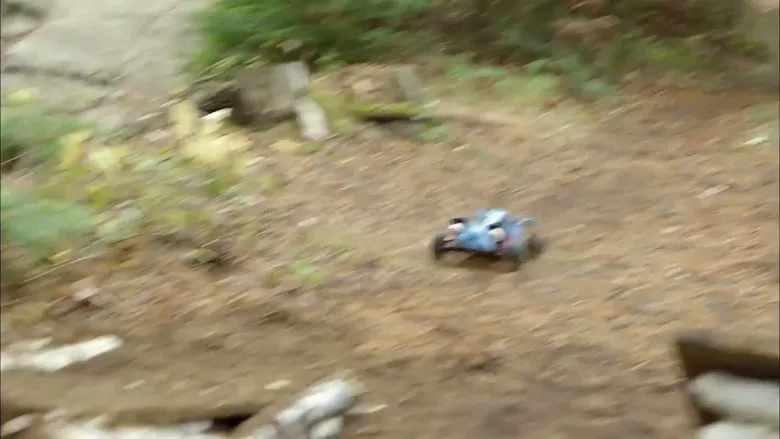
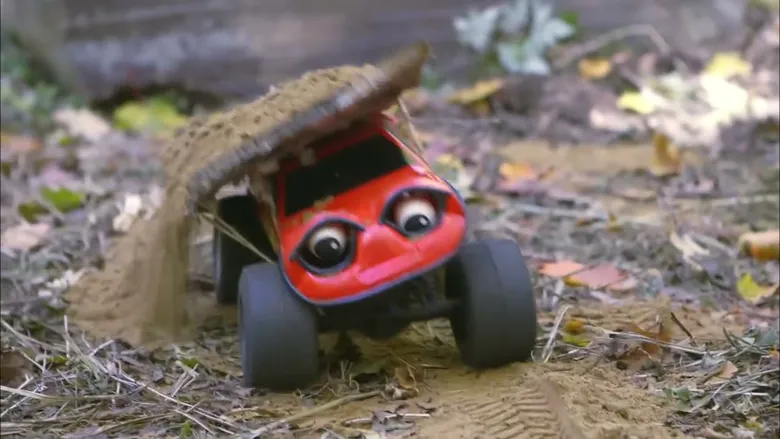
On a rainy day in the forest, Zack and Lily discover that rain has formed a stream washing away the town's roads, and with the construction Zerbies they try blocking it with dirt, then dig a pit to hold the water, and finally redirect the stream away from town. In the second story Zack and Rex play hide-and-seek, and Rex, a big yellow car, keeps failing to hide behind a rock and under sticks and leaves until he covers himself in mud and blends into the plants. Rex is crowned the hide-and-seek champion, and the friends head off to wash the mud away. Both stories are set entirely outdoors among real water, dirt and trees.