















This program is well-balanced. It remains mostly easy to follow and process. It is a good fit for the recommended age.
The pacing is moderate. The story remains easy for a child to follow.
The sound is soft and supportive.
The visuals are busy, with a lot of movement and frequent changes.
Each half of the episode follows one clear goal, making the sand pit bigger and then keeping a flower safe on the trail, so there is only ever one thread to follow. Events build in order with a recognisable beginning, middle and end, and each new idea arrives one at a time rather than piling up. Cause and effect is easy to read: Zack drops his load because he has no bucket to hold it, and a dirt mound steers cars around the flower because they cannot drive straight through it. This clarity helps a young child stay oriented and predict what comes next.
The mood stays warm and even throughout, with friends encouraging each other and no real distress on screen. When something goes wrong, like sand spilling or a car bumping into a rock, the reaction is gentle and quickly followed by reassurance, usually the shared line 'it's okay, we can always try, try again'. Feelings shift gradually rather than swinging between extremes. The only small wobbles are mild grumbles, such as Lily wondering why she always ends up watching the flower, and they pass without conflict.
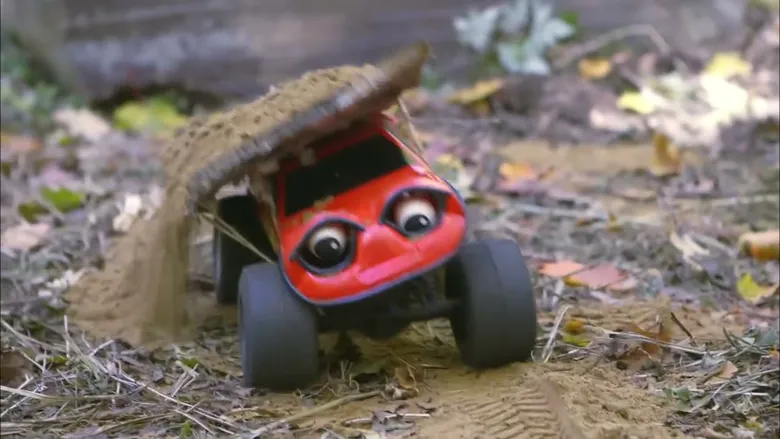
This episode stands out for showing how to work through a problem step by step. The characters name what is wrong, try something, watch it fail and then adjust: Zack cannot carry sand in his open body, so he finds a curved piece of bark to use as a scoop, and a rock that blocks the whole trail is swapped for a dirt mound that simply nudges cars around the flower. The friends drive these ideas themselves rather than waiting to be rescued, and the repeated 'answers are everywhere' invites them to look around and reason it out. Failure is treated as an ordinary part of figuring things out.
The dialogue uses short, clear sentences and concrete words a four-year-old will know, like sand, bucket, scoop and mound, while slipping in useful new ones such as 'haul' and 'solution' through what the characters do. Talk mostly serves the task at hand, explaining how to move the sand or why a mound works better than a rock, rather than empty filler. Words are used consistently, so a 'dump truck' or a 'scoop' always means the same thing. A few playful exclamations sit alongside the explanations without crowding them out.
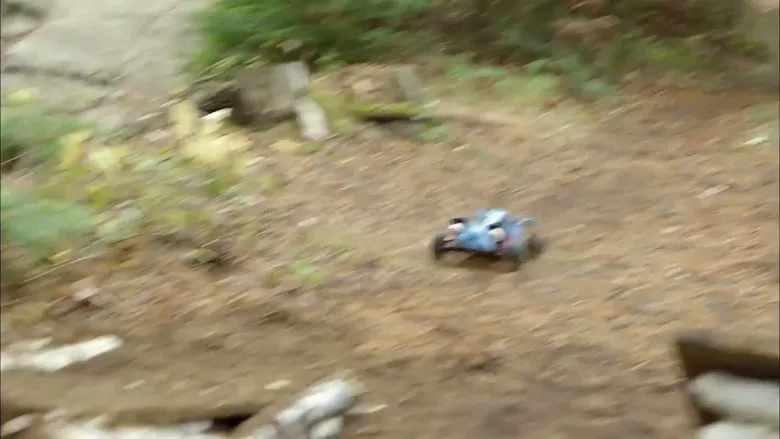
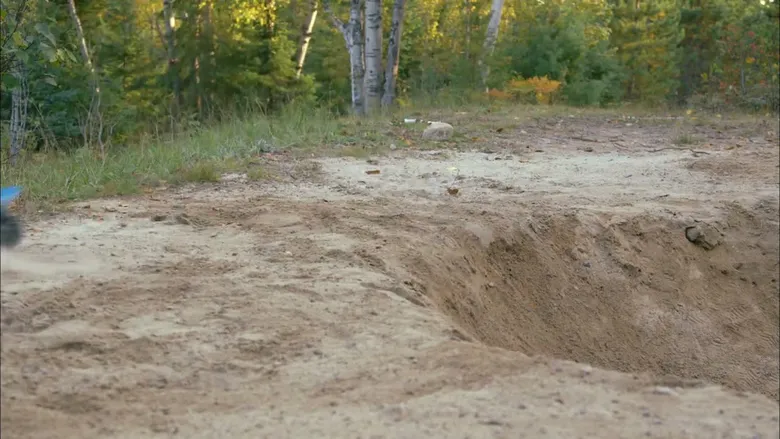
The activities connect closely to things a child knows from real life: digging and moving sand, using a tool to carry more, and working out how to protect a flower on a path. It is filmed in a real forest with real sand, sticks and rocks, so things behave as they would in a backyard, the one imaginative touch being that the cars talk. The social moments are familiar too, with friends helping, asking for help and taking turns. A child could carry the persistence idea and the scoop trick straight into their own sandpit play.
More information
This score shows how inclusively the series portrays diverse people, families and cultures. Scale: Limited → Varied → Rich → Inclusive.
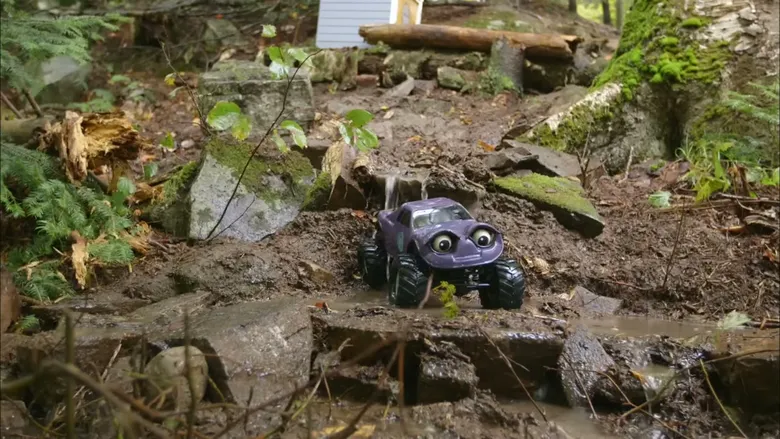
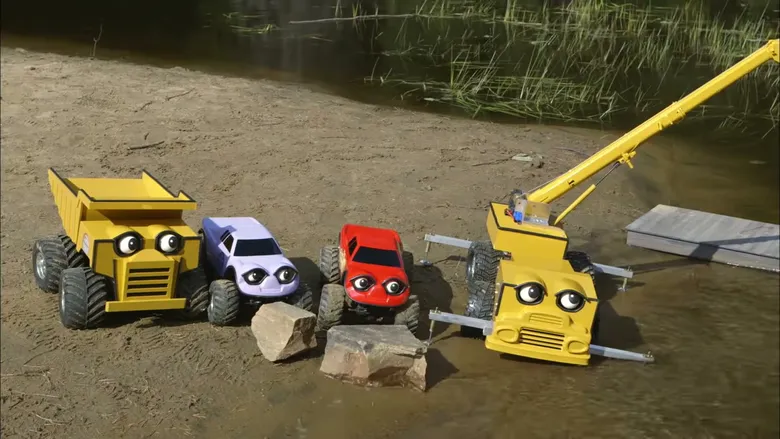
The cast is made up entirely of small toy cars with animated faces, living in one stretch of forest, so no people, cultural backgrounds, family forms or different walks of life appear on screen. A few cars are distinct and recurring, including a female character named Lily, but the overall picture stays narrow and uniform. In the stories the two main cars, Zack and Rex, lead the hauling, exploring and problem-solving, while Lily spends much of her segment parked beside a flower as a lookout. That lookout duty is later handed to Rex, who openly grumbles about always being the one to watch the flower, so the pattern leans mildly traditional rather than being rigidly fixed.
This score shows whether the series stays close to everyday reality or leans into fantasy. Scale: Fantasy → Mixed reality → Realistic.
The world of Zerby Derby is almost entirely real: actual forest trails, an outdoor sand pit, flowers, rocks, bark and moss, with the single playful twist that the toy trucks talk and have feelings. There is no villain anywhere. Every problem comes from a situation, like a sandpit that is too small or sand that keeps spilling, and the characters solve them by trying again and looking around for answers. The talking-truck idea stays consistent, with each vehicle limited by what its real shape can do, and this grounded mix of real play and a gentle imaginative layer fits a four-year-old comfortably.
This score shows how enjoyable the series is for parents watching along. Scale: Tedious → Tolerable → Pleasant → Enjoyable.
The episode keeps a co-viewing parent at arm's length, with circular, child-pitched exchanges and little to latch onto. A simple problem-solving arc gives it some shape, but the heavy repetition of hauling sand and stock catchphrases wears thin for older ears. The natural forest setting and gentle background music keep it from grating, and the real vehicles filmed outdoors with added cartoon faces are a consistent, intentional touch. Taken together it is watchable in the background for an adult without offering much reward.
Two toy cars, Zack and Rex, want to play in the Zerby Town sand pit, but it is too small, so they set out to haul sand back from a larger pit deep in the forest. When carrying it turns out to be hard, they keep inventing new methods, including a bark scoop, until the pit is big enough. In the second story, Lily blocks the trail to stop cars from crushing a flower, and the friends test a rock and then a dirt mound until they find a way to keep both the flower and the path clear. Both stories end with the problems solved through repeated tries.