
















This program is stimulating. It actively demands attention and can feel intense. For the recommended age, this may be on the more intense side.
The pacing is fast. Images follow each other quickly, leaving little time to pause and take in what is happening.
The sound is soft and supportive.
The visuals are busy, with a lot of movement and frequent changes.
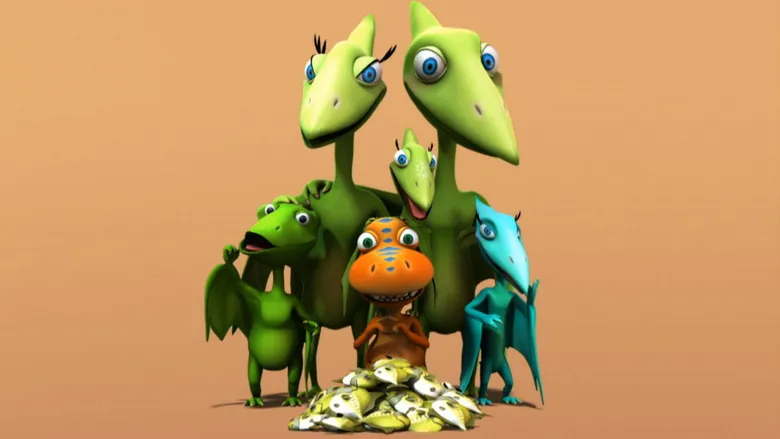
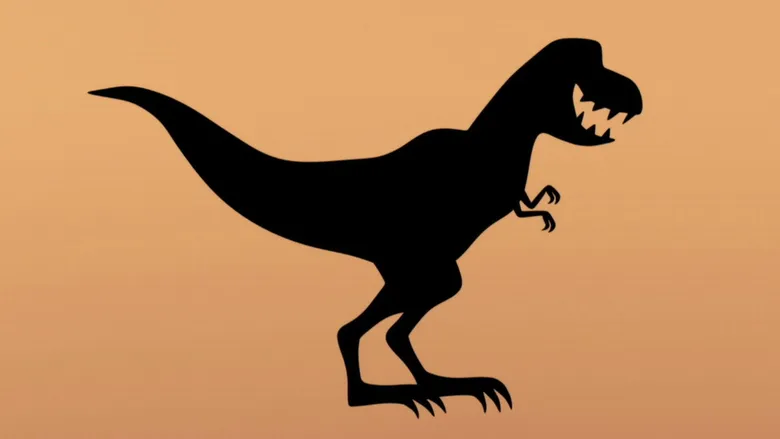
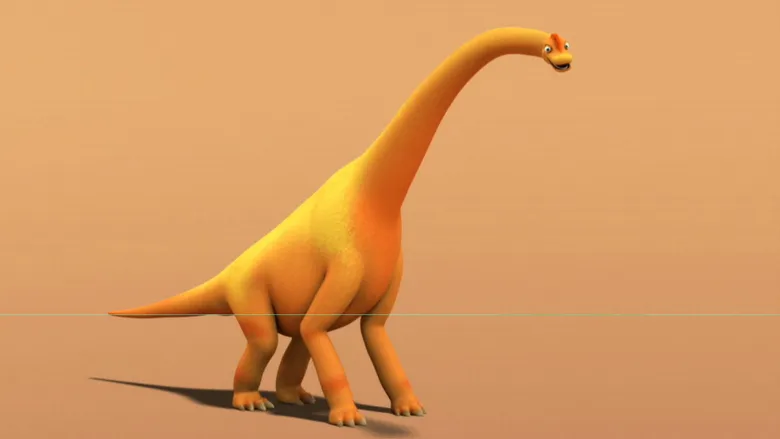
The story follows one clear thread: the Pteranodon family spends a hot day together and learns how a Stegosaurus copes with the heat, with a beginning, middle, and end that are easy to follow. Events connect logically, one leading into the next, and the train rides act as clear signposts between locations. The built-in paleontology segment steps away from the story but stays tied to the same topic, so the through-line holds. The one caveat is that the episode packs in a fair amount of new information, including dinosaur facts and science words, which is a lot to take in for the youngest children in the recommended range.
The emotional tone stays warm and even throughout. Characters treat each other with kindness and curiosity, the mother is patient and reassuring, and there is no teasing, shouting, or frightening conflict to unsettle a young child. When small worries come up, such as the discomfort of the heat, they are resolved gently and soon after. Emotional shifts are mild and gradual rather than sudden, which keeps the experience steady and safe for a three-year-old.
The episode models thinking out loud in a way young children can follow: the characters notice something, wonder about it, form an idea, and check whether it holds up. Buddy and his siblings drive much of this themselves through their own questions and curiosity rather than waiting to be told what to do. A problem like understanding why a Stegosaurus has back plates is worked through in recognizable steps, with the adults guiding rather than solving everything. The reasoning is sound and visible, though the answer is often handed over fairly directly once the question is raised.
Language is clear, well spoken, and used for a purpose, mostly to describe, explain, and ask questions rather than just to react. Characters speak in complete, well-formed sentences, and words are used correctly and consistently, so the dialogue is easy to understand. The episode also introduces real science vocabulary, such as 'hypothesis,' 'species,' and 'Stegosaurus,' usually explained in context. For a three-year-old, some of these terms sit above their everyday vocabulary, even though the surrounding sentences stay simple.
Much of what happens on screen cannot be carried straight into a child's own day: the talking dinosaurs, the time-traveling train, and the prehistoric adventures are firmly imaginative, which limits how directly a three-year-old can copy the activities in real life. What grounds the episode is its real science: the facts about Stegosaurus are accurate, and the live-action segment with a real paleontologist, who compares the dinosaur's size to an elephant, ties the imagination back to the real world. The family and friendship dynamics are also recognizable, so the social side connects even when the setting does not.
More information
This score shows how inclusively the series portrays diverse people, families and cultures. Scale: Limited → Varied → Rich → Inclusive.
Dinosaur Train tells its story through a family of dinosaurs, so the people and cultures children see in everyday life are mostly absent, apart from one live-action host and a child near the end. What it does offer is a warm picture of a family built through adoption, with Buddy the young T. rex raised by Mrs. Pteranodon alongside her own chicks. Boys and girls are equally curious and capable, taking turns to lead, ask questions and explore, and the dinosaurs treat one another as equals. The main gap is human variety, with the factual segment resting on a single adult man.
This score shows whether the series stays close to everyday reality or leans into fantasy. Scale: Fantasy → Mixed reality → Realistic.
The series is built on an imagined prehistoric world where dinosaurs talk, sing, and ride a time-traveling train, so little of the setting comes from a child's daily life. There is no villain anywhere; the story turns on a young dinosaur making friends with Morris the Stegosaurus, and any tension comes from new situations rather than a bad guy. The fantasy keeps to its own rules throughout, and a short live-action segment with a paleontologist links the made-up adventures to real science. For the youngest viewers the world is more fantastical than a mostly realistic mix would be, but the warmth and friendship themes stay easy to follow.
This score shows how enjoyable the series is for parents watching along. Scale: Tedious → Tolerable → Pleasant → Enjoyable.
This ride with the Pteranodon family and Morris, a singing Stegosaurus they meet along the way, carries a clear little story rather than a looped activity, which makes it easy to follow even if you are only half watching. The voices stay warm and the prehistoric palette of greens and earth tones is easy on adult ears and eyes. The live-action paleontology insert with a real expert hands a parent some genuine dinosaur facts, though the jokes themselves stay aimed squarely at the child. Craft is solid and consistent throughout.
Themes
Dinosaurs
Central
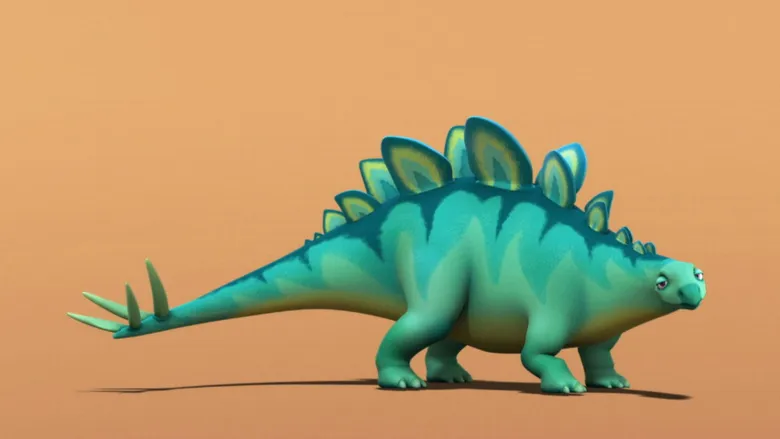
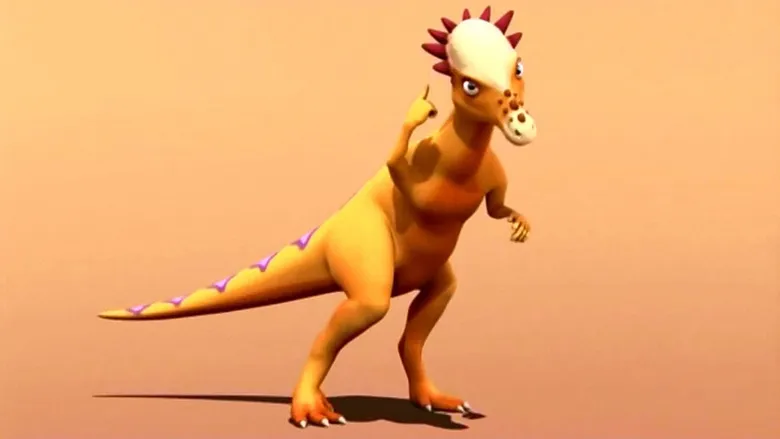
The whole story features dinosaur characters, including the orange Pteranodon family and a green Stegosaurus met in a prairie.
Science
Central
Characters investigate why a Stegosaurus has back plates, and a live-action paleontologist shares real facts about the species.
The Pteranodon mother and her children, including the young T. Rex Buddy, ride the Dinosaur Train and spend a hot day in a prehistoric prairie. There they meet a large green Stegosaurus and work out how its back plates help it cope with the heat. A live-action segment with a paleontologist, Dr. Scott, compares the Stegosaurus to an elephant and shares real facts about the animal. The episode returns to the family before closing.