







This program feels calm and predictable. It gives room to watch and process. For the recommended age, this may feel calm or somewhat slow.
The pacing is moderate. The story remains easy for a child to follow.
The sound is intense and continuously present.
The visuals are well-balanced, with a clear overall view.
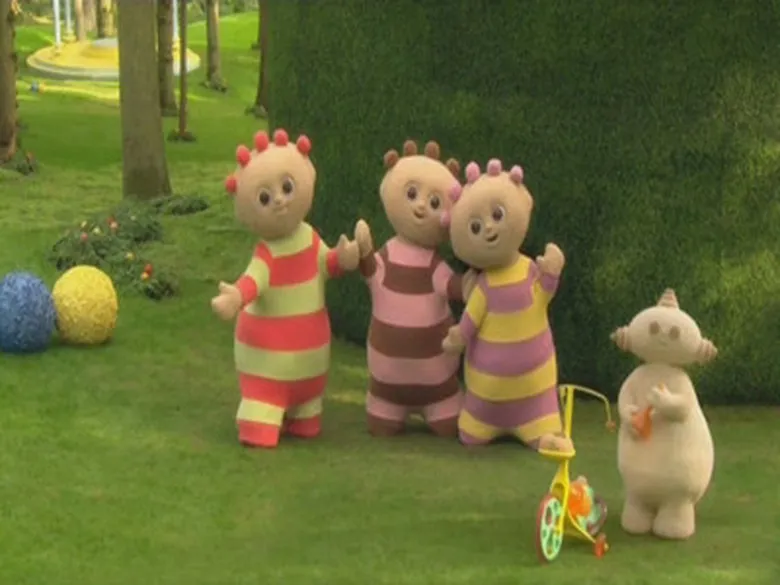
The episode follows one simple line: the Tombliboos invent a waving game and visit each friend in the garden. Events arrive one at a time with clear transitions and a recognisable beginning, middle and end. The amount of new information per scene stays very low, which suits a two-year-old. The small caveat is that some moments rely more on atmosphere than on a clear cause leading to a clear consequence.
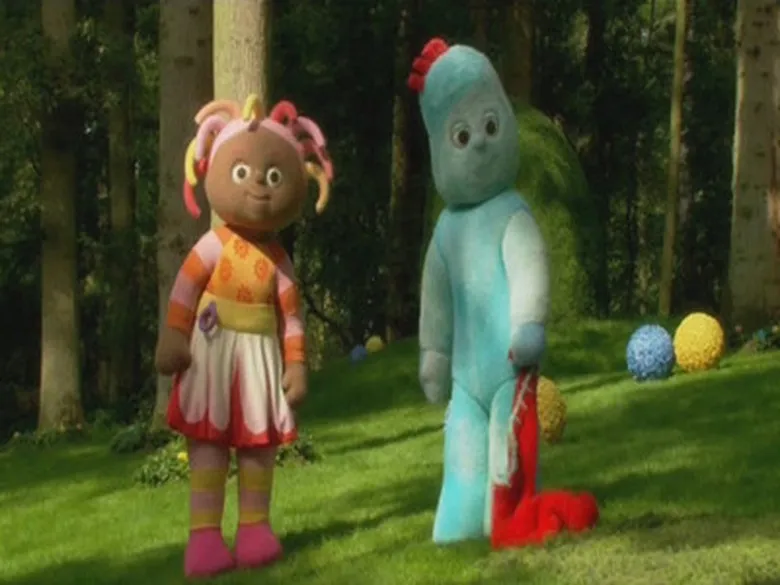
This pillar is the episode's strongest. Voices stay soft, faces stay friendly, and the characters greet each other with gentle waves and quiet laughter throughout. The only mild worry, Igglepiggle is not in his bed yet, is named calmly by the narrator and resolved in the same scene as he drifts off in his boat. Transitions between feelings happen slowly, with music carrying the child from playfulness into sleep.
This pillar scores low because the episode barely shows thinking or solving. The Tombliboos do invent the waving game themselves, which gives a small spark of initiative, but no problem is actually named, attempted, evaluated and resolved. The 'who is not in bed' moment is answered by the narrator rather than worked out by a character, and other characters mostly react with smiles instead of reasoning steps. Cause-and-effect is implied rather than modelled out loud.
The narration that does appear is calm and age-appropriate, with simple sentences like 'Here is my nose' and 'what a happy waving game'. What holds this pillar down is the heavy reliance on babble and nonsense syllables from the Tombliboos and Makka Pakka, plus long stretches with no speech at all, so meaningful word use stays thin. Sentences from the narrator are well-formed, but they make up a small share of the audio. Much of the talking is expressive sound rather than informative content.
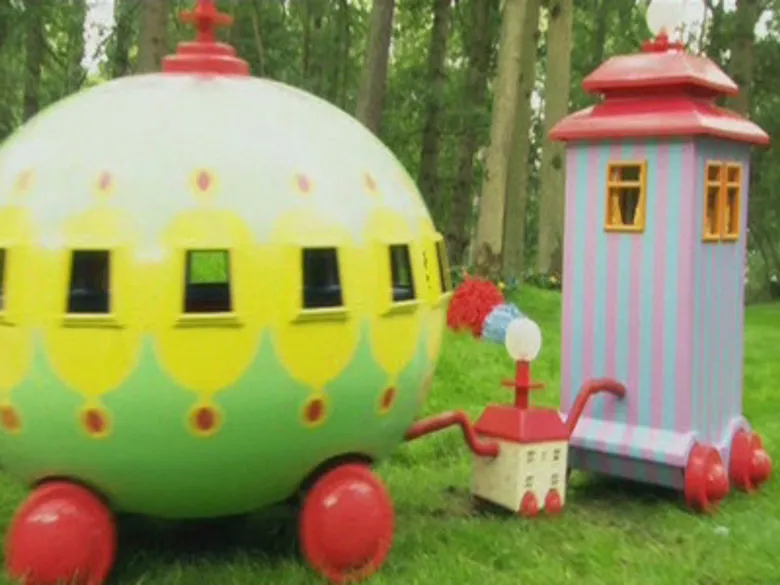
The pillar lands in the middle because the bedtime routine and the simple act of waving hello are recognisable from daily life and easy to copy. Holding it back is the fully fantastical world: the Pinky Ponk airship, the Ninky Nonk train, the Haahoos and the entire cast are imagined creatures with no real-world parallel, which at age two is a heavy fantasy load. Activities like 'playing a waving game' have purpose but rarely build out into clear, multi-step actions a child could follow. Social moments such as greeting friends and settling down to sleep are the most transferable parts.
More information
This score shows how inclusively the series portrays diverse people, families and cultures. Scale: Limited → Varied → Rich → Inclusive.
The cast is made up almost entirely of fantasy creatures and puppet figures who share a magical garden, so questions of human diversity do not really apply in the usual sense. What the show does well is treat every character as belonging: the three Tombliboos, Igglepiggle, Upsy Daisy, Makka Pakka, the Pontipine family and the large Haahoos all join the same waving game without hierarchy. Because there is virtually no human representation, the breadth of real-world diversity stays limited, but the show avoids stereotypical roles by giving each creature equal standing in the play.
This score shows whether the series stays close to everyday reality or leans into fantasy. Scale: Fantasy → Mixed reality → Realistic.
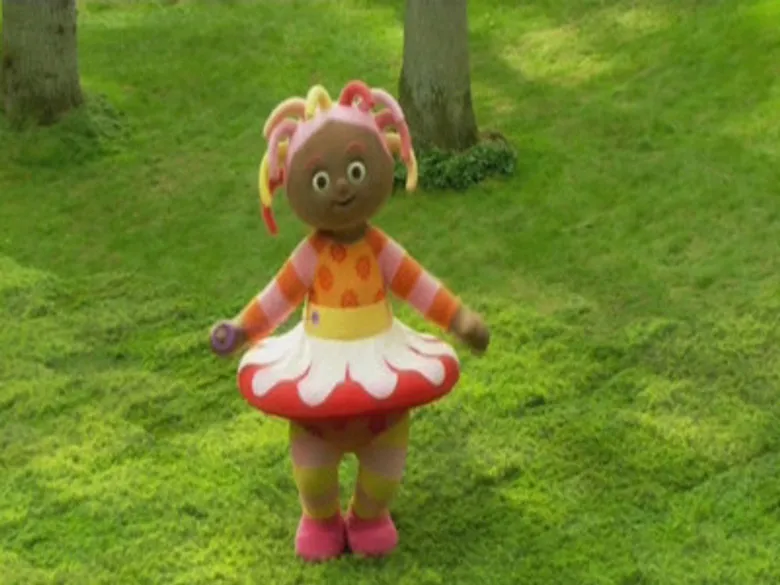
This episode plays out in a wholly imagined Night Garden world filled with fantastical creatures like Igglepiggle, Upsy Daisy, the Tombliboos and Makka Pakka, with magical vehicles like the Ninky Nonk and Pinky Ponk. There is no villain anywhere in the story; the action is built around gentle games and waving, not conflict. The fantasy world stays internally consistent, with each character keeping their own habits and place across the episode. The mismatch sits with age fit: at 2 years the recommended band leans toward mostly realistic content with only light imagination, and this show offers the opposite, an entirely dream-like fantasy world.
This score shows how enjoyable the series is for parents watching along. Scale: Tedious → Tolerable → Pleasant → Enjoyable.
The production is polished and the calm, lullaby-paced atmosphere makes it easy to be in the room with, which lifts the overall parental experience. There is, however, almost nothing aimed at adults: no layered humor, no references, and the plot is a slim ritual of waving and bedtime. Parents can rely on it as a low-irritation co-viewing window, but should not expect to be entertained themselves.
Themes
Play
Central
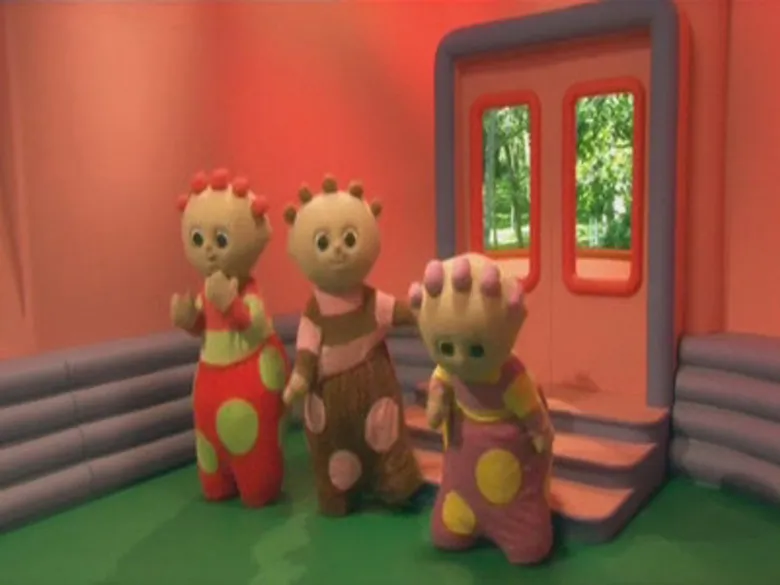
The central activity is 'a waving game' that the Tombliboos invent and share with everyone.
In a magical garden between waking and sleeping, the three Tombliboos invent a waving game and travel through the trees to share it with their friends. They wave to Igglepiggle, Upsy Daisy, Makka Pakka, the Pontipines and even the large Haahoos, riding along on the Pinky Ponk and Ninky Nonk. The narrator describes each meeting in a soft voice while music and gentle laughter carry the action. The episode closes with the narrator tucking every character into bed, ending as Igglepiggle drifts away in his little boat.