























This program is well-balanced. It remains mostly easy to follow and process. It is a good fit for the recommended age.
The pacing is moderate. The story remains easy for a child to follow.
The sound is intense and continuously present.
The visuals are calm and well-organized.
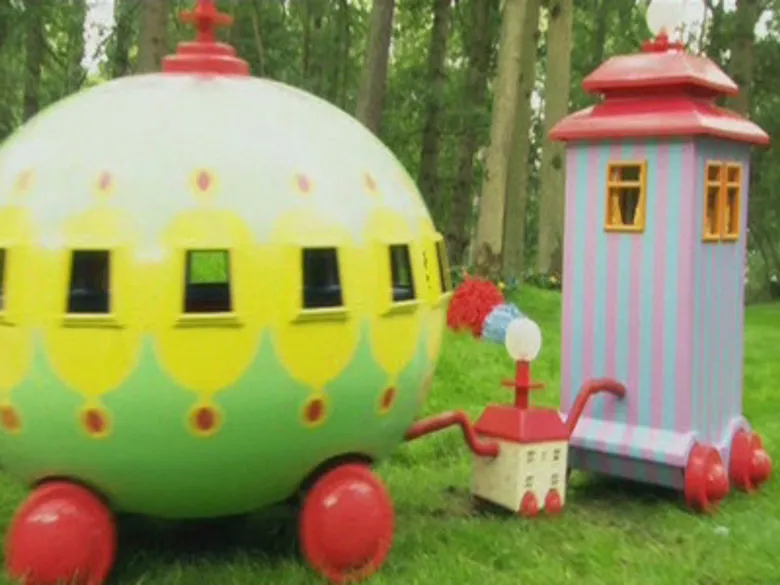
The storyline is easy to follow for a toddler: Makka Pakka's trumpet makes a funny noise, the friends notice, a stone is found inside, and the trumpet sounds right again. Information arrives one small unit at a time, with each idea given room to land before the next. Cause and effect are made explicit, and the closing 'once upon a time in the night garden' recap restates the whole sequence. A small caveat: the show weaves in side visits to the Pontipines, Tombliboos, and Pinky Ponk that aren't tied to the main thread, which can feel like detours.
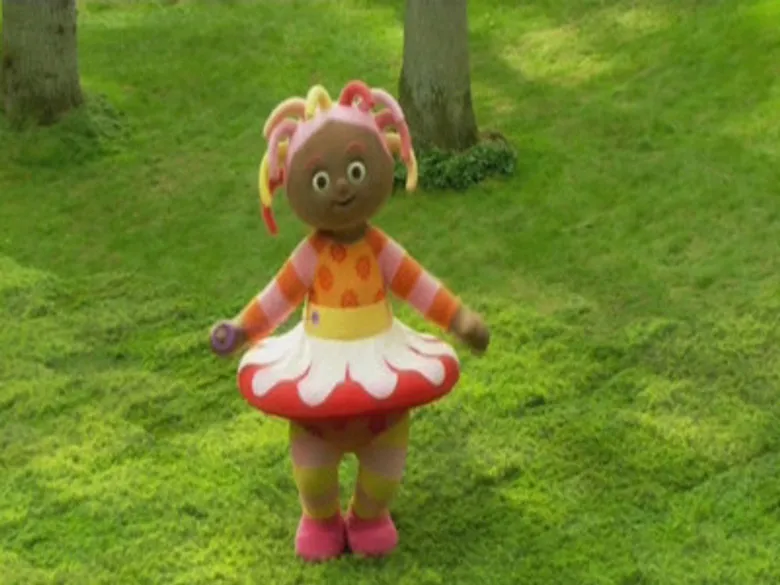
Emotional safety is a defining strength here. Voices stay soft, expressions stay friendly, and the warm narrator gently reassures ('don't worry Iggle Piggle, it's only a funny noise'). The small worry about the trumpet is resolved within the same scene with Upsy Daisy's comforting dance and the discovery of the stone. Transitions are gradual, and characters consistently treat each other with kindness, including the gift exchange between Makka Pakka and Upsy Daisy.
This pillar lands in the middle because the problem and its resolution are simple but not really worked through on screen. The friends notice the funny noise and Upsy Daisy responds with a comforting dance, but the actual removal of the stone happens off-screen and the discovery is delivered by the narrator rather than shown as a step-by-step investigation. Initiative is mostly emotional (Upsy Daisy cheering Makka Pakka up) rather than analytic, so the visible thinking process for a toddler is thin. Cause and effect (stone in, funny noise; stone out, normal noise) is stated clearly, which keeps the score from dropping further.
Language is well matched to a two-year-old: short sentences, concrete words, and the narrator repeats key lines twice ('what a funny noise', 'thank you Makka Pakka') so meaning has time to settle. Sentences are mostly informative or descriptive rather than expressive filler. The caveat is that much of the dialogue from the characters themselves is nonsense babble or name-calls ('Igglepiggle', 'Makka Pakka', 'Upsy Daisy do'), which limits the meaningful word use across the full runtime even though the narrator's English is clear and stable.
This pillar scores low because the world and activities are almost entirely fantasy and not transferable to a toddler's daily life. The setting is a magical garden, the characters are soft puppet-creatures, and the central object is a fantasy trumpet that holds a stone. Activities like Makka Pakka washing with sponge and soap or the friends exchanging a small gift do connect to recognisable social moments, but most of the running, dancing, and trumpet-playing has no clear real-world counterpart. For the 2-year recommended age, the rubric still expects 'mostly realistic with light imagination', and this episode sits well on the fantasy side of that line.
More information
This score shows how inclusively the series portrays diverse people, families and cultures. Scale: Limited → Varied → Rich → Inclusive.
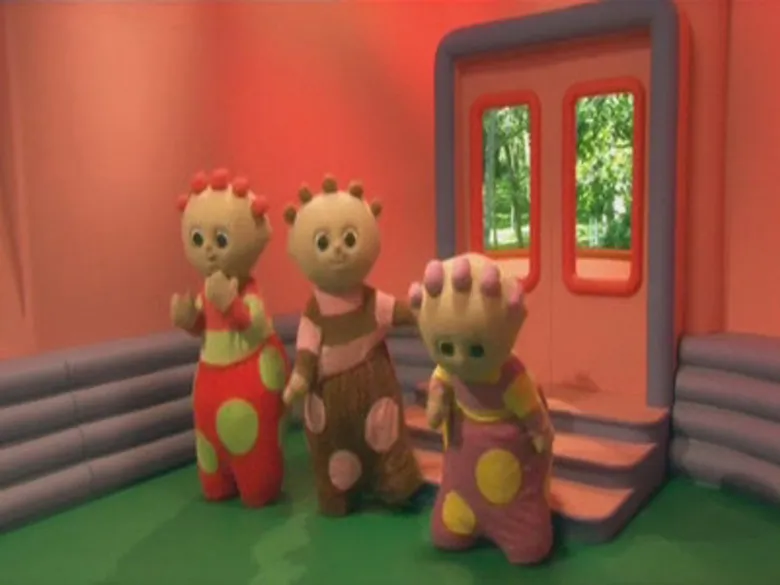
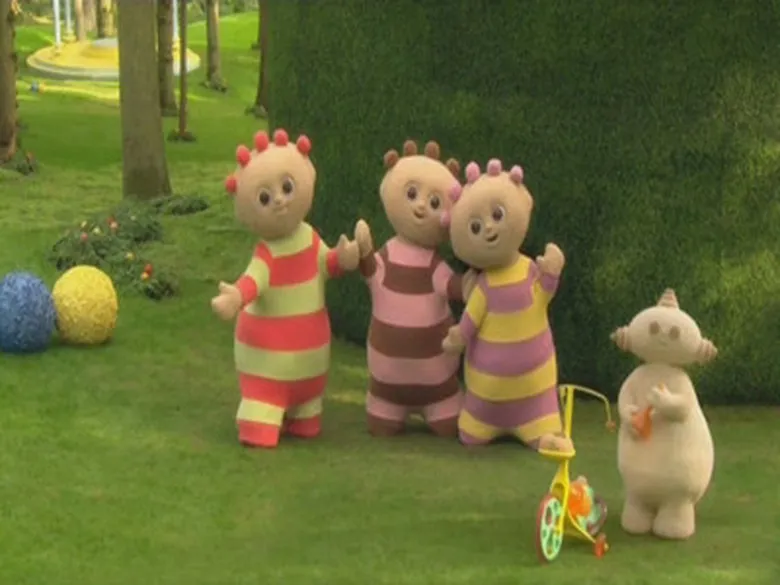
In the Night Garden takes place in a self-contained imaginary world populated entirely by stylized puppet creatures, so parents will not see human ethnic, cultural or socioeconomic diversity reflected on screen. Within that fantasy frame there is some variety: Igglepiggle, Upsy Daisy and Makka Pakka have different shapes, sizes and looks, and the Pontipines appear as a family unit of ten small figures. Roles stay gentle and cooperative, with characters helping one another solve the puzzle of the funny trumpet noise, though Upsy Daisy carries a soft feminine coding through her dance and affectionate kiss while the narrator voice remains male throughout.
This score shows whether the series stays close to everyday reality or leans into fantasy. Scale: Fantasy → Mixed reality → Realistic.
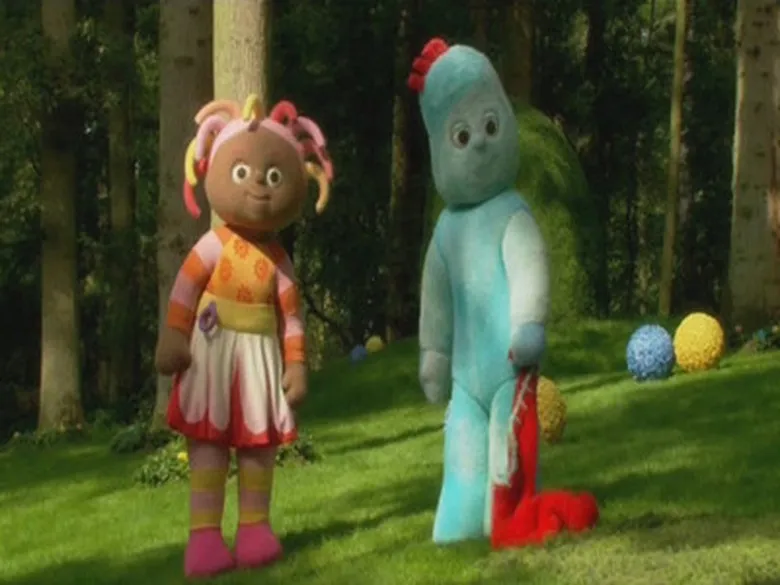
This is a fully imagined dream-garden world populated by invented creatures like Igglepiggle, Upsy Daisy, Makka Pakka and the Pontipines, with a soft-spoken narrator framing every scene. The fantasy stays remarkably consistent and there is no villain anywhere in the story; the only 'problem' is a small stone stuck in a trumpet. For a 2-year-old guided toward 'mostly realistic with light imagination', the realism/fantasy mix tips noticeably toward fantasy, even though the tone itself is calm and gentle.
This score shows how enjoyable the series is for parents watching along. Scale: Tedious → Tolerable → Pleasant → Enjoyable.
This program is pitched squarely at very young children at bedtime, and offers little to engage an adult co-viewer. The plot is a single repeated event followed by a recap of that same event, and the writing contains no humor or references aimed above the target age. The saving grace is craft: the production is unusually polished for preschool television, with a real garden setting, original orchestral score, and Derek Jacobi's calm narration. Adults will likely tune out, but they are unlikely to be irritated.
In a softly lit live-action garden, Iggle Piggle, Upsy Daisy, Makka Pakka and the smaller families (Pontipines, Tombliboos) move through their evening together. Makka Pakka's small trumpet starts to make a funny noise; Upsy Daisy dances to comfort him, and the friends discover that a stone has lodged inside it. Once the stone is removed the trumpet sounds right again, and Makka Pakka offers the stone to Upsy Daisy as a present. The narrator closes the episode with a 'once upon a time in the night garden' recap that retells the small story before bedtime.