











This program feels calm and predictable. It gives room to watch and process. For the recommended age, this may feel calm or somewhat slow.
The pacing is moderate. The story remains easy for a child to follow.
The sound is intense and continuously present.
The visuals are calm and well-organized.
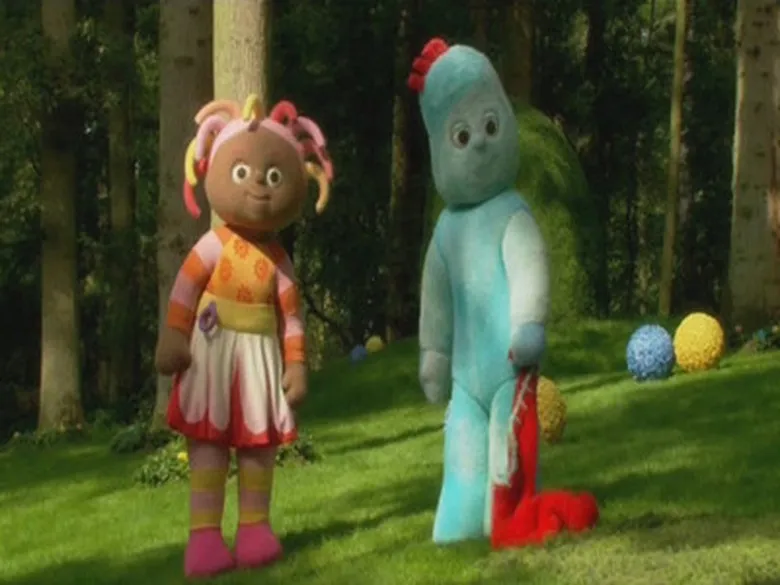
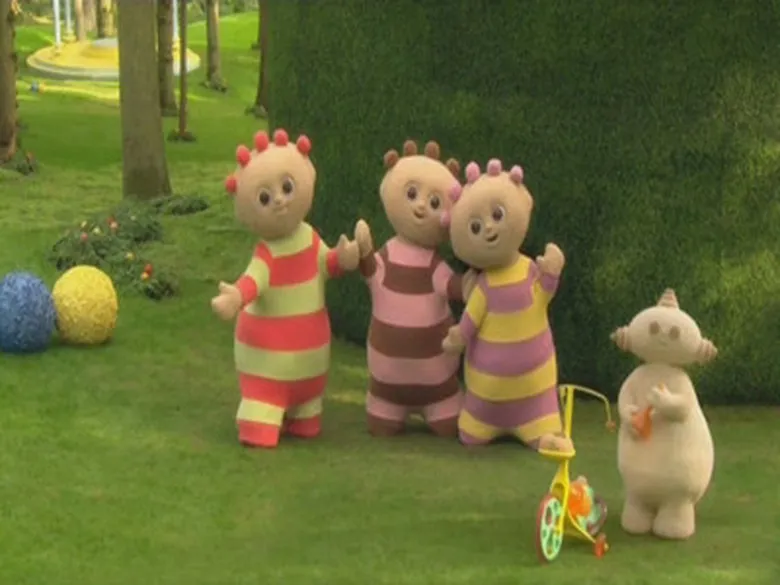
The episode follows one central thread, Upsy Daisy's wish to see flowers and Iggle Piggle's wish to ride the Ninky Nonk, with a recognisable beginning, middle, and end that is even retold near the close as 'Once Upon A Time in the Night Garden'. New information arrives in very small doses, often one idea at a time, which suits a young toddler. A small caveat is the inserted Pontypines counting sequence, which briefly steps away from the main story before the narrative returns.
The emotional environment is warm and steady. The narrator's voice stays calm even when something new happens like the arrival of the Ninky Nonk, and characters greet each other with kindness, repeating gentle hellos and names. The few mild moments of unease, such as Iggle Piggle missing Upsy Daisy, resolve in the same or next scene when he brings her back to share the flower. Switches between feelings happen gradually rather than abruptly.
The pillar scores mid because, while Upsy Daisy and Iggle Piggle each follow their own wish and Iggle Piggle takes the initiative to fetch his friend, the thinking and reasoning behind their choices stays largely off-screen. The narrator describes what happens rather than showing trial, failure, and adjustment, so a child sees the outcome more than the steps. Solutions arrive directly: Iggle Piggle finds the flower, then collects Upsy Daisy, with little visible problem-solving in between.
The language is short, concrete, and matched to a toddler ear. Phrases like 'hello Upsy Daisy', 'what pretty flowers', and 'go to sleep' repeat across the episode so the meaning has time to land, and the narrator names objects and characters plainly. The small caveat is that some sung sections and stretched-out vowels are less clearly articulated, and a few moments register as unintelligible filler in the transcript, which softens the meaningful-use score.
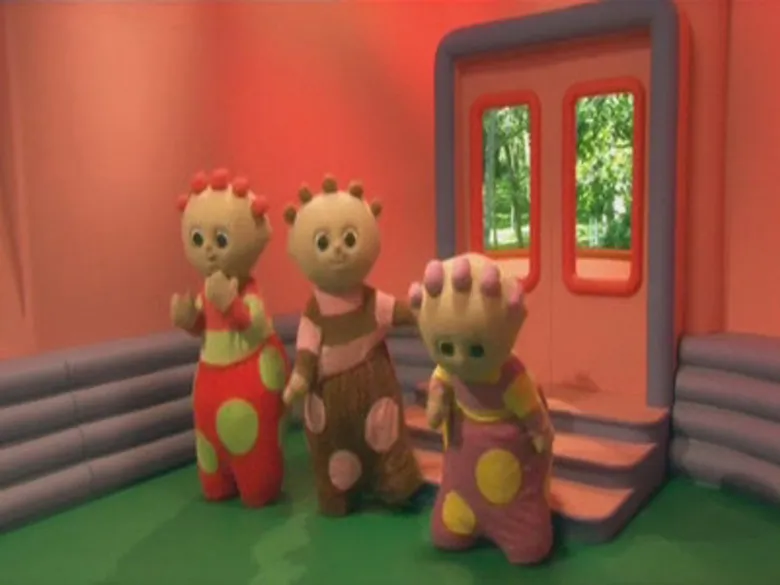
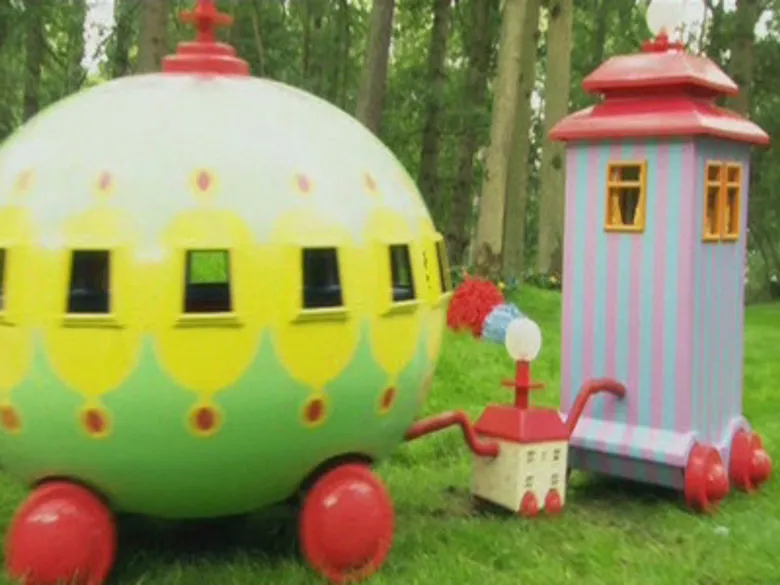
This pillar scores low because the world on screen is almost entirely make-believe, with puppet creatures, a fantasy train called the Ninky Nonk, and a magical garden where toys live together. For a two-year-old the rubric calls for content mostly grounded in everyday reality, and very little of what happens here is directly imitable in daily life. The closing bedtime ritual and the brief flower-watching are the most relatable moments, while social cues like friendship and caring are present but play out among fantasy toys rather than around realistic people or routines.
More information
This score shows how inclusively the series portrays diverse people, families and cultures. Scale: Limited → Varied → Rich → Inclusive.
The Night Garden is a fantasy world inhabited by puppet-like characters rather than humans, so most diversity questions about ethnicity or cultural background do not really apply to the on-screen population. The show does offer variety in character types, household sizes, and home environments, with a large family (the Pontipines), a small trio of siblings (the Tombliboos), a solo cleaner figure (Makka Pakka), and two central friends. The role distribution leans on a familiar split, with Upsy Daisy drawn to pretty flowers and Igglepiggle drawn to the Ninky Nonk train, although both characters get equal narrative weight and resolve their differences cooperatively.
This score shows whether the series stays close to everyday reality or leans into fantasy. Scale: Fantasy → Mixed reality → Realistic.
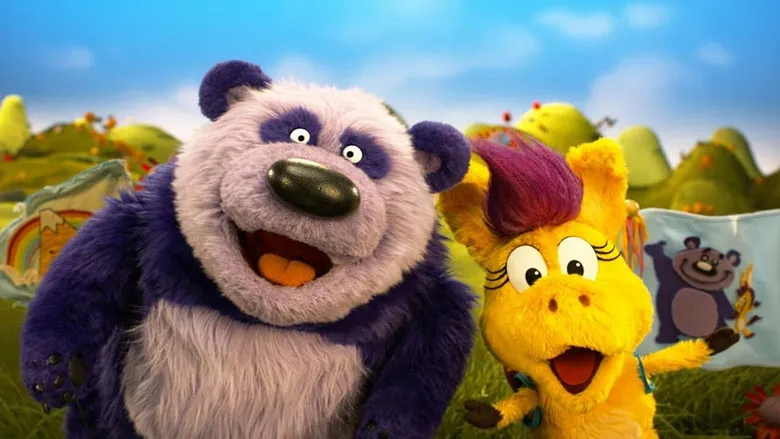
This episode takes place entirely in a dreamlike fantasy garden where small puppet creatures wander, ride a fantastical train called the Ninky Nonk, and speak in short babble like 'Yes my name is Upsy Daisy'. There are no villains and no real conflict, only gentle wants such as wanting to look at the flowers or take a ride. The fantasy world stays internally consistent and is framed as a baby's bedtime dream. For a 2-year-old in a 'mostly realistic' band, the world is more imagined than recognisable, which limits how strong the fit is at this age.
This score shows how enjoyable the series is for parents watching along. Scale: Tedious → Tolerable → Pleasant → Enjoyable.
This is a calm bedtime show that adults can sit through comfortably without finding much to engage with directly. Production craft is strong, with orchestral music, polished puppetry on real garden sets, and a warm narrator keeping the soundscape pleasant. Plot interest is thin for anyone outside the target age, with most of the runtime spent on gentle wandering and repeated character routines like counting the Pontipines or boarding the Ninky Nonk. The trade-off works well as a wind-down experience but offers little for a parent looking to be actively entertained.
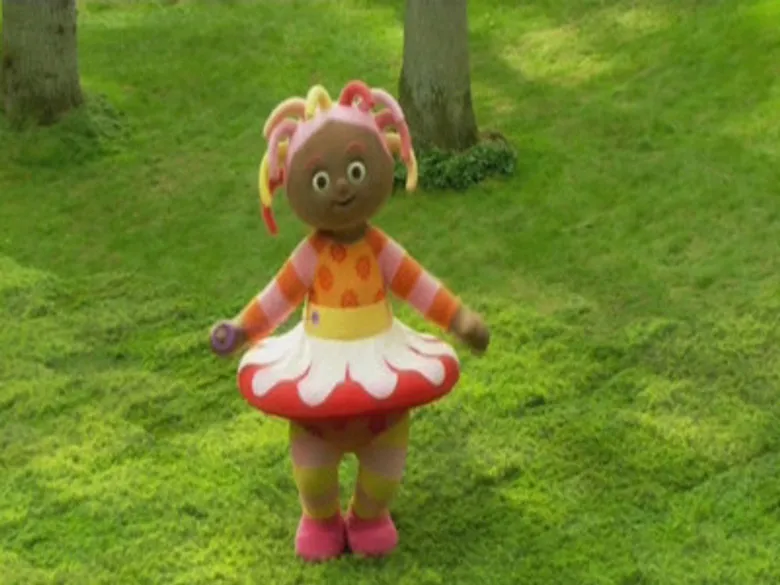
In a magical garden, Upsy Daisy decides to wander off and look at the flowers while Iggle Piggle wants to ride the Ninky Nonk train. They each follow their own wish around the garden, and when Iggle Piggle finds an especially pretty flower he uses the Ninky Nonk to fetch Upsy Daisy so they can share it. The episode ends with the narrator gently saying goodnight to every character one by one as they settle down to sleep.