







This program is well-balanced. It remains mostly easy to follow and process. It is a good fit for the recommended age.
The pacing is fast. Images follow each other quickly, leaving little time to pause and take in what is happening.
The sound is intense and continuously present.
The visuals are well-balanced, with a clear overall view.
One thread runs through the whole episode: the Ninky Nonk train arrives, each character either climbs aboard or is briefly visited, and the night ends with everyone being tucked in. The arc is recognisable from beginning to end, and each scene tends to introduce only one new character or action, which fits a 2-year-old's attention. The chain of 'the train stops, someone gets on, the train moves again' stays consistent and predictable, with a few playful surprises like Makka Pakka turning up to wash the train instead of ride it.
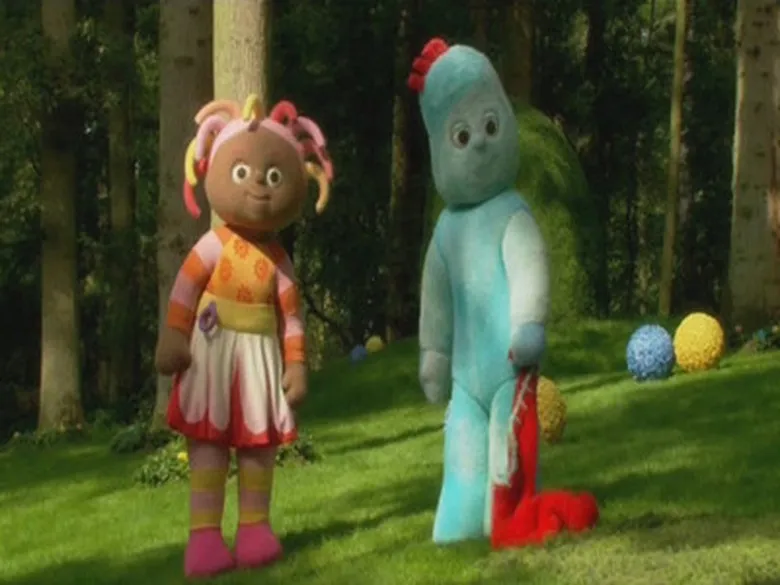
This show stands out for its emotional steadiness. The narrator's voice stays warm and low, characters greet each other gently with 'Hello, Upsy Daisy', 'Hello, Iggle Piggle', and nobody mocks, scolds, or shouts. Emotional shifts between scenes are signposted by music rather than by abrupt switches, and the episode closes with each character being calmly wished goodnight by name. There is essentially nothing to recover from, which fits the bedtime intent of the show.
This pillar scores low because the episode shows almost no real problem-solving. Characters wander through the garden, board the train, and follow simple impulses (Makka Pakka decides he just wants to wash the Ninky Nonk), but no problem is named, no attempt-then-adjust sequence appears, and there is no visible reasoning step. The focus is mood and atmosphere, not figuring things out, so a child sees companions doing rather than thinking. For a 2-year-old this matches the basic cause-and-effect-plus-imitation expectations, which is why the score lands in mixed territory rather than at the bottom.
The pillar sits in mixed territory because the language has two very different layers. The narrator speaks in short, clear, concrete sentences and names what is happening on screen ('All aboard the Ninky Nonk', 'Time to go to sleep'), which is well matched to a 2-year-old. The characters themselves mostly repeat invented names and sing-song nonsense like 'Maka Pakka aka wakka ma maka moo' and 'Omlibu tombly boo', which is playful but offers little concrete vocabulary or sentence structure. The result is a small core of functional language surrounded by a lot of babble-style refrain.
This pillar scores low because the entire episode lives in a fantasy world: puppet creatures with invented names sail tiny boats, ride a magical train called the Ninky Nonk, and live in a garden 'between waking and sleeping'. Activities like boarding the Ninky Nonk or singing the Tombliboo refrain are not actions a 2-year-old can repeat in daily life with recognisable objects. The closing bedtime routine, where each character is tucked in one by one, is the one piece a child can mirror at home, and the gentle social warmth between friends is recognisable, but the world itself is almost entirely imagined.
More information
This score shows how inclusively the series portrays diverse people, families and cultures. Scale: Limited → Varied → Rich → Inclusive.
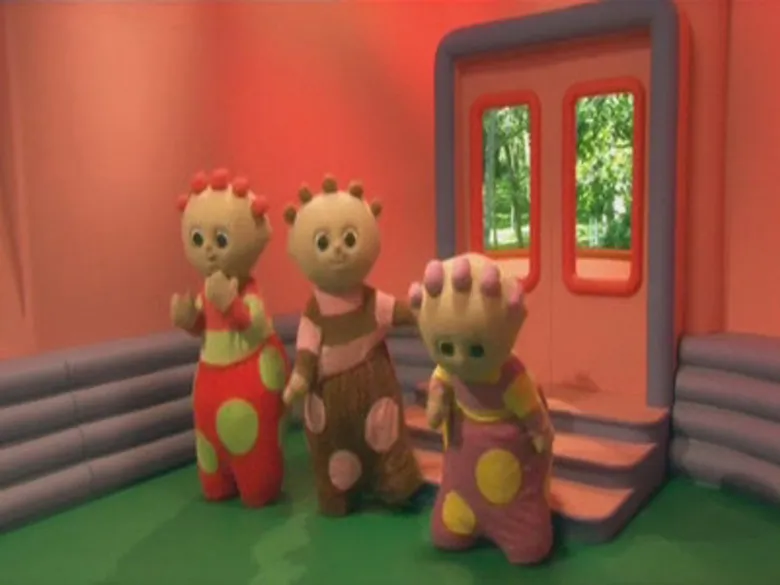
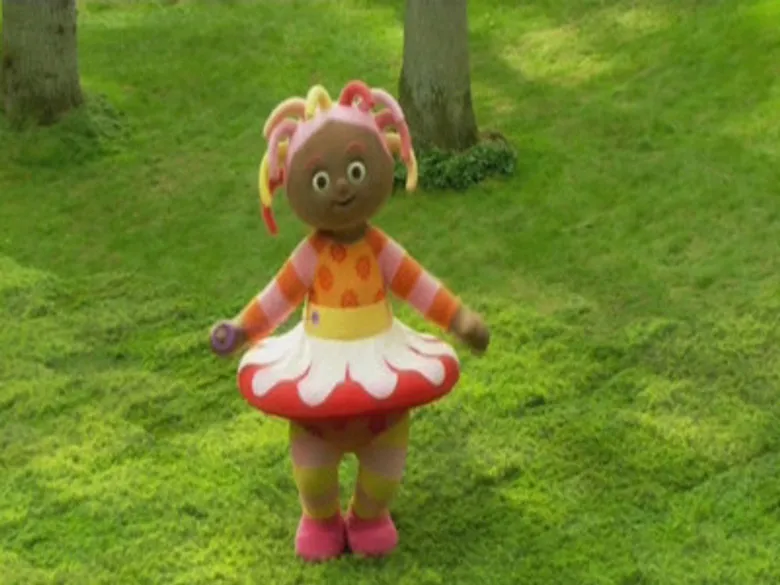
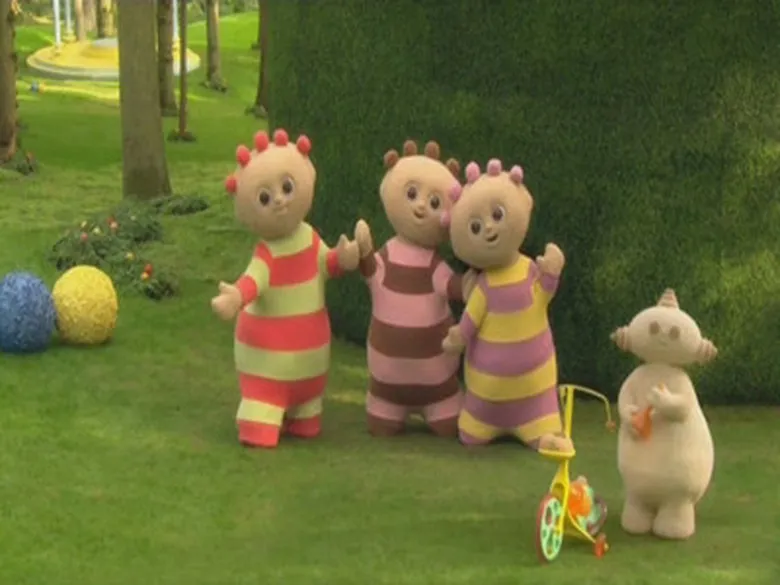
The cast is made up entirely of stylised fantasy creatures (Iggle Piggle, Upsy Daisy, Makka Pakka, the Tombliboos, the Pontipines), so the show does not engage with real-world human diversity in any direct way. There is some variation in character design and colouring, and Upsy Daisy has brown-toned skin, but the world is a single, abstract dream-garden with one older British narrator voice. Roles among the friends are friendly and broadly equal, with no clear gender or hierarchy patterns, though Makka Pakka is fixed in a tidying-and-washing role. Overall the programme is neutral on representation rather than actively broad or actively narrow.
This score shows whether the series stays close to everyday reality or leans into fantasy. Scale: Fantasy → Mixed reality → Realistic.
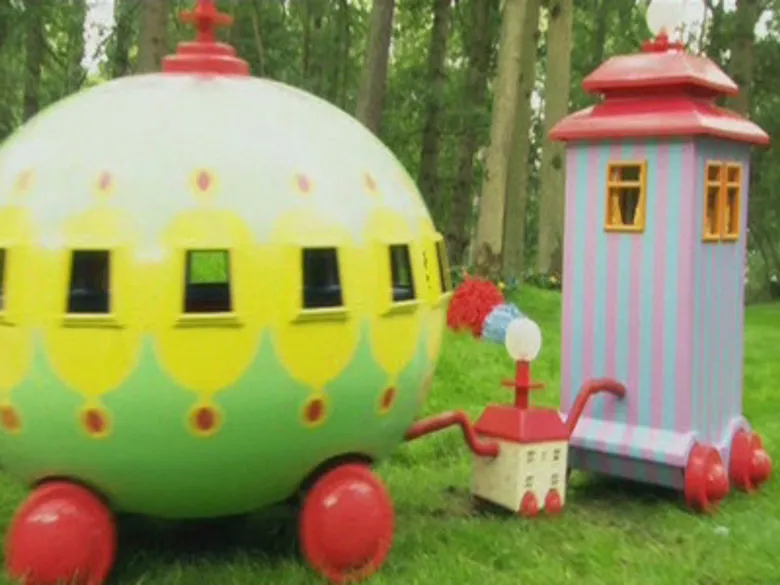
This episode takes place in an imagined 'Night Garden' world filled with invented creatures, made-up names, and a tiny train called the Ninky Nonk. There is no villain anywhere in the story; the gentle drama comes only from the train stopping to pick up new friends. The fantasy follows its own consistent rules and the bedtime framing with the live-action baby anchors the dream-logic. For a 2-year-old, the mix leans much more heavily on imagination than the age band suggests is ideal, though the soothing pace and predictable structure soften that mismatch.
This score shows how enjoyable the series is for parents watching along. Scale: Tedious → Tolerable → Pleasant → Enjoyable.
This is a bedtime wind-down program with very little for adult co-viewers cognitively, but the craft and the calm sensory load are real strengths. There are no jokes, no wordplay, and no narrative ambition; the plot is a thin frame stretched with repetition and invented vocabulary. What carries it for parents in the room is a soothing narrator, a careful sound mix, and a polished production with original orchestral music and physical sets.
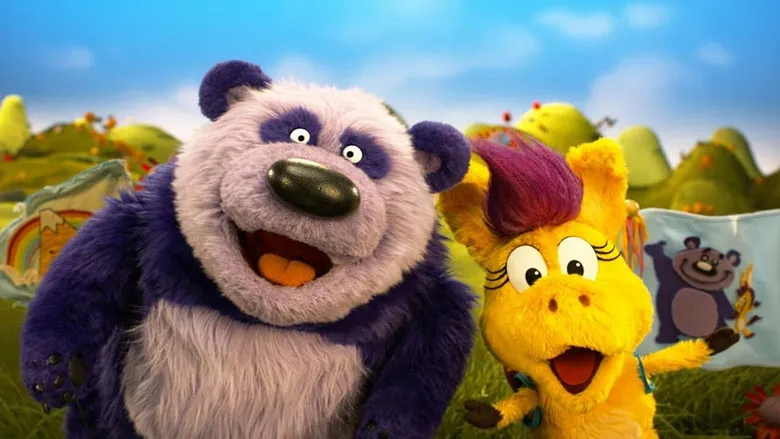
A live-action puppet show set in a magical 'night garden' that the narrator describes as the place between waking and sleeping. The Ninky Nonk train arrives, and Iggle Piggle, Upsy Daisy, the Tombliboos and others take turns climbing aboard for a bouncy ride. Makka Pakka turns up to wash the Ninky Nonk rather than ride it, and the titifers sing their song. At the close, the narrator wishes every character goodnight one by one until only sleeping figures remain.