





















This program is well-balanced. It remains mostly easy to follow and process. It is a good fit for the recommended age.
The pacing is fast. Images follow each other quickly, leaving little time to pause and take in what is happening.
The sound is clearly present and regularly draws attention.
The visuals are calm and well-organized.
One simple thread carries the whole episode: Little Bear spends a day with what he believes is a new friend, his own shadow, from morning until bed. Events follow a clear order, home in the morning, an afternoon by the pond, dinner, then sleep, so a young child can always tell what is happening and why. Each scene adds just one new idea, such as the shadow vanishing in the shade or returning in the sunlight, keeping the load light. Actions lead to sensible results, which quietly shows how shadows behave.
The mood stays warm and even from start to finish. Father gently encourages Little Bear to amuse himself, Mother welcomes his imaginary friend without a fuss, and Frog answers his worry with patience. The one small concern, that Little Bear thinks he has lost his shadow, is settled when Frog reassures him with 'You are your shadow, and your shadow is you' and the shadow reappears. No one is mocked, no voices are raised, and feelings shift softly rather than swinging from one extreme to another.
Little Bear shows real initiative: told there is no one to play with, he invents an entire game with his shadow on his own. What he does not do is work through a problem in clear steps, because the shadow is a companion to enjoy rather than a puzzle to crack. When he wonders where his shadow has gone, the understanding comes from Frog explaining it to him rather than from his own trial and error. The result celebrates independent imaginative play, with little visible reasoning toward a worked-out solution.
The dialogue is clear and easy to follow, built from short, concrete lines like 'Want to play?' and 'Give me your hand, I'll pull you out.' Voices are well spoken and never muffled, so each word lands cleanly. Most speech does real work by asking, describing, or guiding, as when Frog says 'Now close your eyes and say, Om.' A few phrases reach a little higher, such as Frog calling the day 'glorious,' but the surrounding talk keeps their meaning within reach.
Everyday routines anchor the episode, with a parent painting, a family dinner, and a bedtime wind-down that children will recognize from their own homes. Playing with your own shadow is something a child can try the very next sunny day, which gives the episode genuine practical value. At the same time, the world is built around a family of talking bears, a meditating frog, and other animal friends, so the link to real life is softened by fantasy. Much of the action is imaginative play rather than purposeful activity, which limits how directly it carries over into daily life.
More information
This score shows how inclusively the series portrays diverse people, families and cultures. Scale: Limited → Varied → Rich → Inclusive.
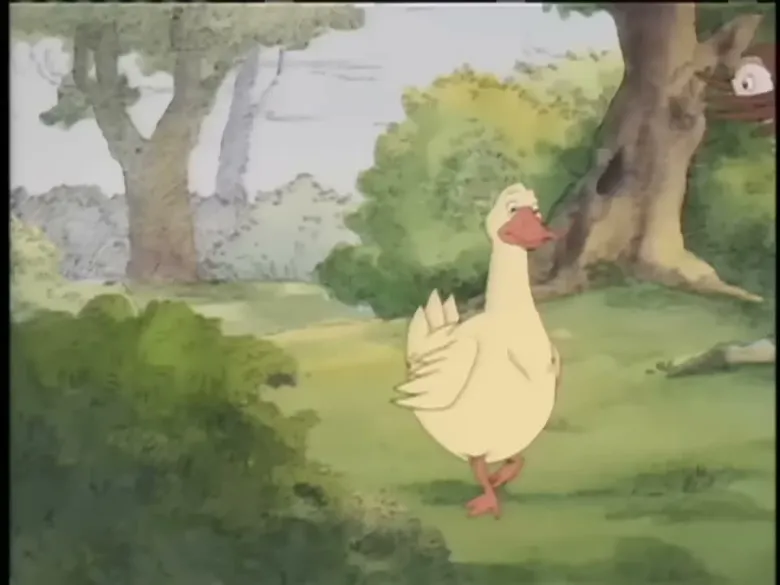
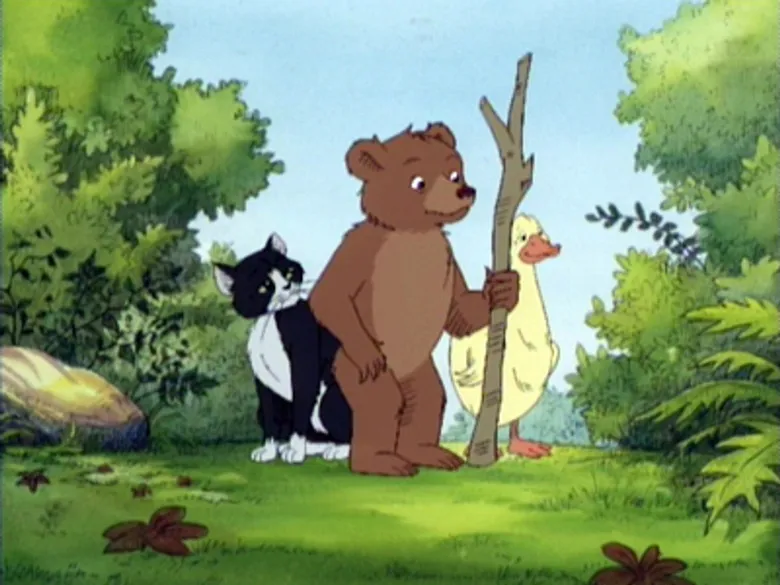
This episode follows Little Bear through a quiet day as he turns his own shadow into a playmate, surrounded by a small cast built around his parents and a few forest animals. The world is homely and narrow, centred on one two-parent household, with other friends like Cat, Duck and Hen named but rarely seen. Roles fall along familiar lines, with the father working outdoors and the mother handling cooking and bedtime, though both are warm and Little Bear drives the day himself. There is some animal variety, but little breadth in family forms, life-worlds or the way tasks are shared.
This score shows whether the series stays close to everyday reality or leans into fantasy. Scale: Fantasy → Mixed reality → Realistic.
Little Bear spends a quiet day amusing himself when his friends are busy, climbing trees, swimming, sitting with Frog, and turning his own shadow into a playmate he brings home for dinner and bed. Almost everything here comes straight from a young child's real world: a parent painting at home, playing outside, the family meal, and the bedtime routine. There is no villain and no real danger, only the gentle problem of finding something to do alone. The light touch of imagination, treating a shadow as a friend, sits comfortably within a recognizable everyday setting.
This score shows how enjoyable the series is for parents watching along. Scale: Tedious → Tolerable → Pleasant → Enjoyable.
This is a calm, carefully made episode that is easy to sit through alongside a child. The watercolor animation and soft sound keep it a pleasant presence in the room, and the shadow story carries enough of an arc to follow even outside the target age. There is little layered humor aimed at adults, so a co-viewing parent gets atmosphere more than jokes. On craft and comfort it remains a relaxed watch.
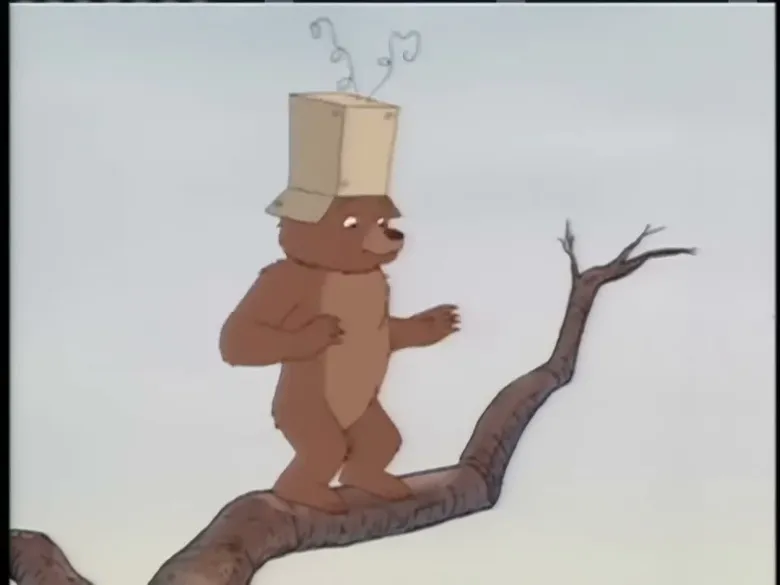
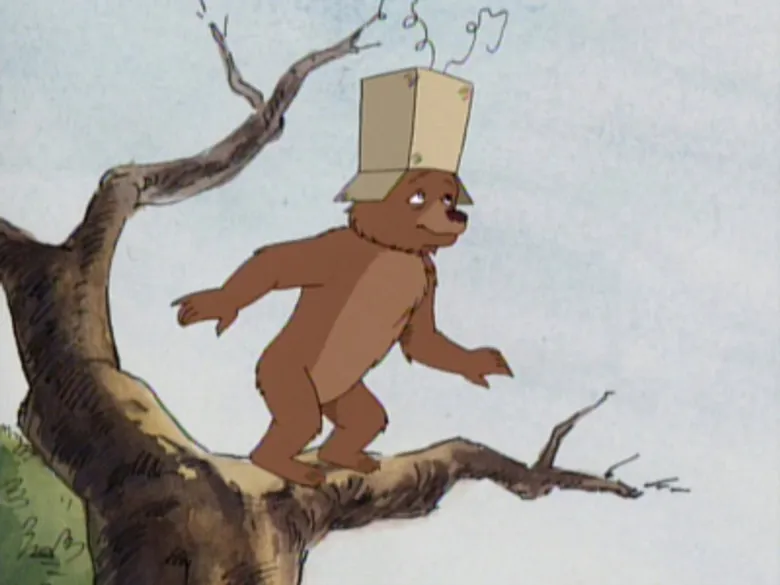
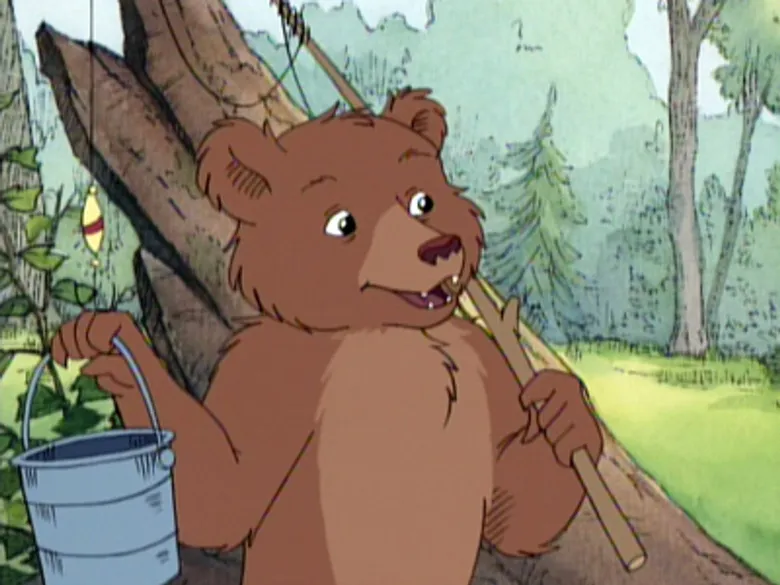
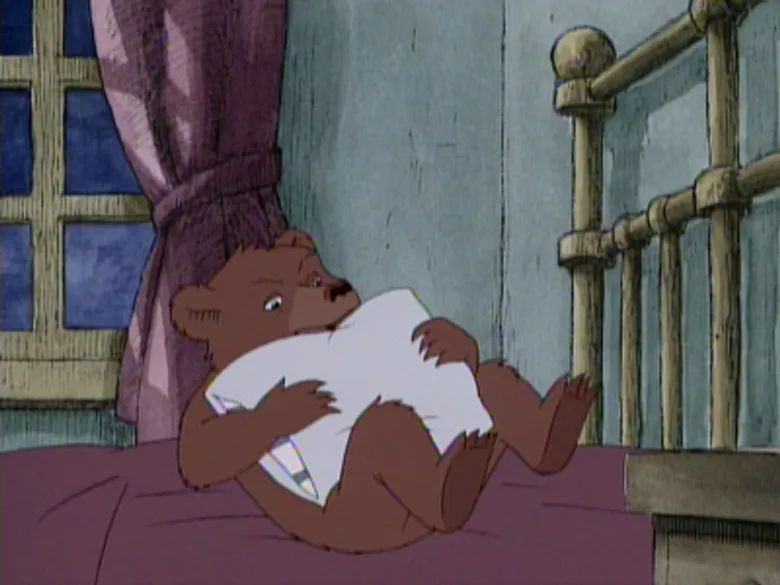
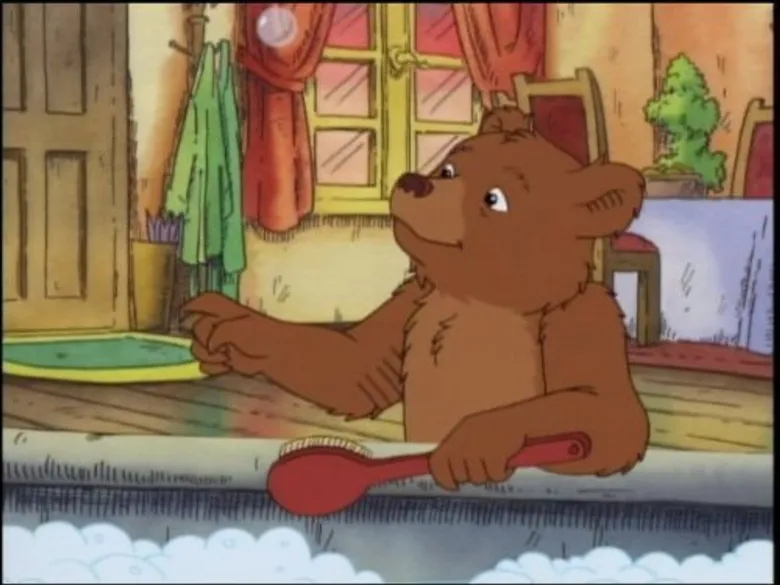
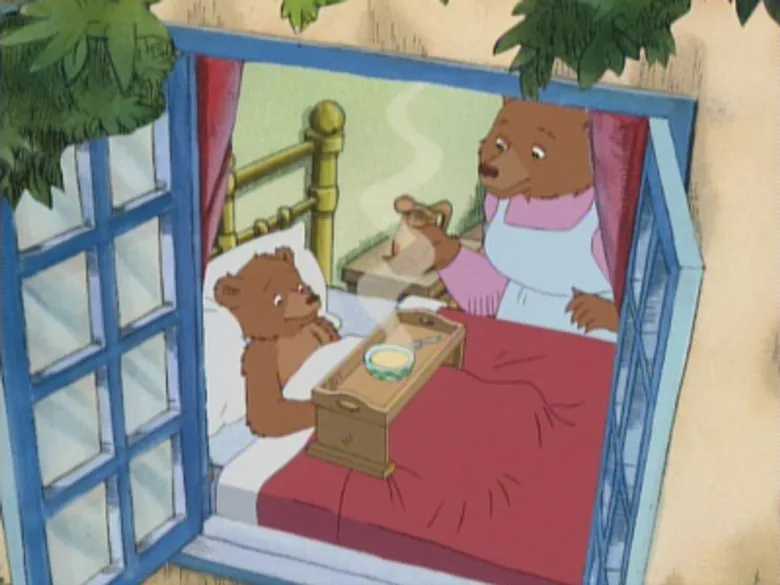
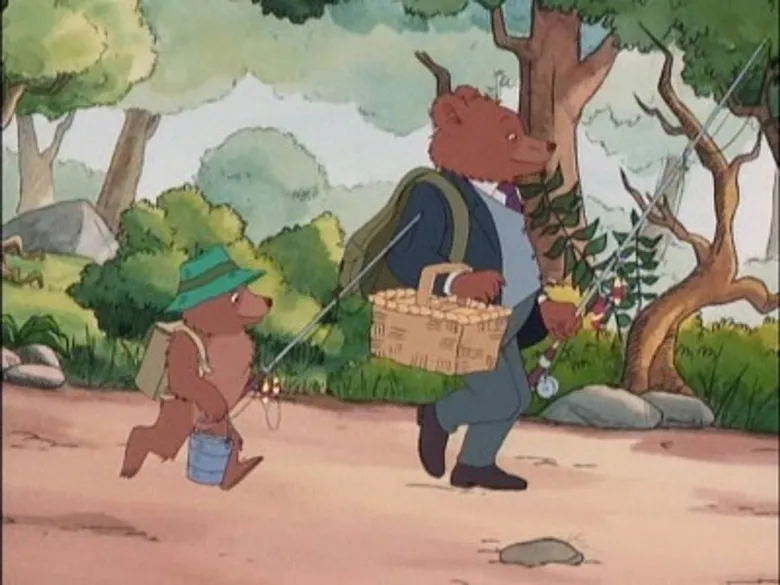
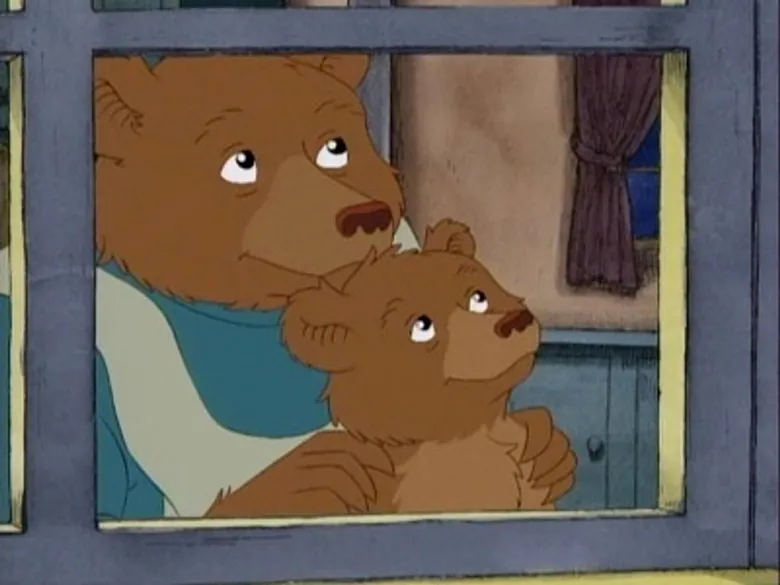
Little Bear comes home wanting someone to play with, but his friends are all busy and Father is painting the house. Out in the forest and by the pond he discovers his own shadow and spends the day treating it as a new friend, climbing trees, playing hide-and-seek, and sitting with Frog. He brings the shadow home for dinner and asks for it to stay over. The day ends as Mother tucks him into bed and he says good night to his shadow.