










This program is well-balanced. It remains mostly easy to follow and process. It is a good fit for the recommended age.
The pacing is fast. Images follow each other quickly, leaving little time to pause and take in what is happening.
The sound is clearly present and regularly draws attention.
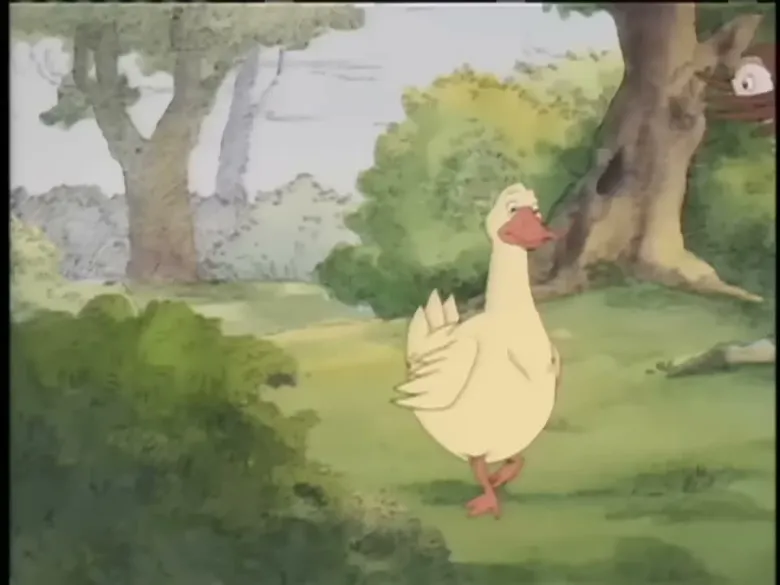
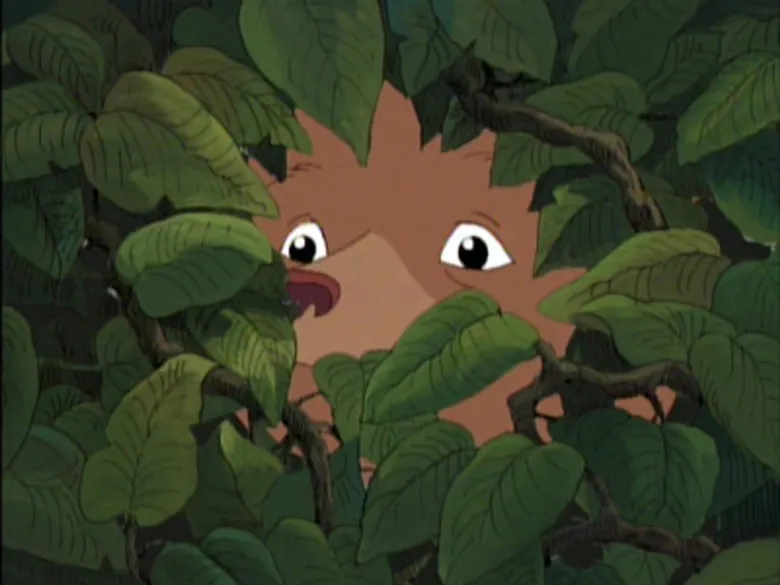
The visuals are calm and well-organized.
The episode follows one clear thread from start to finish: Little Bear decides to go to the moon and the whole story stays with that single idea. Events arrive one at a time and in order, he plans, climbs, jumps, explores and comes home for lunch, so a young child can follow what happens and why. New ideas are introduced sparingly, giving small minds room to take in each moment. When he jumps and comes down, or knocks and enters the house, the link between an action and what follows is easy to see.
The mood stays warm and steady throughout, with Mother Bear gently playing along with her cub's imagination rather than correcting him. Interactions are affectionate and consistent, from Owl politely wishing him a good trip to the closing hug and shared lunch, so a child feels held rather than unsettled. Mother's opening joke that he is a 'little fat bear cub with no wings' is teasing but soft and quickly followed by her letting him go with love. The one small wobble, his tumble out of the tree, resolves at once as he picks himself up and carries on.
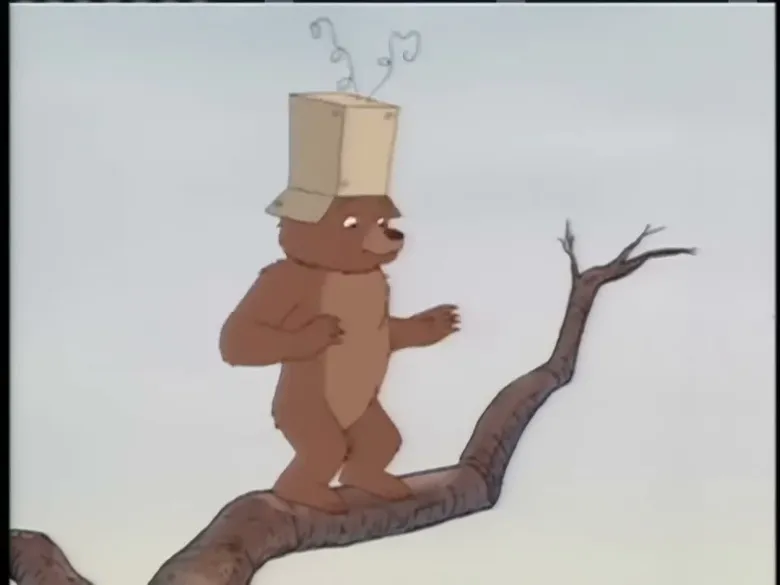
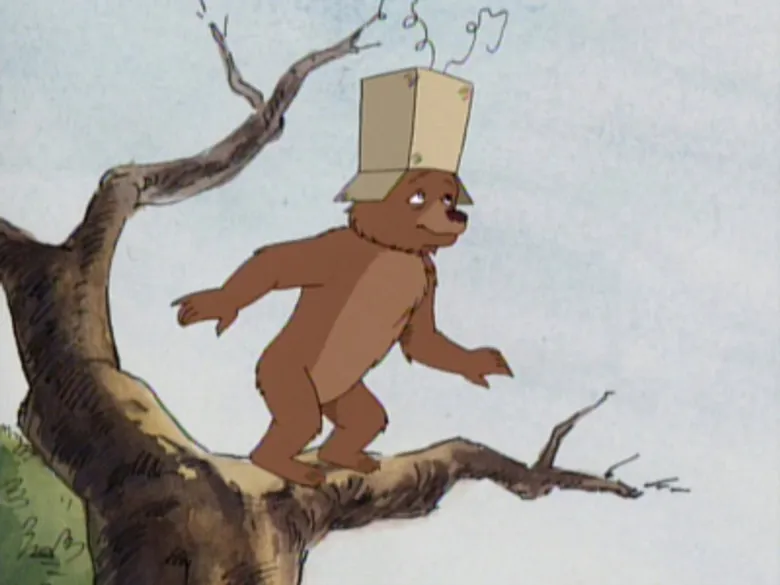
Little Bear drives the whole adventure himself: the trip to the moon is entirely his own idea, and he keeps his goal in mind from the first plan to the last jump. He reasons out loud ('birds fly, and maybe I can fly like a bird'), looks for a high spot, finds a tree is 'not high enough' and climbs higher, showing a simple try-and-adjust process that fits a young child. Where it stays light is the solving itself, since his journey is resolved through pretend rather than a worked-out problem, so the steps are more imaginative than practical. Still, his initiative and his spoken cause-and-effect thinking give a child a clear model of figuring things out.
The language is clear, concrete and well matched to a young listener, built from short everyday sentences about flying, birds, lunch and the moon. Words are used consistently and the speech is easy to understand, with Mother Bear and Little Bear talking in a natural back-and-forth ('You can't fly.' 'Birds fly.'). Most lines carry real meaning, describing, questioning or explaining, rather than empty exclamations, though a few gentle 'Hmm' and 'Oh' moments dot the quieter scenes. Sentences are mostly complete and simple, which suits this age well.
The episode leans heavily on imaginative pretend play, so its direct real-world payoff is modest, but it is not absent. Little Bear's paper-bag helmet, his climbing and jumping, and the closing routine of lunch and a nap are all things a child recognises and could copy in daily life. The bigger limitation is that the world is one of talking bears and a make-believe moon trip, so much of the action lives in fantasy rather than practical, step-by-step tasks. What grounds it is the very recognisable family life, a child's big imagination and a patient parent playing along, which mirror real home moments a young viewer will know.
More information
This score shows how inclusively the series portrays diverse people, families and cultures. Scale: Limited → Varied → Rich → Inclusive.
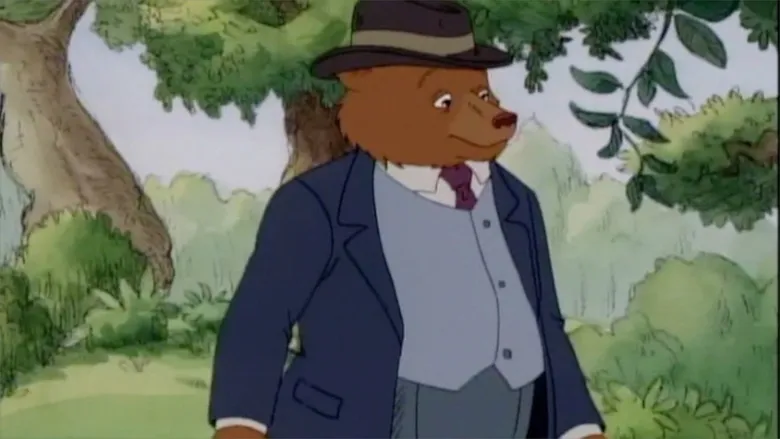
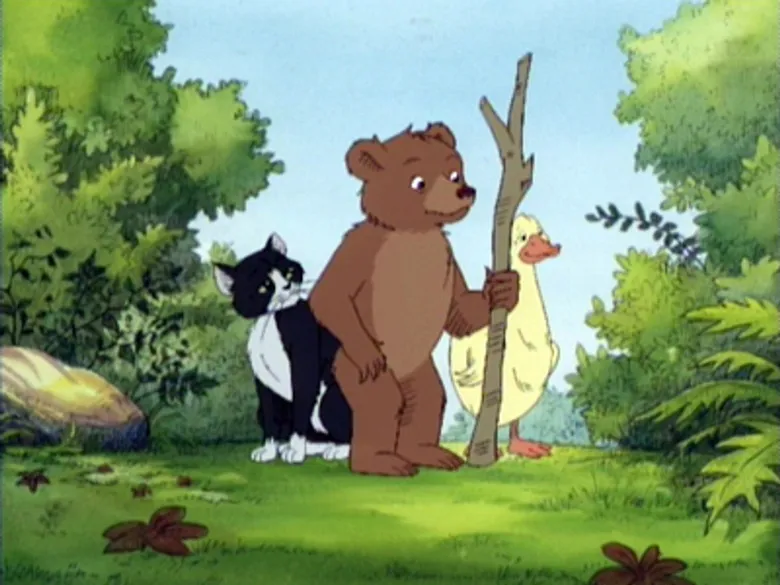
The world here is almost entirely one family of bears. Little Bear and his mother carry the story, with a few forest animals like Owl, a bird and a frog appearing briefly along the way. There is little variety in who is shown: no range of family forms, ages or backgrounds, and the mother is the only adult, presented as a warm caregiver in an apron who cooks and settles her cub for a nap. Little Bear drives the action with his own imagination while the roles around him stay familiar and gentle.
This score shows whether the series stays close to everyday reality or leans into fantasy. Scale: Fantasy → Mixed reality → Realistic.
This episode sits close to a child's real world. Little Bear lives with his family in a forest cottage, eats lunch, takes a nap, and plays pretend, all things a preschooler recognizes. The one imaginative thread, flying to the moon, is clearly a game: Little Bear jumps from a tree, decides the ordinary world around him must be the moon, and his mother gently plays along before naming that they are home on earth. There is no villain and no real magic, just warm family life and a child's imagination, which fits a young preschooler well.
This score shows how enjoyable the series is for parents watching along. Scale: Tedious → Tolerable → Pleasant → Enjoyable.
This episode is a pleasure to sit through as the grown-up in the room. Little Bear puts a paper bag on his head and decides to fly to the moon, and his mother's dry teasing plus her willingness to play along give the story a gentle wit that lands for adults. The watercolor backgrounds, soft voices, and unhurried sound keep it easy on adult ears and eyes. Little happens loudly, but what happens is charming and well made.
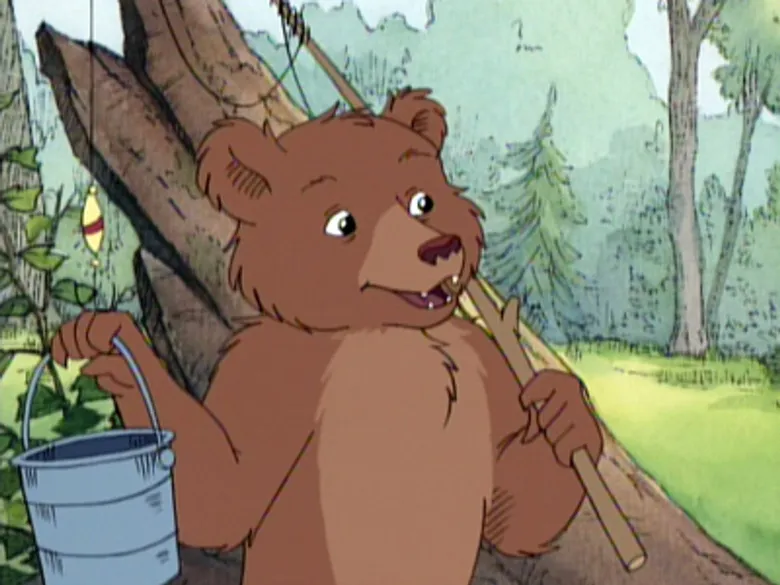
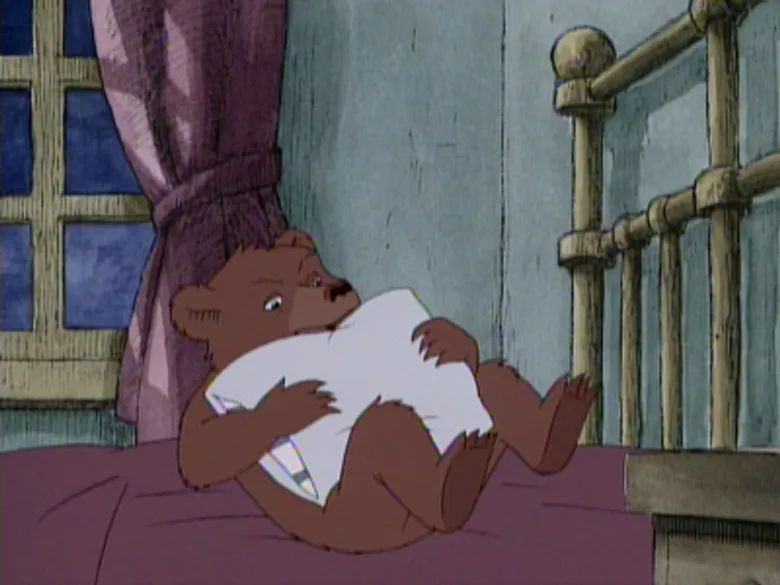
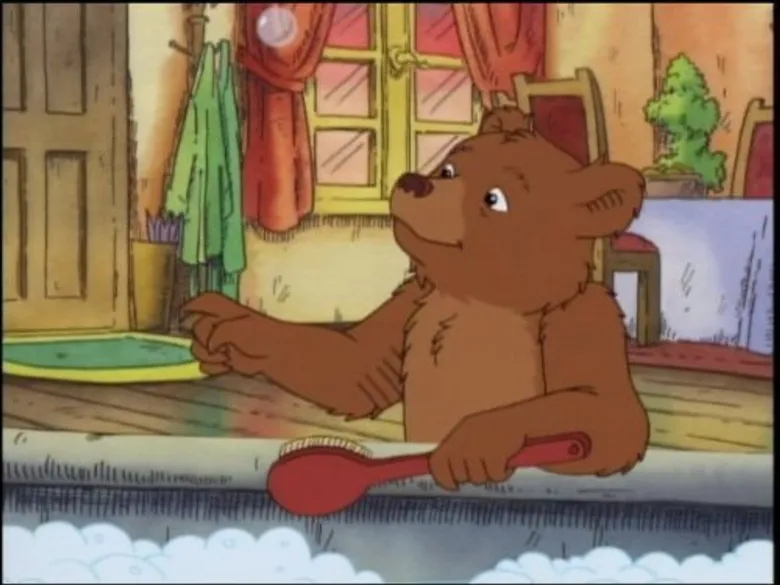
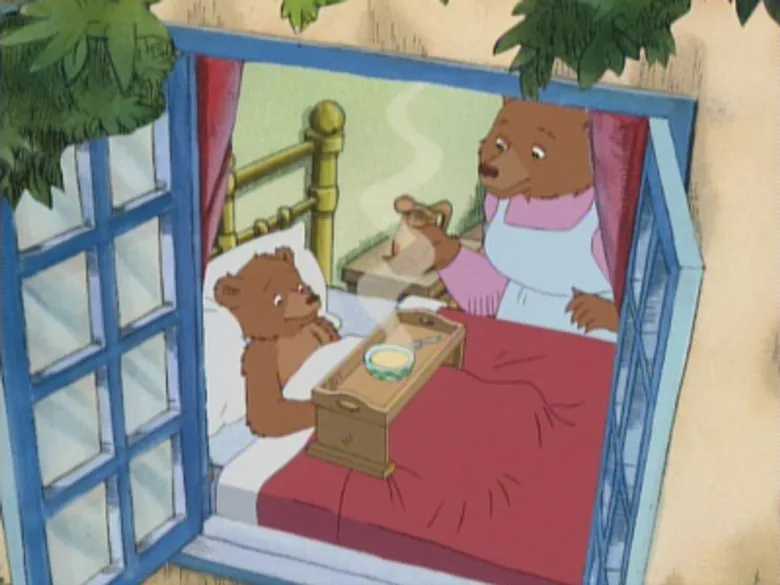
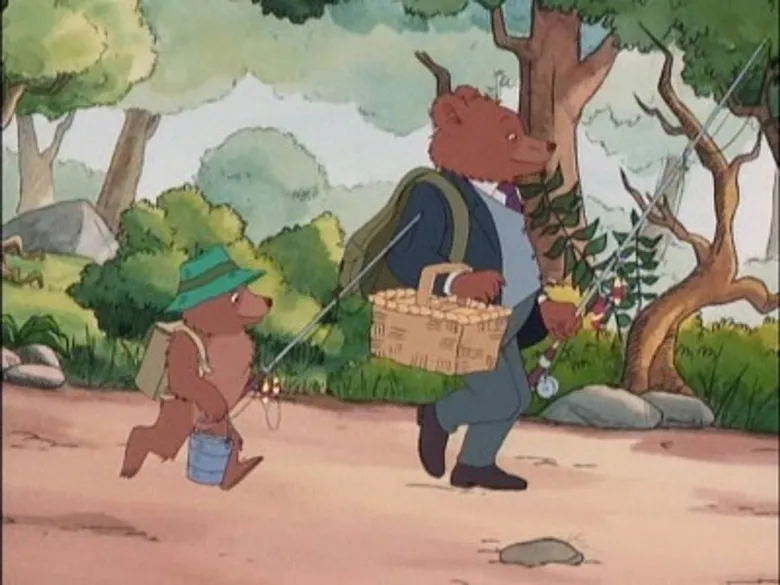
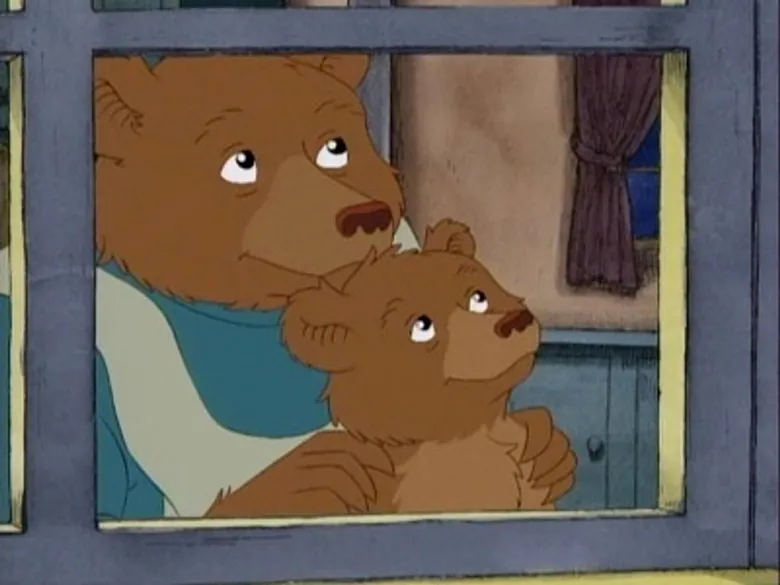
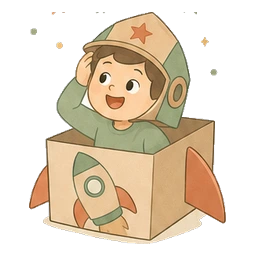
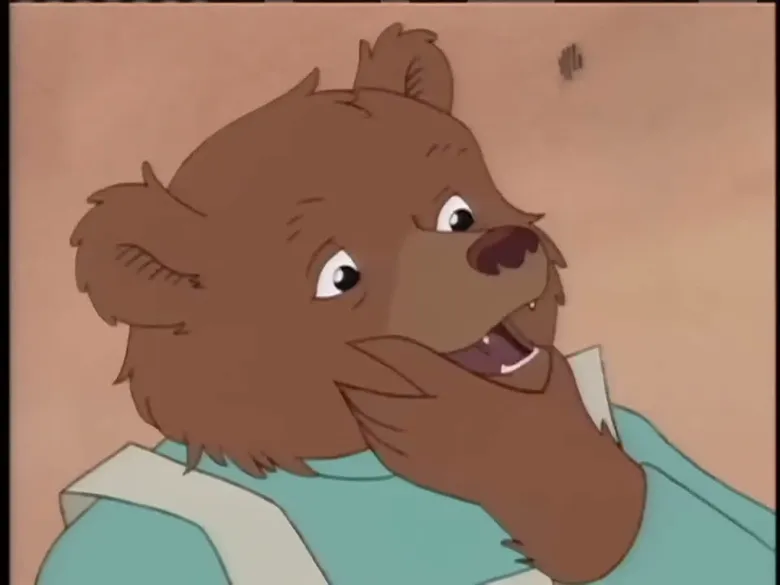
Little Bear wakes up and decides to fly to the moon like a bird, wearing a paper-bag space helmet. After telling a doubtful but affectionate Mother Bear, he climbs a tree, jumps, and imagines he has landed on a moon that looks exactly like his own forest and home. He explores, finds 'moon food' and meets a mother bear who plays along with his adventure. The story ends back at home, where Mother Bear gives him lunch and settles him down for a nap.