




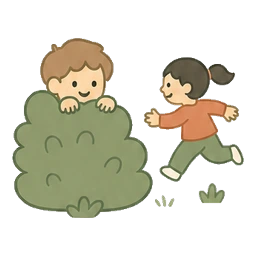






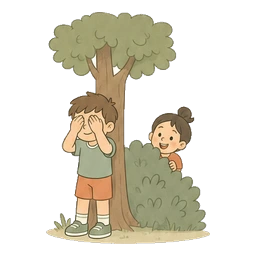





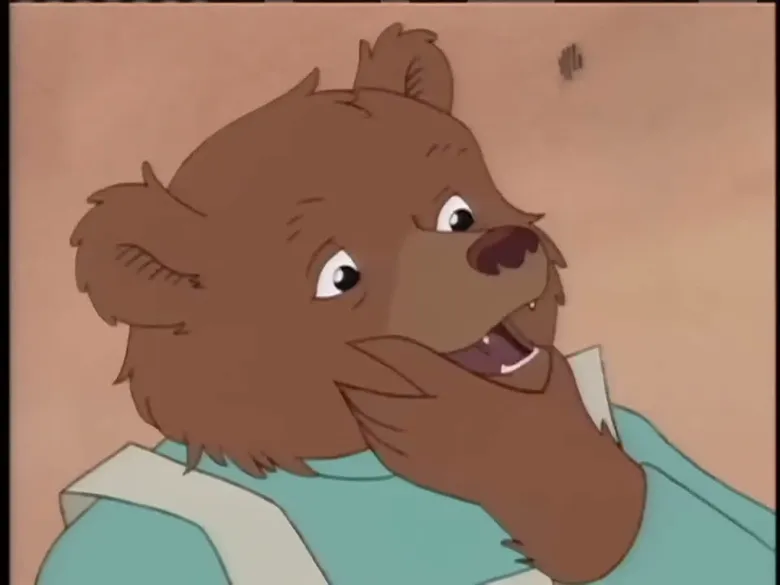
This program is well-balanced. It remains mostly easy to follow and process. It is a good fit for the recommended age.
The pacing is fast. Images follow each other quickly, leaving little time to pause and take in what is happening.
The sound is clearly present and regularly draws attention.
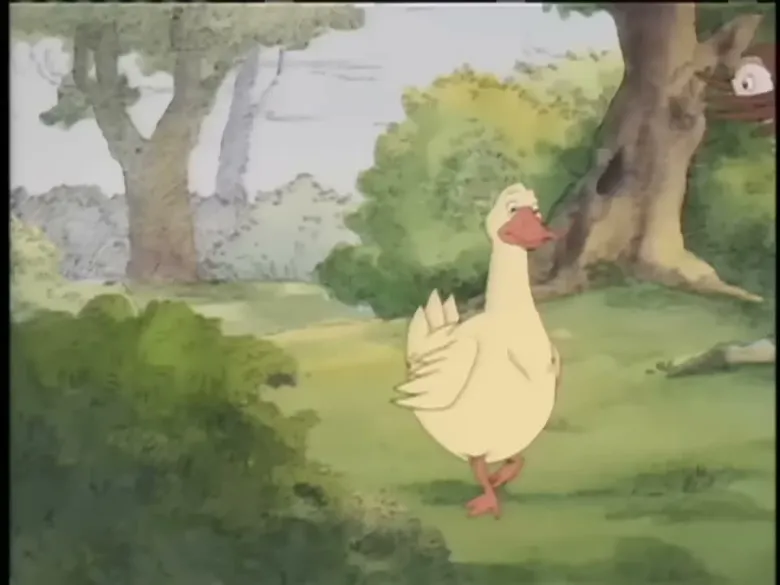
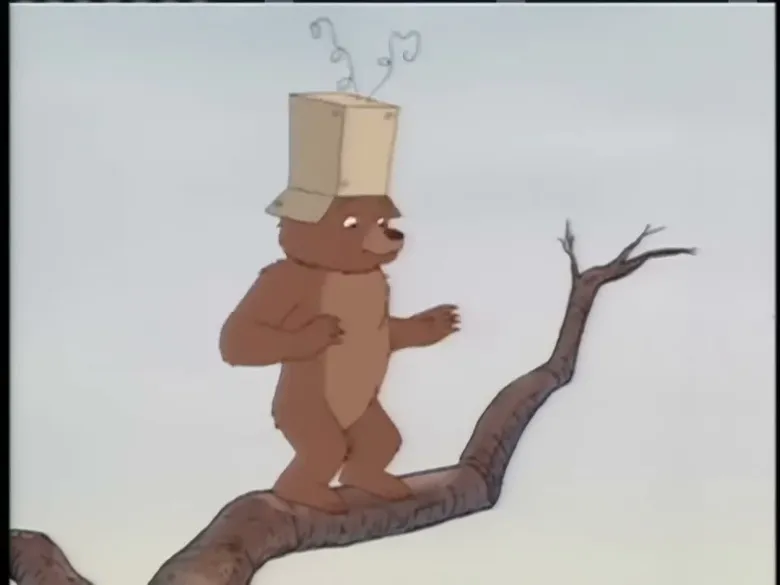
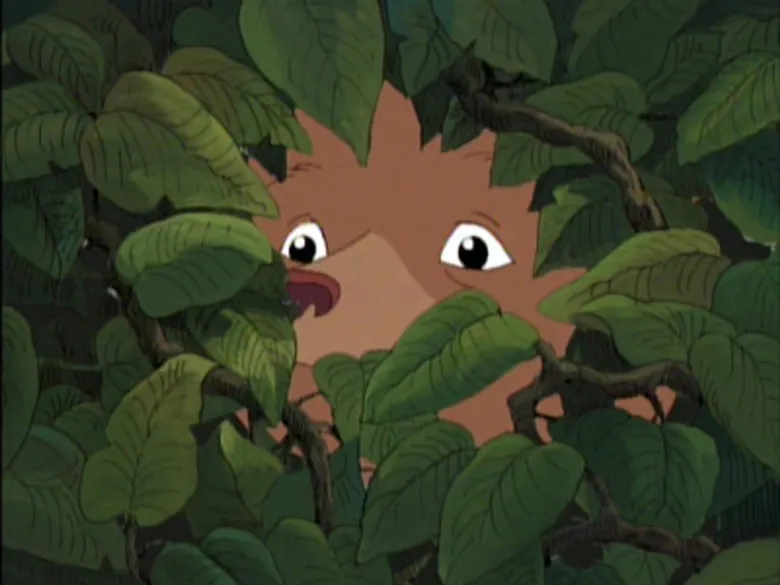
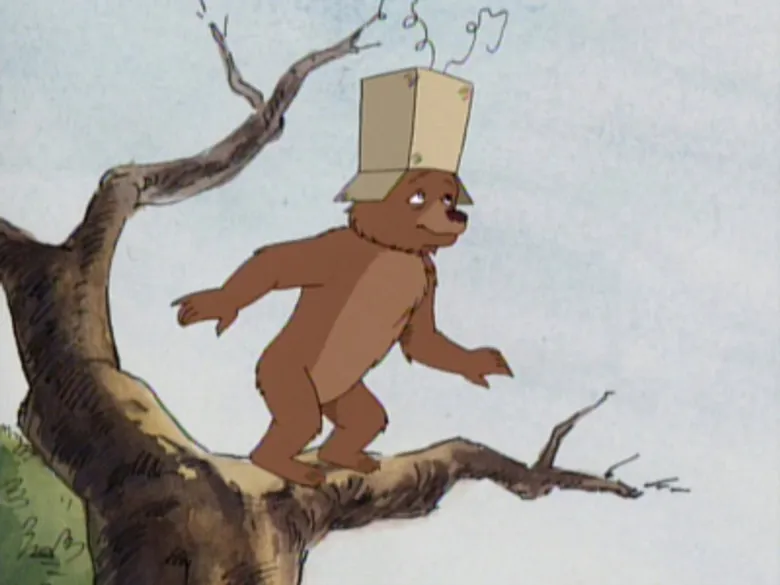
The visuals are calm and well-organized.
One clear thread carries the whole episode: the friends decide to play hide-and-seek, Duck counts, everyone hides, and then each friend is found in turn. Events follow in a recognisable order with a real beginning, middle, and end, so the story is easy to follow. New details arrive slowly, one at a time, which suits a young child. Actions lead to predictable results, such as following the hen's tracks to find her or moving toward a sound to discover Owl.
The mood stays warm and steady throughout, with friends who agree to give Duck a turn and support each other during the game. Emotional moments are small and quickly settled: when Duck worries 'Maybe I'll never be found,' the feeling passes the moment friends appear. Surprises like the repeated 'Boo!' resolve straight into laughter and play rather than fright. A small caveat is Owl's slightly gruff 'I wasn't asleep, that was to fool you,' but it stays light and never sours the friendly tone.
The friends set up and run the game themselves, and Duck asks for the seeker role and then works to find everyone. There is some visible thinking, such as spotting footprints and following the tracks that lead to Hen, or turning toward a sound to locate Owl. Still, the finding often happens in one quick step rather than through several tries with a setback and a fresh attempt, so the problem-solving stays simple. For a three-year-old this offers a gentle taste of figuring things out without deep reasoning.
The language is simple, concrete, and easy for a young child to follow, with short clear lines like 'You have to close your eyes so we can hide' and 'Turn around and count to ten.' Speech is clear and used meaningfully, mostly to explain the game or describe what the characters are doing. Counting to ten runs through the middle and reinforces real words a child is learning. A few playful exclamations sit alongside the many complete, purposeful sentences.
Hide-and-seek is a real game children play, and the counting, hiding, and searching all map directly onto things a three-year-old can do offline. Taking turns, wanting a fair chance, and returning home to a parent are social patterns a child will recognise from daily life. The one distance from real life is that all the players are talking animals, though the woodland world itself stays grounded with no magic. Overall the episode connects closely to a young child's own play and relationships.
More information
This score shows how inclusively the series portrays diverse people, families and cultures. Scale: Limited → Varied → Rich → Inclusive.
The cast is made up entirely of forest animals, Little Bear, Duck, Cat, Owl, Hen and Frog, playing together in one woodland world. This keeps the picture of who is present quite narrow, with a single caregiving figure, Mother Bear, appearing near the end. What stands out more is how the group plays together as equals, with a real effort to be fair: Duck, who says he never gets to look, is finally given a turn as the seeker. Roles among the friends are shared and no character is locked into a fixed pattern.
This score shows whether the series stays close to everyday reality or leans into fantasy. Scale: Fantasy → Mixed reality → Realistic.
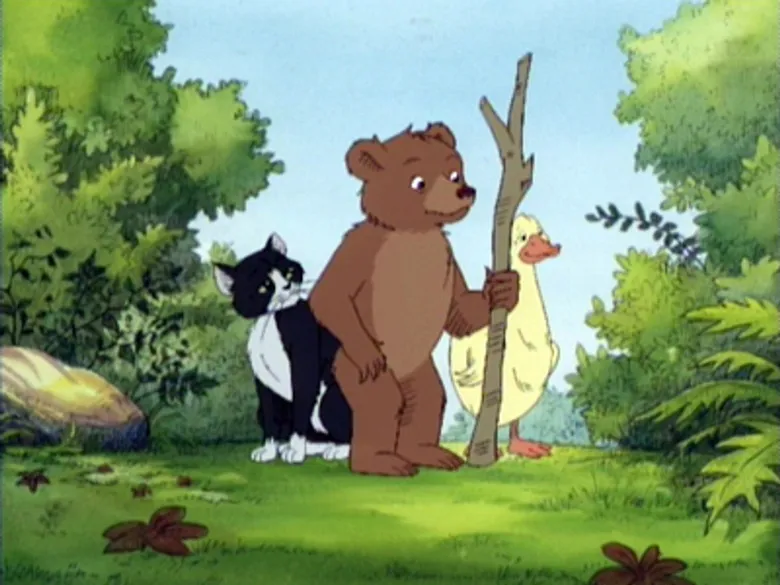
This episode sits close to a young child's real world. Little Bear and his friends play a game of hide-and-seek in the forest, count to ten, follow footprints, and search behind trees and bushes, all things a preschooler recognizes. The only step away from reality is that the players are animals of different kinds who talk and reason like children, a light and consistent touch of imagination. There is no villain and no menace; the small hitches come from Duck losing track of his counting, not from any bad character, which keeps the mix well matched to a 3-year-old.
This score shows how enjoyable the series is for parents watching along. Scale: Tedious → Tolerable → Pleasant → Enjoyable.
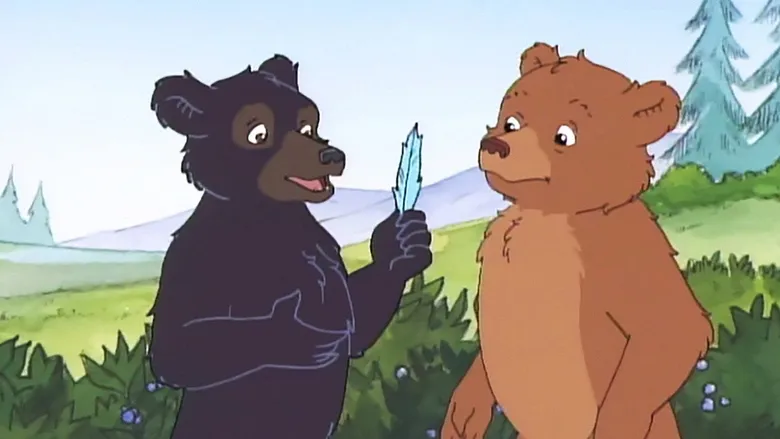
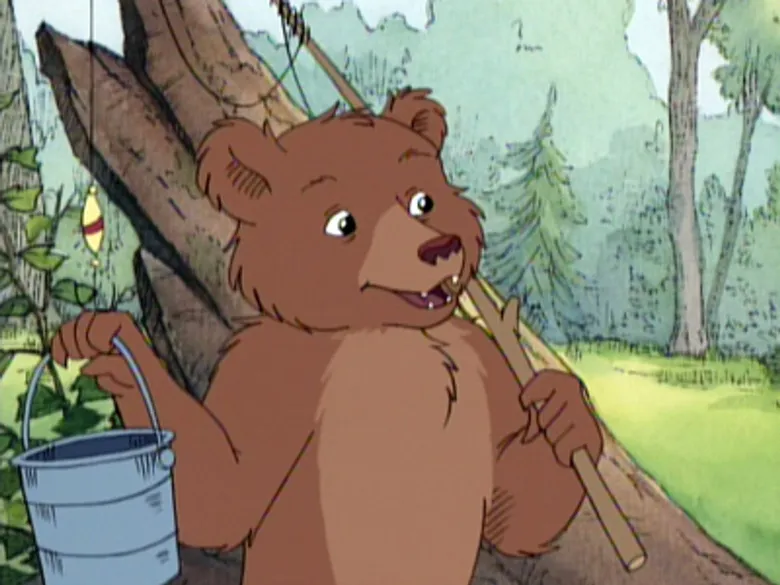
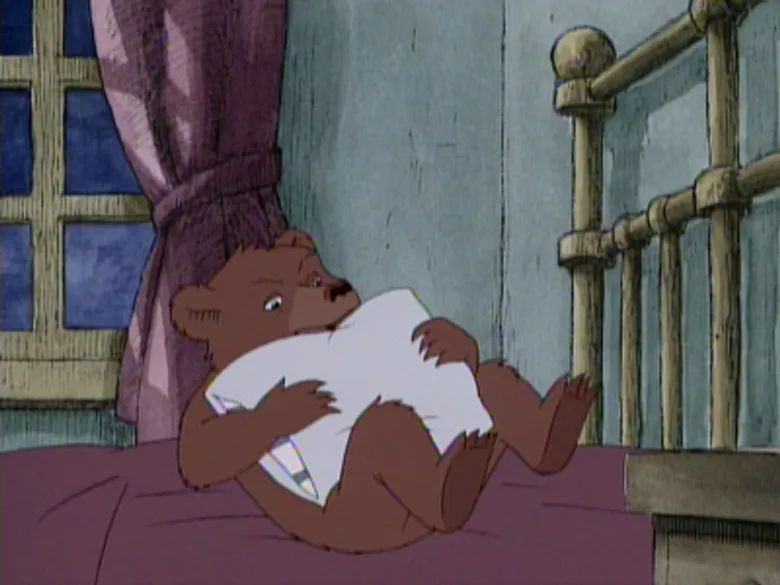
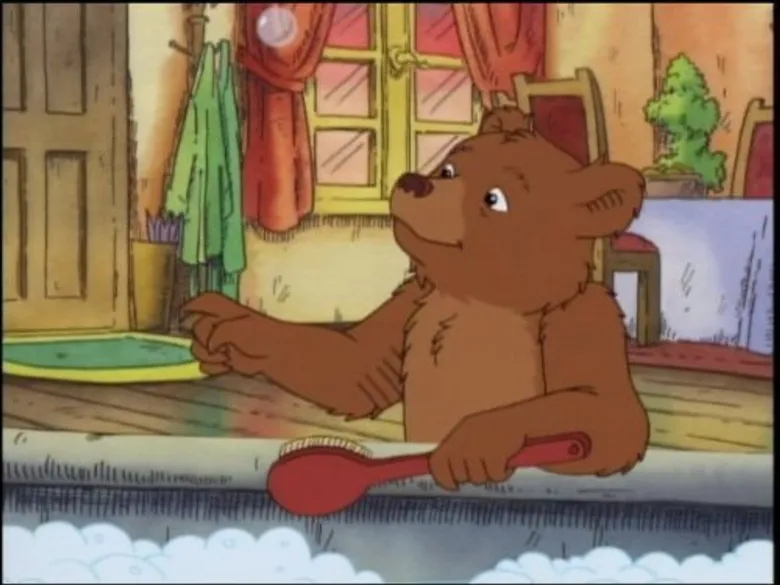
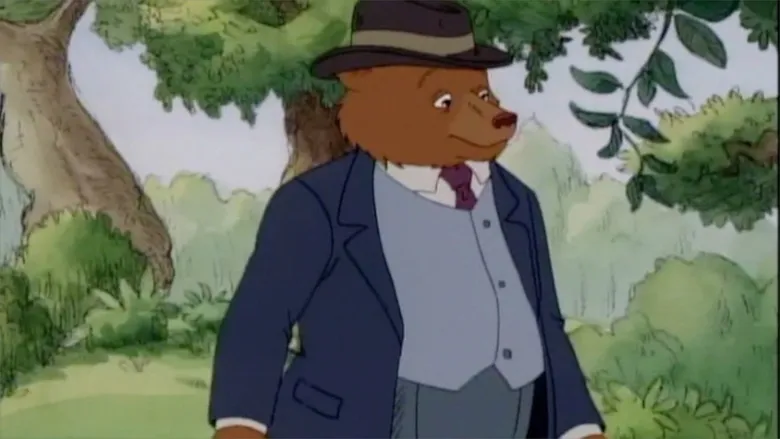
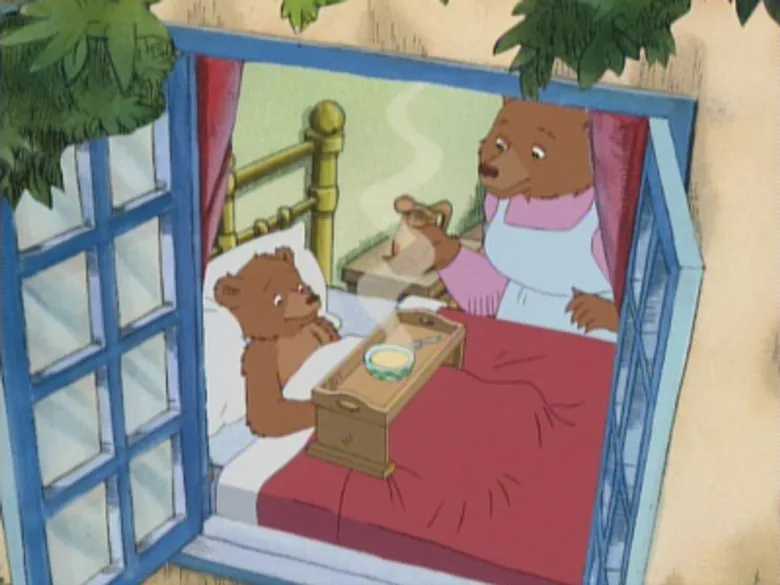
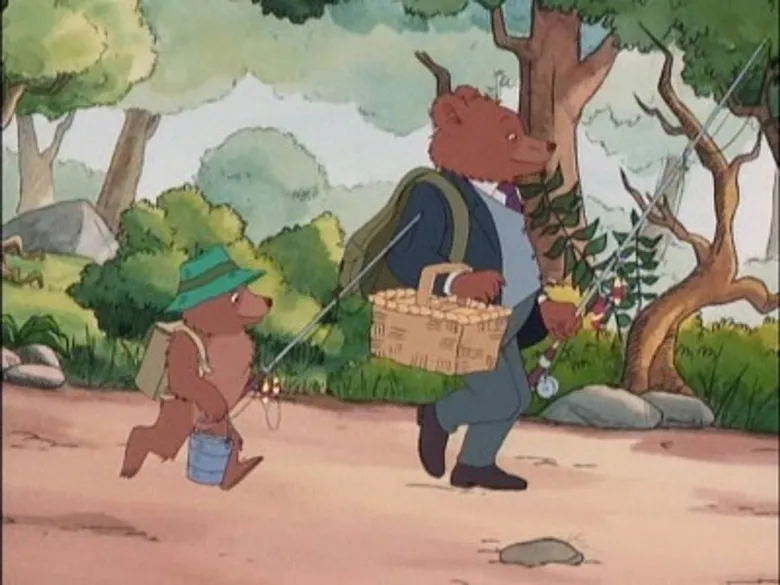
This is calm, hand-painted animation with a warm watercolour palette and gentle voices, which makes it easy to have on in the room. The hide-and-seek story is slight but has real character comedy, from Duck losing his place while counting to Owl insisting he was only pretending to sleep, and a co-watching adult will catch the dry wit even if the plot stays simple. There is nothing shrill or repetitive to grate on grown-up ears. The craft is the standout, with soft backgrounds and unhurried staging that hold up well.
Themes
Play
Central
The friends spend the episode playing a game of hide-and-seek in the forest.
In a woodland home, Little Bear and his friends Duck, Hen, Cat, and Owl decide to play hide-and-seek, and Duck finally gets his wish to be the seeker. He closes his eyes and counts to ten while the others hide, then searches the forest, finding each friend by spotting footprints and following sounds. Once everyone is found, Little Bear heads home. There he surprises Mother Bear with a playful 'Boo!' at the washing line.