
Slowscreen SlowScreen
Toggle sidebar

Just launched: free lifetime premium for the first 1,000 members to activate their account.

Start free

Social theme

Peer rivalry

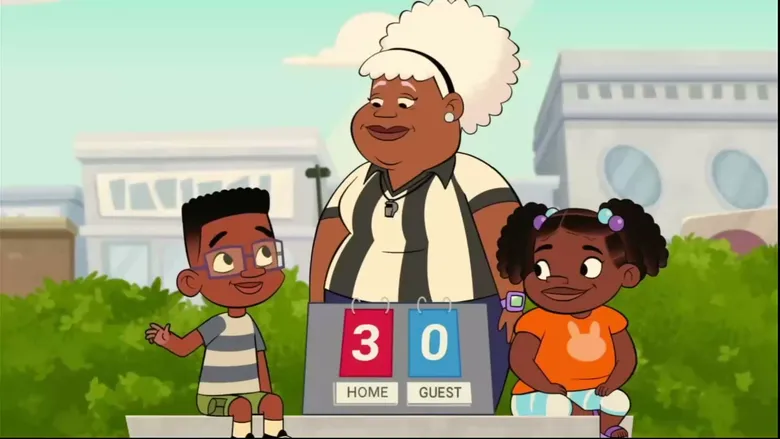
Peer rivalry is what happens when children measure themselves against each other: who is fastest, who got the bigger piece, who is best friends with whom. It is uncomfortable to watch, but it is how children learn to handle wanting something someone else has. A calm series about it lets a child see the feeling from a safe distance, and shows that a friendship can survive it.

For 3-year-olds

At three, rivalry is mostly about the object in the moment: the red shovel, the front seat, the turn on the swing. A child this age cannot yet hold on to fairness as an idea, so the feeling arrives whole and loud. Look for a series where the conflict is small and named out loud, where an adult or a friend helps put words to the wanting, and where the repair follows quickly. Long gaps between the upset and the fix are hard to follow at this age.

For 4-year-olds

Four-year-olds start comparing themselves rather than just the toys: who is bigger, braver, better at climbing. That comparison can sting, and it often shows up as boasting or as refusing to join in. Helpful series let a character be openly jealous or competitive without being scolded for it, then show the friendship still standing afterwards. Watch for stories where a character asks for help or admits they wanted to win, so the feeling has somewhere to go.

For 5-year-olds

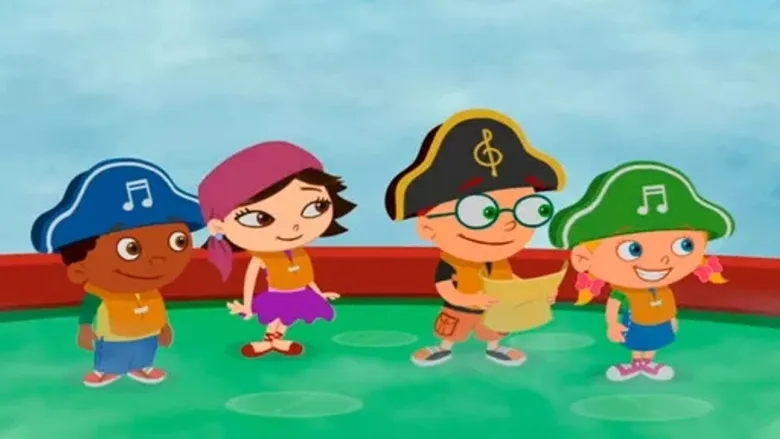
By five, children track fairness closely and notice who gets picked, praised, or left out. Rivalry becomes social: best-friend triangles, being second best, wanting to be the one who knows most. Series that work here give the rivalry a real reason on both sides, so neither child is simply the mean one. Look for characters who talk it through, apologise in their own words, or discover that two people can be good at different things.

For 6-year-olds

Six-year-olds run their own social world, with teams, rankings, and rules they negotiate themselves. Competition here can be genuinely fun, and the rivalry that matters is the kind that quietly hurts: exclusion, one-upping, a friendship strained by wanting to be first. At this age a child can follow a story where the tension holds for a while before it resolves. Look for series that let characters be wrong, sit with the awkwardness, and work their way back without an adult stepping in to fix it.

Just launched: free lifetime premium for the first 1,000 members to activate their account.

Create your account

Search by title, show, tag, or topic

We use functional cookies and Google Analytics to improve our site. Learn more