





This program is highly stimulating. It may be difficult to calmly process everything. For the recommended age, this can feel clearly intense.
The pacing is fast. Images follow each other quickly, leaving little time to pause and take in what is happening.
The sound is intense and continuously present.
The visuals are busy, with a lot of movement and frequent changes.
The video keeps one easy-to-follow focus: a single color at a time, each opened with the same question and answer. That clear, predictable pattern helps a young child know what is coming next. What holds this pillar back is that there is no real story or chain of cause and effect, just a repeating list of colors and clothing. Each color section also introduces several new clothing words together, which is a fair amount to absorb even though the steady repetition softens it.
Emotionally this is a steady, safe watch. The mood stays cheerful and warm the whole way through, with smiling performers, encouraging lines like 'I love wearing blue', and no conflict, fear, or sadness at any point. Because nothing ever turns tense, there is no upsetting moment a child would need to recover from. The small caveat is that there is little real back-and-forth between the characters to model, since most of the singing is aimed straight at the viewer rather than at one another.
This pillar scores low because the video never shows a problem being worked out. No character meets a challenge, tries something, or reaches a solution, so there is no thinking or learning process for a child to watch and copy. The one interactive touch is the repeated 'What color am I wearing? Can you see it?', which invites the child to answer, but that is a brief prompt rather than genuine problem-solving. For building independence and reasoning there is very little to draw on here.
Language is a clear strength. The words are concrete and well-matched to a three-year-old: seven color names paired with everyday clothing like socks, gloves, a hat and a dress, spoken clearly and tied directly to what is on screen. That tight link between word and picture makes the meaning easy to grasp. The caveat is that much of the lyric is chanted single words ('blue, blue, blue, blue') and short clothing lists rather than full sentences, so it leans more on naming than on complete spoken language.
There is real everyday value here: colors and clothing are things a child sees and uses daily, and the video invites them to look at their own clothes and name the colors, which carries straight into offline life. Everything shown is grounded in the real world, with no fantasy to untangle. What holds the pillar back is that the actions stay at the level of naming and labeling, with no multi-step activity to follow, and there is little real social life, family, or play to recognize beyond performers singing to the camera.
More information
This score shows how inclusively the series portrays diverse people, families and cultures. Scale: Limited → Varied → Rich → Inclusive.
This is a colors song performed by a fixed group of adult entertainers who each take turns leading a different color section. The cast shares the spotlight fairly, with men and women both presenting, singing and dancing as equals, and it visibly includes a range of body shapes. What it does not offer is ethnic or age variety, since everyone reads as light-skinned and adult, and the clothing sticks closely to traditional gender styling. For a short learning song the focus stays on colors rather than people, so the world it shows is cheerful but narrow.
This score shows whether the series stays close to everyday reality or leans into fantasy. Scale: Fantasy → Mixed reality → Realistic.
This color song stays grounded in everyday life. Real performers wear ordinary clothing items like belts, socks, jackets, and hats while naming each color, so everything on screen is something a child sees and wears every day. There is no villain and no conflict, just a group singing through the colors one by one. The complete absence of fantasy and the fully recognizable world make it a strong match for a young preschooler.
Themes
Colors
Central
Each verse names and shows one color, moving through blue, green, orange, purple, yellow, red and pink.
Clothing
Central
Every color is illustrated with worn items such as belt, braces, socks, skirt, dress and tutu.
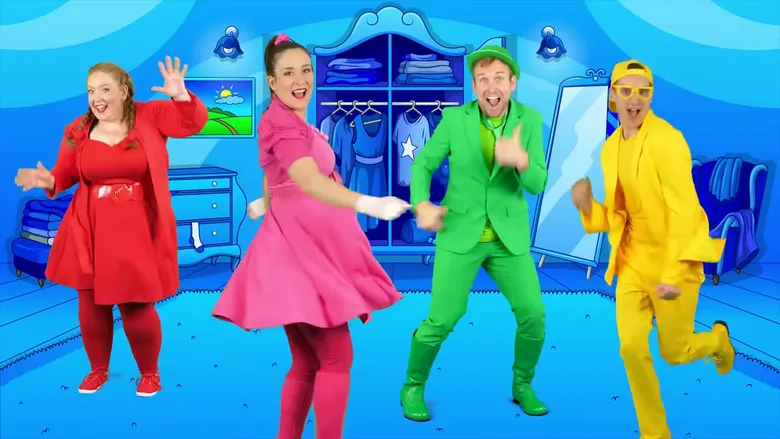
A group of five adult performers from Bounce Patrol sing a color song against bright, single-color backdrops. One color at a time they ask 'What color am I wearing?' and name clothing items in that color, working through blue, green, orange, purple, yellow, red and pink. Each section repeats the color name and ends with the cast chanting it. The video closes with the whole group dancing together in a recap of all the colors.