
Slowscreen SlowScreen
Toggle sidebar

Just launched: free lifetime premium for the first 1,000 members to activate their account.

Start free

Social theme

Respect for nature
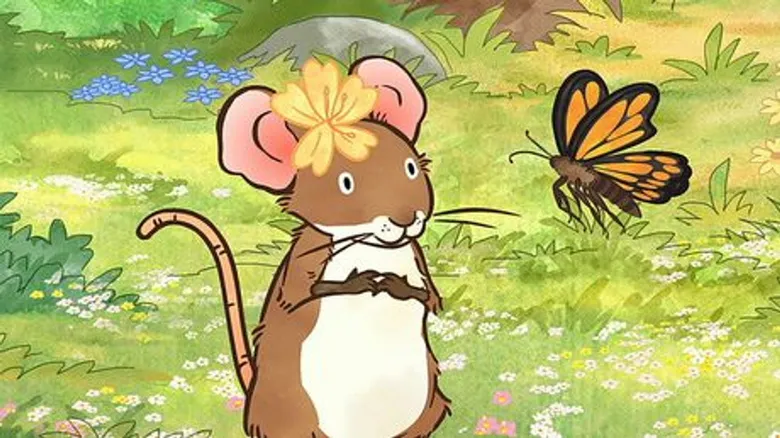
Respect for nature starts small: noticing a snail on the path, listening to rain, or wondering where a bird sleeps. Children learn to care for living things by first being curious about them, and by seeing adults treat plants, animals and weather as worth paying attention to. A calm, well-made series can slow that noticing down and give a child time to look, ask and feel connected.

For 2-year-olds

At two, nature is mostly sensory. Your child notices grass underfoot, a moon in the sky, a dog walking past, and repeats the words for them with real pleasure. Look for stories that stay close to one animal or one outdoor moment, with plenty of quiet and simple naming. What matters at this age is warmth and gentleness toward living things, not explanation; a character stroking a rabbit softly teaches more than any fact about rabbits.

For 3-year-olds

Three-year-olds start following animals as characters with their own lives: where they sleep, what they eat, who their family is. They also begin to grasp simple cause and effect outdoors, that rain makes puddles and wind moves leaves. Choose stories where the natural world has its own rhythm and is not just a backdrop for a chase or a joke. Small acts of care, helping a stuck creature, waiting quietly so a bird is not startled, land clearly now.

For 4-year-olds

Around four, curiosity turns into questions with real intent: why, how, what happens next. Children can now hold onto the idea that animals and plants have needs separate from their own wishes. Look for stories that let a child explore outdoors, make a small discovery, and connect it to something familiar at home. This is also the age where a story can show that nature is not always tidy or comfortable, without turning that into fear.

For 5-year-olds

Five-year-olds can follow a chain of ideas: this animal eats that, this habitat depends on that water. They enjoy real information and remember it, so accuracy starts to matter. Look for stories that explain a natural process step by step and invite the child to predict or wonder along. Respect deepens when a child understands what a creature actually needs, and sees people asking questions and checking before they act.

Molly of Denali
S04 E07 Story A

Molly of Denali

Tusk, Tusk, and More Tusk

Balanced
recommended age Unlock co-watching from 2
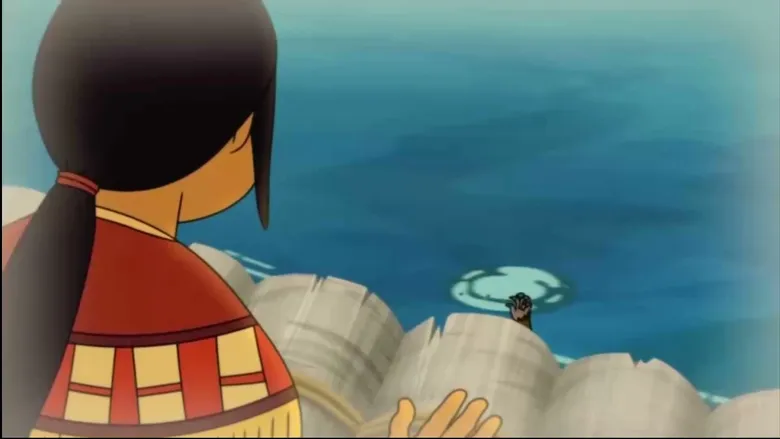
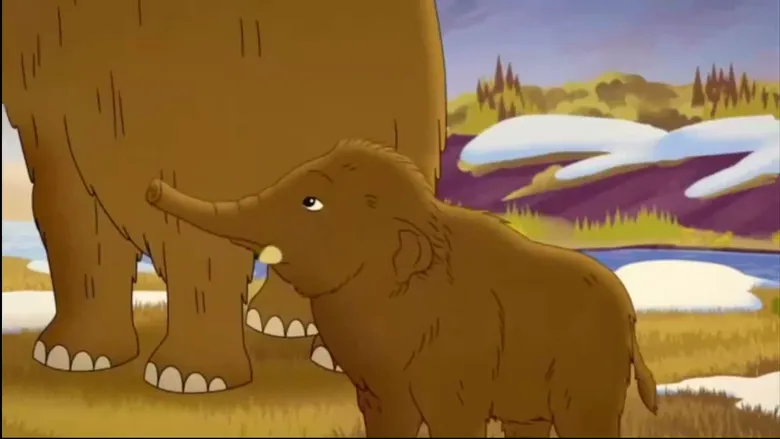
Molly and her friends Tooey and Trini discover a large tusk buried in the mud near the river in their Alaska village. Grandpa Nat and an archaeologist named Olin Benedict identify it as a woolly mammoth tusk and explain the Ice Age, permafrost, and how the warming climate erodes the riverbank. The children help free the tusk through trial and error, measure it, photograph it, and give it the Gwich'in name 'Trilzok', meaning gentle. The episode ends with a separate live-action segment where children visit a museum to learn whether dinosaurs once lived in Alaska.

Molly of Denali
S04 E20

Molly of Denali

Happy Birthday, Qyah!

Balanced
recommended age Unlock co-watching from 2
Molly and her best friend Tui set out to answer one question: how old is their Alaska Native village of Qyah, really? After Molly's dad finds a cave revealed by an earthquake, the two join archaeologists Nina and Olin to investigate signs that ancestors once sheltered there. They uncover a painted pictograph that matches an oral origin story, get briefly trapped by an aftershock before climbing out, and help carbon-date the find. The episode ends with a new museum exhibit, a corrected town website, and the news that people have lived in the area for at least 13,000 years.

SciShow Kids

SciShow Kids

Blobfish: The World's Ugliest Animal

Balanced
recommended age Unlock co-watching from 2
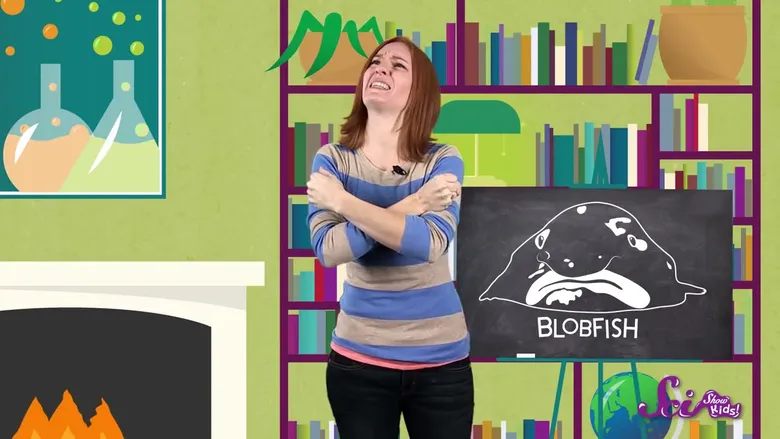
Live-action host Jessi and her robot puppet Squeaks introduce the blobfish, a deep-sea animal once labeled the world's ugliest. They explain that it lives near the ocean floor off Australia, where it is dark, cold, and under heavy pressure, and that its soft, jelly-like body lets it float and feed with little effort. Jessi adds that the fish only looks blobby once nets pull it up from that pressure, and looks more ordinary at depth. The episode ends with the two practicing silly faces together.

SciShow Kids

SciShow Kids

Worms Are Wonderful

Balanced
recommended age Unlock co-watching from 2
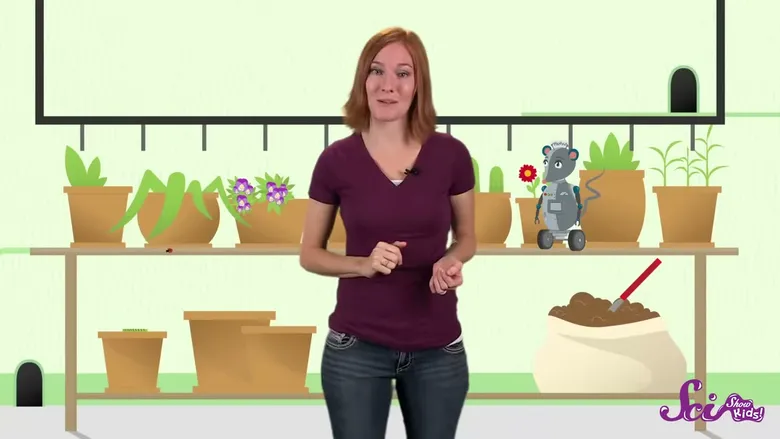
Jessi, a science host, and her robot friend Squeaks introduce earthworms and explain what makes them special. Standing in an illustrated set, she covers how worms differ from insects and snakes, how they move and breathe, why they live in burrows, what they eat, and how they enrich soil through tunnelling and composting. Real footage of worms, birds and soil is mixed with cartoon diagrams of worm anatomy. The episode closes with the message that healthy worms mean healthy soil and healthy people, and a thank-you to the viewer.

The Magic School Bus
S01 E06

The Magic School Bus

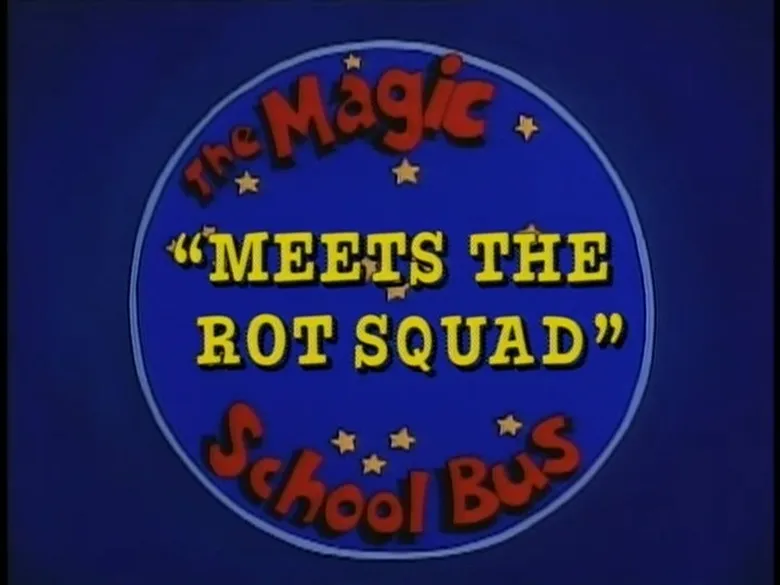
Meets the Rot Squad

Balanced
recommended age Unlock co-watching from 2
Ms. Frizzle's class holds a rotten-food contest, and winner Wanda receives a young tree she wants to plant in a vacant lot full of dead logs. When Wanda calls a service to haul away one rotting log, the Magic School Bus shrinks the class to bug size so they can see the fungi, beetles and slime molds living inside it. The children learn that rot is nature recycling itself and race to stop Larry from removing the log. In the end they save it, plant Wanda's tree, and feed it compost.

Gigantosaurus
S01 E13

Gigantosaurus

Please Don't Pick The Flowers

Balanced
recommended age Unlock co-watching from 4
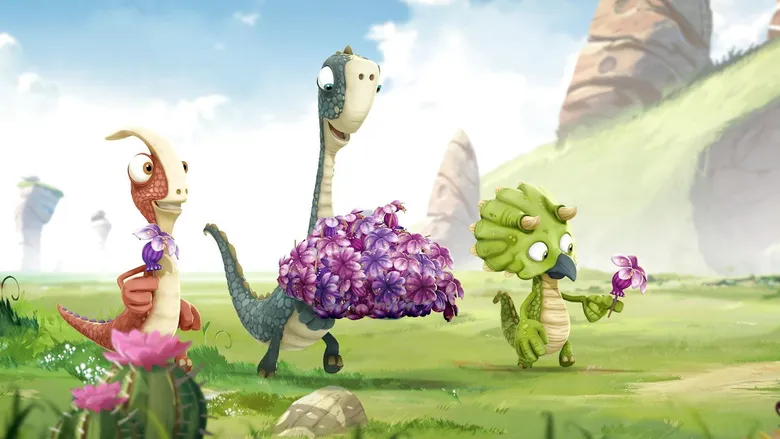
In a colourful dinosaur land, four young friends, Rocky, Bill, Tiny and Mazu, spend the day near the swamp. When Bill discovers how tasty the floating flowers are and picks far too many, the whole food chain starts to break down, leaving the horseshoe crabs, the birds and even the giant Giganto hungry. Mazu explains how the animals all depend on one another, and the friends set out to dig up a bone, return the flowers and scatter seeds. By the end the ecosystem is working again and Bill has learned how one small choice can affect everyone.

For 6-year-olds

By six, children can hold a bigger picture: habitats, seasons, that human choices affect animals and land. They also feel strongly about fairness, which now extends to how living things are treated. Look for stories that go into real depth, name species, show how creatures survive, and let characters weigh what to do when nature and people collide. Detail is welcome here; a six-year-old is ready to admire a creature for exactly what it is.

Pinecone & Pony
S02 E02 Story A

Pinecone & Pony

The Harvest Spirit

Balanced
recommended age Unlock co-watching from 4
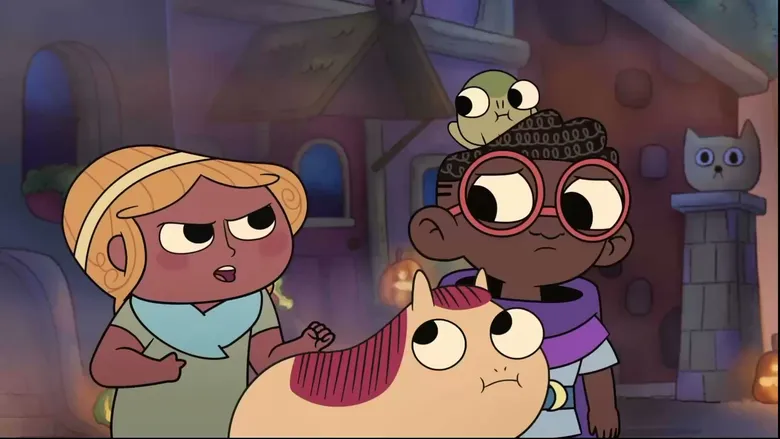
During a Harvest Festival dinner in the town of Sturdy Stone, Pinecone questions why everyone hides indoors from a Harvest Spirit no one has ever seen. She, her unicorn Pony and their friend Hawthorn set out on a nighttime quest, following an eerie moaning sound through the streets and into the swamp. They discover the sound comes from jilly-toads driven out of their flooded home by the town's heavy festival float. The town moves the float, frees the toads and celebrates together, agreeing to keep the tradition without harming the swamp.

Wild Kratts
S03 E10

Wild Kratts

Mystery on the Prairie

Balanced
recommended age Unlock co-watching from 4
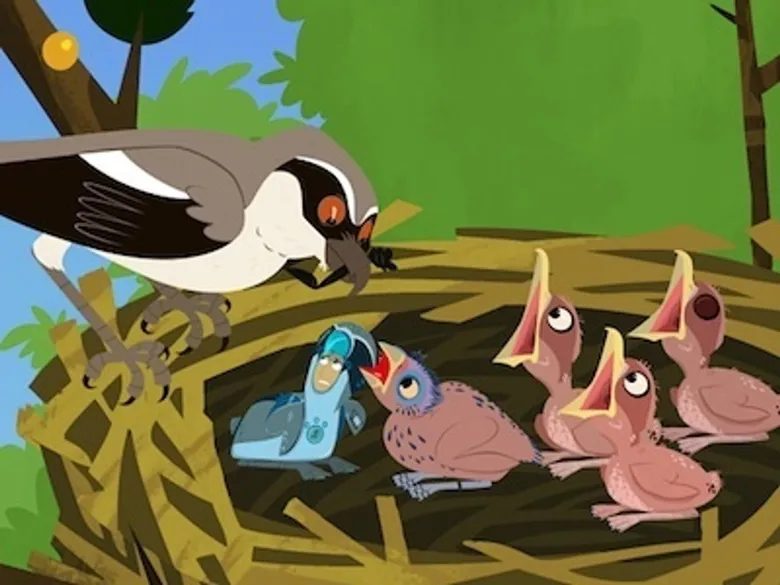
Brothers Chris and Martin Kratt explore the North American shortgrass prairie, where they investigate two animal mysteries: who is impaling insects and small prey on thornbushes, and why one egg in a nest looks different from the rest. With help from their crew aboard the Tortuga, they discover that loggerhead shrikes use thorns instead of talons, and that buffalo birds, also called cowbirds, secretly lay their eggs in other birds' nests. After mistakenly 'rescuing' a cowbird chick they name Moo, they realize the chick belonged where it was and decide to raise it themselves. Live-action segments with the real Kratt brothers and footage of actual prairie animals bookend the animated adventure.

Wild Kratts
S01 E01

Wild Kratts

Mom of a Croc

Balanced
recommended age Unlock co-watching from 4
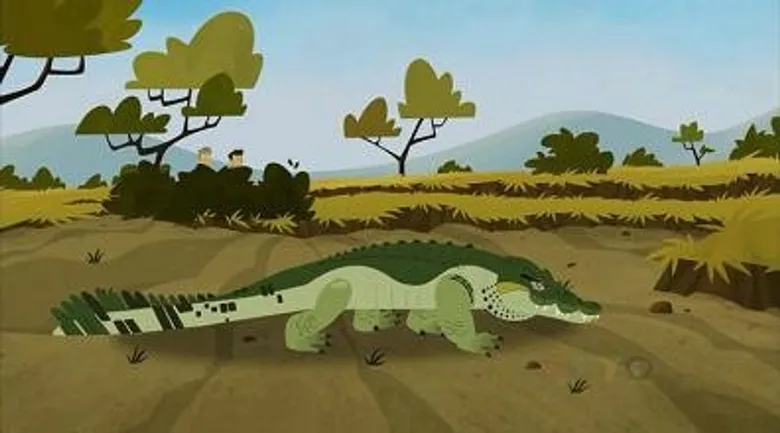
Chris and Martin Kratt shrink down disguised as crocodile eggs to study a Nile crocodile mother nicknamed 'Crocodilla' along an African river. They count 57 eggs, observe how she regulates nest temperature, and watch her defend the nest from monitor lizards, hippos and other predators while Aviva, Koki and Jimmy support from the Tortuga base. The team discovers that egg temperature decides the hatchlings' sex and helps move the baby crocs safely to the nursery pool. By the end Aviva, who started out disliking crocodiles, admits she was wrong to judge them before knowing them.

Wild Kratts
S02 E19

Wild Kratts

Rattlesnake Crystal

Balanced
recommended age Unlock co-watching from 4
Chris and Martin Kratt and their crew crash-land their ship, the Tortuga, in the Sonoran Desert and find that its power crystals, made of a rare material called tellurium, are failing. Racing a countdown, the brothers use heat vision and 'rattlesnake powers' to search underground through ground squirrel tunnels, learning about real rattlesnakes along the way. They find tellurium crystals in a den full of snakes and get them back just in time to save the ship. The episode closes with live footage of the real brothers tracking wild rattlesnakes at a desert museum.

Just launched: free lifetime premium for the first 1,000 members to activate their account.

Create your account

Search by title, show, tag, or topic

We use functional cookies and Google Analytics to improve our site. Learn more