

Slowscreen SlowScreen
Toggle sidebar

Just launched: free lifetime premium for the first 1,000 members to activate their account.

Start free

Rattlesnake Crystal

Good

Recommended age Unlock

Co-watching from age 4

Balanced

Exact score locked

Watch on Prime Video PBS Kids
Save
Rattlesnake Crystal

Share

Pass this find on to another parent

Link preview

Wild Kratts: Rattlesnake Crystal | Good, co-watching from age 4

Wild Kratts: Rattlesnake Crystal | Good, co-watching from age 4 - Slowscreen

Good · Co-watching from age 4. Chris and Martin Kratt and their crew crash-land their ship, the Tortuga, in the Sonoran Desert and find that its power crystals,...

slowscreen.com

https://slowscreen.com/en/series/wild-kratts/s2/e19-rattlesnake-crystal

https://slowscreen.com/en/series/wild-kratts/s2/e19-rattlesnake-crystal

Slowscreen

Wild Kratts: Rattlesnake Crystal | Good, co-watching from age 4 - Slowscreen

Good · Co-watching from age 4. Chris and Martin Kratt and their crew crash-land their ship, the Tortuga, in the Sonoran Desert and find that its power crystals,...

Wild Kratts: Rattlesnake Crystal | Good, co-watching from age 4

slowscreen.com

Wild Kratts: Rattlesnake Crystal | Good, co-watching from age 4 - Slowscreen

Good · Co-watching from age 4. Chris and Martin Kratt and their crew crash-land their ship, the Tortuga, in the Sonoran Desert and find that its power crystals,...

Wild Kratts: Rattlesnake Crystal | Good, co-watching from age 4
slowscreen.com

Wild Kratts: Rattlesnake Crystal | Good, co-watching from age 4 - Slowscreen

slowscreen.com · Posted by you

Wild Kratts: Rattlesnake Crystal | Good, co-watching from age 4 - Slowscreen

0 Share
Wild Kratts: Rattlesnake Crystal | Good, co-watching from age 4
To
Subject Wild Kratts: Rattlesnake Crystal | Good, co-watching from age 4

Good · Co-watching from age 4. Chris and Martin Kratt and their crew crash-land their ship, the Tortuga, in the Sonoran Desert and find that its power crystals,...

https://slowscreen.com/en/series/wild-kratts/s2/e19-rattlesnake-crystal

Share on WhatsApp Share on X Share on Facebook Share on Telegram Share on Reddit Share on Email

See the exact scores

The review is yours to read. Create a free account to reveal the exact SlowScreen score and every pillar score.

Create free account
This program is well-balanced. It remains mostly easy to follow and process. It is a good fit for the recommended age. The pacing is fast. Images follow each other quickly, leaving little time to pause and take in what is happening. The sound is soft and supportive. The visuals are calm and well-organized.
One clear goal runs through the whole episode: find tellurium crystals before the ship shuts down for good. Events follow in a logical chain, the crash, the discovery of the failing crystals, the underground search, the setbacks and the final find, so a child can follow what leads to what. Cause and effect is spelled out plainly, like the rule that every use of the ship's powers cuts its remaining life in half. The one caveat is that a lot of real science is packed in, from heat-sensing pits to the meaning of a hibernaculum, which is a full load at this age.
The brothers treat each other and the animals with respect, repeating that rattlesnakes 'are just defending themselves' rather than something to fear, and they gently cheer on a nervous crewmate until he succeeds. Against that warmth sits a steady run of tension: the ship is described as 'dying', a crash landing opens the story, and an on-screen meltdown countdown is restated again and again. Reassurance and resolution do arrive, the ship is saved and everyone celebrates, so the worry is released by the end. For a sensitive child the repeated peril and urgent voices are the part to keep an eye on.
The brothers drive the problem-solving themselves and their thinking is visible: they try spotting something shiny, switch to heat-vision goggles, realise the goggles cannot show cool pebbles or crystals, and conclude they need to see with both heat and ordinary sight. They hit genuine dead ends, losing the crystal down a tunnel and having to pick the right one, and they adjust instead of getting it right first time. Solutions are reasoned out loud, such as choosing the tunnel without a Gila monster crawling from it. This is a solid model of trying, failing and rethinking for this age.
The language is rich and mostly accurate, naming real concepts like venom, camouflage, heat-sensing pits and a hibernaculum, and the speech is clear and easy to follow. Sentences are complete and explanatory, and most of the talk delivers real information or instruction rather than empty exclamations. Some words stretch well beyond everyday vocabulary, 'metalloid', 'semiconduction' and 'telemetry', which suits an older school-age child more than a young one. Throughout, the words are used consistently and with purpose.
The episode is anchored in a real ecosystem and a real animal, with live footage of the actual desert, a working researcher tracking wild rattlesnakes, and a hands-on 'can you find the rattlesnake?' camouflage game a child could picture playing. Much of the adventure, though, runs on invented mechanics, creature-power suits, a magic ship and teleporting discs, which a child cannot carry into daily life. The recognisable parts are the teamwork, the careful observation of animals and the respect for wildlife. So the real-world value is genuine but sits alongside a large layer of fantasy that stays on the screen.

More information

This score shows how inclusively the series portrays diverse people, families and cultures. Scale: Limited → Varied → Rich → Inclusive.
Wild Kratts builds its adventures around a mixed team, and this episode keeps that up. Aviva and Koki, both women of color, work as the inventor and the operations lead, while the brothers Chris and Martin and their pilot Jimmy handle the search for the rare crystal out in the desert. Children see different skin tones and a fair gender balance as an ordinary part of the group, with the small caveat that the women stay at the base while the brothers do the active fieldwork. Beyond the team itself, the cast offers little variation in family forms, ages or ways of living.
This score shows whether the series stays close to everyday reality or leans into fantasy. Scale: Fantasy → Mixed reality → Realistic.
The episode keeps one foot firmly in the real world, with actual desert footage, real rattlesnakes, coyotes and roadrunners, accurate animal facts, and a real researcher tracking snakes in the field. The adventure layer adds invented gadgets, animal power suits, shrinking down to squirrel size and teleporting objects, but these follow consistent rules and never feel arbitrary. There is no villain at all; the suspense comes from a ticking clock rather than a bad guy, and the desert animals are treated with respect throughout. For a child of this age the blend of real science and imaginative play lands well and stays easy to relate to.
This score shows how enjoyable the series is for parents watching along. Scale: Tedious → Tolerable → Pleasant → Enjoyable.
This one gives the adult in the room more to hold onto than most. The story carries real stakes, with a failing vehicle and a ticking clock to find a rare mineral, and it threads in genuine animal science about how rattlesnakes hunt by heat and how their prey fights back. The production is solid, pairing clean animation with real desert footage, and the voices and sound stay easy on the ear. It is energetic and pitched at kids, so you are more an interested co-viewer than gripped, but it holds up nicely beside your child.

Themes

Behaviour

Danger

The brothers come face to face with venomous rattlesnakes in strike position and survive a crash landing.

Scary scenes

A dark underground den is filled with coiling rattlesnakes baring fangs, which may unsettle sensitive children.

Fast pacing

The brothers and crew speak quickly, packing many facts into the dialogue.

Product promotion

The closing message tells children to visit the Wild Kratts website and 'collect your own Wild Kratts creature powers'.
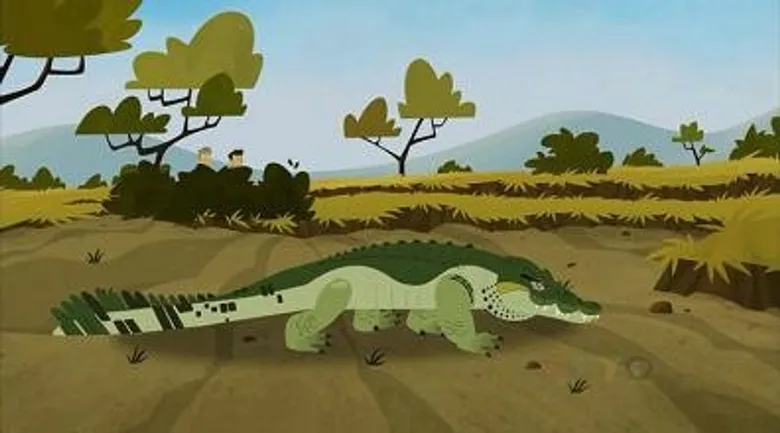
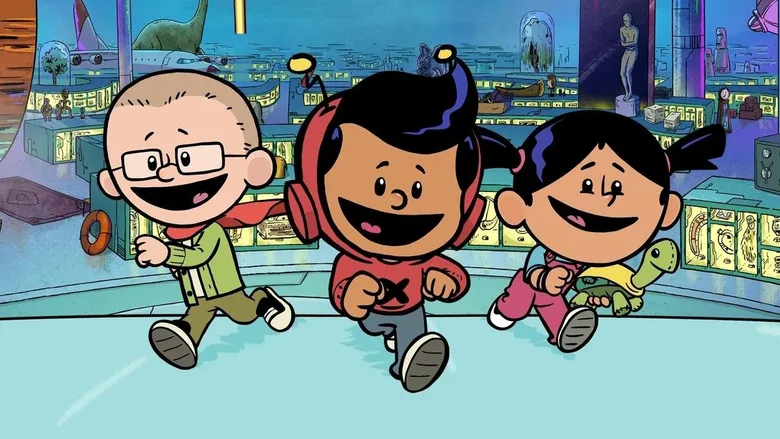
Chris and Martin Kratt and their crew crash-land their ship, the Tortuga, in the Sonoran Desert and find that its power crystals, made of a rare material called tellurium, are failing. Racing a countdown, the brothers use heat vision and 'rattlesnake powers' to search underground through ground squirrel tunnels, learning about real rattlesnakes along the way. They find tellurium crystals in a den full of snakes and get them back just in time to save the ship. The episode closes with live footage of the real brothers tracking wild rattlesnakes at a desert museum.

Wild Kratts
S01 E01

Wild Kratts

Mom of a Croc

Balanced
recommended age Unlock co-watching from 4
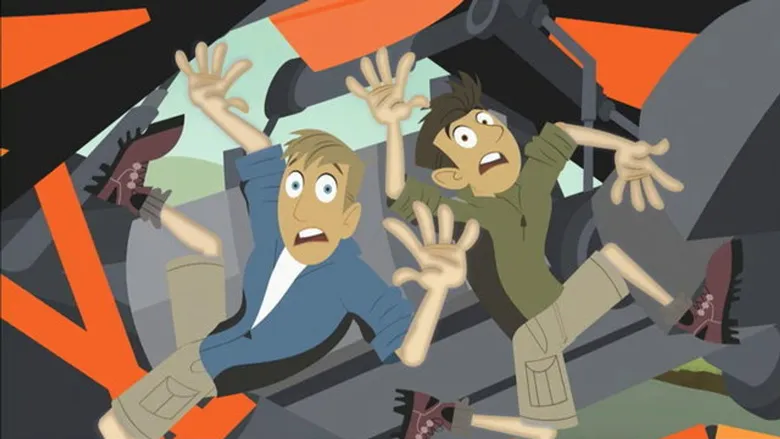
Chris and Martin Kratt shrink down disguised as crocodile eggs to study a Nile crocodile mother nicknamed 'Crocodilla' along an African river. They count 57 eggs, observe how she regulates nest temperature, and watch her defend the nest from monitor lizards, hippos and other predators while Aviva, Koki and Jimmy support from the Tortuga base. The team discovers that egg temperature decides the hatchlings' sex and helps move the baby crocs safely to the nursery pool. By the end Aviva, who started out disliking crocodiles, admits she was wrong to judge them before knowing them.

Wild Kratts
S01 E09

Wild Kratts

Voyage of the Butterflier XT

Balanced
recommended age Unlock co-watching from 4
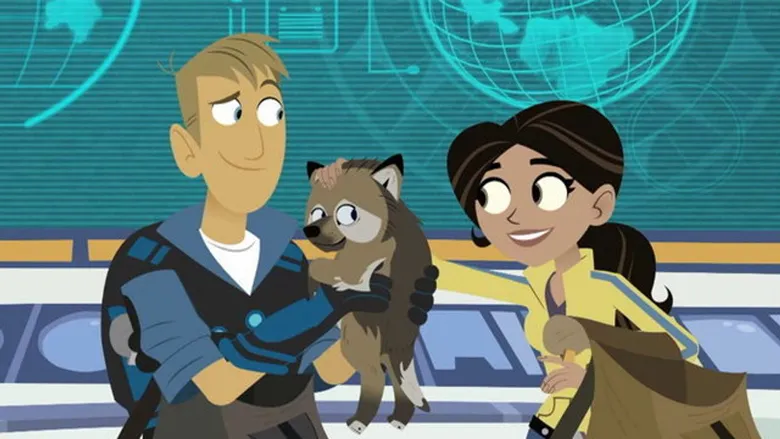
Brothers Chris and Martin Kratt set out to prove that a single monarch butterfly can travel three thousand miles to Mexico. Shrinking to butterfly size in a tiny flying vehicle, they follow a monarch named Maxilla through predators, a windstorm and a fashion designer who wants to capture butterflies for accessories. Along the way they explain the monarch life cycle, migration and survival tricks. Maxilla lays her eggs and dies, and a new generation hatches to continue the journey north.

Wild Kratts
S01 E26

Wild Kratts

Little Howler

Balanced
recommended age Unlock co-watching from 4
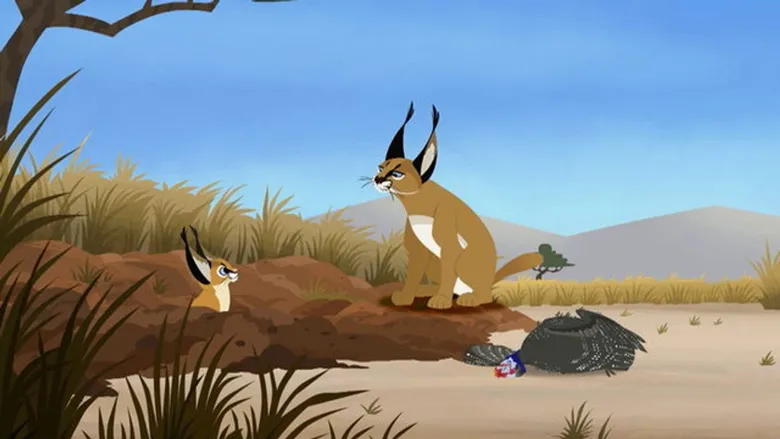
The Kratt brothers discover an orphaned wolf pup, Little Howler, has stowed away in a backpack, and set out to solve the mystery of where he came from. Retracing their day tracking a wolf pack through the northern woods, they learn how wolves howl, run marathon distances and team up with ravens, while dodging a charging moose and a cougar. Once they find the pup's den, they use wolf body language and his familiar scent to return him to the pack. The episode closes with real footage of the pup growing into a young wolf able to run on her own.

Wild Kratts
S01 E33

Wild Kratts

The Gecko Effect

Balanced
recommended age Unlock co-watching from 4
Chris and Martin Kratt set out to discover how a gecko climbs on smooth surfaces. After a failed suction-cup experiment, they miniaturise themselves to study a Tokay gecko's toe pads up close and learn about microscopic electrostatic hairs. Meanwhile, the villain Zach Varmitech steals their miniaturiser and traps the team, who escape by using their new gecko powers to climb out. The episode ends with the inventions reclaimed and the brothers naming the gecko 'Okay'.

Wild Kratts
S02 E19

Wild Kratts

Rattlesnake Crystal

Balanced
recommended age Unlock co-watching from 4
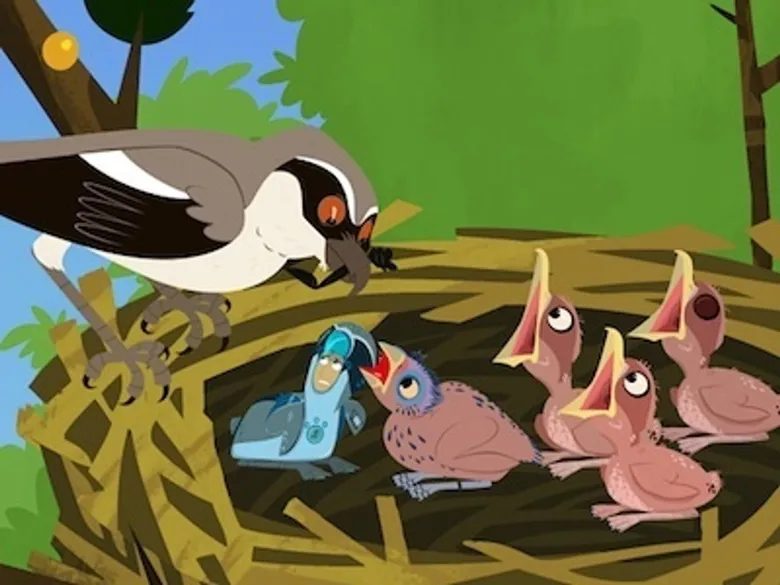
Chris and Martin Kratt and their crew crash-land their ship, the Tortuga, in the Sonoran Desert and find that its power crystals, made of a rare material called tellurium, are failing. Racing a countdown, the brothers use heat vision and 'rattlesnake powers' to search underground through ground squirrel tunnels, learning about real rattlesnakes along the way. They find tellurium crystals in a den full of snakes and get them back just in time to save the ship. The episode closes with live footage of the real brothers tracking wild rattlesnakes at a desert museum.

Wild Kratts
S03 E10

Wild Kratts

Mystery on the Prairie

Balanced
recommended age Unlock co-watching from 4
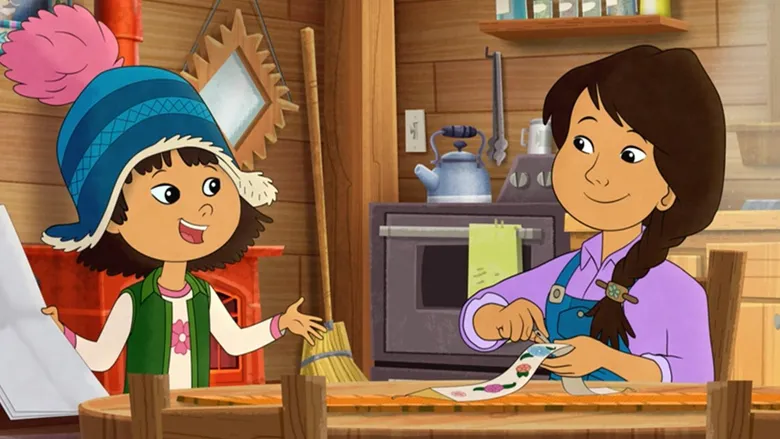
Brothers Chris and Martin Kratt explore the North American shortgrass prairie, where they investigate two animal mysteries: who is impaling insects and small prey on thornbushes, and why one egg in a nest looks different from the rest. With help from their crew aboard the Tortuga, they discover that loggerhead shrikes use thorns instead of talons, and that buffalo birds, also called cowbirds, secretly lay their eggs in other birds' nests. After mistakenly 'rescuing' a cowbird chick they name Moo, they realize the chick belonged where it was and decide to raise it themselves. Live-action segments with the real Kratt brothers and footage of actual prairie animals bookend the animated adventure.

Just launched: free lifetime premium for the first 1,000 members to activate their account.

Create your account

Search by title, show, tag, or topic

We use functional cookies and Google Analytics to improve our site. Learn more