



















This program is well-balanced. It remains mostly easy to follow and process. It is a good fit for the recommended age.
The pacing is fast. Images follow each other quickly, leaving little time to pause and take in what is happening.
The sound is intense and continuously present.
The visuals are calm and well-organized.
One clear storyline follows Scratch through his first day on the team, with a recognisable beginning, middle and end. Each event connects to the next: he is told to watch, he visits Scoop, Muck and Roley in turn, he practises on his own, he finds the vase. Cause and effect remains visible throughout, and the resolution at the museum closes the arc cleanly. The score is held back because the opening minutes introduce a large cast (Bob, Scoop, Muck, Wendy, Lofty, Dizzy, Roley, Scrambler, Mr Mockney, Scratch) and several different jobs at once, which is denser than a three-year-old can fully track.
The emotional register stays gentle and consistent throughout. Scratch openly tells Scoop and Muck 'I'm a bit scared, I want to fit in', and every adult and peer character answers with patience and reassurance rather than teasing. When he feels left out, the episode returns to a calm working scene and his arc closes with explicit recognition from Bob ('we're proud to have you on our team') and from Mr Mockney. Adults consistently model warm, attuned behaviour toward a worried newcomer.
Scratch drives the whole episode by trying to solve his own problem of not having a job. He approaches Scoop, then Roley, then Wendy and Bob, listens to each answer, and finally decides to practise digging on his own. The discovery of the vase grows directly out of that initiative, and he even reasons aloud about whether the bigger diggers should take over before deciding to finish it himself. Multiple visible attempts and a complete solution structure give this pillar real weight for a young preschool viewer.
Dialogue is mostly clear and used to explain real jobs (concreting, flattening the ground, the touch and smell garden), which gives language a functional role. Characters use names and objects consistently across scenes, which supports comprehension. The score is held down because the words arrive quickly and several terms sit above the three-year band: 'historical', 'exhibition', 'exhibits', 'pergola', 'fabulous'. Sentence length and structure are otherwise solid for the age range, with most lines forming complete simple sentences.
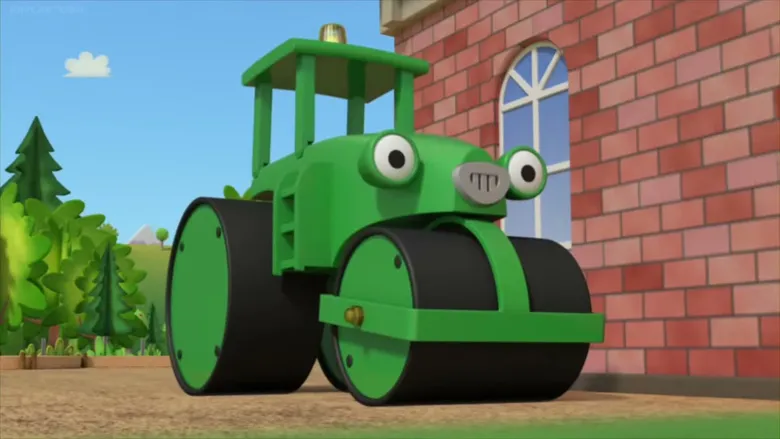
The activities shown (digging, rolling, concreting, planting a sensory garden, polishing museum exhibits) all map onto recognisable real work and could be imitated in play. Social dynamics around a new team member, asking for help, and earning praise are familiar to a young child. The score is mixed because the cast is built almost entirely from talking construction vehicles: Scoop, Muck, Roley and Scratch are machines with personalities and conversations, which for a three-year-old sits more in imagination than in real life. The museum and gardening framing pulls some of that back toward the everyday.
More information
This score shows how inclusively the series portrays diverse people, families and cultures. Scale: Limited → Varied → Rich → Inclusive.
This Bob the Builder episode features a small human cast (Bob, Wendy and museum curator Mr. Mockney) who all appear to share a similar light-skinned, white European look, alongside a larger ensemble of talking construction vehicles. The world stays inside one familiar building-yard and museum setting, with no visible variation in family forms, cultures, ages or bodies. Roles are reasonably balanced inside the team: Wendy is presented as a competent builder and equal partner to Bob, and the machines each contribute a distinct skill. Still, Bob remains the central authority who assigns every job, so the overall picture of who lives in this world stays narrow.
This score shows whether the series stays close to everyday reality or leans into fantasy. Scale: Fantasy → Mixed reality → Realistic.
This Bob the Builder episode places an everyday workplace story (preparing museum gardens, digging, rolling, planting herbs) inside a world where all the construction machines talk and have personalities. There is no villain; the only tension is Scratch's wish to fit in with the team, which resolves through patient watching and learning. The fantasy premise stays consistent throughout, and the calm, friendly tone fits this age well, with a small caveat that the entire main cast being sentient machines is more than purely realistic.
This score shows how enjoyable the series is for parents watching along. Scale: Tedious → Tolerable → Pleasant → Enjoyable.
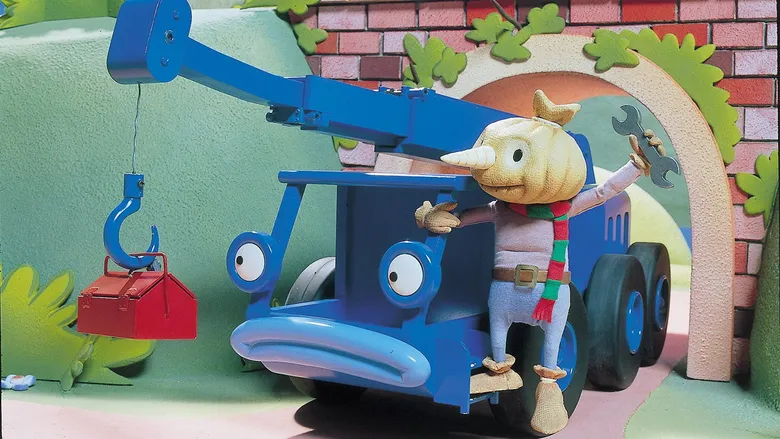
Bob the Builder offers a complete story arc with the new character Scratch finding his place on the team, which gives parents something to follow rather than pure formula. The pacing is calm and voices are pleasant, so it sits comfortably in the background. The classic stop-motion craft and clean sound mix hold up well. The main limitation for adults is that the dialogue and humor are pitched entirely at young children, with no layered jokes or knowing references for a co-viewer.
Themes
Belonging
Central
Scratch says 'I want to fit in' and the arc resolves with his formal welcome into the crew.
Learning
Central
Bob tells Scratch 'watching is the best way to learn' and Scratch later confirms 'I did learn a lot by watching'.
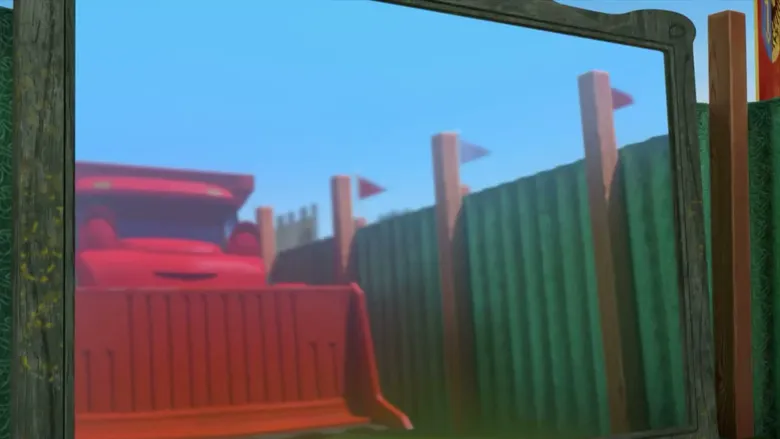
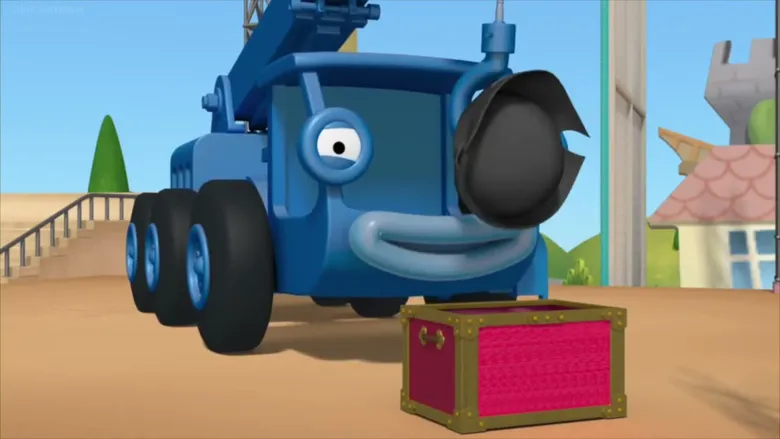
Scratch, a small new digger, arrives for his first day on Bob's construction team and is disappointed when Bob asks him to watch the others instead of giving him a job. He visits Scoop, Muck, Roley and Wendy hoping to help, and each one tells him to watch and learn. While practising digging on his own, Scratch uncovers a buried vase that the museum curator David Mockney recognises as the long-lost Mockney Monk vase. The episode ends with Bob and the team welcoming Scratch as a full member of the crew.