







This program is stimulating. It actively demands attention and can feel intense. For the recommended age, this may be on the more intense side.
The pacing is moderate. The story remains easy for a child to follow.
The sound is intense and continuously present.
The visuals are well-balanced, with a clear overall view.
There is only one thing to follow, the BINGO song about a farmer's dog, with no competing side stories, so it stays easy for a young child to track. Each verse arrives in the same predictable shape and introduces almost no new information, which keeps the mental load very light and well matched to a three-year-old. The limitation is that the song repeats rather than builds toward an ending, so there is little real cause-and-effect or story development to follow. The clear single thread is a genuine strength even though the content does not progress.
Emotionally the video feels safe: the mood is cheerful and stays cheerful, with no frightening, sad, or angry moments and no jarring switches in feeling. The boy treats his dog Bingo with warmth, feeding him a bone and playing gently, and the children behave kindly toward one another, with no whining, mocking, or put-downs. The one caveat is that the excitement sits at a constant high pitch with no calm, settling beats, which is a lot of sustained buzz for a three-year-old. Nothing, though, is left tense or unresolved.
This pillar scores low because the video is a repetitive song with no problem to solve and no thinking or learning process shown on screen. The characters sing, dance, and play with the dog, but they never face a challenge, try something out, hit a setback, or work toward a solution. There is no goal-driven initiative and no chain of reasoning for a child to watch unfold. The singalong format simply does not offer this kind of content.
The language suits a young child well: short, concrete words like 'farmer', 'dog', and the name 'Bingo' in simple, rhythmic, repeated lines that are easy to catch and join in with. Spelling out B-I-N-G-O adds some early-literacy value by naming each letter clearly and consistently. The caveat is that a large share of the words are single letters chanted over and over plus the rhyme filler 'name-o', so there is not much rich or new language beyond the core phrases. For this age the clarity and the repetition still work in the child's favour.
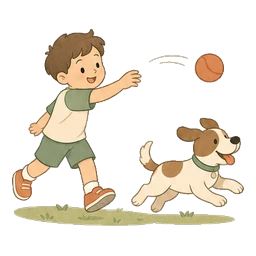
The video connects to real life mainly through the pet scenes: a boy feeds his dog a bone, a food bowl and doghouse sit nearby, and he plays beside them, which mirrors caring for a real pet. Clapping, singing along, and naming letters are also things a child can copy off-screen. What holds this pillar down is that much of the running time is decorative spectacle, giant grass-covered letters and stylised group dancing, rather than activities with a clear everyday purpose. The farm and the pet are recognisable, but the real-world payoff stays modest.
More information
This score shows how inclusively the series portrays diverse people, families and cultures. Scale: Limited → Varied → Rich → Inclusive.
This is a sing-along version of the BINGO nursery rhyme, where a small group of toddlers dances with a spotted farm dog in a green countryside. The children mix light and dark skin tones and share the screen as equals, and a Black boy is given a featured moment caring for the dog, so the ethnic representation feels natural rather than added on. What the video does not offer is breadth in other directions: everyone shown is a young child in one farm setting, with no adults, older people or different family lives, and the girls wear pink and purple dresses while the boys wear shorts. For a short rhyme the children get along easily and no group is pushed into the background.
This score shows whether the series stays close to everyday reality or leans into fantasy. Scale: Fantasy → Mixed reality → Realistic.
This sing-along builds its world from things a young child already knows: a farm with a red barn, children dancing in a sunny field, and a dog named Bingo. There is no villain and no good-versus-evil story, just a repeated song that spells out the dog's name. The only imagined touches are a smiling sun with a face and the oversized letters that float in to teach the spelling, and both stay consistent from start to finish. For a three-year-old, this mix of the familiar with a light touch of imagination is a strong fit.
This score shows how enjoyable the series is for parents watching along. Scale: Tedious → Tolerable → Pleasant → Enjoyable.
This is a single nursery rhyme built almost entirely on repetition, and it offers little for an adult sharing the room. The BINGO song loops the same verse and spelling refrain again and again, dropping one letter for a clap each time, so there is no story to follow and nothing pitched at a grown-up. The relentless refrain and the very saturated palette become wearing on repeat viewings. The production itself is clean and consistent, which is the one area that holds up for a parent.
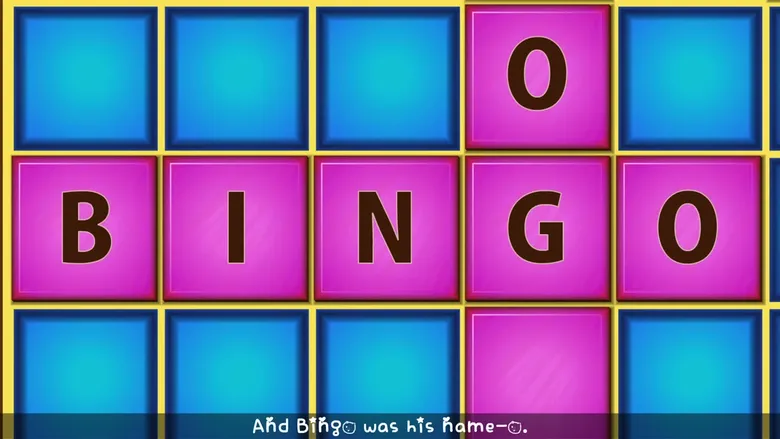
This is an animated nursery rhyme from ChuChu TV built around the 'BINGO' song. On a bright cartoon farm, a young boy feeds and plays with a white spotted dog named Bingo while groups of children dance. Each verse sings 'There was a farmer had a dog and Bingo was his name-o' and spells B-I-N-G-O, dropping one letter each round and replacing it with a clap, shown with giant grass-textured letters and on-screen lyrics. The video closes on a 'Subscribe for more videos' sign with the ChuChu TV logo.