










This program is highly stimulating. It may be difficult to calmly process everything. For the recommended age, this can feel clearly intense.
The pacing is fast. Images follow each other quickly, leaving little time to pause and take in what is happening.
The sound is intense and continuously present.
The visuals are busy, with a lot of movement and frequent changes.
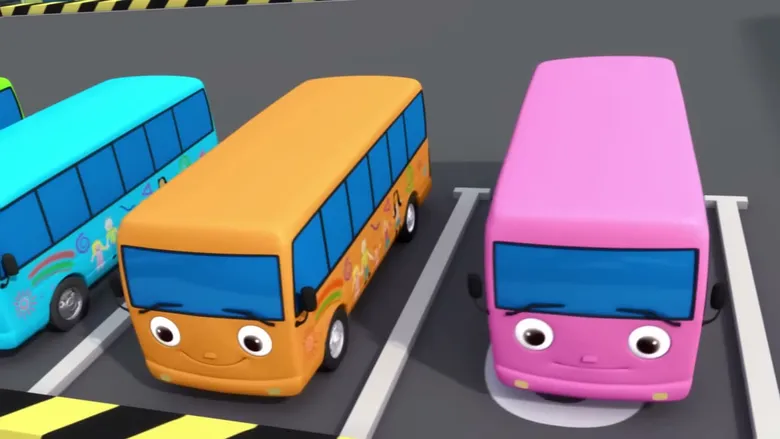
There is only one thing to follow, counting buses from one to ten and back again, so nothing competes for a child's attention and the thread stays clear. Because the same count keeps coming back, little genuinely new information arrives at once, which keeps it manageable for a toddler. What holds this pillar back is the lack of real cause and effect or a building story: numbers simply follow one another and the buses appear without events that lead to a result. A child can follow it easily but is not carried through a beginning, middle and end.
Emotionally this is a safe watch. The mood stays cheerful and even throughout, with smiling buses, a warm singing voice and no scary moments, sudden frights or upsetting turns, so a child is never left worried. There is no tension that needs repairing, because nothing distressing happens in the first place. The one caveat is that the buses do not really interact or show care for one another, so there is little genuine warmth or social attunement to model, just a consistently friendly feeling.
This pillar scores low because the video contains no problem to solve and no thinking process to follow. The buses are counted; they do not face a challenge, try something, make a mistake or work toward a goal. Nothing invites a child to predict, reason or imagine how a situation might be resolved. As a counting song it simply is not built to show initiative or problem-solving.
The language fits a two-year-old well: short, concrete and rhythmic, built around the number words from one to ten and the simple phrase 'little buses'. Words are used correctly and the singing is clear, so the meaning is easy to grasp and the counting reinforces itself. The limitation is that the lyrics are mostly counting lists rather than full sentences, and the same lines repeat many times, so there is little varied or descriptive language for a child to pick up. It teaches number words clearly but offers little beyond them.
The clearest real-world value here is counting, a skill a child can carry into everyday life by counting objects along with the song. Beyond that the connection to daily life is thin: the buses have cartoon faces and there are no recognisable activities with practical steps or social situations a child would meet at home or at play. The buses do line up at a station, which gives a faint sense of how buses work, but the video does not show people doing relatable things together. It is useful for early number words more than for understanding the world.
More information
This score shows how inclusively the series portrays diverse people, families and cultures. Scale: Limited → Varied → Rich → Inclusive.
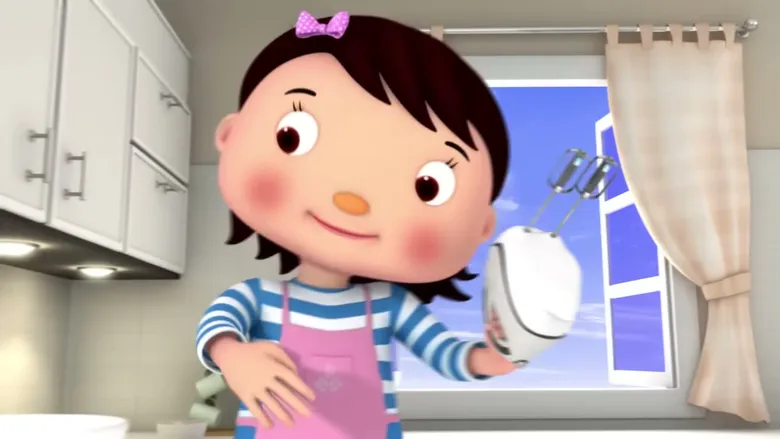
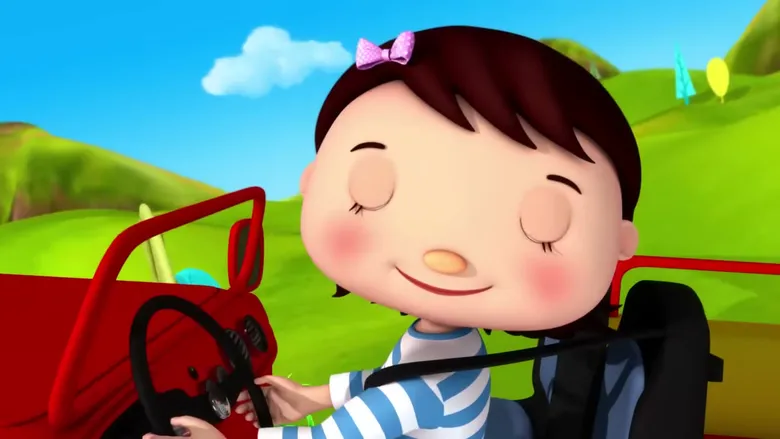
This counting song is built around brightly colored buses and boats with smiling faces driving around a harbor and a small town, with people barely featuring at all. The only human is a single light-skinned girl who appears in the closing card, so the video offers almost no picture of human diversity in family life, age, or culture. Because the characters are near-identical vehicles that mainly line up to be counted, there is also little variety in roles or behavior to draw on. There is no harmful stereotyping here, but there is also very little representation of people and the different ways they live together.
This score shows whether the series stays close to everyday reality or leans into fantasy. Scale: Fantasy → Mixed reality → Realistic.
The world is built almost entirely from things a 2-year-old already knows: brightly colored buses, roads, a small town, and a harbor with boats. The only imaginative touch is that each bus and boat has a smiling cartoon face, a light layer that stays the same from start to finish. There is no villain and no good-versus-evil conflict, the buses simply drive while a voice counts them up to ten and back down. For this age, that blend of everyday objects and one gentle imaginative element is a strong match.
This score shows how enjoyable the series is for parents watching along. Scale: Tedious → Tolerable → Pleasant → Enjoyable.
For an adult in the room, this counting song offers very little. The whole video repeats one sung phrase, 'one little two little three little buses,' set to a familiar nursery tune, with no plot and nothing aimed at a grown-up. The looped refrain and constant counting wear thin quickly, though the bright 3D animation is clean and consistent. Its value sits in teaching numbers to a small child, not in entertaining the parent watching alongside.
Themes
Counting
Central
The song counts buses from one to ten and then counts back down from ten to one.
Vehicles
Central
Brightly coloured buses are the only main characters and are on screen throughout.
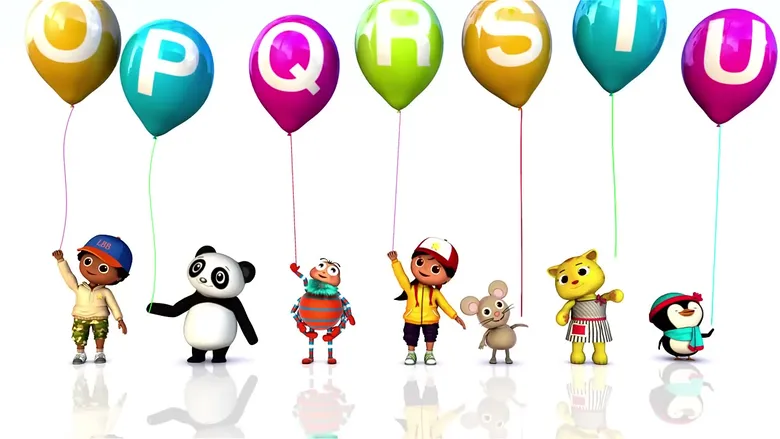
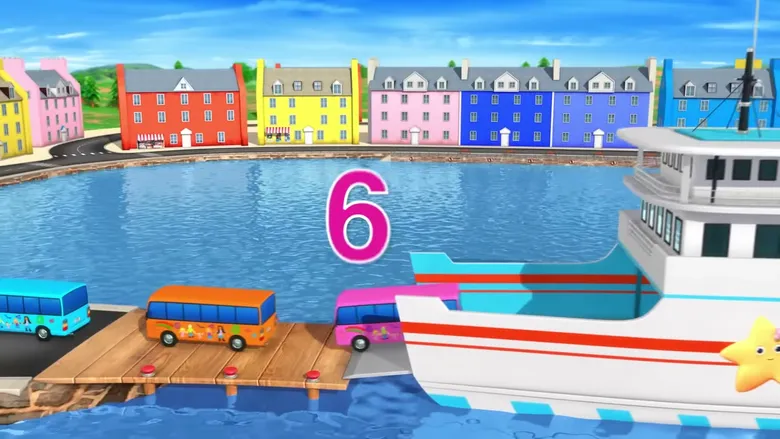
This is an animated nursery rhyme from Little Baby Bum in which a row of brightly coloured buses with cartoon faces is counted from one to ten and back again. The buses drive and line up around a stylised town with roads, a bus station and a harbour while a singer performs the counting song. A monkey and a small child character appear briefly near the end. The video closes with an on-screen prompt to subscribe and to tap the next video.