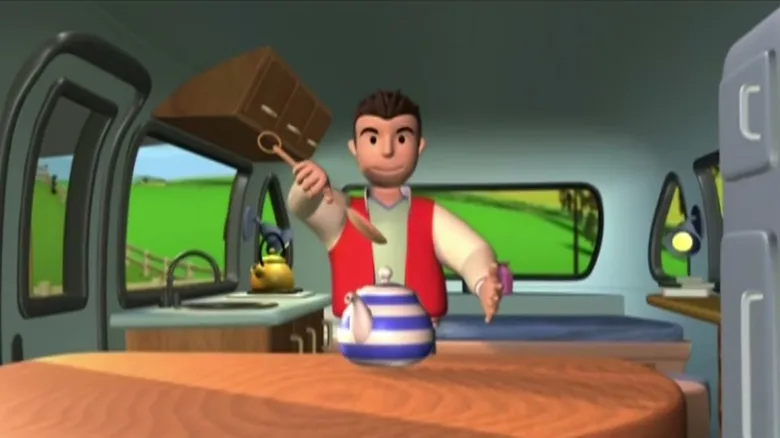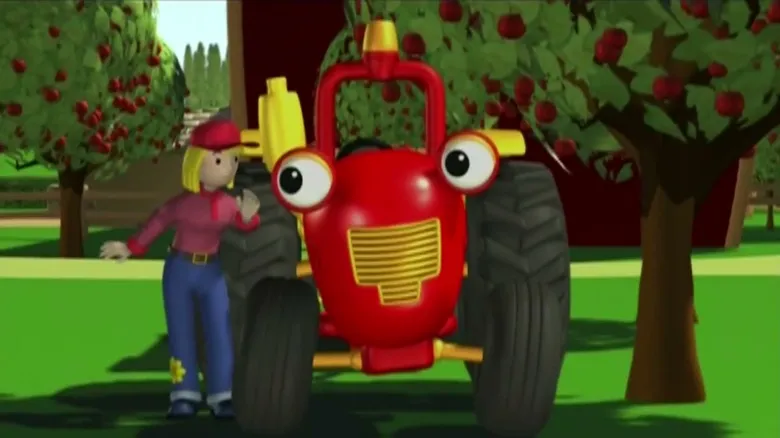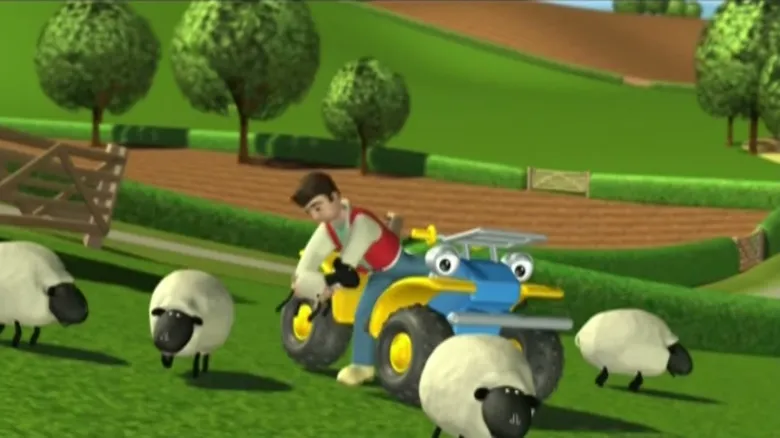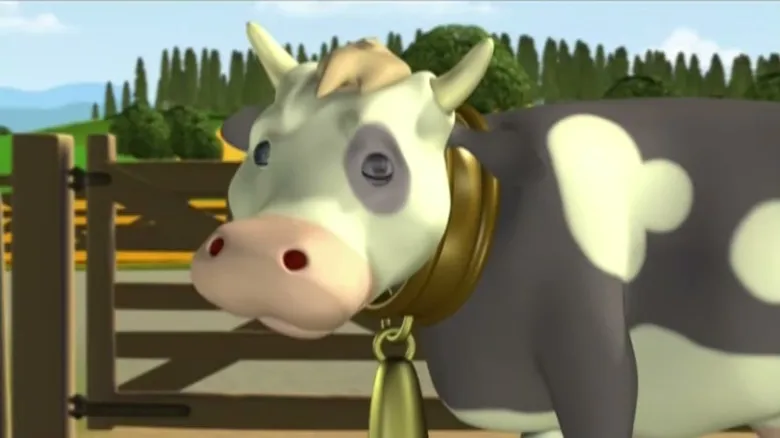

















This program is well-balanced. It remains mostly easy to follow and process. It is a good fit for the recommended age.
The pacing is fast. Images follow each other quickly, leaving little time to pause and take in what is happening.
The sound is clearly present and regularly draws attention.
The visuals are calm and well-organized.
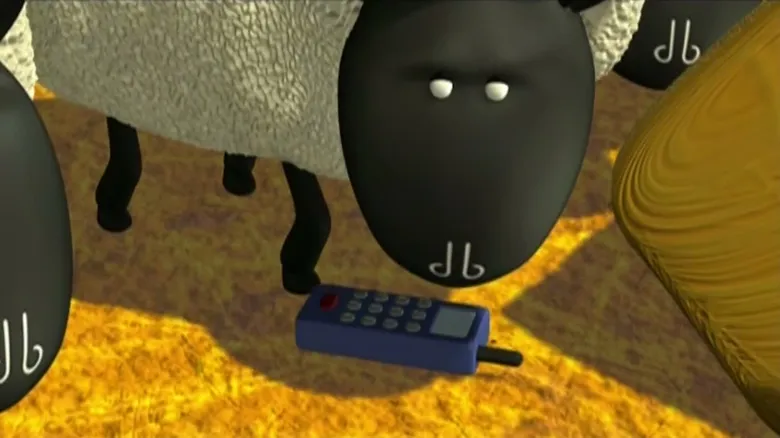
The episode follows one clear thread: Matt loses his new phone and the whole farm tries to find it. Events unfold in order with a narrator who bridges each scene ('back at the farmhouse', 'in the barn'), so a child can follow what happens and why. The cause and effect is satisfying and central, because the phone has recorded the animals' voices, which is exactly why calling it only produces a 'moo' or a 'quack'. The small caveat is the number of animals and the recording idea itself, which ask a three-year-old to hold a few threads together at once.
The emotional tone stays gentle and supportive throughout. When Matt is upset about his lost phone, Fi stays kind and practical, helping him search and reassuring him, so worry is met with care rather than left hanging. Characters treat each other with warmth, and the ending is openly affectionate when Fi tells Tom, 'I don't need a ringtone to tell me how much help you are.' Matt's worry does linger across much of the search before it is fully resolved, but each dip is softened along the way.
The episode shows a real thinking process. Tom notices that something about the duck is not right, tests an idea by having Pie chase the ducks away, and works out that the quacking is coming from the phone rather than the birds. The solution arrives in clear, logical steps instead of by luck, and the characters choose to keep trying rather than give up. The main caveat is that most of the clever reasoning belongs to Tom the tractor, so a child sees good problem-solving modelled by a character they cannot fully copy.
The dialogue is clear and concrete, with simple lines a young child can follow, such as 'I'll call your phone and you listen for the ringtone.' Words are used consistently and correctly, the speech is clean and easy to understand, and most sentences carry real information about the search rather than empty noise. The narrator's storybook style leans a little long and elaborate for a three-year-old, which is the one thing that nudges the language slightly above the youngest end of this age.
This pillar scores lower because the heart of the story is carried by talking tractors, which limits how much a child can take from the screen into real life. The farm setting itself is realistic, with hay-making, animals, and a phone used to make calls, and the social world is recognizable: people help each other and say thank you. But the key problem-solving is done by a vehicle with a face, and few of the actions are things a young child could copy at home. The recognizable relationships and the real-world farm backdrop are the genuine strengths here.
More information
This score shows how inclusively the series portrays diverse people, families and cultures. Scale: Limited → Varied → Rich → Inclusive.
This farm story centres on two light-skinned adults, capable farmer Fi and the more scatterbrained farmhand Matt, surrounded by talking vehicles and animals like Tom the tractor and Mo the cow. Human diversity is thin: there are no children, older people, or different cultural or family backgrounds, so the world stays narrow in who it actually shows. On the role side it does better, since Fi clearly owns and runs the farm while Matt is the careless show-off who needs help, which sidesteps the oldest cliches. Even so, the very small human cast and Fi's added caring role keep the overall picture limited rather than broad.
This score shows whether the series stays close to everyday reality or leans into fantasy. Scale: Fantasy → Mixed reality → Realistic.
This show is built on a farm world that children recognize at once: hay stacks, sleepy animals, a hot afternoon, and a lost mobile phone. The one stretch of imagination is the friendly machines, led by Tom the red tractor, who has a face and a personality but solves problems through plain farm sense. There is no villain anywhere; every problem comes from a situation rather than a bad character, and it all ends warmly with Tom getting a shower and Matt a new ringtone. For a child of this age, the gentle mix of real farm life and light make-believe is a comfortable fit.
This score shows how enjoyable the series is for parents watching along. Scale: Tedious → Tolerable → Pleasant → Enjoyable.
This farm story gives an adult co-viewer a real plot to follow, built around a lost mobile phone and a clever reveal that its ringtone had accidentally recorded a duck. The calm pacing, warm farm palette, and gentle theme song make it easy to have on in the room. What holds it back is a thin layer for grown-ups, with little wordplay or humor pitched above the children, and computer animation that looks dated and simple. The middle stretch also leans on a repeated 'call it again, I still cannot hear it' beat before the satisfying ending lands.
Themes
Farm life
Central
The whole episode unfolds on Springhill Farm with hay-making, a barn, and animals like sheep, ducks and a cow
On a hot day at Springhill Farm, farmhand Matt shows off a new mobile phone that can record any ringtone, then loses it. Fi and Matt search everywhere, but the animals have recorded their own voices onto the phone, so ringing it only produces a moo or a quack and confuses everyone. Tom the tractor works out that the sounds are coming from the phone itself and finds it. Fi thanks Tom with a cool shower and records a special ringtone of Tom as a surprise for Matt.