











This program is stimulating. It actively demands attention and can feel intense. For the recommended age, this may be on the more intense side.
The pacing is fast. Images follow each other quickly, leaving little time to pause and take in what is happening.
The sound is soft and supportive.
The visuals are busy, with a lot of movement and frequent changes.
This is a magazine style show that hops between many separate segments, an aardvark interview, a baby animal grooming clip, quizzes, a cooking sketch, a song, an award and a story, so there is no single thread for a young child to hold onto. The facts also arrive thick and fast, with new names and details packed into nearly every scene, which is a lot to take in at this age. What helps is that each switch is clearly announced ('and now it is time for', 'our next guest is') and the explanations follow clean cause and effect, like the woodpecker pecking holes and then fishing out bugs with its tongue. The strong signposting and clear logic partly offset how busy and fact heavy the whole thing is.
The overall feeling stays light and friendly, with the hosts welcoming each guest warmly and saying things like 'thank you very much for being here, a pleasure'. Small flare ups, such as Armstrong getting worked up over the baboons or Jake's tongue getting stuck, are quickly calmed or played for a laugh, so nothing lingers as upsetting. The one caveat is the occasional teasing jab, like calling the aardvark 'cute, not terribly quick', and the frequent jumps between very different little scenes. A mother animal grooming her cub adds a gentle, caring note that grounds the tone.
The episode leans more on presenting facts than on showing characters puzzle their way through real problems. The quizzes do invite the child to stop and think ('do you know what a woodpecker eats? give it a think'), and the chef keeps adjusting his plan as his ants escape, which models a bit of trial and error. Percy the pangolin sets his own goal of eating the most ants and follows it through, so there is some self driven effort on display. Still, most challenges are either solved instantly or left as a comic muddle, so the thinking shown stays fairly thin.
The language carries plenty of real information and the sentences are coherent and clearly delivered, but the style sits above a three year old. The script is full of puns and idioms, like 'the early aardvark gets the best termite' and 'if you have ants in your pants then you have to do the ants pants dance', plus tricky names such as pangolin, tamandua and cuttlefish. Younger children will catch the concrete animal words but miss most of the wordplay and quick jokes. The explanations themselves are accurate and meaningful, which keeps the talk worthwhile even when the humour flies overhead.
Most of what is shown are wild animal behaviours, an aardvark shooting out its tongue, a chameleon swivelling its eyes, a woodpecker drilling for grubs, which a child cannot really copy in daily life. The payoff is real world knowledge about how these animals live, and the generous use of genuine nature footage anchors that learning to the actual world rather than pure make believe. Recognisable touches like welcoming guests, family cousins and a parent grooming a youngster give a few familiar social hooks. The activities are well explained and purposeful, but their direct usefulness off the screen is limited.
More information
This score shows how inclusively the series portrays diverse people, families and cultures. Scale: Limited → Varied → Rich → Inclusive.
This is an all-animal world, built from a wide range of species both as puppet hosts and guests and as real wildlife on screen, drawn from habitats across several continents. What is missing is any human presence, so the cultural, ethnic and family diversity children recognise from their own lives does not appear, and the breadth here is mostly one of animal types and environments. Tasks and curiosity are spread fairly evenly, with male and female characters alike taking the knowledgeable guest spot, though the two permanent hosts, Jake and Stinky, are both male. A French chef cockroach leans on a light national cliche for laughs, but otherwise personalities and feelings are not tied to fixed types.
This score shows whether the series stays close to everyday reality or leans into fantasy. Scale: Fantasy → Mixed reality → Realistic.
This is a puppet talk show where a polar bear named Jake and a skunk named Stinky introduce real animals and play documentary footage of them. Most of what children see is grounded in nature: real woodpeckers tapping for grubs, baboons on a termite mound, and a chameleon changing color, all wrapped in the light make-believe of talking animal hosts. There is no villain anywhere, and the imaginative framing stays consistent from the opening to the closing. The mix of recognizable animals and gentle imagination suits children at the younger end of preschool.
This score shows how enjoyable the series is for parents watching along. Scale: Tedious → Tolerable → Pleasant → Enjoyable.
This is a confident variety show that gives the adult co-viewer plenty to enjoy. The puppetry and set design are polished, real wildlife footage is folded in smoothly, and the writing lands jokes that work over a child's head, from the designer-named chef battling escaping ants to a Star Trek aside about a termite. Warm voices and tuneful songs keep it pleasant in the room. The main limit is structural, since it runs through a fixed set of segments rather than telling one story.
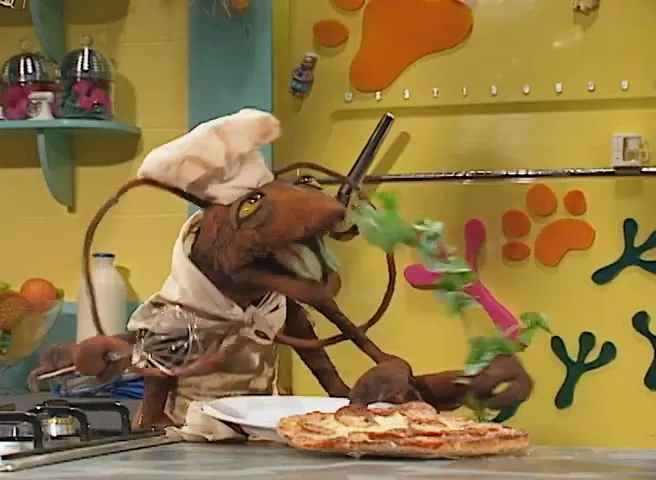
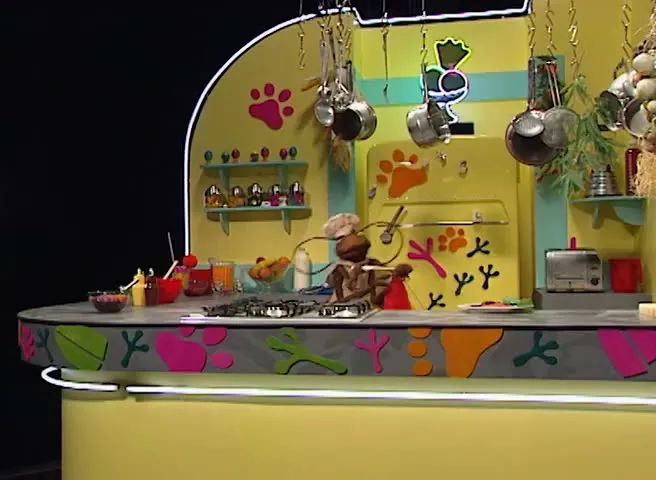
Puppet hosts Stinky the skunk and Jake the polar bear present a wildlife talk show built around animals with long tongues. They interview a guest aardvark named Arlene and a chameleon named Chas, run quizzes about a woodpecker and a cuttlefish, watch a chef try to cook with ants, sing a bug song, hand out an award for the longest tongue and tell a story about a record breaking pangolin. Real nature footage of savannas, forests and termite mounds is woven between the puppet segments. The episode closes with the hosts thanking their guests and signing off.