


















This program is well-balanced. It remains mostly easy to follow and process. It is a good fit for the recommended age.
The pacing is fast. Images follow each other quickly, leaving little time to pause and take in what is happening.
The sound is clearly present and regularly draws attention.
The visuals are calm and well-organized.
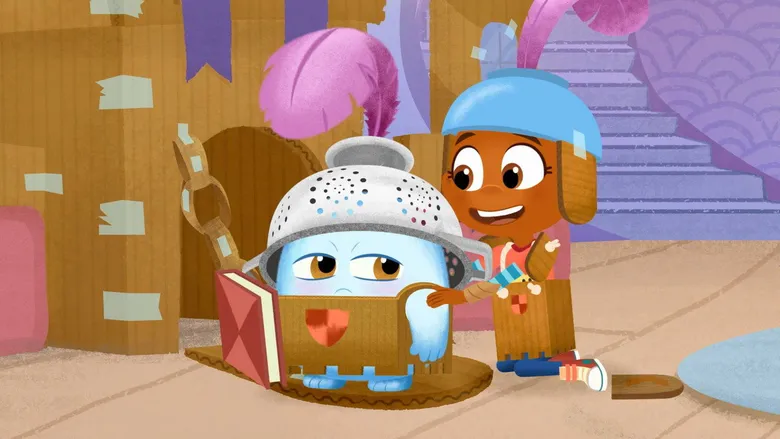
One clear storyline carries the whole episode: Esme and Roy are looking after a little monster who will not settle for naptime, and everything follows that single goal. Events unfold in a logical order with a recognisable beginning, middle and end, so a three-year-old can follow what is happening and why. New information arrives in small, digestible pieces, and each action leads to a sensible result. The story stays easy to track from the first scene to the last.
The emotional world here is warm and steady. Esme and Roy respond to the little monster's worry and restlessness with patience, holding its hands and offering reassurance rather than scolding, as in the quiet moment where Esme comforts it before sleep. Moments of upset stay mild and are soothed soon after they appear, and the episode ends with the monster asleep and the characters celebrating together. The caregivers behave consistently and kindly, giving the child a reliable, safe anchor throughout.
The episode makes its problem-solving visible. Esme and Roy name the problem, that the little monster cannot fall asleep, then try calming ideas, watch how they land and adjust until the monster rests. They take the initiative themselves rather than waiting for the problem to fix itself, and the steps connect in a way a young child can follow. The cause-and-effect logic, that a calmer body leads to easier rest, is shown clearly through their actions.
The language fits a three-year-old well. Sentences are short and clear, built from concrete words about resting, noise and feelings, and the voices stay easy to understand throughout. Dialogue mostly does real work, naming what is happening, suggesting what to try and describing how the little monster feels, rather than filling time with empty exclamations. Word use stays consistent and meaningful across the episode.
There is real take-home value here: the settling and calming strategies the characters use at naptime map onto a young child's own rest routines, and the situations of comforting someone upset, winding down and playing together are recognisable from daily life. The social relationships mirror real caregiving, and household objects have clear, familiar purposes. What holds this pillar back from the top is the fantasy framing, since the main characters are monsters in a make-believe neighbourhood, so the world sits one step removed from a child's real surroundings even though the lessons inside it transfer well.
More information
This score shows how inclusively the series portrays diverse people, families and cultures. Scale: Limited → Varied → Rich → Inclusive.
Esme & Roy follows a Black girl and her yellow monster friend as they help wound-up young monsters settle down for a nap. The show stands out for putting a capable, calm girl of color at its center and sharing the caring role between her and a male character, which avoids tired ideas about who takes charge and who nurtures. Its diversity mostly comes through the colorful, varied monster cast rather than a range of real human backgrounds or family forms, so human representation stays fairly narrow. Within that monster world, the message that everyone looks different and belongs comes through clearly, and roles are handled in a fresh, even-handed way.
This score shows whether the series stays close to everyday reality or leans into fantasy. Scale: Fantasy → Mixed reality → Realistic.
This is a calm, kind story with no villains at all: the only challenge is a little monster who struggles to settle down for a nap, and Esme and her monster friend Roy help out with patience and gentle calming games. The situations and feelings are drawn straight from real life, which makes them easy for a young child to recognize and even copy. The one imaginative layer is the cast itself, a human girl alongside friendly monsters in a made-up town, but that fantasy stays light, consistent and never frightening. The realism and gentle imagination mix sits comfortably in range for this age.
This score shows how enjoyable the series is for parents watching along. Scale: Tedious → Tolerable → Pleasant → Enjoyable.
Esme & Roy is a calm, well-made show that is easy for a parent to sit through, built around a naptime theme with a clear little story and soft, polished animation. The standout for adults is the gentle production and genuinely soothing tone rather than any humor written for grown-ups. A parent in the room gets a low-stress presence and a simple plot they can follow, though there is little aimed specifically at them. The settling routine Esme and Roy use to calm their restless little monster is the kind of thing a parent can actually borrow.
Themes
Caregiving
Central
Esme and Roy work as monstersitters looking after a small monster.
Esme, a young girl, and her monster best friend Roy work as monstersitters. In this episode they look after a small monster that cannot settle for naptime, and they try a series of quiet activities, including a puppet show, to help it rest. After several attempts the little monster finally falls asleep, and the characters celebrate together. The story takes place mostly inside a home in their monster neighbourhood.