

Slowscreen SlowScreen
Toggle sidebar

Just launched: free lifetime premium for the first 1,000 members to activate their account.

Start free

Sea of Love

Sufficient

Recommended age Unlock

Co-watching from age 2

Stimulating

Exact score locked

Watch on Netflix
Availability in
Save
Sea of Love

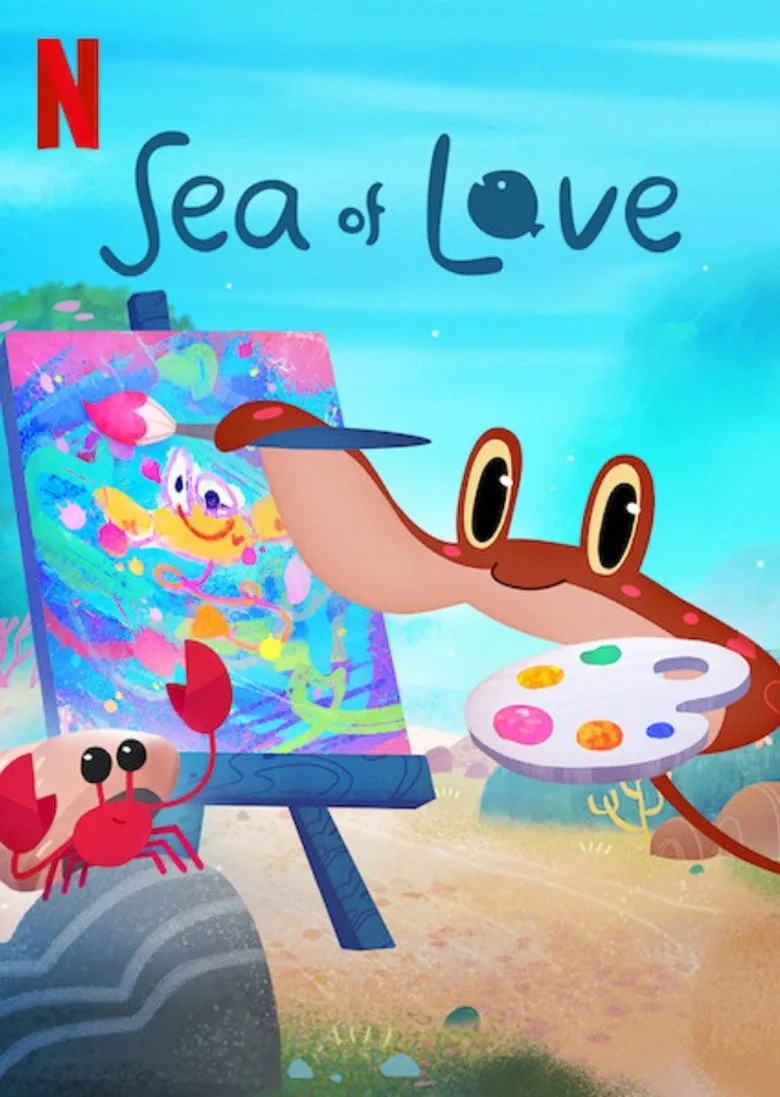
Sea of Love follows a young whale and its ocean friends swimming, cooking and playing in a colourful underwater world. Calm and playful in tone, it suits toddlers, with gentle lessons about friendship and family.

  • Told mostly through visuals and sound rather than words.
  • Calm, slow pacing suits the youngest viewers.
  • Small mishaps resolve quickly and reassuringly.
  • Shows friends comforting each other through small upsets.
  • Brief mildly tense moments for the youngest viewers.
  • A brand name is briefly visible on screen.
  • Each episode ends with a long credits sequence.

See the exact scores

The review is yours to read. Create a free account to reveal the exact SlowScreen score and every pillar score.

Create free account

Score Breakdown

The visuals stay calm and tidy throughout, with uncluttered underwater scenes that are easy to take in. The pacing runs fast, though, with images following each other quickly and leaving little time to pause on a moment. Sound is clearly present and regularly pulls attention, and in 'Uncle Tao' it is more intense and almost continuous. On balance the series stays easy to follow and process for the age it is aimed at, with the quick image flow as the main thing to watch for.
Every episode follows a single, easy-to-track storyline, so a young child only has to hold one thread at a time. Events arrive in a sensible order with a clear beginning, middle and end, and new creatures or ideas appear one at a time, which keeps things manageable. Cause and effect stays simple and visible, like friends setting out to find Bobby's lost tooth or Bruder working through a recipe that does not match the picture. The episodes built around a clear goal, such as 'Bobbi's Tooth' and 'Volcano Lunch', have the tightest through-line, while the gentler, near-wordless ones like 'Bruda's Pie' and 'Uncle Tao' drift more from moment to moment than they build a clear journey.
The mood stays warm and friendly throughout, with characters who play together, share and welcome one another, and no scary moments or villains. When a small upset comes up, comfort follows soon after: friends promise 'We won't laugh' before helping Bobby, and a larger whale swims close to soothe a small creature crying alone on the reef. No one is mocked or made the butt of a joke. The few wobbles are mild and brief, such as Bobby's sharp 'No! My tooth!' or the excited reactions that pile up in the middle of 'Playhouse', and each settles quickly rather than being left hanging.
Characters often act on their own initiative, choosing to explore the reef, cook at the stove or comfort a sad friend without being told to. How much problem-solving a child actually sees, though, varies a lot between episodes. In 'Bobbi's Tooth' and 'Volcano Lunch' the thinking is visible on screen: Bruder keeps going when the ingredients do not match the recipe and builds a playful volcano lunch with his friend, and the friends coordinate to pull Bobby free with his tooth. Other episodes lean more on gentle togetherness, where problems are tiny, resolved in a single step or settled directly through comfort, so there is little trying, failing and adjusting for a child to follow.
How much spoken language a child hears swings widely from episode to episode. 'Bobbi's Tooth' and 'Volcano Lunch' offer clear, concrete words tied to what is on screen, like tooth, breakfast, wraps and sauce, along with simple instructions the characters give each other. Others, such as 'Playhouse' and 'Uncle Tao', are told almost entirely without words, carried by giggles, gasps and reaction sounds, which leaves little full speech for a toddler to copy or learn from. Even in the talkier episodes, expressive filler like long runs of 'ha', 'ooh' and 'hmm' shares space with the meaningful talk. When words do come they stay simple and matched to the action, but connected, informative sentences are limited.
The social side of the stories is easy for a child to recognize: sharing a snack, playing together, helping a friend and wanting to do something kind for a parent all mirror real life. The activities themselves transfer less well, because everything happens in a make-believe ocean of talking whales and sea creatures cooking 'plankton spring rolls', which a young child will not fully separate from reality. A few episodes land closer to everyday life, with 'Volcano Lunch' and 'Playhouse' showing real, copyable steps of cooking and decorating. The real animal types on screen, whales, sharks, seahorses and octopuses, give a small window onto the natural world.

More information

This score shows how inclusively the series portrays diverse people, families and cultures. Scale: Limited → Varied → Rich → Inclusive.
The whole series is told through sea creatures, with real variety in their types, colours and ages, and they explore and play together as equals. The friendly shark sidesteps the usual scary-predator role, and families are warm, including a caring single father in 'Bobbi's Tooth'. Because every character is an animal, the human sides of diversity, different cultures, ethnicities, family forms, ages and bodies, are not part of the picture, so the overall range stays narrow. Who carries the initiative shifts from episode to episode rather than settling into one pattern: some lean on male leads, the two named adults in 'Bruda's Pie' both read as nurturing female figures, and 'Volcano Lunch' shares initiative and emotion evenly between a boy in the kitchen and his working mother.
This score shows whether the series stays close to everyday reality or leans into fantasy. Scale: Fantasy → Mixed reality → Realistic.
The series sits in a bright underwater world where real sea creatures, whales, sharks, seahorses, crabs and rays, talk and live together as one friendly community. There is no villain anywhere: conflicts are small and grow out of everyday situations like a lost tooth or a recipe that will not come together, and they are solved by friends helping one another. The imagination stays light and internally consistent, with the ocean behaving like a real ocean and only the talking-animal element invented; even the one magical idea, the Magic Dugong who swaps a tooth for a surprise, follows a clear and steady rule. The main caveat for the youngest is that the entire cast is imagined sea creatures rather than the more grounded, everyday world this age connects to most easily.
This score shows how enjoyable the series is for parents watching along. Scale: Tedious → Tolerable → Pleasant → Enjoyable.
This is an easy one to have on while you are in the room. The hand-painted underwater backgrounds and soft palette are genuinely pleasant to look at, and each episode tells a complete little story rather than looping the same activity, so you are not left staring at filler. Most of the time the humor sits squarely with the youngest viewers, so do not expect jokes written for you, but 'Bobbi's Tooth' sneaks in a running gag of every character mangling the name 'Magic Dugong' that earns a few real smiles. The craft is the standout, and it stays calm and undemanding as background viewing.

Season 1

5 episodes

Sea of Love
S01 E01

Sea of Love

Bruda's Pie

Stimulating
recommended age Unlock co-watching from 2
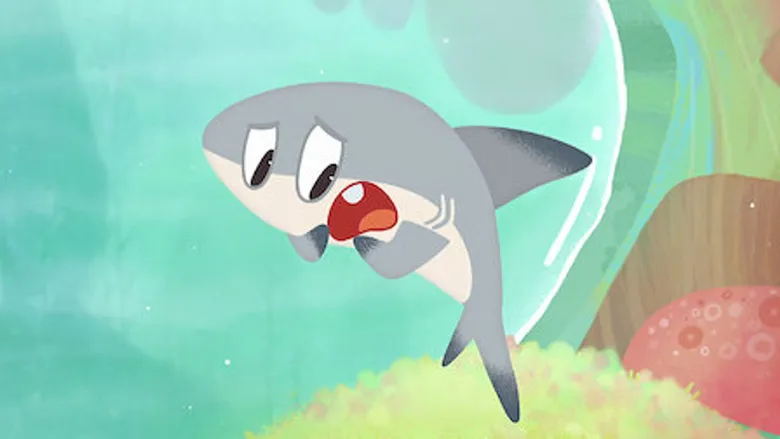
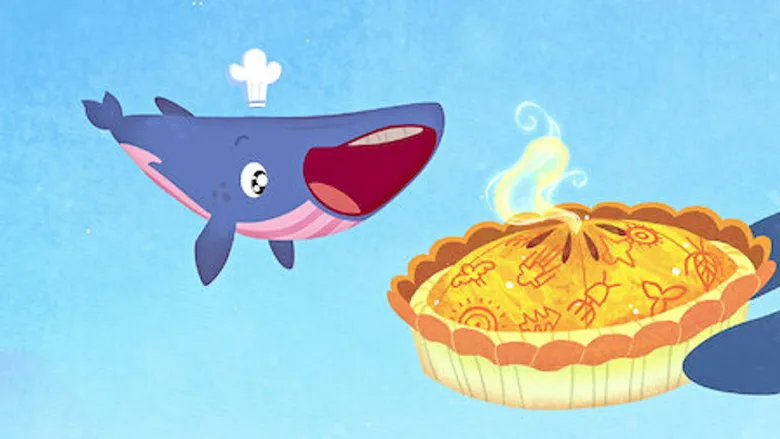
In an underwater world, a young whale named Bruder bakes a plankton pie with his mum and takes it to a school picnic led by his teacher Miss Aime. When several classmates lose or forget their snacks, the friends follow a delicious smell around the seabed but cannot find its source. A seahorse named Puri shares his small kelp donut, and Bruder finally admits the smell is his own hidden pie. He shares it with everyone and the day ends with the friends eating together and smiling.

Sea of Love
S01 E02

Sea of Love

Bobbi's Tooth

Stimulating
recommended age Unlock co-watching from 2
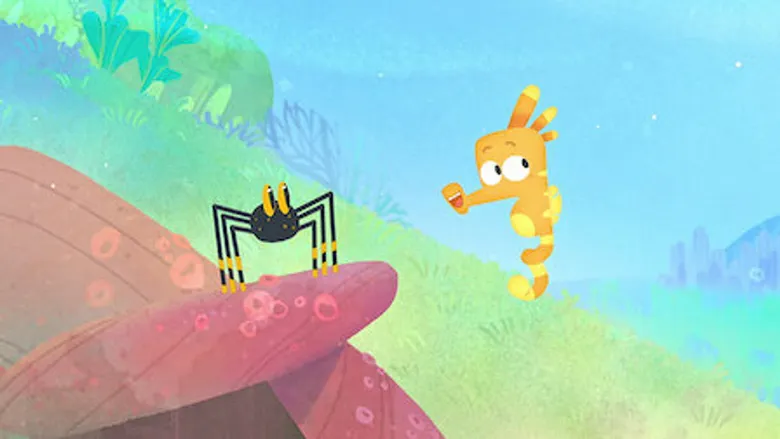
Bobby, a young shark, wakes to find his favourite tooth wobbling, and his dad tells him that when it falls out the magic dugong will leave a surprise. On the way to school the tooth drops into the ticklish reef, and Bobby hides from his friends, afraid they will laugh at his gap. His friends coax him out, reassure him and work together to fish the tooth from a crack in the reef. That night Bobby falls asleep waiting and wakes to find the dugong has been, leaving him thrilled to tell everyone the friends who helped him.

Sea of Love
S01 E03

Sea of Love

Playhouse

Stimulating
recommended age Unlock co-watching from 2
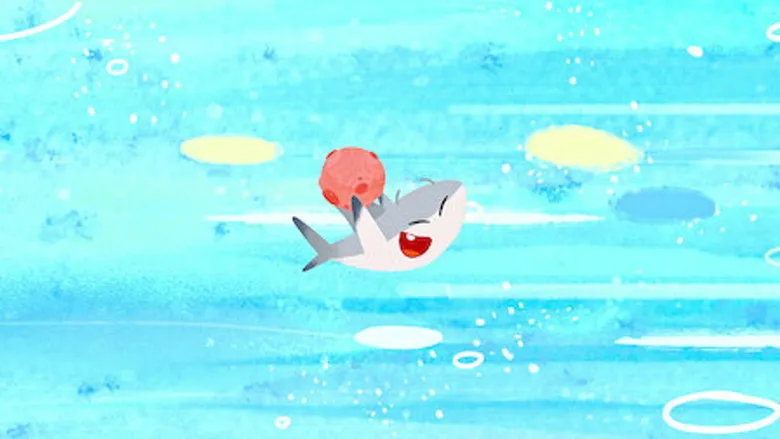
A group of young sea creatures discover a playhouse and each takes on a role: a king, a cook and a house painter. Puri cannot decide what to be and feels unsure, then stumbles on what looks like a scary thing hiding inside. It turns out to be a friendly sea spider whose companions love to dance. Puri overcomes his fear and decides to be the spider friend, finding a place of his own.

Sea of Love
S01 E04

Sea of Love

Uncle Tao

Balanced
recommended age Unlock co-watching from 2
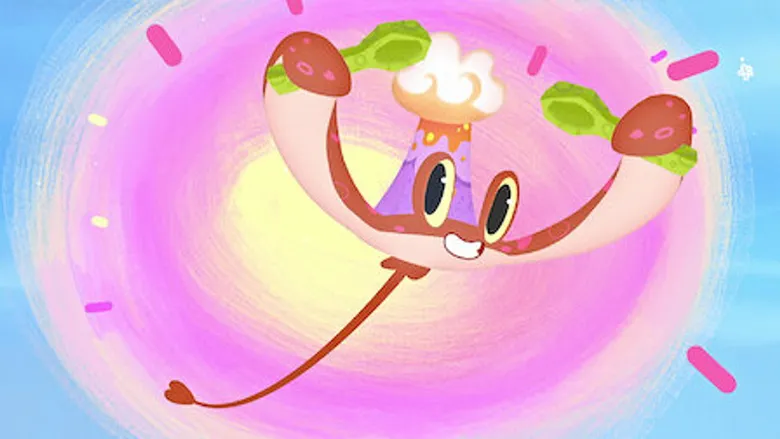
A large blue whale shares a hand-painted underwater world with a small grey shark, a pink octopus, a seahorse, and a red ray-like creature. Across the episode the friends swim, float, and play through the coral reef, and at one point a small creature becomes upset and is comforted by the whale. The story is told almost entirely without dialogue, carried by visuals and sound. It closes with a long sequence of multilingual credits.

Sea of Love
S01 E05

Sea of Love

Volcano Lunch

Stimulating
recommended age Unlock co-watching from 2
A young whale named Bruder decides to make a surprise lunch for his mother, Mama, but cannot find the right ingredients for her favourite plankton spring rolls. His friend Wayu arrives, gives up their plan to build a volcano, and helps him improvise a meal from whatever they can find. Together they turn it into a playful 'volcano lunch', which Mama tastes and loves. The episode is set underwater and ends with the family and friend happy together at the table.

Explore more

By age 2 years
By platform Netflix

Share

Pass this find on to another parent

Link preview

Sea of Love | Sufficient, co-watching from age 2

Sea of Love | Sufficient, co-watching from age 2 - Slowscreen

Sufficient · Co-watching from age 2. Sea of Love follows a young whale and its ocean friends swimming, cooking and playing in a colourful underwater world. Calm...

slowscreen.com

https://slowscreen.com/en/series/sea-of-love

https://slowscreen.com/en/series/sea-of-love

Slowscreen

Sea of Love | Sufficient, co-watching from age 2 - Slowscreen

Sufficient · Co-watching from age 2. Sea of Love follows a young whale and its ocean friends swimming, cooking and playing in a colourful underwater world. Calm...

Sea of Love | Sufficient, co-watching from age 2

slowscreen.com

Sea of Love | Sufficient, co-watching from age 2 - Slowscreen

Sufficient · Co-watching from age 2. Sea of Love follows a young whale and its ocean friends swimming, cooking and playing in a colourful underwater world. Calm...

Sea of Love | Sufficient, co-watching from age 2
slowscreen.com

Sea of Love | Sufficient, co-watching from age 2 - Slowscreen

slowscreen.com · Posted by you

Sea of Love | Sufficient, co-watching from age 2 - Slowscreen

0 Share
Sea of Love | Sufficient, co-watching from age 2
To
Subject Sea of Love | Sufficient, co-watching from age 2

Sufficient · Co-watching from age 2. Sea of Love follows a young whale and its ocean friends swimming, cooking and playing in a colourful underwater world. Calm...

https://slowscreen.com/en/series/sea-of-love

Share on WhatsApp Share on X Share on Facebook Share on Telegram Share on Reddit Share on Email

Just launched: free lifetime premium for the first 1,000 members to activate their account.

Create your account

Search by title, show, tag, or topic

We use functional cookies and Google Analytics to improve our site. Learn more