















This program is well-balanced. It remains mostly easy to follow and process. It is a good fit for the recommended age.
The pacing is fast. Images follow each other quickly, leaving little time to pause and take in what is happening.
The sound is intense and continuously present.
The visuals are calm and well-organized.
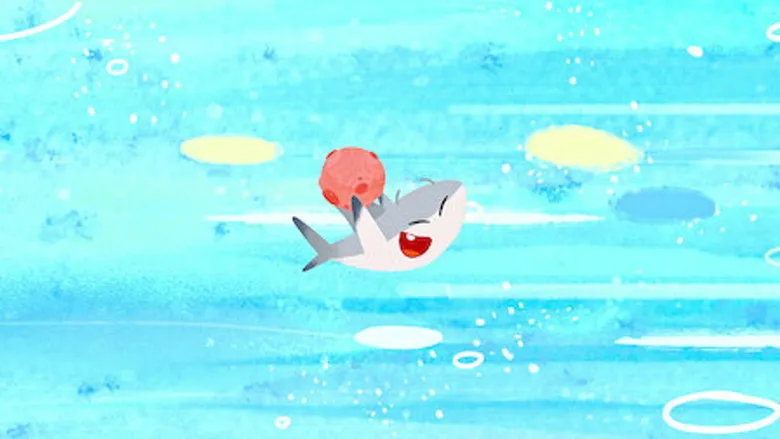
The episode keeps to one storyline set in a single underwater neighbourhood, following the same whale and her friends from beginning to end, which makes it easy to follow. New things arrive one at a time, a creature appears, a ball is picked up, a friend becomes upset, so a toddler is rarely asked to track too much at once. Cause and effect is clear and gentle, when one creature is sad another comes to help. The small limitation is that the wordless, vignette-like structure sometimes drifts from moment to moment rather than building a tight chain of events.
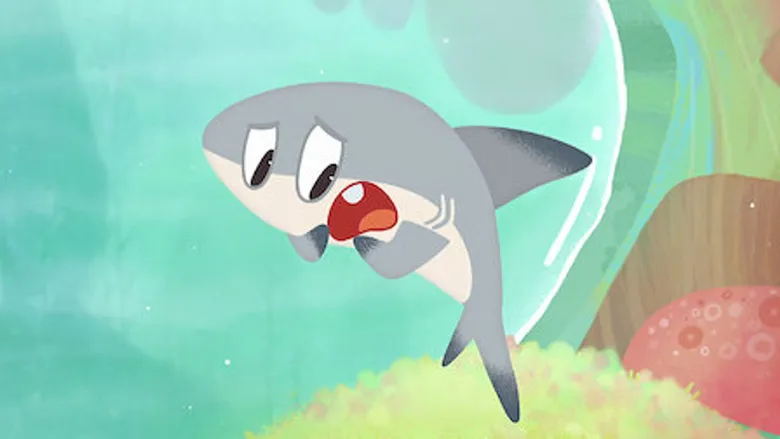
Emotions stay mild and well-regulated, with warm, supportive behaviour between the characters. When a small creature becomes upset and cries, a larger whale comes close to comfort it, and the upset settles soon after rather than being left hanging. There is no mocking, no nagging to get one's way, and no character set up as a fool. The emotional shifts are handled softly, so a sensitive toddler is unlikely to feel startled or left in distress.
This pillar lands in the middle because the episode is built around mood and friendship more than around solving problems. Characters do act on their own, exploring the reef and choosing to comfort a sad friend, but there is little visible step-by-step thinking, trying, failing, and adjusting. The one clear problem, a creature who is upset, is resolved directly through comfort rather than through a worked-out solution. As a result there is not much for a child to follow in the way of reasoning or independent problem-solving.
This pillar scores low because the episode is told almost entirely without words. The story carries itself through pictures and gentle sounds, and the little voicing that appears is mostly expressive noises, giggles and gasps, rather than clear spoken sentences. That leaves very little spoken language for a toddler to hear, copy, or learn from, and almost no full sentences or informative talk. The sounds that are present are clear and never harsh, but they do not add up to a meaningful language model for this age.
This pillar scores low because the episode takes place in a make-believe ocean where sea creatures talk, emote, and live a fantasy life, so very little of what happens can be carried over into a child's own day. The activities are mostly swimming, floating, and play rather than practical tasks with clear, repeatable steps. The real-world anchor is thin, though children may at least recognise the animal types, whale, shark, octopus, seahorse and crab, and the friendship and comforting do mirror real social situations. For a two-year-old, the heavy reliance on fantasy keeps the everyday usefulness limited.
More information
This score shows how inclusively the series portrays diverse people, families and cultures. Scale: Limited → Varied → Rich → Inclusive.
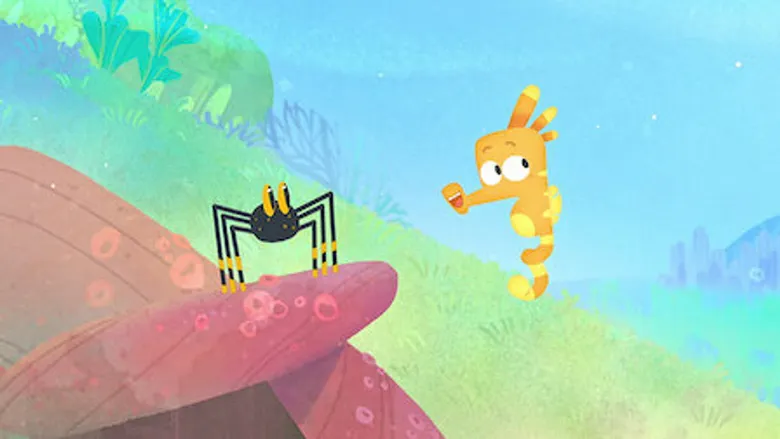
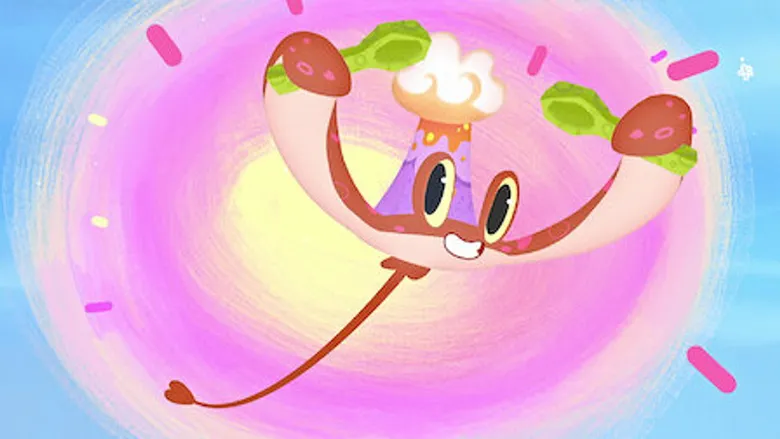
Sea of Love plays out in a colorful underwater world where every character is a sea creature: a blue whale, a gray shark, a seahorse, a stingray, an octopus and a crowd of crabs and small fish. There is real variety in character types, and the group explores and reacts together as equals, with the friendly shark breaking the usual scary-predator mould. What is absent is any human side of diversity, so differences in ethnicity, family forms, ages, bodies or gender expression are not part of the picture. For parents, this is a cooperative animal ensemble that hints at different kinds getting along, rather than a show that mirrors the range of people and households children meet in real life.
This score shows whether the series stays close to everyday reality or leans into fantasy. Scale: Fantasy → Mixed reality → Realistic.
Sea of Love is set in a recognizable underwater world filled with real sea animals like sharks, flamingos, crabs, and jellyfish, with the light imaginative twist that each creature has a face and personality rather than any magic. There is no villain driving the story, so the mood stays calm and any conflict comes from the situation rather than from a character coded as bad. The imaginative premise stays internally consistent, since the ocean behaves like a real ocean and only the talking-animal element is invented. For a toddler this mostly realistic mix with light imagination is a good fit, with the small caveat that an underwater animal society sits a step away from a child's everyday surroundings.
This score shows how enjoyable the series is for parents watching along. Scale: Tedious → Tolerable → Pleasant → Enjoyable.
This underwater show is easy and pleasant to have on in the room, carried by polished, painterly animation and a soft color palette that never grates on adult eyes. A simple friendship story runs underneath, with real emotional beats such as the blue whale leaning in to comfort a small red sea creature crying alone on the reef floor, so a co-viewing parent has something to follow. The clear limitation is that the humor and storytelling are sincerely pitched at young children, with no wordplay or references aimed at adults. As background viewing it stays calm and undemanding.
Themes
Ocean
Central
Every scene takes place underwater among coral, kelp, and sea creatures like a whale, a shark, and an octopus.
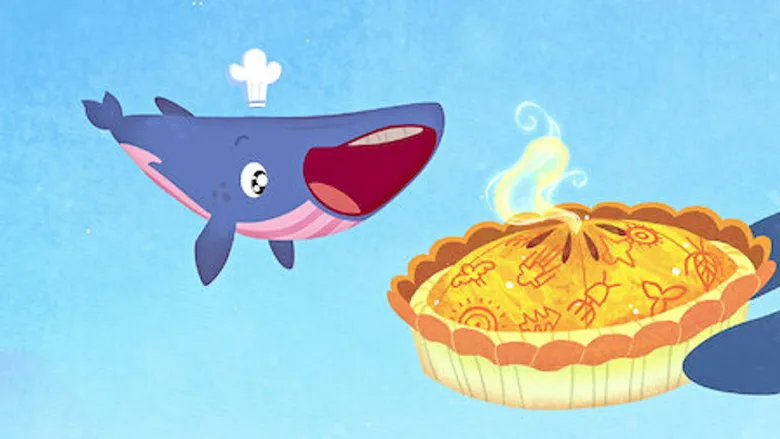
A large blue whale shares a hand-painted underwater world with a small grey shark, a pink octopus, a seahorse, and a red ray-like creature. Across the episode the friends swim, float, and play through the coral reef, and at one point a small creature becomes upset and is comforted by the whale. The story is told almost entirely without dialogue, carried by visuals and sound. It closes with a long sequence of multilingual credits.