




















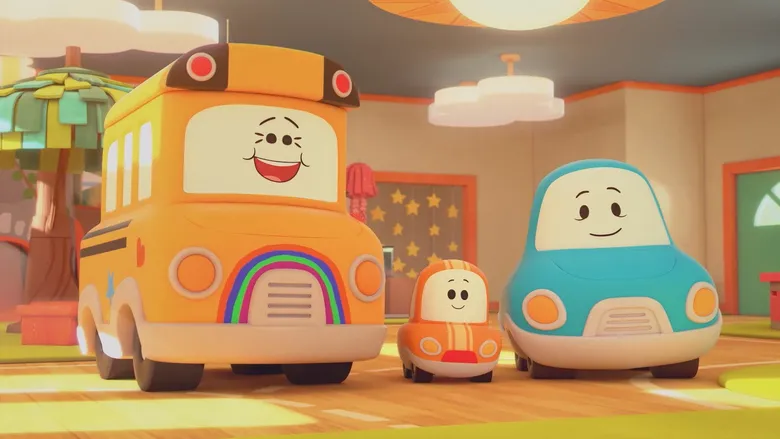
This program is well-balanced. It remains mostly easy to follow and process. It is a good fit for the recommended age.
The pacing is fast. Images follow each other quickly, leaving little time to pause and take in what is happening.
The sound is clearly present and regularly draws attention.
The visuals are well-balanced, with a clear overall view.
The episode follows one clear thread from start to finish, Cory's first day of school, from waking up to making his first friends. Events unfold in order with a recognisable beginning, middle and end, and actions lead to outcomes a child can predict, like a wobbly slide ride ending in a safe landing. The one stretch that asks a lot is the school tour, where the stage, the snack and the art station, plus several classmates, are introduced close together. For the most part the story stays easy to follow.
The emotional tone is warm and supportive throughout. Cory's mother stays patient when he is nervous and wants to go home, and she lets him decide for himself when to stay. The teacher corrects a rough moment kindly with 'We encourage gently', and small upsets like a tumble down the slide are settled at once with a cheerful 'I'm okay'. Feelings shift gradually rather than swinging suddenly, with only the brief slide scare standing out.
Cory's main challenge is his own nervousness, and the episode shows only a light version of working through it: he hangs back, tries his rehearsed introduction, fumbles it, and slowly warms up through play. Much of the resolution comes from joining in rather than figuring something out, and the grown-ups smooth the path more than Cory solves a concrete problem himself. He does take some initiative, fetching a block for another child and choosing on his own to stay. The thinking stays simple, with little visible trial, error and adjustment.
The dialogue is clear and well spoken, with full sentences and natural back-and-forth between characters. Cory's repeated line, 'Hi, I'm Cory, Cory Carson. My favorite color is blue. What's yours?', hands a young child a simple, useful script for meeting someone new. Some jokes sit well above a three-year-old's head, like a snack called 'organic, plant-based, flavor-neutral' or colour described as 'an illusion created by light waveforms'. The talk is also dense in places, so not every line lands for the youngest.
The social situations map neatly onto real life: a first day at school, a parent dropping off, feeling shy, and making friends by playing together. A child can copy plenty here, like introducing yourself by name and favourite colour or building and toppling a tower with others. What holds it back is that everyone is a car in a car-world, so the actions sit one step removed from a child's own hands and toys. The recognisable feelings carry more weight than the literal activities.
More information
This score shows how inclusively the series portrays diverse people, families and cultures. Scale: Limited → Varied → Rich → Inclusive.
This vehicle world shows variety mainly through different car types, colors and ages, from a baby sibling to school-age kids to an older neighbor named Mr. Coltrane, with both boy and girl characters throughout. It leans on one family model and keeps cultural and living-situation differences out of view, so the breadth stays fairly surface-level. Roles and emotions, however, are shared quite evenly: the children play without locked-in parts, older kids help the younger ones, and Cory moves through a full range of feelings. A mild traditional note remains in Mama handling the school drop-off while Papa stays home with the baby.
This score shows whether the series stays close to everyday reality or leans into fantasy. Scale: Fantasy → Mixed reality → Realistic.
The whole town is made of talking cars, yet everything that happens is lifted straight from a young child's day: a reluctant wake-up, a goodbye hug, nerves about a new school, and building a block tower with brand-new friends. There is no villain anywhere; the only tension comes from Cory's first-day jitters and a couple of small classroom mishaps. The car world stays consistent in its own logic, and the gentle imagination paired with a deeply familiar emotional story fits a three-year-old well. Cory even calls his nervous stomach his 'engine acting funny,' keeping the make-believe tied to real feelings.
This score shows how enjoyable the series is for parents watching along. Scale: Tedious → Tolerable → Pleasant → Enjoyable.
This is an easy episode to keep on in the room. The writing slips in genuine winks for parents, from the 'Motor-Sori' school to its 'flavor-neutral snack brick', and the first day plays out as a real emotional arc rather than a looped activity. The animation is clean and the voices stay warm, so it sits comfortably as background for an adult. The plot is light, but there is enough wit and story to hold a co-viewer's attention.
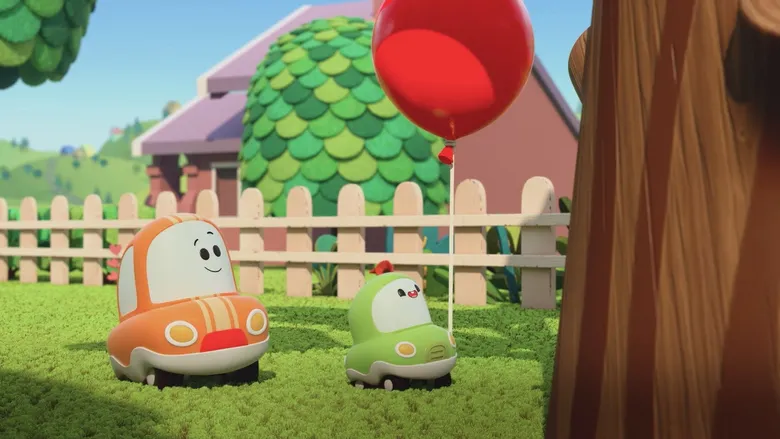
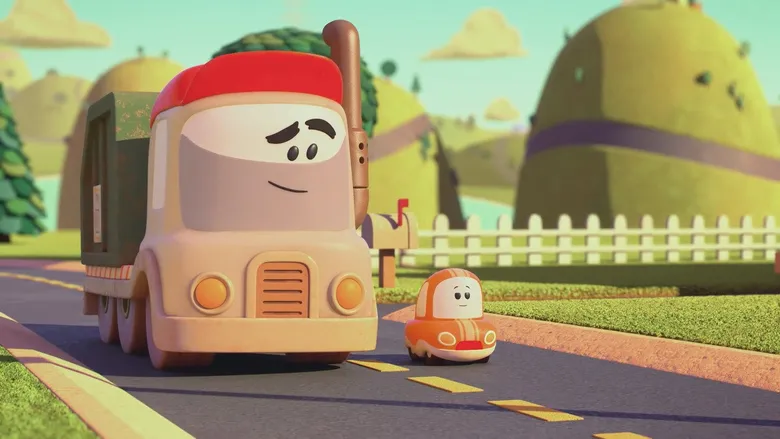
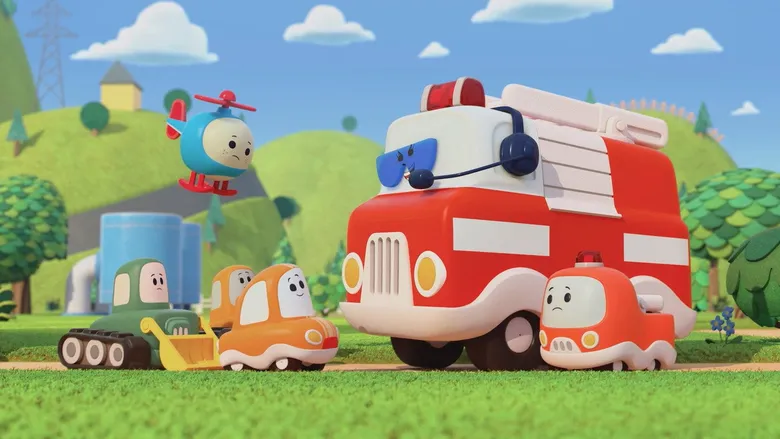
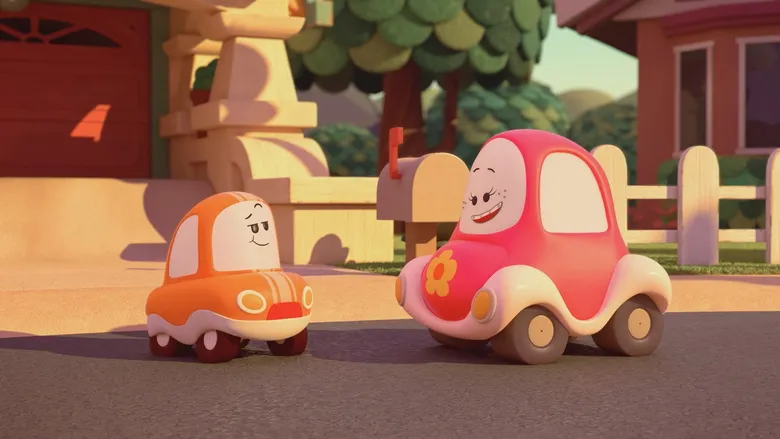
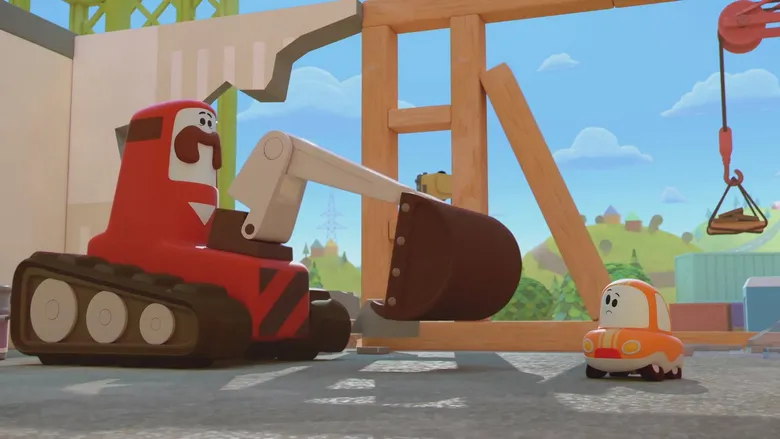
Cory Carson, a small blue car, wakes up for his very first day of school. His mother drives him through town to the Motor-Sori school, where he feels too nervous to join in and asks to go home. After watching the others and helping build a block tower, he makes friends with Freddy, Timmy, Kimmy and Halle. He decides to stay, and the new friends knock the tower down together at the end.