










This program is stimulating. It actively demands attention and can feel intense. For the recommended age, this may be on the more intense side.
The pacing is fast. Images follow each other quickly, leaving little time to pause and take in what is happening.
The sound is intense and continuously present.
The visuals are well-balanced, with a clear overall view.
One simple thread carries the whole episode: Chrissy adopts a red balloon she calls Looney and treats it as her best friend. Events follow each other clearly, from finding the balloon to losing it and getting it back, so a young child can track what happens and why one thing leads to the next. New ideas arrive one at a time rather than piling up, which keeps the story easy to hold onto. The early play section is loosely strung together before the plot firms up, a small caveat in an otherwise clear build.
The household feels warm and attentive: Mom praises Chrissy with 'practice makes perfect', and Papa gently plays along by offering food to the balloon. Feelings run high during play, and there are small worried beats when Looney drifts away and Chrissy calls 'Come back, Looney!', but these settle into reassurance and a happy reunion. Characters stay kind and consistent with each other, and the ending lands tenderly when Chrissy shows that her real best friend is her brother Cory. A few quick swings from glee to worry are the main thing to note for the most sensitive viewers.
Much of the problem-solving comes down to chasing: when the balloon floats off, Cory races after it and grabs at it rather than working through a plan, and Looney partly rescues itself by drifting back down. Chrissy, as a toddler, mostly reacts and feels rather than reasons, so the visible thinking stays thin. There is real initiative, the children set their own goal of keeping and catching Looney, but the steps between problem and solution are short. The reunion is more lucky than earned, which limits how much a child sees a worked-through process.
When the characters talk, the language fits a three-year-old well: short, clear sentences and concrete words like 'lunchtime', 'best friend' and 'bath time', with Chrissy speaking in single words and small phrases. A large part of the episode, though, leans on exclamations, with 'Whoa', 'Yeah', 'Whee' and 'Yay' carrying long stretches of the play scenes rather than meaningful talk. The family dialogue is consistent and easy to follow, and words are used correctly throughout. The heavy share of expressive sounds over informative speech is the clearest limitation here.
The social heart of the episode is very recognizable: a small child clings to a comfort object, the family humours her, and in the end she discovers her brother is her real best friend. Everyday activities like eating lunch, drawing a picture and getting ready for a bath give a child things they can link to their own day. Against that, the world is made of talking cars and a balloon with a face, so the frame sits more in imagination than in plain daily life, which softens how directly the play carries over offline. The relationships ring true even when the setting does not.
More information
This score shows how inclusively the series portrays diverse people, families and cultures. Scale: Limited → Varied → Rich → Inclusive.
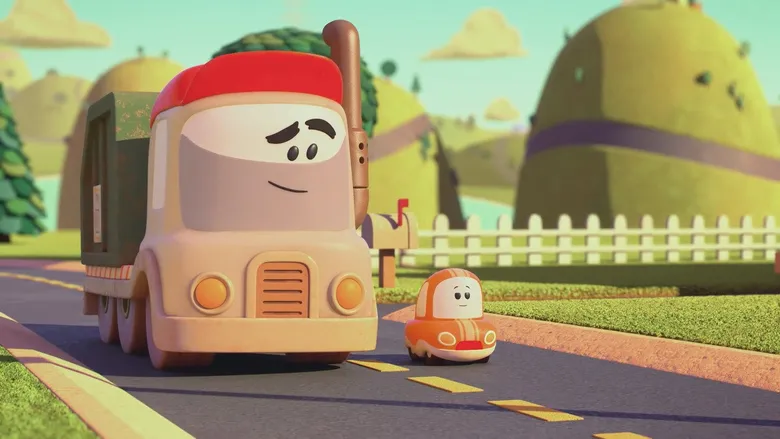
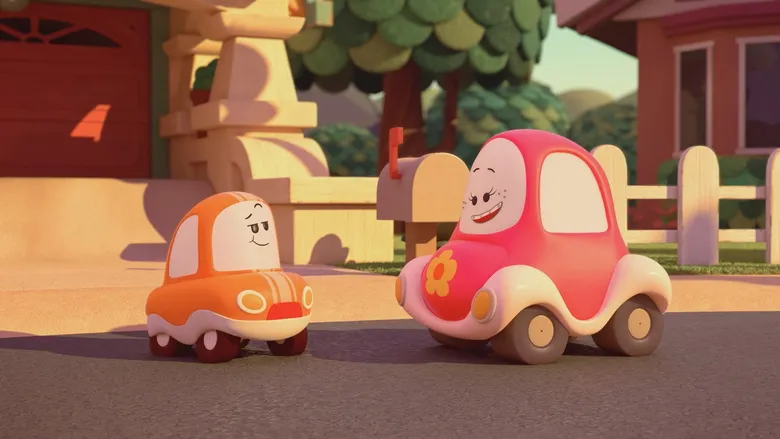
The episode follows one family of cars: Cory, his baby sister Chrissy, their Mom and Papa, plus an older neighbour, Mr. Coltrane, so the range of people and ways of living stays small. Within that family, roles are handled in a balanced way: both parents feed and care for the children, and Cory takes on a gentle, protective role toward Chrissy and the balloon she befriends. Chrissy, though very young, is given real agency, choosing her own friend and deciding for herself who her best friend is. The overall picture is limited breadth of representation paired with fairly even, non-stereotyped roles.
This score shows whether the series stays close to everyday reality or leans into fantasy. Scale: Fantasy → Mixed reality → Realistic.
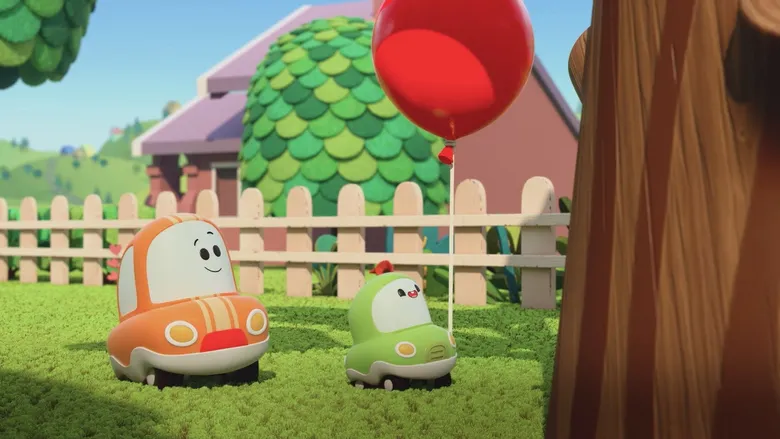
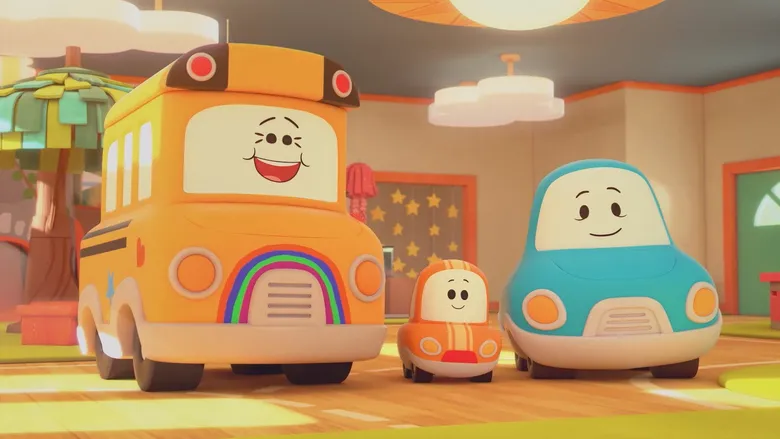
This is a gentle slice-of-life story where toddler Chrissy adopts a red balloon she names Looney and treats it as her best friend, while her big brother Cory and Papa try to keep the fragile balloon safe. The everyday routines are easy for a young child to recognize, lunch at the table, bath time, a nap, and drawing, though the whole town is made up of living cars and trucks rather than people. There is no villain anywhere; the small bumps in the day come from a toddler being a bit too rough and a balloon that keeps floating off. The imaginative play with a balloon friend and the warm family moments suit a young preschooler well.
This score shows how enjoyable the series is for parents watching along. Scale: Tedious → Tolerable → Pleasant → Enjoyable.
This holds up well for an adult sharing the room. The story follows Chrissy and her balloon friend Looney through a real little arc with a warm twist at the end, and the dad's deadpan asides give grown-ups their own thread of humor to track. The 3D animation is polished and the warm palette is easy on the eyes, with only the toddler's repeated squealing as a minor irritant. A co-viewing parent gets genuine moments to enjoy alongside the child.
Chrissy, the toddler of the Carson car family, adopts a red balloon she names Looney and decides it is her best friend. Across an afternoon at home she feeds it at lunch, draws its picture and resists bath time, while Papa worries about keeping the fragile balloon safe. When Looney floats away, big brother Cory chases it through town and brings it back. In the end Chrissy lets the balloon go and shows that Cory is her real best friend.