





















This program is stimulating. It actively demands attention and can feel intense. For the recommended age, this may be on the more intense side.
The pacing is fast. Images follow each other quickly, leaving little time to pause and take in what is happening.
The sound is clearly present and regularly draws attention.
The visuals are calm and well-organized.
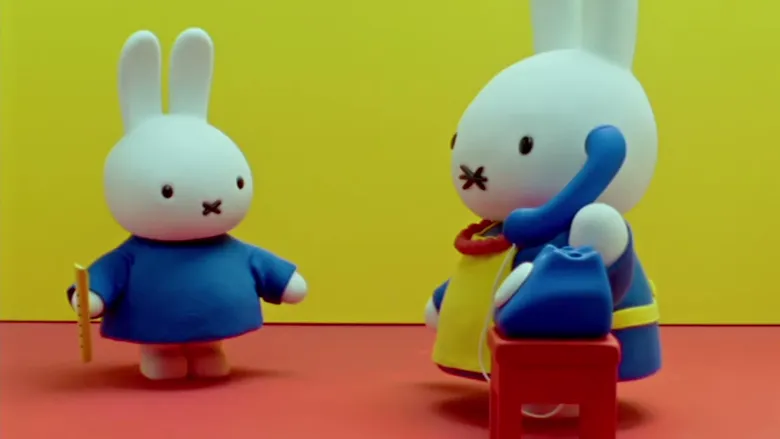
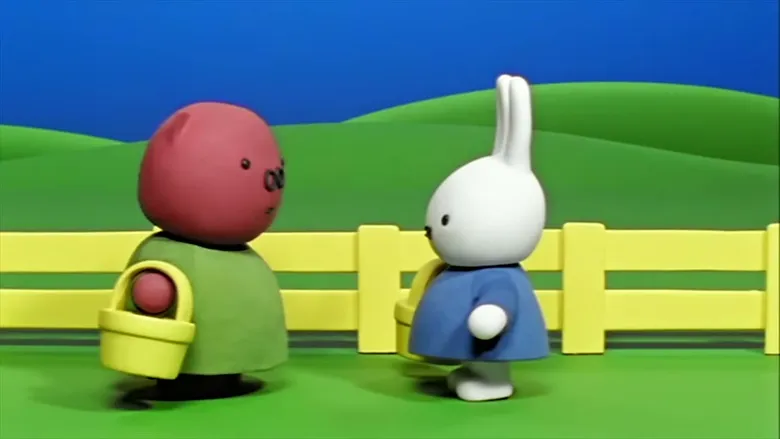
The story follows one clear thread from start to finish: Miffy wants her music to sound fuller, so friends come over one by one. New information arrives in small, sequential pieces, with each instrument and friend introduced before the next is added. Cause and effect is easy to follow, with mother bunny phoning Poppy and Poppy then walking up the hill with her double bass. The structure is ideal for a two-year-old who needs information in small, orderly steps.
The narrator's voice stays warm and soft, and characters speak kindly to each other throughout. Mother bunny supports Miffy with phrases like 'You play that very nicely, Miffy', and the only mild worry, that Grunty has nothing to play, is resolved in the same scene when Miffy offers her toy piano. There are no raised voices, no scary moments, and no abrupt mood switches. The emotional climate is consistently safe and attuned to a young child.
Miffy is the driver of the action: she wants more players, she suggests inviting Aggie, and she finds a solution for Grunty by offering her own toy piano. The thinking process is shown in small, visible steps, which is appropriate for a toddler. Mother bunny does take over the phone call to Poppy, so adult help is woven in rather than the child solving everything alone. Solutions are simple but meaningful, with each problem resolved through a concrete action rather than magic.
The narrator uses short, complete sentences with concrete words a toddler can match to what is on screen: 'I will call her on the telephone and invite her to join us', 'Poppy Pig plays the double bass beautifully', 'I do have a nice toy piano'. Instrument names are introduced with the object visible, which supports new vocabulary. The opening song's lyrics blur together a little when sung fast, which is the main reason this pillar does not score higher, but the storytelling dialogue itself is clear and informative.
The activities shown are directly recognisable from a toddler's world: playing a recorder, calling a friend on the phone, having friends over, sharing a toy when someone needs it. Social patterns like a mother helping her child, friends arriving one by one, and including the youngest in the group reflect real family and friendship dynamics. The characters are stylised talking animals rather than humans, which sits slightly outside pure realism for a two-year-old, but the situations themselves are grounded enough to be easily mapped onto offline play.
More information
This score shows how inclusively the series portrays diverse people, families and cultures. Scale: Limited → Varied → Rich → Inclusive.
Miffy's world is populated entirely by simple anthropomorphic animals (rabbits, pigs, a bear), so the episode does not engage with human ethnic, cultural, or socio-economic variety. There is a small touch of family variation when Poppy Pig brings her young niece Grunty along, alongside Miffy and her mother. Roles are evenly shared: the lead characters are female, they cooperate to make music together, and Miffy takes the initiative to make sure Grunty also has an instrument. The picture is friendly and balanced, but the range of people and life-worlds shown is narrow.
This score shows whether the series stays close to everyday reality or leans into fantasy. Scale: Fantasy → Mixed reality → Realistic.
This Miffy episode blends recognizable daily life with talking animal characters in a gentle, friendly story. Miffy practices her recorder, calls a friend on the telephone, and welcomes guests for a small music gathering. There is no villain anywhere in the story, and the only hiccup (little Grunty has nothing to play) is solved warmly when Miffy offers her toy piano. The realism and fantasy mix sits comfortably within the 2-4 year band.
This score shows how enjoyable the series is for parents watching along. Scale: Tedious → Tolerable → Pleasant → Enjoyable.
Miffy's Musical Day is easy on adult ears and well crafted, but offers little to engage a parent beyond the calm atmosphere. The plot is light yet genuine, following Miffy as she gathers friends with different instruments to play together. The Miffy aesthetic and gentle narrator make this pleasant background, though there is no wordplay, irony or reference layer for grown-ups.
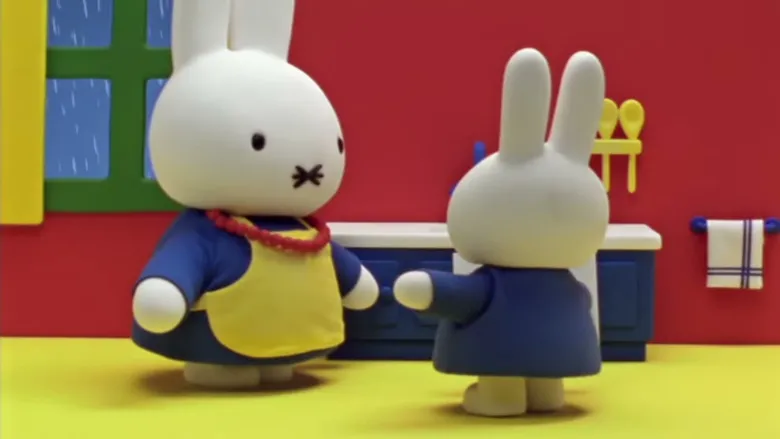
Miffy is practising her recorder at home and her mother says the tune needs more players. Miffy invites her friend Aggie, who arrives with an accordion, and mother bunny phones Poppy Pig, who walks up the hill with her double bass and her little niece Grunty. Because there is no real piano for Grunty, Miffy offers her own toy piano. The four of them then play a piece together as a quartet, after which the video ends with a short teaser of the next episode and an end screen.