

















This program is stimulating. It actively demands attention and can feel intense. For the recommended age, this may be on the more intense side.
The pacing is fast. Images follow each other quickly, leaving little time to pause and take in what is happening.
The sound is intense and continuously present.
The visuals are calm and well-organized.
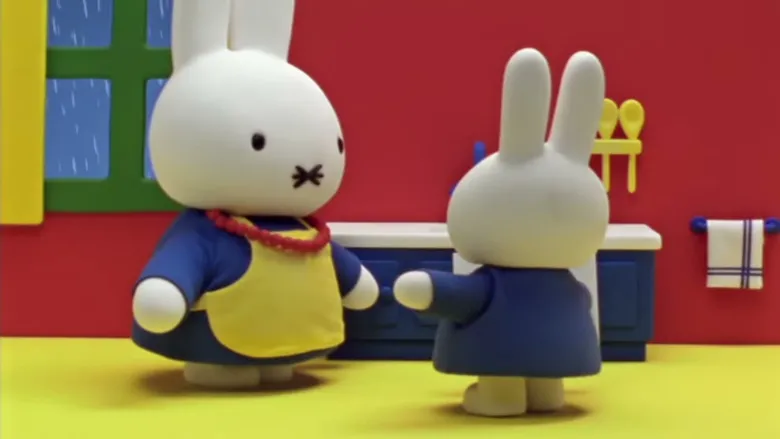
One simple storyline carries the whole episode: a dog arrives at Miffy's door, she welcomes him, they play, and he alerts her to a running tap. Events follow a clean beginning, middle and end with each new idea introduced one at a time, and every cause links to a visible effect, like Snuffy barking at the window because the water is still running. New information per scene stays low and easy to follow for a two-year-old. The narrative shape is one of the strongest parts of the episode.
The emotional atmosphere is warm and steady throughout. Miffy welcomes the unknown dog without fear, speaks kindly ('what a clever dog you are, Snuffy'), and the brief worried moment when Snuffy starts running around is resolved within the same scene by finding and fixing the open tap. There are no raised voices, no scares, no mocking jokes, and the adult narrator's tone stays gentle from start to finish. Interactions model attuned, respectful behaviour between characters.
Miffy shows small acts of initiative, naming the dog, offering water, inviting it to play, and Snuffy himself is the one who notices the running tap and persistently leads Miffy to it. The pillar score is held back because the actual problem-solving stays surface-level for a toddler episode: Snuffy points, Miffy looks, Miffy turns off the tap, with no visible weighing of options or trial and error. Cause and effect in the reasoning is clear but the resolution is essentially one direct step rather than a multi-step thinking process.
The narrator speaks in short, complete sentences with concrete words a toddler can hold onto, like 'shall I give you some water', 'sit', 'roll over' and 'I forgot to turn off the tap'. Dialogue is consistent, calmly delivered and easy to understand, and most utterances carry real information rather than empty exclamations. Vocabulary is mostly familiar, with a few stretch words like 'scratching' and 'thirsty' that are immediately clarified by what is shown on screen. Sentence structure stays well within reach for the 2-4 age band.
The episode shows some recognisable real-life activities, welcoming a guest, giving an animal water, playing in the garden and turning off a running tap, that a young child can connect to daily life. The score is held down because the world itself is stylised and anthropomorphic: a rabbit lives alone in a house, opens her own door, and a dog understands sentences, so the realistic anchor for a two-year-old is partial. Social behaviour is warm and easy to recognise, but the practical handling of the 'problem' is brief and the setting tilts more toward imagination than the real-world calibration this age band benefits from.
More information
This score shows how inclusively the series portrays diverse people, families and cultures. Scale: Limited → Varied → Rich → Inclusive.
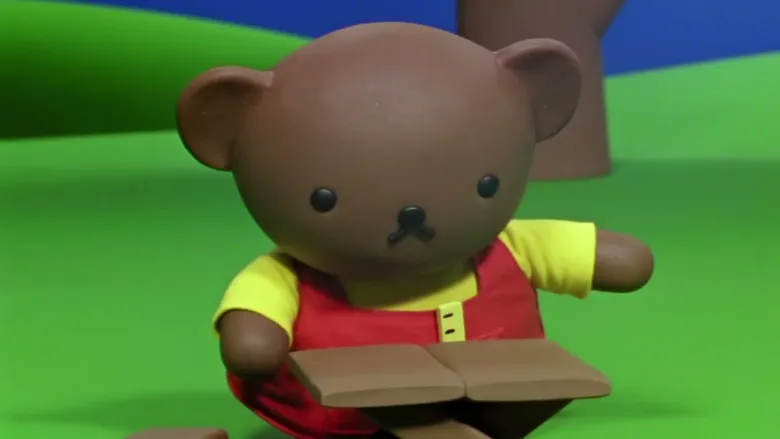
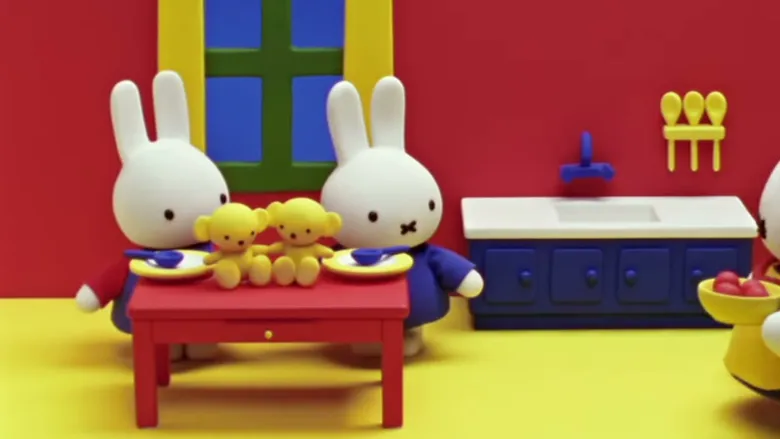
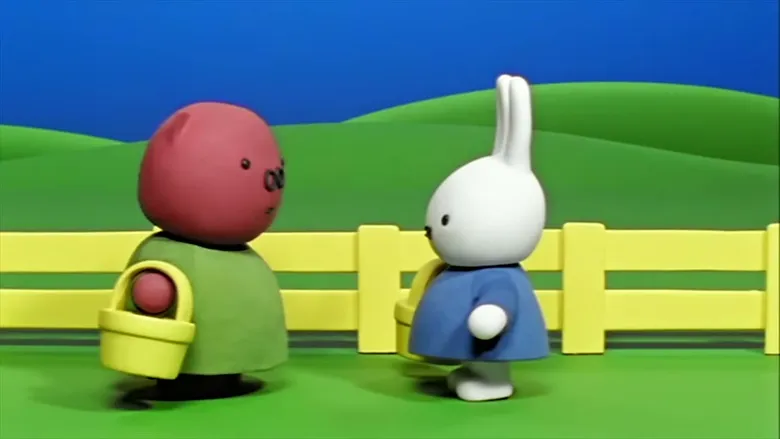
This episode keeps a very small cast: Miffy, a white rabbit, and Snuffy, a brown dog, meet at Miffy's home and play in the garden. The opening song briefly names other animal friends (Grunty the pig, a forest bear, Puppy), but they do not appear in the story itself. There are no human characters, no family settings, and no varied life-worlds shown. Within this narrow frame the two characters share the action on equal footing, with Snuffy positioned as the clever one who spots a problem Miffy has missed.
This score shows whether the series stays close to everyday reality or leans into fantasy. Scale: Fantasy → Mixed reality → Realistic.
This episode pairs light fantasy (a talking bunny named Miffy who lives in her own house) with very recognizable everyday situations: hearing someone at the door, welcoming a visitor, pouring water for a thirsty guest, playing in the garden, and noticing a tap left running. There is no villain and no helden-vs-schurken framing at all; the only small problem is the forgotten tap, which the dog helpfully points out. The internal logic stays consistent, with Snuffy behaving like a real dog throughout (barking, wagging her tail, sitting, begging, rolling over). The mix of friendly stylised animals and ordinary domestic routines is a strong fit for a 2-year-old.
This score shows how enjoyable the series is for parents watching along. Scale: Tedious → Tolerable → Pleasant → Enjoyable.
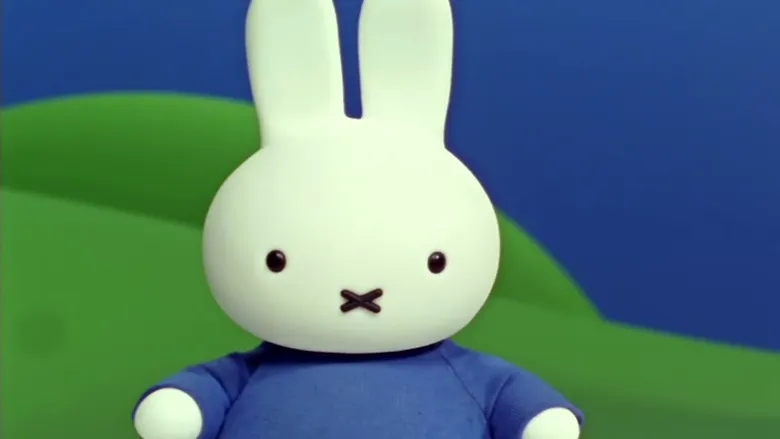
This episode offers a calm, gentle viewing experience that is easy on adult ears and eyes, with charming stop-motion claymation in the iconic Dick Bruna style. The story is simple but complete: Miffy meets a stray dog, names her Snuffy, and the dog alerts her to a running tap. There is little here aimed at adult viewers in terms of humor or layered references, so a co-viewing parent will mostly enjoy the craft and atmosphere rather than the content itself.
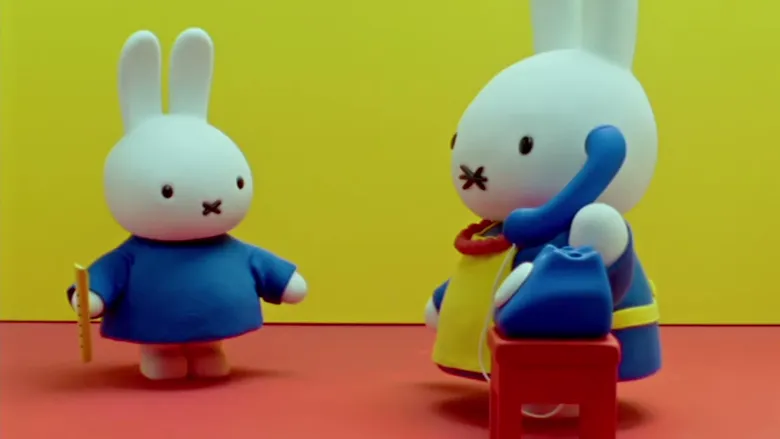
Miffy hears a strange scratching at her front door and finds a friendly brown dog waiting outside. She names him Snuffy, gives him cold water in the kitchen and takes him out into the garden, where he shows that he can sit, beg and roll over. Snuffy then runs to the kitchen window and barks until Miffy realises she has forgotten to turn off the tap and quickly closes it. The episode ends with Miffy thanking Snuffy with a biscuit and inviting him to come back any time, followed by an end card with subscribe and next-video prompts.