















This program is stimulating. It actively demands attention and can feel intense. For the recommended age, this may be on the more intense side.
The pacing is fast. Images follow each other quickly, leaving little time to pause and take in what is happening.
The sound is clearly present and regularly draws attention.
The visuals are calm and well-organized.
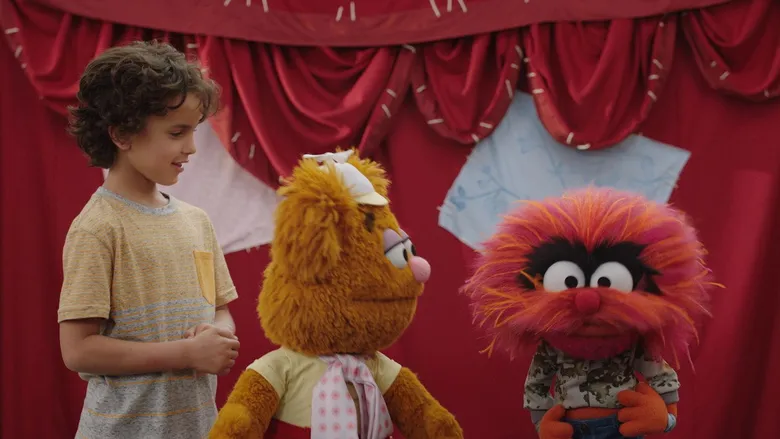
One clear goal runs from start to finish: Fozzie and Bruce try to teach Animal how to tell a knock-knock joke. Events build in order, step by step, as they explain each part of the joke and Animal keeps mixing it up, and the cause and effect stays easy to follow (Animal hears 'knock-knock' and literally runs to answer a door). The single thread and predictable structure make it simple for a young child to track. A little repetition of the teaching beats keeps the idea from getting lost.
The mood stays light and friendly throughout, with Fozzie patiently guiding an over-eager Animal and Bruce cheering the small wins ('Yeah, good, okay'). Fozzie shows brief, gentle exasperation when Animal misunderstands ('No, no, Animal, not again'), but it always lands softly and resolves into another try. Emotions stay low-key and any small tension is smoothed over quickly with a joke or a kind word. Characters treat each other with respect and never mock, so the emotional footing feels secure.
The whole piece is a problem being worked out in the open: how to get Animal to say his line in the right spot. The characters try, see it fail, and adjust their approach ('Maybe we should have started with orange'), so a child sees real trial and correction rather than an instant fix. Animal stays a willing partner and the joke does eventually get told, though he is still muddled at the end, so the payoff is only partly earned. The steps are visible and honest, if a touch drawn out.
The language is clear and concrete, built around teaching one thing (the shape of a knock-knock joke) in short, guided sentences a preschooler can follow. Words are used consistently, the speech is easy to understand, and the wordplay of 'Ken who' turning into 'Can you let me in' models simple joke logic. Alongside the instruction there are plenty of expressive bits ('Waka waka', 'Huh?', 'Ah?') that carry feeling more than information. On balance the talk is purposeful and well matched to young listeners, with room for a bit more complete-sentence structure.
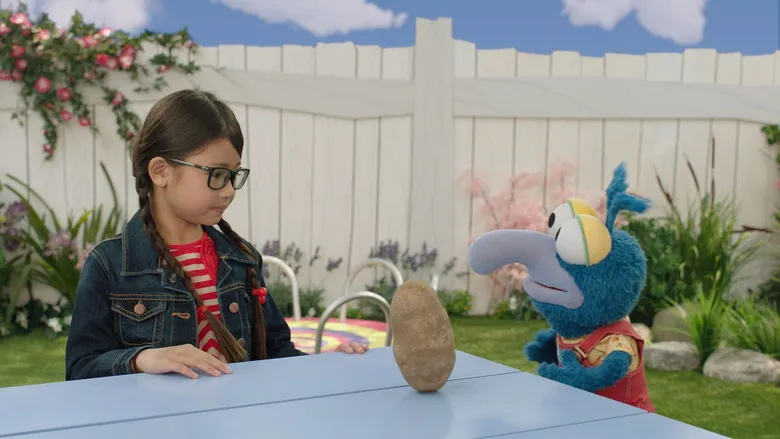
Learning to tell a joke is a real social skill a child can take straight off the screen and try with family or friends, and the step-by-step coaching shows how it works. The setting is a real backyard with a real child, so even though Fozzie and Animal are puppets, the situation of friends helping each other practise is recognisable and grounded. The dynamic of patience, encouragement and taking turns reflects everyday play. The value sits mostly in that transferable social moment rather than in a broader lesson.
More information
This score shows how inclusively the series portrays diverse people, families and cultures. Scale: Limited → Varied → Rich → Inclusive.
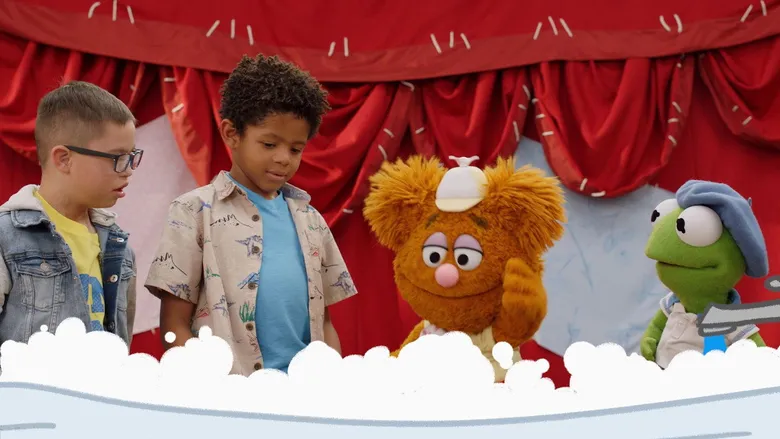
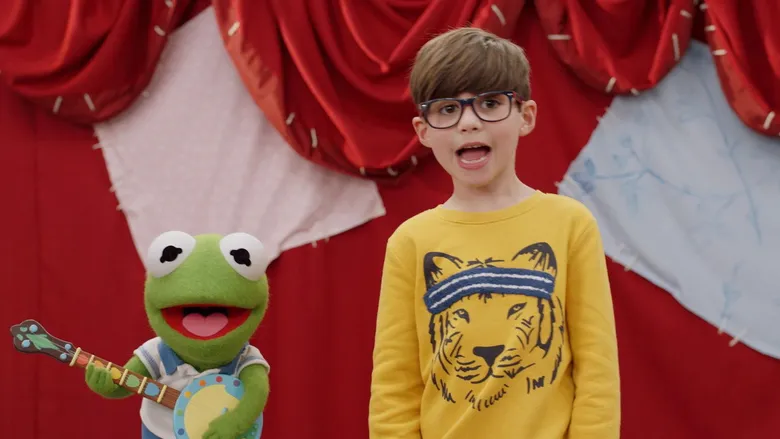
This short segment has a small cast: one live-action boy named Bruce, plus the puppets Fozzie Bear and Animal, gathered around a backyard puppet stage to practice a knock-knock joke. The human child brings some visible variety, but the group is entirely male-coded and there are no girls, adults, or different family settings on screen. Roles are shared warmly, with Bruce and Fozzie guiding and Animal learning through trial and error, and everyone cooperates as equals. The picture is friendly but narrow, shaped mostly by how few characters appear.
This score shows whether the series stays close to everyday reality or leans into fantasy. Scale: Fantasy → Mixed reality → Realistic.
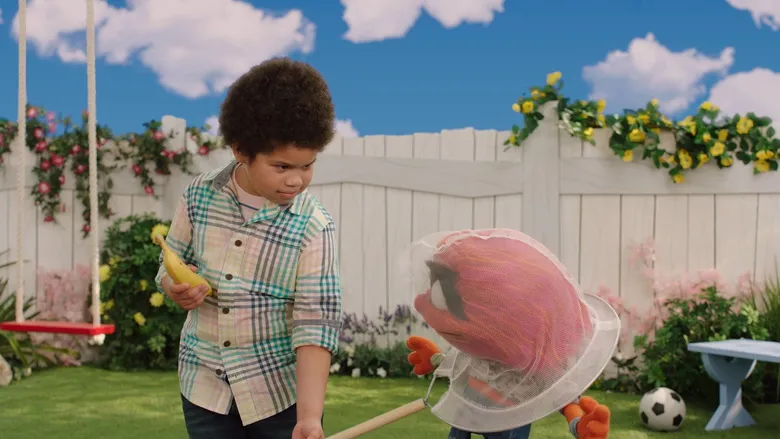
A real child sits in a backyard behind a small curtained stage, trading knock-knock jokes with two friendly puppet characters. The world is warm and recognizable: an ordinary outdoor setting and a familiar everyday goal of learning how to tell a joke, with talking puppets as the only imaginative touch. Nobody plays a villain; the fun comes entirely from Animal misunderstanding each step of the joke and running off to answer an imaginary door. The realism and light play mix sits comfortably for this age.
This score shows how enjoyable the series is for parents watching along. Scale: Tedious → Tolerable → Pleasant → Enjoyable.
This one is genuinely pleasant to sit through. Fozzie Bear and Animal are performed with real craft, the humor lands on more than one level, and the sound stays easy on adult ears. The story is thin, a single joke stretched across the runtime, so you will not be following a plot, but the timing and the puppetry carry it. If you are on the couch nearby, expect a few chuckles rather than a chore.
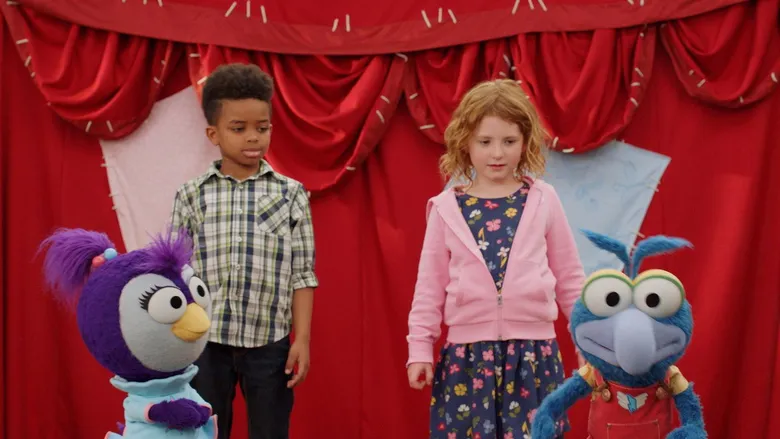
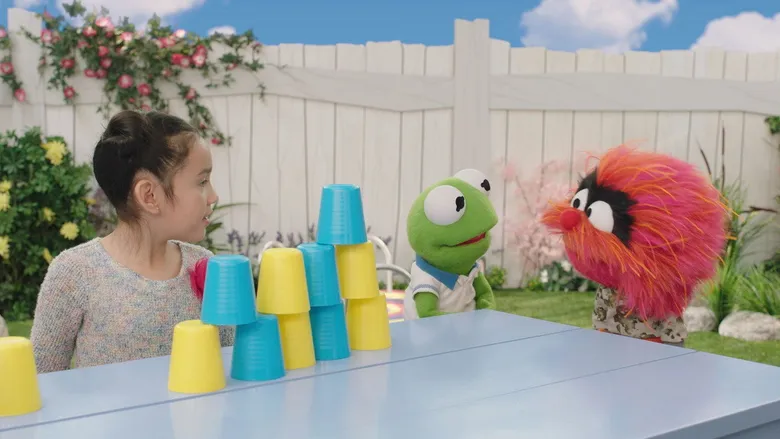
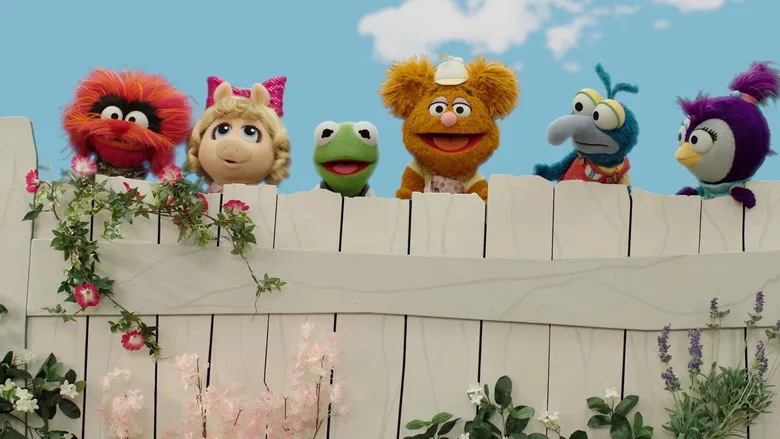
In a backyard set with a red stage curtain, the puppet Fozzie Bear and a boy named Bruce try to teach their friend Animal how to tell a knock-knock joke. Animal keeps misunderstanding, running off to answer an imaginary door and mixing up his lines. Step by step, Fozzie and Bruce coach him through each part until the joke almost comes together. It ends with Animal still a little muddled as everyone laughs along.