









This program is well-balanced. It remains mostly easy to follow and process. It is a good fit for the recommended age.
The pacing is fast. Images follow each other quickly, leaving little time to pause and take in what is happening.
The sound is soft and supportive.
The visuals are well-balanced, with a clear overall view.
One clear question drives the whole episode: who took the head off Nature Cat's acorn statue. The story builds in order, from the unveiling to following the tracks to the final discovery, so a child can follow what is happening and why. Cause and effect are easy to read, as the team measures footprints and reasons 'too big, not the right shape' to rule suspects out. The main caveat is that the dialogue packs a lot of information into each scene, which can be a lot for a young child to hold onto.
The friends treat each other with warmth and support, reassuring Nature Cat ('don't worry, Nature Cat will find your head') and politely apologising to the animals they question. When Nature Cat is dismayed that his 'masterpiece is ruined', the upset is quickly turned into a shared mission, and every small tension lands on a calm resolution. The episode ends on generosity, with the new statue given to the squirrels for winter. The mood does run consistently excited and loud, and the mock-dramatic 'bring me the head of Nature Cat' is played for comedy, which keeps the overall tone upbeat but high-spirited.
This episode stands out for showing thinking out loud. The friends spot a problem, gather evidence, and work through it step by step: they follow tracks, measure footprints in inches, compare size and shape, and eliminate the raccoon and the squirrel one by one before reaching the answer. The characters start the investigation themselves and keep adjusting when a clue does not fit. A child sees a full, satisfying problem-solving structure modelled from start to finish, with real observation and deduction at its centre.
Language is purposeful and tied to the nature theme, with useful words like tracks, footprints, inches, investigate and culprit used correctly and consistently. Most lines are complete sentences, and the talk genuinely carries the investigation forward rather than just filling space. The limitation is reach: words such as 'masterpiece', 'proclaim', 'consequences' and 'swindling', plus quick witty asides between adults, sit above what a five-year-old fully grasps. Concrete naming of the clues helps anchor the harder vocabulary in something the child can see.
The activities connect to the real world in ways a child could copy: looking for animal tracks, comparing their size, observing creatures outdoors, and making art from acorns found on the ground. Recognisable social patterns run throughout, from working as a team to the closing act of helping the squirrels survive a hungry winter. The frame is a group of talking animals, and a few sequences turn imaginative, such as the football-game retelling, which sits alongside the grounded nature content. The core nature-study skills remain the most directly transferable part.
More information
This score shows how inclusively the series portrays diverse people, families and cultures. Scale: Limited → Varied → Rich → Inclusive.
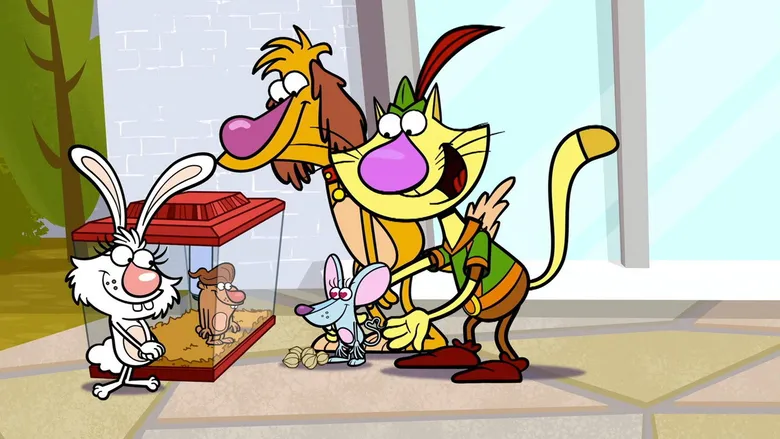
The cast is made up entirely of animals who talk and act like people: a cat, a mouse, a dog and a rabbit form the central group, joined by woodland animals such as a raccoon and squirrels. Because no human characters appear, backgrounds like cultural origin and different family forms are not part of the picture, and the variety on screen comes mostly from the mix of animal types and a balance of male and female friends. Where the series does well is in how the group works: they investigate the missing acorn head together, each pitching in a skill, and problem-solving is shared rather than handed to one character. The result is a friendly, cooperative world that is broad on teamwork but narrow on the kinds of human diversity children might recognise from their own lives.
This score shows whether the series stays close to everyday reality or leans into fantasy. Scale: Fantasy → Mixed reality → Realistic.
Nature Cat sends a group of talking animal friends on a light detective hunt to find a missing acorn sculpture, set in real fields and woods. The mix leans imaginative because the whole cast talks and behaves like people, but it stays anchored by genuine nature learning: reading and measuring animal tracks to work out who passed by. There is no villain; the 'thief' turns out to be a squirrel simply gathering acorns for winter, and the story ends warmly with Nature Cat donating his statue to help the squirrels through the cold months. The talking-animal world stays consistent throughout and fits comfortably with what children at this age can follow and enjoy.
This score shows how enjoyable the series is for parents watching along. Scale: Tedious → Tolerable → Pleasant → Enjoyable.
This episode offers a co-viewing adult more than most preschool fare. A detective-style plot with a genuine twist runs alongside jokes pitched over children's heads, from a teenage raccoon stalling his mom to a straight-faced sports broadcast parody. The animation is clean and the voice work is sharp and expressive. The main caveat is the relentless high energy and Squeeks's squeaky voice, which can tire an adult ear across the full runtime.
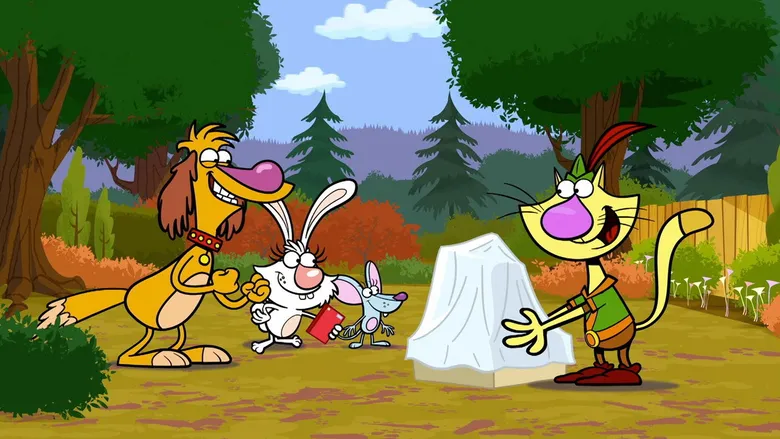
On Nature Art Day, Nature Cat unveils a statue of himself made of acorns, only to find its acorn head has vanished. With his friends Hal, Daisy and Squeeks, he follows footprints through the forest, measuring and comparing tracks to question a raccoon and a squirrel before realising the squirrels took the acorns. Nature Cat builds a new statue and donates it to the squirrels to help them through winter. The episode closes with the friends celebrating and the show's credits.