



Slowscreen SlowScreen
Toggle sidebar

Just launched: free lifetime premium for the first 1,000 members to activate their account.

Start free

Sesame Street

Sufficient

Recommended age Unlock

Co-watching from age 2

Stimulating

Exact score locked

Watch on Netflix HBO Tubi TV
Availability in
Save
Sesame Street

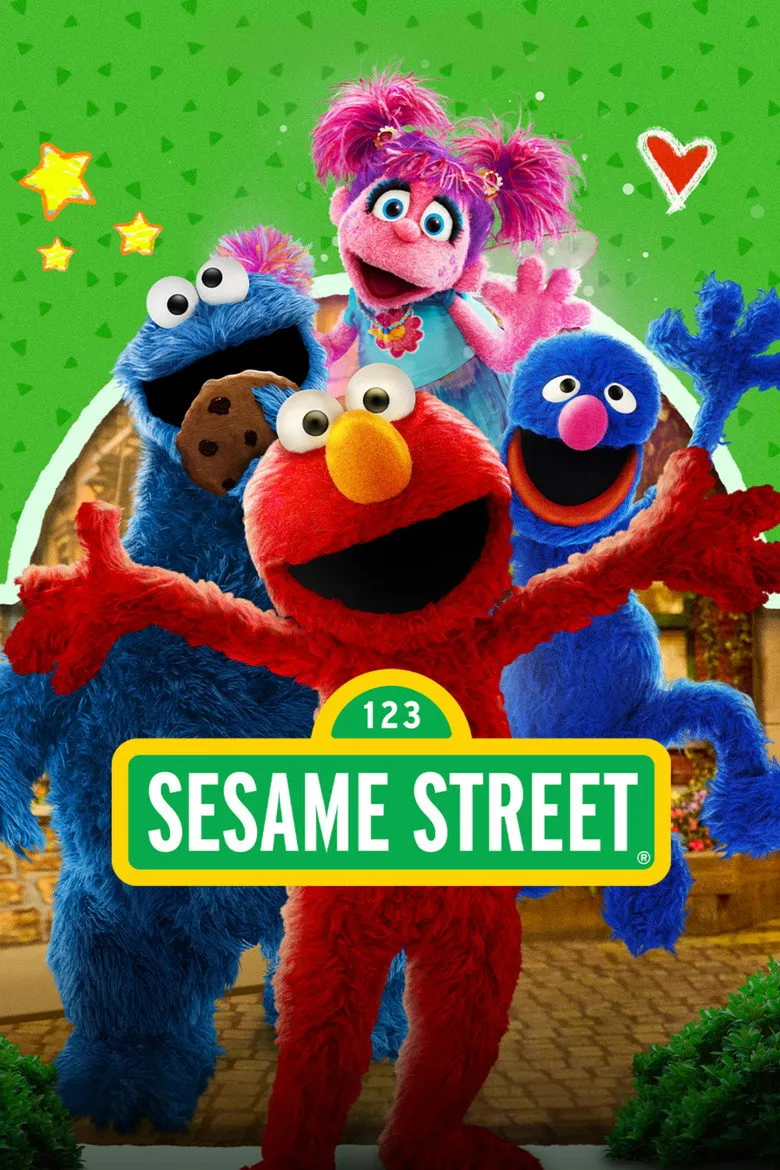
Sesame Street follows Elmo, Abby, Cookie Monster and friends through everyday adventures in a friendly city neighborhood. The tone is warm and playful, aimed at toddlers, with gentle lessons about feelings, friendship and healthy habits.

  • Pretend play helps ease worries about new experiences.
  • Short segments suit very young attention spans.
  • Cooking and farm trips connect food to real nature.
  • Characters model apologizing and welcoming others' ideas.
  • Mild disagreements between friends before they make up.
  • Occasional loud sounds and flashing visuals.

See the exact scores

The review is yours to read. Create a free account to reveal the exact SlowScreen score and every pillar score.

Create free account

Score Breakdown

The pace is quick throughout, with images changing fast and little quiet time to take in what just happened. Sound stays present and regularly draws attention, and in some stretches it turns intense and continuous. The visuals are usually well organised and easy to read, though busier moments with a lot of movement and frequent changes do appear. For a two-year-old this sits on the stimulating side and can feel demanding to sit through.
Every episode is built from several stand-alone segments held together by a loose theme, so a child has to restart their attention each time a new story begins. Within each segment the build-up is clear and easy to follow, with a problem named, attempts made, and a tidy ending. Cause and effect reads plainly, like Abby waving her wand to send Cookie Monster's cart spinning, or heat turning a snowman into a puddle. The main limitation is the number of new characters, props and facts packed into each block, which is more than the youngest can comfortably hold in one sitting.
The emotional tone stays warm and supportive, with characters naming real feelings and helping each other through them. When Cookie Monster says 'Me feeling so frustrated' or Zoe decides she is no good at a game, a friend listens, reassures, and the worry resolves within the same scene. Characters also model honest repair, as when Grover says 'I am sorry for not listening to your ideas' and invites everyone to start over. The small caveats for this age are the choppy switches between sketches and a few loud, chaotic moments, and in one story Grover's lowest point stretches on for a while before comfort arrives.
Characters drive the solutions themselves, and their thinking stays visible on screen: they name a problem, try something, and adjust when it goes wrong. Elmo and Abby track down a melted snowman by gathering clues, and the monsters travel to a real farm when a recipe turns out to be missing an ingredient. Everyday steps like following a recipe or turning a puzzle piece the right way give children small, followable examples. The exception is Cookie Monster's Magical Cart, where Abby's magic wand creates and undoes much of the trouble, so the strongest problem-solving there is social, with Cookie Monster learning to speak up about what he wants.
Speech is clear and the teaching moments are purposeful, with short concrete sentences explaining ideas like snow being frozen water that melts, or where Brussels sprouts and pineapples come from. Repeated chants and phrases such as 'one, two, three, open sesame' give the youngest a foothold, and Nina's Spanish greetings add natural bilingual moments. Two things temper this for a two-year-old: some vocabulary sits above their level, like 'stethoscope', 'heat advisory' and 'gazpacho', and a large share of the talk is excited filler such as 'whoa', 'yeah' and Cookie Monster's 'nom nom nom'. The informative language is solid, but it often competes with a lot of noise.
Much of the series connects straight to a child's own day: a real dentist visit, cooking a recipe step by step, splashing in puddles, and learning to be considerate when others need quiet. Real footage of farms and recognisable social moments like sharing, apologising and asking neighbours for help keep one foot firmly in the real world. Alongside this sits a good deal of make-believe, with magic wands, talking monsters and a fairy, so not everything maps onto real life for this age. The cooking, feelings and everyday-routine lessons are the most directly useful at home.

More information

This score shows how inclusively the series portrays diverse people, families and cultures. Scale: Limited → Varied → Rich → Inclusive.
The cast is broad and inclusive across ethnicity, age, gender and ability. Dr. Price is a Black woman dentist, Alan runs the corner store, Nina slips naturally between English and Spanish, Ji-Young is Korean American, and Julia, who is autistic, gets a central storyline of her own. Roles and initiative are shared widely, with women in expert positions, adults who stay helpful rather than taking over, and children of varied backgrounds in the live-action clips. The recurring limitation is that the human variety often appears in brief visits while the mostly male monster cast carries the main stories, and different family set-ups are barely shown.
This score shows whether the series stays close to everyday reality or leans into fantasy. Scale: Fantasy → Mixed reality → Realistic.
The series keeps both feet in everyday life, with recognisable neighbourhoods, kitchens, farms and real footage woven through, all carried by friendly characters like Elmo, Julia and Cookie Monster. There is no villain anywhere; the small problems grow out of ordinary situations, such as a melting snowman or getting too absorbed in a tablet game, and they are solved by wondering, watching and working together. The light touches of make-believe, mainly Abby's fairy magic, follow their own steady rules and are always framed as pretend. For a two-year-old this blend of real-world topics and gentle imagination sits comfortably.
This score shows how enjoyable the series is for parents watching along. Scale: Tedious → Tolerable → Pleasant → Enjoyable.
There is enough here to keep you comfortably in the room. The puppetry, music and live-action segments are polished, a few sly asides are aimed squarely at grown-ups, and some stories carry a real arc, like Elmo missing out because he stays glued to his tablet, or Grover learning to listen to his friends. What you will need to brace for is Elmo's high, squeaky voice and the looping refrains, which can wear thin over a full sit-through. On balance it gives a co-viewing parent more to hold onto than most at this age.
Sesame Street
S50 E08

Sesame Street

A Trip to the Dentist

Stimulating
recommended age Unlock co-watching from 2

Elmo, Charlie, Julia, and Alan rehearse a dentist visit on Sesame Street by playing pretend with a toy alligator, then Julia tags along to Charlie's real check-up with Dr. Price, who explains every tool. The episode then moves through Samuel modelling tooth-brushing, a Letter of the Day segment on 'D for dentist', a Cookie Monster and Gonger story about making celery butterflies, a counting song with seven martians, and an Elmo's World about doctors. Julia ends the episode willing to visit Dr. Price herself, and the friends recap what they learned about keeping teeth healthy.

Sesame Street
S55 E07

Sesame Street

Elmo's Lost Snowman

Stimulating
recommended age Unlock co-watching from 2

Elmo, Abby and their friends spend a very hot day on Sesame Street. Abby uses her magic wand to make a snowman to cool everyone off, but he disappears, and the children search the neighborhood before working out that he melted into a puddle because snow is frozen water. Along the way the episode visits the letter W for weather, the number 15, Cookie Monster and Gonger making a green fruit salad at a kiwi farm, and an Elmo and Tango mystery about a missing drawing. It closes with a recap that heat turns snow back into water and a song about growing smarter, stronger and kinder.

Sesame Street
S56 E09

Sesame Street

Elmo's Magnificent Mini City

Stimulating
recommended age Unlock co-watching from 2

On a very hot day, Elmo and his friends gather at a cooling center where Elmo would rather play a tablet game than join in. While Abby and Julia build a tiny city out of cups, boxes and sponges, Elmo learns to put the tablet down, stretch and help out. The episode then moves through a pretend 'floor is quicksand' game, a segment where Cookie Monster and Gonger bake cornbread and visit a real cornfield, and an Elmo's World about babies. It ends with the friends finishing their mini city together and a closing song.

Sesame Street
S56 E12

Sesame Street

Grover's Play

Stimulating
recommended age Unlock co-watching from 2
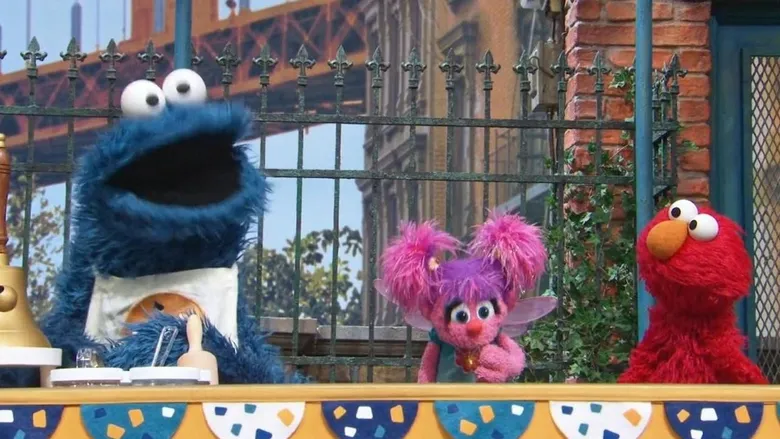
On Sesame Street, Director Grover plans a fairy-tale play and casts his friends, but he refuses to let Elmo, Abby, Telly, and Ji Young change their parts, so the cast walks out. Alone and regretful, Grover realizes the play is no fun without them, apologizes, and they build a new plan together that includes everyone's ideas. The episode then moves through Cookie Monster's tea party, where Elmo and Tango help him set up after he muddles his to-do list, a Monster Foodies segment where Cookie Monster and Gonger make a half-mushroom, half-pineapple pizza and visit a real pineapple farm, and an Elmo's World about gardens. It closes with Elmo's happy dance and the credits.

Sesame Street
S56 E13

Sesame Street

Cookie Monster's Magical Cart

Stimulating
recommended age Unlock co-watching from 2
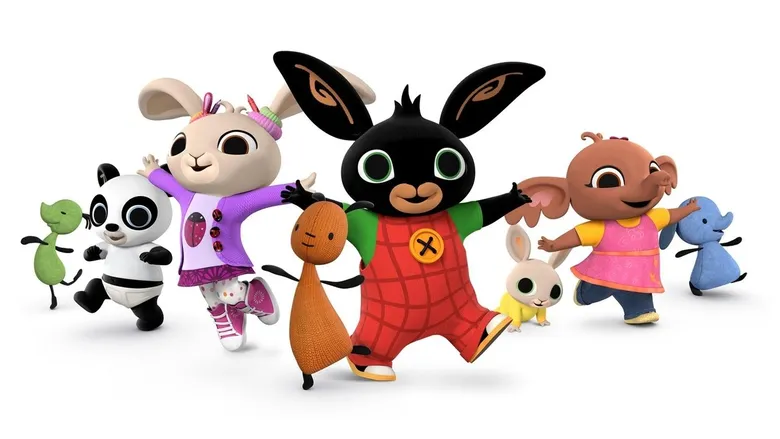
Cookie Monster delivers cookies around Sesame Street with his cart until Abby Cadabby uses fairy magic to move it without asking, sending the cart zooming and spinning out of control. With Elmo's help, Cookie Monster tells Abby he feels frustrated because she did not listen, Abby apologizes and undoes the spell, and the two agree to push the cart together. The episode also follows Cookie Monster and Gonger as they visit a farm and cook stir-fried Brussels sprouts for Fred, an Elmo segment about finding a quiet place when neighbors are noisy, and an Elmo's World about nursery rhymes. Each part ends with the problem resolved and the characters happy.

Share

Pass this find on to another parent

Link preview

Sesame Street | Sufficient, co-watching from age 2

Sesame Street | Sufficient, co-watching from age 2 - Slowscreen

Sufficient · Co-watching from age 2. Sesame Street follows Elmo, Abby, Cookie Monster and friends through everyday adventures in a friendly city neighborhood. T...

slowscreen.com

https://slowscreen.com/en/series/sesame-street

https://slowscreen.com/en/series/sesame-street

Slowscreen

Sesame Street | Sufficient, co-watching from age 2 - Slowscreen

Sufficient · Co-watching from age 2. Sesame Street follows Elmo, Abby, Cookie Monster and friends through everyday adventures in a friendly city neighborhood. T...

Sesame Street | Sufficient, co-watching from age 2

slowscreen.com

Sesame Street | Sufficient, co-watching from age 2 - Slowscreen

Sufficient · Co-watching from age 2. Sesame Street follows Elmo, Abby, Cookie Monster and friends through everyday adventures in a friendly city neighborhood. T...

Sesame Street | Sufficient, co-watching from age 2
slowscreen.com

Sesame Street | Sufficient, co-watching from age 2 - Slowscreen

slowscreen.com · Posted by you

Sesame Street | Sufficient, co-watching from age 2 - Slowscreen

0 Share
Sesame Street | Sufficient, co-watching from age 2
To
Subject Sesame Street | Sufficient, co-watching from age 2

Sufficient · Co-watching from age 2. Sesame Street follows Elmo, Abby, Cookie Monster and friends through everyday adventures in a friendly city neighborhood. T...

https://slowscreen.com/en/series/sesame-street

Share on WhatsApp Share on X Share on Facebook Share on Telegram Share on Reddit Share on Email

Just launched: free lifetime premium for the first 1,000 members to activate their account.

Create your account

Search by title, show, tag, or topic

We use functional cookies and Google Analytics to improve our site. Learn more