



Slowscreen SlowScreen
Toggle sidebar

Just launched: free lifetime premium for the first 1,000 members to activate their account.

Start free

Grover's Play

Sufficient

Recommended age Unlock

Co-watching from age 2

Stimulating

Exact score locked

Watch on Netflix HBO Tubi TV
Save
Grover's Play

Share

Pass this find on to another parent

Link preview

Sesame Street: Grover's Play | Sufficient, co-watching from age 2

Sesame Street: Grover's Play | Sufficient, co-watching from age 2 - Slowscreen

Sufficient · Co-watching from age 2. On Sesame Street, Director Grover plans a fairy-tale play and casts his friends, but he refuses to let Elmo, Abby, Telly, a...

slowscreen.com

https://slowscreen.com/en/series/sesame-street/s56/e12-grovers-play

https://slowscreen.com/en/series/sesame-street/s56/e12-grovers-play

Slowscreen

Sesame Street: Grover's Play | Sufficient, co-watching from age 2 - Slowscreen

Sufficient · Co-watching from age 2. On Sesame Street, Director Grover plans a fairy-tale play and casts his friends, but he refuses to let Elmo, Abby, Telly, a...

Sesame Street: Grover's Play | Sufficient, co-watching from age 2

slowscreen.com

Sesame Street: Grover's Play | Sufficient, co-watching from age 2 - Slowscreen

Sufficient · Co-watching from age 2. On Sesame Street, Director Grover plans a fairy-tale play and casts his friends, but he refuses to let Elmo, Abby, Telly, a...

Sesame Street: Grover's Play | Sufficient, co-watching from age 2
slowscreen.com

Sesame Street: Grover's Play | Sufficient, co-watching from age 2 - Slowscreen

slowscreen.com · Posted by you

Sesame Street: Grover's Play | Sufficient, co-watching from age 2 - Slowscreen

0 Share
Sesame Street: Grover's Play | Sufficient, co-watching from age 2
To
Subject Sesame Street: Grover's Play | Sufficient, co-watching from age 2

Sufficient · Co-watching from age 2. On Sesame Street, Director Grover plans a fairy-tale play and casts his friends, but he refuses to let Elmo, Abby, Telly, a...

https://slowscreen.com/en/series/sesame-street/s56/e12-grovers-play

Share on WhatsApp Share on X Share on Facebook Share on Telegram Share on Reddit Share on Email

See the exact scores

The review is yours to read. Create a free account to reveal the exact SlowScreen score and every pillar score.

Create free account
This program is stimulating. It actively demands attention and can feel intense. For the recommended age, this may be on the more intense side. The pacing is fast. Images follow each other quickly, leaving little time to pause and take in what is happening. The sound is intense and continuously present. The visuals are well-balanced, with a clear overall view.
The episode is built from four separate stories, a play rehearsal, a tea party, a pizza order, and a garden lesson, so the thread resets several times instead of holding one continuous line. Within each block the build-up is clear: Grover plans his fairy tale, the cast pushes back, he tries to go it alone, then everyone reunites for the show. Cause and effect is easy to follow, for instance Cookie Monster eating the party invitations means new ones have to be made. The main limitation for a two-year-old is the number of new characters and props packed into each block, which can crowd the picture.
Interactions are mostly warm and respectful, with the friends offering ideas kindly and Grover modelling a real repair when he says 'I am sorry for not listening to your ideas' and invites everyone to make a new plan together. Feelings stay within a safe range, mild upset rather than genuine distress, even when the cast walks out or Cookie Monster feels overwhelmed by his party list. The one caveat is that Grover's lowest point, alone and regretful, stretches across several scenes before the reunion lands, so comfort takes a little while to arrive for the youngest viewers. His early bossiness is clearly framed as something he learns from, not behaviour to copy.
Characters drive the action themselves: Telly invents a dancing dragon, Ji Young adds her guitar, and Abby and Elmo swap roles because they want to. Problems get worked through in visible steps, clearest in the pizza segment where the monsters gather ingredients, discover the pineapple is missing, travel to a real farm to fetch one, and assemble the pie. Grover's own arc shows him noticing his plan failed and choosing a better approach. The reasoning is simple at times, but for this age the trying, adjusting, and figuring-out are consistently on display.
Most dialogue uses short, concrete sentences about costumes, cookies, pineapples, and flowers that a young child can follow, and the farm and garden segments add clearly explained ideas like a pineapple being a tropical fruit. The language is purposeful in those teaching moments, but a large share of the talk is excited filler, 'whoa', 'yeah', and Cookie Monster's endless 'nom nom nom', which carries energy more than meaning. Some delivery is deliberately jumbled for comedy, such as Cookie Monster muddling 'deliver invitations' with 'set the table'. The result is understandable for a two-year-old, with the caveat that the informative language competes with a lot of noise.
The strongest real-world value sits in the everyday activities: setting a table with plates, cups, spoons, and napkins, baking cookies, and learning where pineapples actually grow from a real farmer in a real field. These connect directly to things a child can do or see offline, and the social lessons about sharing ideas and working together mirror familiar friendship and family situations. Against that, a sizeable part of the runtime is pure make-believe, with magic wands, a costume-changing suitcase, and a dragon-and-wizard fairy tale that do not transfer to daily life. For a two-year-old the mix is balanced rather than grounded, with fantasy carrying a noticeable share.

More information

This score shows how inclusively the series portrays diverse people, families and cultures. Scale: Limited → Varied → Rich → Inclusive.
These stories put a varied cast on screen, from colourful monsters and Ji-Young, who is Korean American, to human twins, a farmer of colour and a visiting grandmother, set across a backstage, a kitchen, a farm and a garden. Roles stay flexible: a princess plays guitar, a dragon dances, and the knight and wizard parts pass freely between characters. The heart of the main story is Grover discovering that a good plan only works when everyone's ideas count, so leadership ends up shared rather than owned by one. The main limitation is that the broadest human variety appears in brief segments, and different family set-ups are barely shown.
This score shows whether the series stays close to everyday reality or leans into fantasy. Scale: Fantasy → Mixed reality → Realistic.
This collection stays close to a young child's real world, with characters putting on a play, hosting a tea party, making pizza, and learning about gardens. There is no villain anywhere; the only tension comes from Grover wanting everyone to follow his plan, a feeling he works through and apologizes for. A few light touches of make-believe, like Abby's magic wand and a costume suitcase that changes outfits, follow their own steady logic. The gentle mix of everyday activity and playful pretend fits toddlers comfortably.
This score shows how enjoyable the series is for parents watching along. Scale: Tedious → Tolerable → Pleasant → Enjoyable.
This is a rewarding sit for the adult on the couch. The craft is strong across puppetry, music, and staging, and the humor works on two levels, with Grover's theatrical ego and Cookie Monster's deadpan gags landing for grown-ups. The Grover story also carries a real arc about listening to your friends rather than leaning on pure repetition. Elmo's high pitch and a couple of looped songs are the only real wear points.

Themes

Behaviour

Mild conflict

The cast argues with Grover and walks out, saying they no longer want to be in the play.

Flashing lights

A brief bright flash occurs in the opening transition around the eleven-second mark.
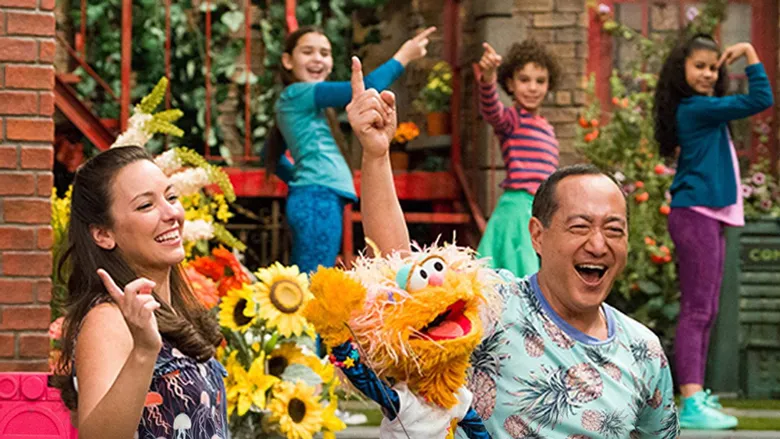
On Sesame Street, Director Grover plans a fairy-tale play and casts his friends, but he refuses to let Elmo, Abby, Telly, and Ji Young change their parts, so the cast walks out. Alone and regretful, Grover realizes the play is no fun without them, apologizes, and they build a new plan together that includes everyone's ideas. The episode then moves through Cookie Monster's tea party, where Elmo and Tango help him set up after he muddles his to-do list, a Monster Foodies segment where Cookie Monster and Gonger make a half-mushroom, half-pineapple pizza and visit a real pineapple farm, and an Elmo's World about gardens. It closes with Elmo's happy dance and the credits.

Sesame Street
S50 E08

Sesame Street

A Trip to the Dentist

Stimulating
recommended age Unlock co-watching from 2
Elmo, Charlie, Julia, and Alan rehearse a dentist visit on Sesame Street by playing pretend with a toy alligator, then Julia tags along to Charlie's real check-up with Dr. Price, who explains every tool. The episode then moves through Samuel modelling tooth-brushing, a Letter of the Day segment on 'D for dentist', a Cookie Monster and Gonger story about making celery butterflies, a counting song with seven martians, and an Elmo's World about doctors. Julia ends the episode willing to visit Dr. Price herself, and the friends recap what they learned about keeping teeth healthy.

Sesame Street
S55 E07

Sesame Street

Elmo's Lost Snowman

Stimulating
recommended age Unlock co-watching from 2
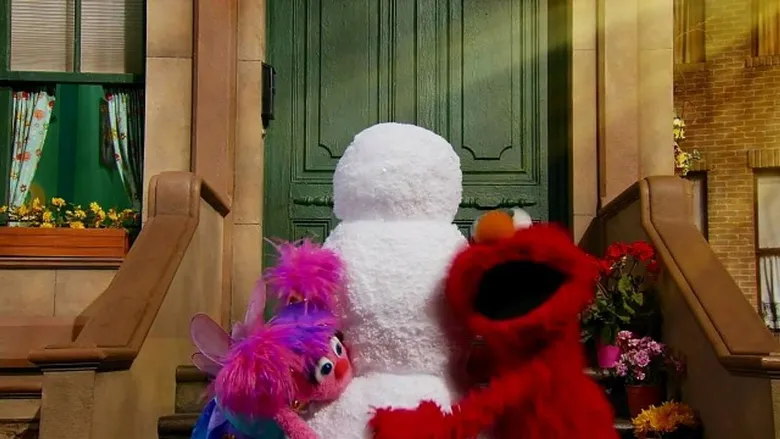
Elmo, Abby and their friends spend a very hot day on Sesame Street. Abby uses her magic wand to make a snowman to cool everyone off, but he disappears, and the children search the neighborhood before working out that he melted into a puddle because snow is frozen water. Along the way the episode visits the letter W for weather, the number 15, Cookie Monster and Gonger making a green fruit salad at a kiwi farm, and an Elmo and Tango mystery about a missing drawing. It closes with a recap that heat turns snow back into water and a song about growing smarter, stronger and kinder.

Sesame Street
S56 E09

Sesame Street

Elmo's Magnificent Mini City

Stimulating
recommended age Unlock co-watching from 2
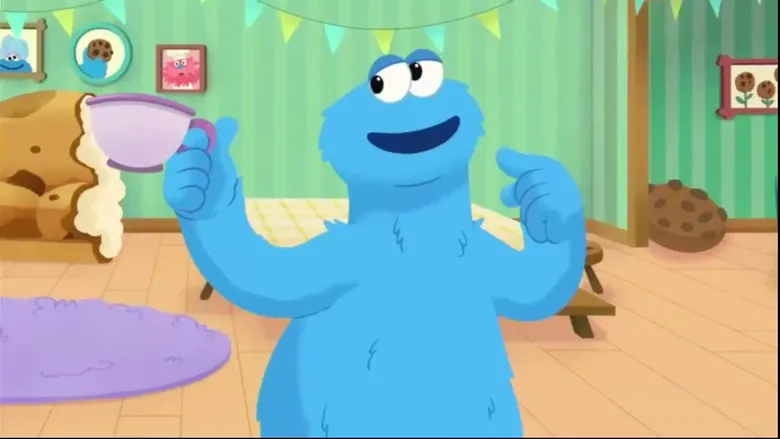
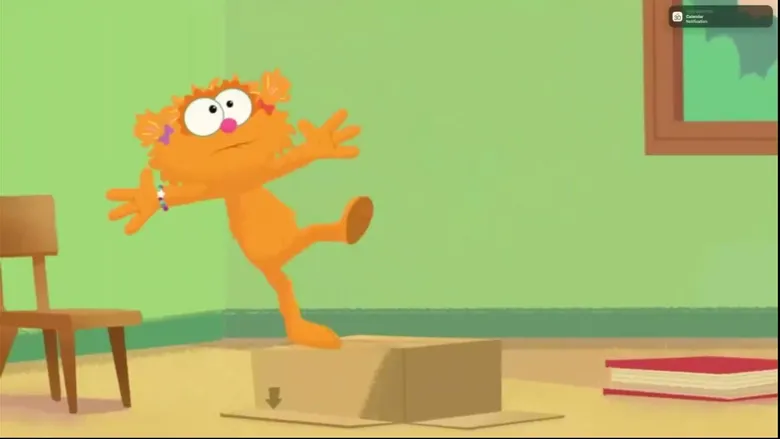
On a very hot day, Elmo and his friends gather at a cooling center where Elmo would rather play a tablet game than join in. While Abby and Julia build a tiny city out of cups, boxes and sponges, Elmo learns to put the tablet down, stretch and help out. The episode then moves through a pretend 'floor is quicksand' game, a segment where Cookie Monster and Gonger bake cornbread and visit a real cornfield, and an Elmo's World about babies. It ends with the friends finishing their mini city together and a closing song.

Sesame Street
S56 E12

Sesame Street

Grover's Play

Stimulating
recommended age Unlock co-watching from 2
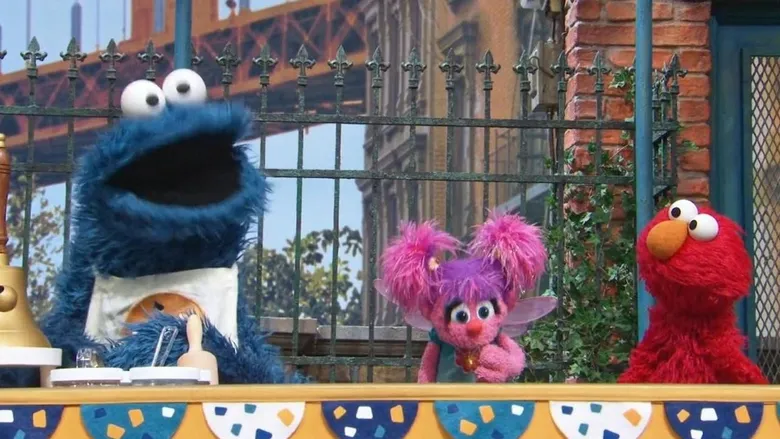
On Sesame Street, Director Grover plans a fairy-tale play and casts his friends, but he refuses to let Elmo, Abby, Telly, and Ji Young change their parts, so the cast walks out. Alone and regretful, Grover realizes the play is no fun without them, apologizes, and they build a new plan together that includes everyone's ideas. The episode then moves through Cookie Monster's tea party, where Elmo and Tango help him set up after he muddles his to-do list, a Monster Foodies segment where Cookie Monster and Gonger make a half-mushroom, half-pineapple pizza and visit a real pineapple farm, and an Elmo's World about gardens. It closes with Elmo's happy dance and the credits.

Sesame Street
S56 E13

Sesame Street

Cookie Monster's Magical Cart

Stimulating
recommended age Unlock co-watching from 2
Cookie Monster delivers cookies around Sesame Street with his cart until Abby Cadabby uses fairy magic to move it without asking, sending the cart zooming and spinning out of control. With Elmo's help, Cookie Monster tells Abby he feels frustrated because she did not listen, Abby apologizes and undoes the spell, and the two agree to push the cart together. The episode also follows Cookie Monster and Gonger as they visit a farm and cook stir-fried Brussels sprouts for Fred, an Elmo segment about finding a quiet place when neighbors are noisy, and an Elmo's World about nursery rhymes. Each part ends with the problem resolved and the characters happy.

Just launched: free lifetime premium for the first 1,000 members to activate their account.

Create your account

Search by title, show, tag, or topic

We use functional cookies and Google Analytics to improve our site. Learn more