














This program is well-balanced. It remains mostly easy to follow and process. It is a good fit for the recommended age.
The pacing is fast. Images follow each other quickly, leaving little time to pause and take in what is happening.
The sound is clearly present and regularly draws attention.
The visuals are calm and well-organized.
The episode follows a single clear thread: Andy finds a birthday card, works out what to do with it, and ends up throwing a surprise party. Events arrive in order with a tidy beginning, middle and end, and each action leads to a sensible next step, so a child can easily follow what is happening and why. The one caveat is that a string of named friends, Missy Hissy, Tiffo, Orby and Bilbo, each appear with their own reason to decline, which is a fair amount to hold in mind for a three-year-old, though the repeated question pattern keeps it manageable.
Emotionally this is a safe, even experience that stands out for its steadiness. Voices stay gentle, nobody shouts or frightens, and the warm feeling never lurches from one state to another. Friends treat each other with thoughtfulness, with Looby Loo quietly leaving a card and Bilbo lending his decorations, and no character is mocked or belittled even when Andy's cake turns out odd. Small hiccups, like Teddy struggling to hang the flags, are smoothed over kindly.
Andy drives the story himself: he decides not to waste the card, asks each friend in turn whether they want a birthday, and when they all say no he and Teddy land on the idea of a surprise party. That visible trying, checking and adjusting models genuine problem-solving for a young child. The cake task adds a clear set of steps to follow, with the small caveat that its playful, nonsensical recipe makes the result more about having a go than reaching a sensible outcome.
The narration is clear, well spoken and almost entirely made up of complete, meaningful sentences that describe exactly what is happening on screen. Concrete words like 'envelope', 'cupboard', 'decorations' and 'cake' tie the language to things a child can picture. The small caveat is that the storybook delivery leans on longer, multi-clause sentences, which sit a touch above what the very youngest in this age range will fully absorb.
The story rests on activities a child knows from real life, planning a party, making something for a friend and hanging decorations, and the social warmth of celebrating someone is very recognisable. What holds this pillar down is that everything happens in an imaginary world of talking toys rather than a realistic setting, which limits how directly a three-year-old can carry it into their own day. The flagship activity, a 'cake' of baked beans, jam and bananas mixed together, is a deliberate joke rather than something practical to copy.
More information
This score shows how inclusively the series portrays diverse people, families and cultures. Scale: Limited → Varied → Rich → Inclusive.
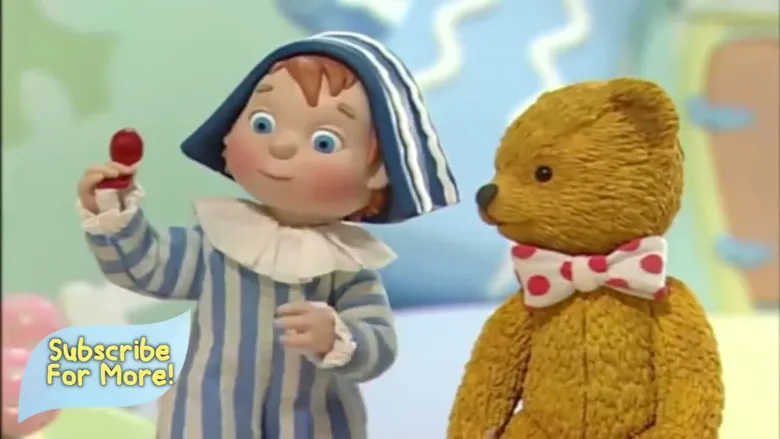
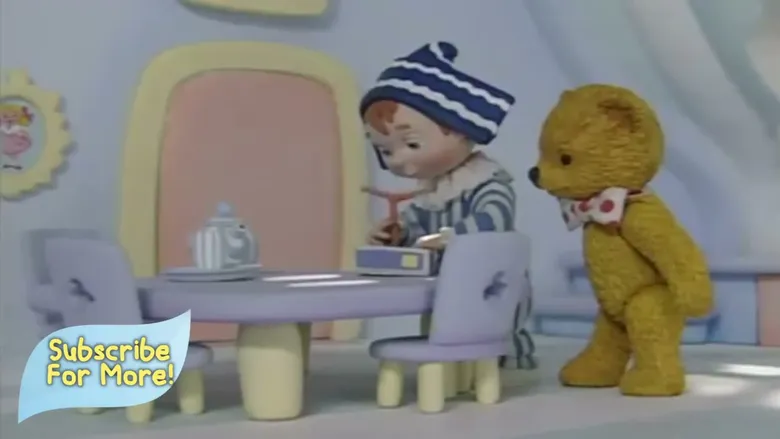
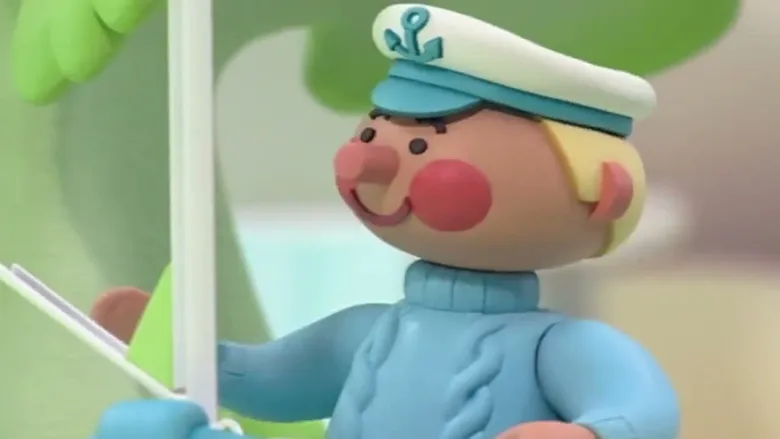
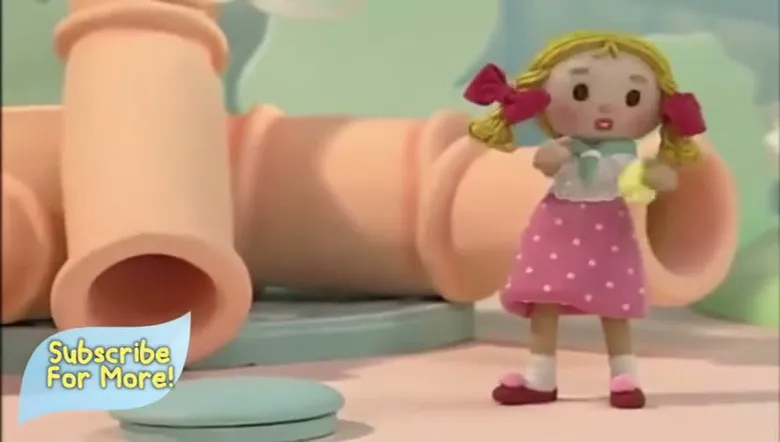
Andy Pandy is a toy-world story where a small circle of friends, a striped boy doll, a rag doll, a teddy, a snake, a dog, a ball, and a sailor, plan a surprise birthday party. The faces here are limited: the human-looking characters share one light skin tone, no families appear, and everything happens in one gentle pastel setting, so the picture of people and how they live together stays narrow. Roles are friendly and cooperative, and Looby-Loo shows real initiative by remembering the birthday and baking her own cake, but the inventive lead still belongs to the boy while the caring tasks fall to the female characters. Children see warmth and teamwork, but little variety in who people are or the worlds they come from.
This score shows whether the series stays close to everyday reality or leans into fantasy. Scale: Fantasy → Mixed reality → Realistic.
Andy Pandy and his friends are toys who come to life, yet everything they do mirrors a young child's everyday world: finding a hidden birthday card, planning a surprise party, and baking a cake for the first time. No villain appears anywhere in the story, and the only bumps are gentle and comedic, like Teddy struggling to hang decorations while Tiffo the dog 'helps.' The living-toy idea stays consistent from start to finish, with each character behaving in a steady, predictable way. For a young child at this stage, this blend of familiar situations and light make-believe is a close match.
This score shows how enjoyable the series is for parents watching along. Scale: Tedious → Tolerable → Pleasant → Enjoyable.
This is easy company for a parent in the room. The stop-motion craft is careful, and the soft pastel look with a calm narrator make it gentle to sit through, while a real little story runs underneath: a found birthday card, a secret party plan, and a cake gone comically wrong. The bigger laughs land for the children rather than the adult alongside them, though the absurd cake of baked beans, jam, and bananas earns a quiet grown-up smile. Pleasant to share, even if it is not pitched at the parent.
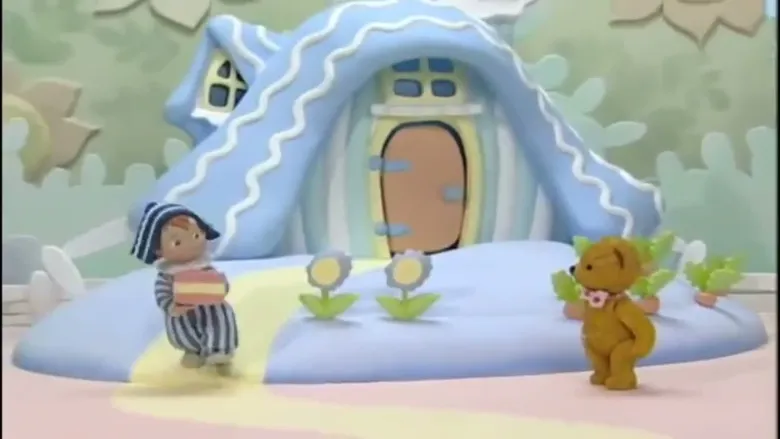
Andy Pandy finds a birthday card that Looby Loo has secretly left in his cupboard, and rather than waste it he asks each of his friends whether they would like a birthday. When they all say no for their own reasons, he and Teddy decide to throw Looby Loo a surprise party. Andy makes an unusual ice cream cake from his favourite foods while Teddy hangs the borrowed decorations. The toys gather in the garden for the party, where Looby Loo turns up with a proper cake of her own.