



Slowscreen SlowScreen
Toggle sidebar

Just launched: free lifetime premium for the first 1,000 members to activate their account.

Start free

Silent Treatment

Good

Recommended age Unlock

Co-watching from age 3

Balanced

Exact score locked

Watch on Prime Video BBC PBS Kids
Save
Silent Treatment

Share

Pass this find on to another parent

Link preview

Arthur: Silent Treatment | Good, co-watching from age 3

Arthur: Silent Treatment | Good, co-watching from age 3 - Slowscreen

Good · Co-watching from age 3. George, a quiet moose in the town of Elwood City, becomes convinced his friends never notice him, so he decides to stop talking u...

slowscreen.com

https://slowscreen.com/en/series/arthur/s13/e3-silent-treatment

https://slowscreen.com/en/series/arthur/s13/e3-silent-treatment

Slowscreen

Arthur: Silent Treatment | Good, co-watching from age 3 - Slowscreen

Good · Co-watching from age 3. George, a quiet moose in the town of Elwood City, becomes convinced his friends never notice him, so he decides to stop talking u...

Arthur: Silent Treatment | Good, co-watching from age 3

slowscreen.com

Arthur: Silent Treatment | Good, co-watching from age 3 - Slowscreen

Good · Co-watching from age 3. George, a quiet moose in the town of Elwood City, becomes convinced his friends never notice him, so he decides to stop talking u...

Arthur: Silent Treatment | Good, co-watching from age 3
slowscreen.com

Arthur: Silent Treatment | Good, co-watching from age 3 - Slowscreen

slowscreen.com · Posted by you

Arthur: Silent Treatment | Good, co-watching from age 3 - Slowscreen

0 Share
Arthur: Silent Treatment | Good, co-watching from age 3
To
Subject Arthur: Silent Treatment | Good, co-watching from age 3

Good · Co-watching from age 3. George, a quiet moose in the town of Elwood City, becomes convinced his friends never notice him, so he decides to stop talking u...

https://slowscreen.com/en/series/arthur/s13/e3-silent-treatment

Share on WhatsApp Share on X Share on Facebook Share on Telegram Share on Reddit Share on Email

See the exact scores

The review is yours to read. Create a free account to reveal the exact SlowScreen score and every pillar score.

Create free account
This program is well-balanced. It remains mostly easy to follow and process. It is a good fit for the recommended age. The pacing is fast. Images follow each other quickly, leaving little time to pause and take in what is happening. The sound is soft and supportive. The visuals are calm and well-organized.
One clear thread runs through the whole episode: George believes his friends never notice him. Events build in a recognisable order, from feeling overlooked at hide-n-seek, to giving the silent treatment, to a dream that helps him see he matters, to the surprise party that sets things right. Actions lead to sensible consequences a child can follow, such as George staying quiet and then fretting that nobody reacts. A connected side thread about the friends secretly planning the party adds a little to track, but it ties straight back to the main story.
The tone stays gentle and the characters treat each other with genuine care, noticing that George is hurting and quietly arranging something kind for him. Feelings shift gradually rather than flipping between extremes, and worried moments resolve, including a brief scare when George falls into the water and is pulled out safely. The lasting feeling of being left out may sit heavily for a sensitive child, since George spends much of the episode convinced he does not matter before the reassuring ending. His dummy Wally adds a few dry, slightly sharp remarks, though never real cruelty.
George's own plan, refusing to speak until someone notices, is the heart of his problem-solving, and it openly backfires rather than working, which limits how much useful figuring-out he models. He does reflect, test the idea, and reach a realisation through the dream that he does matter, so a thinking process is visible across the episode. Much of the resolution, though, comes from his friends acting on his behalf with the party and the contest entry, rather than from George working it out alone. The cause-and-effect in his reasoning stays clear, even when the conclusion he draws is mistaken.
Speech is clear and well-formed throughout, with full sentences and dialogue that carries the story and describes what characters feel and intend. The language is rich, with idioms and wordplay like 'take for granted', 'chopped liver', and the running 'fivehead' joke, giving plenty to learn from context. That same richness pitches some of the humour and the abstract idea of 'what life would be like if you never existed' a little above the youngest end of this age range. Word use stays consistent and purposeful, with very little empty filler.
The strongest real-world value sits in the social situations: feeling overlooked, misreading a friend's intentions, and being welcomed back, all mirroring everyday playground and friendship life. The closing live-action segment, where real children describe their own funny misunderstandings, ties the lesson directly to a child's own experiences. Hands-on, copyable activity is thinner, with woodworking projects and hide-n-seek shown more than walked through step by step. A clearly framed dream with a 'magical' talking dummy sits apart from daily life, though it keeps its own internal logic.

More information

This score shows how inclusively the series portrays diverse people, families and cultures. Scale: Limited → Varied → Rich → Inclusive.
Arthur tells this story through a community of animal characters, with boys and girls sharing the action fairly evenly and a quiet, sensitive boy named George at its emotional center. Initiative and problem-solving are spread across the group rather than tied to one type of character, with the main traditional touch being an older woman who runs the school kitchen. Literal human variety in appearance or background is not part of the animated story itself, but the live-action closing segment brings in a real third-grade class of children from clearly different backgrounds. Together this gives a broad and fairly balanced picture, with the most visible human diversity arriving in the short real-life ending.
This score shows whether the series stays close to everyday reality or leans into fantasy. Scale: Fantasy → Mixed reality → Realistic.
Arthur and his friends live an everyday life of school projects, games and ice cream runs, with the familiar twist that the characters are animals who act like people. The episode's only real flight of fantasy is a clearly signposted dream in which George's talking dummy, Wizard Wally, shows him a world where he never existed, and that imagined world keeps its own logic from start to finish. There is no villain; the upset grows out of a simple misunderstanding, and George's friends are secretly preparing a surprise for him the whole time. The blend of grounded daily life and gentle, coherent imagination fits a five-year-old well, with only the 'never existed' idea reaching a touch beyond the youngest viewers.
This score shows how enjoyable the series is for parents watching along. Scale: Tedious → Tolerable → Pleasant → Enjoyable.
This episode rewards a parent sitting on the couch more than most children's content. George's vow of silence runs alongside his friends secretly planning a surprise party, so adults follow a story with real dramatic irony, while a whole dream sequence openly parodies 'It's a Wonderful Life' for the grown-ups in the room. The voices stay calm and conversational and the steady flat animation holds up across the runtime. The production is solid rather than lavish, but there is genuinely something here for the co-viewer.

Themes

Friendship

Central

George's bonds with Arthur, Buster, Sue Ellen and Binky drive the whole story.

Feeling unnoticed

Central

George repeats 'It's like I don't even exist' and 'No one ever pays attention to me'.

Misunderstanding

Recurring

George reads the friends avoiding him as rejection when they are secretly planning his party.

Self acceptance

Recurring

The dream shows George that without him his friends and even Wally would be worse off, so he matters.

Understanding others

Recurring

His friends realise they keep overlooking him ('we have to do something about George, he was really upset') and act to make him feel seen.

Danger

George falls into the water and is pulled out, with Wally saying 'that was a close one' before it resolves at once.
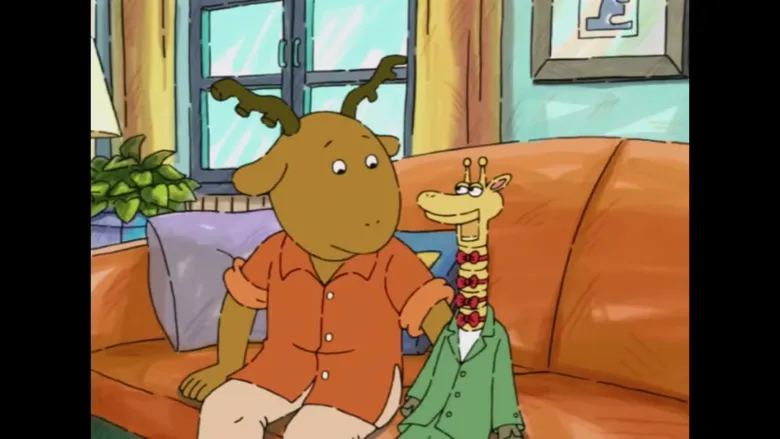
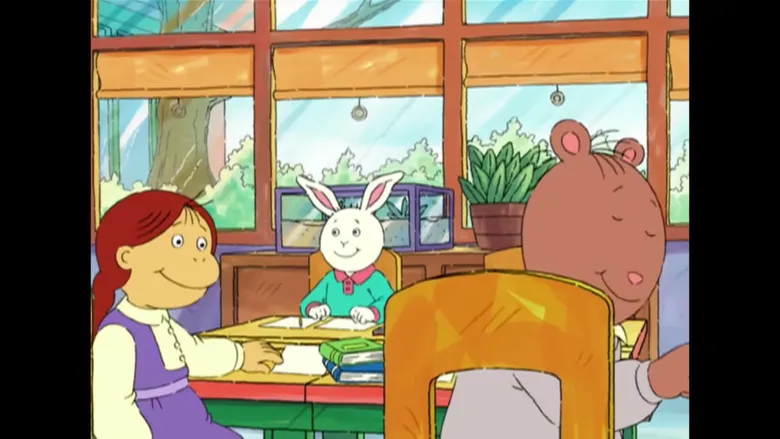
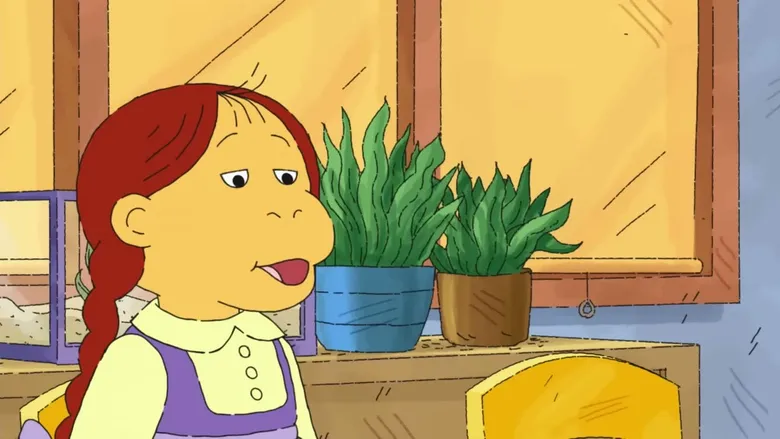
George, a quiet moose in the town of Elwood City, becomes convinced his friends never notice him, so he decides to stop talking until someone does. A dream in which his dummy Wally shows a world where George never existed helps him realise he does matter. His friends, who had been secretly planning a surprise party, reveal that he won the woodworking contest, and the group ends up playing hide-n-seek together. Real children then share their own funny misunderstandings.

Arthur
S13 E03

Arthur

Silent Treatment

Balanced
recommended age Unlock co-watching from 3
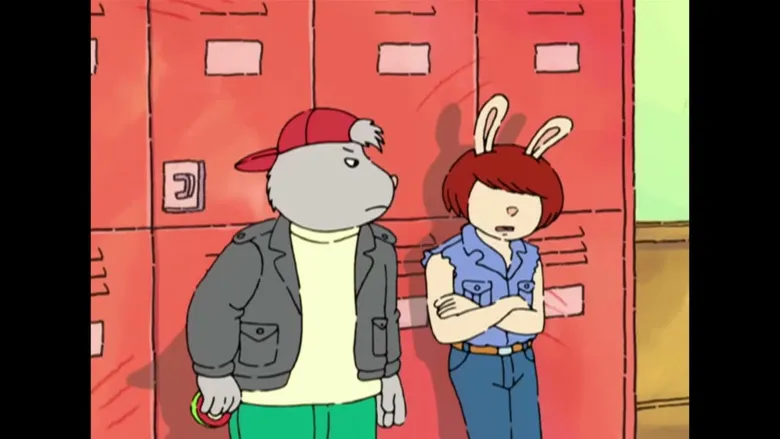
George, a quiet moose in the town of Elwood City, becomes convinced his friends never notice him, so he decides to stop talking until someone does. A dream in which his dummy Wally shows a world where George never existed helps him realise he does matter. His friends, who had been secretly planning a surprise party, reveal that he won the woodworking contest, and the group ends up playing hide-n-seek together. Real children then share their own funny misunderstandings.

Arthur
S15 E02

Arthur

I Wanna Hold Your Hand

Balanced
recommended age Unlock co-watching from 3
Binky, a member of the Tough Customers, is mortified when his classmate George spots him holding his mom's hand at the mall. Afraid of being called a baby, he tries to keep it secret by silencing and bribing George, while Molly and Rattles dig for clues. After a clarinet recital, Binky decides he loves his mom and will hold her hand no matter what, and his friends shrug it off as nothing unusual. He happily chooses a family dinner over a night out with his friends.

Arthur
S15 E06

Arthur

Cents-Less

Balanced
recommended age Unlock co-watching from 3
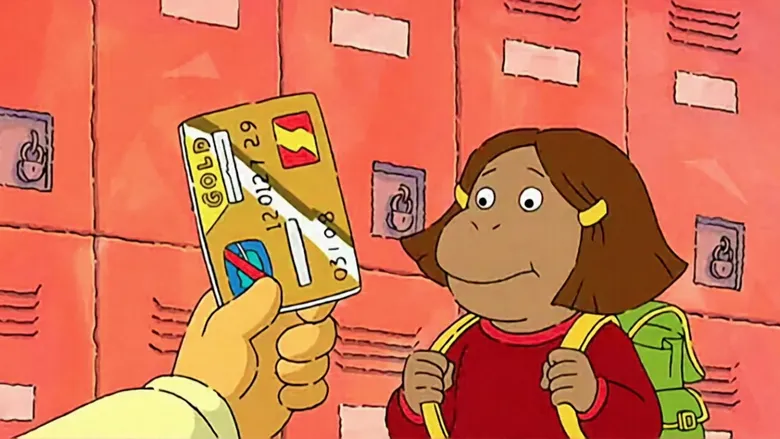
Mr. Ratburn challenges his class to spend no money for a whole weekend and report back on Monday. Muffy, who is used to buying whatever she wants, works through a chain of trades to get a sought-after wrestler figure and finally learns to barter by organising Brain's baseball card collection. Along the way Buster trades jokes for food, Mr. Ratburn revives his old puppets to earn meals, and Francine resists spending a birthday gift. The class returns to school having found they are valuable even without money, and several decide to start saving.

Arthur
S15 E15

Arthur

Through the Looking Glasses

Balanced
recommended age Unlock co-watching from 3
Arthur wakes up unable to find his glasses and has to get a new pair from an eccentric optician. When friends and neighbors start praising his new look, the attention goes to his head and he begins handing out unwanted advice, which pushes his best friend Buster away. After both boys' glasses break, Arthur promises not to let a pair of glasses change who he is, and Buster helps him find his way home. The episode closes with the show's creator demonstrating how to draw the dog Pal.

Arthur
S21 E06

Arthur

Muffy Misses Out

Balanced
recommended age Unlock co-watching from 3

Muffy, a confident organizer at Lakewood Elementary, is thrilled to visit Italy with her father but worries about leaving her friends to run the school bake sale. While she is away, the friends swap her Italian theme for New Orleans beignets and jazz, and the sale is a hit, which leaves Muffy feeling unneeded. When her friends realize how much her ideas and presence meant, they bring her back to help settle a disagreement over decorating the stage curtain. A short closing segment has real children explain who civil rights leader John Lewis was.

Explore more

Just launched: free lifetime premium for the first 1,000 members to activate their account.

Create your account

Search by title, show, tag, or topic

We use functional cookies and Google Analytics to improve our site. Learn more